 \n
\n
2026 Winter Olympics Alpine Skiing: The Heated Arena of Milan-Cortina 2026
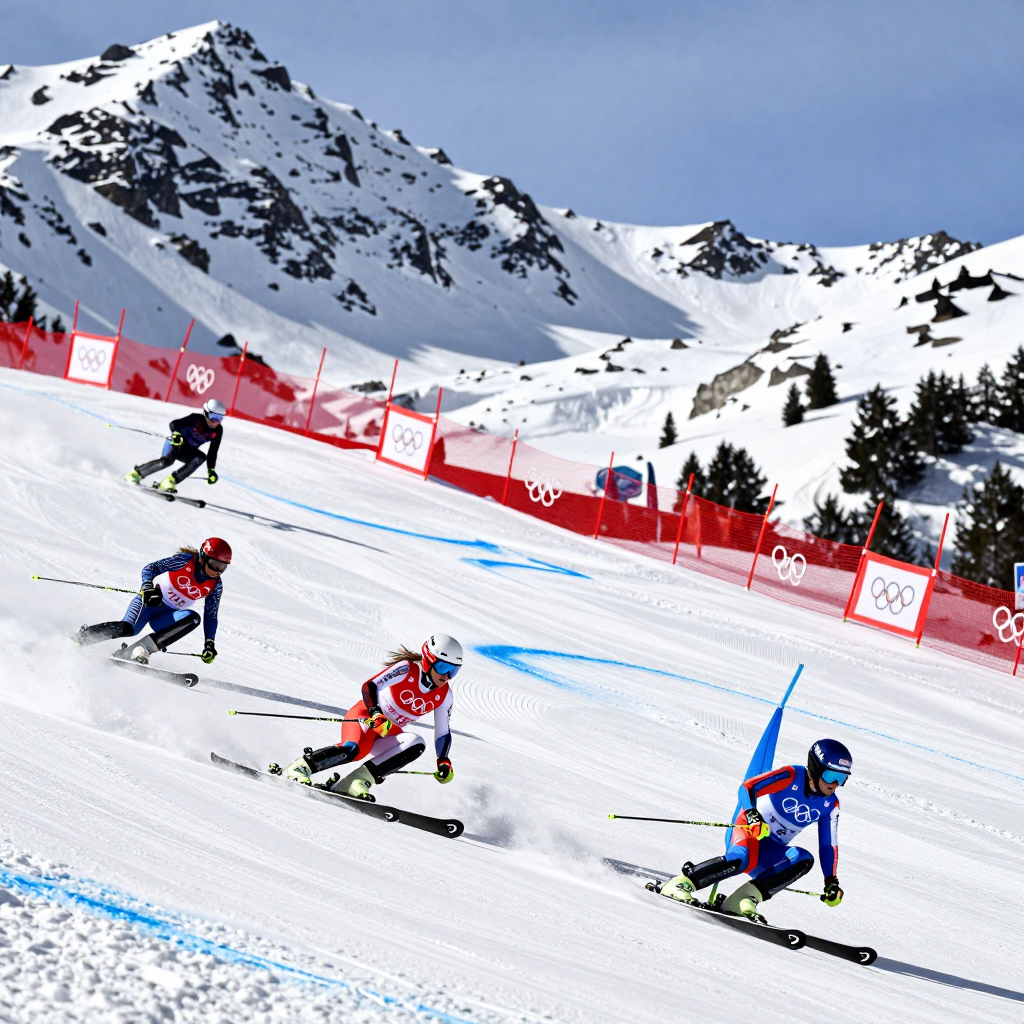
On February 15th, the snowy peaks of the Italian Alps are hotter than ever. The reason? The Women’s Giant Slalom is in full swing. This event, decided over two runs, is a battle of flawless technique where not a single mistake is allowed, and a psychological war where the rankings remain uncertain until the competitor crosses the final gate. After today’s fierce competition, who will rise to the top?
The 2026 Winter Olympics Alpine Skiing has now reached its midpoint in the schedule. Following the speedy thrills of early events like Downhill and Super-G, the technical disciplines are taking center stage—and today’s Giant Slalom marks the pinnacle of this shift.
- 4:00 AM: Women’s Giant Slalom Run 1
- 7:20 AM: Women’s Giant Slalom Run 2
- 3:30 AM (Replay): Men’s Giant Slalom Run 2
Alpine skiing features 10 medal events equally divided between men and women, each requiring drastically different skills. From the explosive speeds exceeding 130 km/h in Downhill to the razor-sharp rhythm needed to carve through tightly packed gates in Slalom—this contrast defines Olympic alpine skiing’s immense appeal. Giant Slalom sits right in the middle, testing the perfect balance between speed and technique with ruthless precision.
Another wildcard factor is, of course, the weather. Strong winds and low visibility can delay races, and subtle changes in snow conditions affect line choices and ski responsiveness. Ultimately, today’s race will be decided not just by “who is fastest,” but by who can complete two runs with consistent composure.
The Hidden Structure and Charm of the 2026 Winter Olympics Alpine Skiing Events
Five alpine skiing disciplines where speed meets technique. From the downhill race, reaching speeds over 130 km/h, to the slalom where precise turns determine the winner—on the surface, it might seem like “the fastest down the slope wins,” but each event actually hides completely different race designs and strategies. To enjoy the 2026 Winter Olympics alpine skiing to its fullest, understanding this structure is key.
Speed vs. Technical: What the Schedule Reveals About the Design Intent
Alpine skiing is broadly divided into speed events (downhill, super-G) and technical events (giant slalom, slalom), with the alpine combined acting like a “test paper combining both worlds.”
The typical order of events—from speed to technical—is more than mere showmanship; it’s a strategic design that takes into account athletes’ fatigue management and recovery time, as well as ensuring fairness based on the characteristics of each discipline.
Five Events, One Mountain, Completely Different Games
- Downhill: The fastest and most dangerous discipline. The course is long with significant elevation changes, where split-second decisions impact survival. Winning is decided by fractions of a second, influenced by line selection and minimizing air resistance.
- Super-G: A hybrid combining downhill speeds with added technical challenges. Gate spacing is tighter than downhill, demanding both speed maintenance and precise turns simultaneously.
- Giant Slalom: The main highlight today for a reason. With two combined runs, athletes can make up for mistakes in the second run, so strategy and mental toughness play critical roles.
- Slalom: Called “the most technical event” for good reason. The gates are very tight and turns sharp, forcing skiers to rely less on speed and more on rhythm, upper body stability, and subtle edge control to win.
- Alpine Combined: Combining one speed run and one technical run, this event crowns the “complete” skier—neither just the fastest nor only the most skilled. As it balances very different skill sets on one scale, equipment setup and on-the-day condition have a huge impact.
Weather Variables as Part of the Race
Unlike indoor sports, alpine skiing can’t fix its conditions. Strong winds, reduced visibility, and shifting snow conditions affect not only times but sometimes the entire event schedule. Thus, at the Olympics, who “adapts fastest to changes” often separates winners from the rest, just as much as who “skis best.”
Watching Tips: Focus on ‘Line’ and ‘Run’ Instead of Just Records
Especially in two-run combined events like giant slalom, the aggressive approach in the first run and risk control in the second unfold differently. Don’t just watch the speedometer on the broadcast—watch the angles at which skiers enter gates and if their acceleration after turns holds up (if their line is alive). Doing so will give the 2026 Winter Olympics alpine skiing a whole new dimension of excitement.
2026 Winter Olympics Alpine Skiing: The Rising Heat of the American Medal Hunt
Major American media aren’t just chasing “results” in real time. It’s the subtle tension at the start gate, the split-second judgments as course conditions shift, and the unwavering focus needed to endure two challenging runs—the relentless quest of American athletes lighting up the Olympic stage is streamed in articles, breaking news, and analyses every moment. Right now, the excitement around 2026 Winter Olympics alpine skiing is heating up as the spotlight moves to the technical events.
What U.S. Media Are Zeroing In On: “Today’s Run Can Change the Medal Color”
The key event on February 15, the Women’s Giant Slalom, is decided by the combined times of two runs. That’s why American outlets focus more on the unpredictable factors “after the first run”—the depth of course ruts, changes in snow texture, and visibility influenced by wind—rather than just the mid-run leaderboard. Small leads built in the first run can be flipped in an instant during the second, making this discipline a breathtaking drama.
From Speed to Technique: A Shift Breeding New Opportunities
Early in the competition, speed events like Downhill and Super-G took center stage, but now technical disciplines such as Giant Slalom and Slalom are stealing the limelight. This transition period is critical for the U.S. team. Within a grueling schedule where stamina and recovery spell success, the key to medal contention lies in who maintains the cleanest turning rhythm as the event progresses.
On the Ground: Weather and Conditions Are Strategy
Alpine skiing is profoundly shaped by the weather. Gusty winds or sudden drops in visibility instantly demand strategic line choices and risk balancing—forcing a choice between “going all out or securing a safe finish.” This is why the American medal chase feels so visceral. It’s not just a race against the clock, but a fierce battle of reading conditions and making split-second decisions every run.
What We Need to Follow Now: Not the Results, But the Details of the Process
Medals are decided at the finish line, but the story begins long before that. From pre-start routines, adjusting rhythm for gate spacing, to bold tweaks in the second run—tracing the intense detail-hunting by the U.S. media reveals the true spectacle in 2026 Winter Olympics alpine skiing isn’t on the leaderboard but in the “moments between.”
Strategic Scheduling and Behind-the-Scenes Variables of Alpine Skiing at the 2026 Winter Olympics
Scheduling is not just about "when and what happens." Given the nature of alpine skiing at the 2026 Winter Olympics, characterized by high-speed runs and extreme cornering, the schedule itself is designed as a device to minimize athletes’ physical strain and maintain fairness. This design continually contends with one key variable: the weather.
Why Does the 2026 Winter Olympics Alpine Skiing Schedule Follow a Speed → Technical Order?
Alpine skiing is broadly divided into Speed events (Downhill, Super-G) and Technical events (Giant Slalom, Slalom). This tournament arranges the speed events early on, followed by the technical events later, for clear reasons:
- Tackling higher-risk events first: Downhill and Super-G feature the highest speeds and impact forces. As fatigue accumulates later in the event, competing in these high-risk speed races increases danger.
- Allowing recovery time: Transitioning from speed to technical events lets athletes recover from intense muscle damage and neural fatigue before focusing on races demanding precise turns and rhythm—especially the Slalom.
- Reducing condition disparities to emphasize ‘skill’: Technical events punish even the smallest errors. By managing fatigue through scheduling, results are more likely to reflect “skill” over “luck.”
The Fatigue and Strategy Battle Created by 'Two Runs' in 2026 Winter Olympics Alpine Skiing
Events like Giant Slalom, conducted over two runs, demand not only stamina but also risk management:
- Run 1: Ski as fast as possible without disqualification (DNF). The initial ranking affects the starting order and psychological pressure for Run 2.
- Run 2: Athletes often must take more aggressive lines while fatigued. With course deterioration (rutting) making turns unpredictable, lower body and core stability directly impact times.
In short, it’s not a “race to perform well twice,” but a competition that must be calculated differently in each run.
The Biggest Variables in 2026 Winter Olympics Alpine Skiing: Wind, Visibility, and Course Conditions
Unlike indoor sports, alpine skiing means even the same athlete can face a completely different race depending on changing conditions. The three main variables:
- Strong winds: Particularly in speed events, risk spikes sharply, making postponements likely. Shaky form during jumps threatens both times and safety.
- Low visibility (fog, snow): Delayed gate recognition disrupts line choices. In technical events, even a split-second delayed reaction can translate into significant time loss.
- Course condition shifts: Depending on temperature and sunlight, the surface can become icy hard or deeply rutted. Starting order can thus be advantageous or detrimental, posing another challenge in ensuring fairness.
Ultimately, the medal battles in 2026 Winter Olympics alpine skiing will be decided beyond just the scoreboard. The schedule, thoughtfully crafted around athletes’ endurance, the strategic demands of two runs, and the ever-changing mountain conditions combine to make the contest not just “who is fastest,” but “who endures and adapts best.”
The Olympic Tale Crafted by the Sublime Harmony of Technology and Speed: 2026 Winter Olympics Alpine Skiing
In this competition where speed meets technique, an unpredictable drama unfolds until the very last moment. Let’s find out who will emerge as the true champion of alpine skiing this season!
Looking at the flow of the 2026 Winter Olympics alpine skiing, the early dominance clearly belonged to the speed events (Downhill, Super-G). Speeds surpassing 130 km/h, the variables of wind and visibility shaking up the results, and the ruthless reality where a single line choice can change rankings—all made it seem like “the fastest wins.” But in truth, this stage was for those who endure the natural conditions and master the course strategy.
However, as the games progress to the middle phase, the spotlight shifts to the technical events. Especially today, February 15th, the Women’s Giant Slalom encapsulates the spirit of this tournament. Since Giant Slalom is decided over two runs, a single burst of power won’t suffice. Even if you lead in the first run, a disrupted rhythm in the second can flip the standings in an instant. Conversely, a small mistake in the first run can be brilliantly corrected by a perfect turn in the second, creating thrilling reversals. This “two chances” format makes the Olympics both harsher and more enchanting.
What’s fascinating is how the schedule itself fuels the drama. Alpine skiing generally starts with the speed events, followed by the technical events, balancing athletes’ recovery and fairness. Thanks to this structure, the viewing experience becomes clear-cut: early on, it’s about “who’s the fastest,” and in the latter half, it’s about “who’s the most precise and enduring.” In the end, the medal race naturally shifts its weight from a league of speed to a league of skill and mental fortitude.
Another key storyline is the ‘national narratives.’ Leading countries, including the USA, constantly update medal standings and athlete conditions in real-time, keeping the door open for comebacks in the remaining technical events. Will the teams dominating the speed stages continue to reign, or will the technical events turn the tables? This very question is the real thrill of this Olympic competition.
Ultimately, the question posed by this Olympic alpine skiing is simple yet profound: Is the greatest athlete the fastest, the most precise, or the one who endures both worlds? The answer won’t be final at the finish line but only when the last run comes to an end.
Comments
Post a Comment