2026 Milan Winter Olympics: The Challenge of 3,500 Athletes from 93 Countries Amid the Climate Crisis
 \n
\n
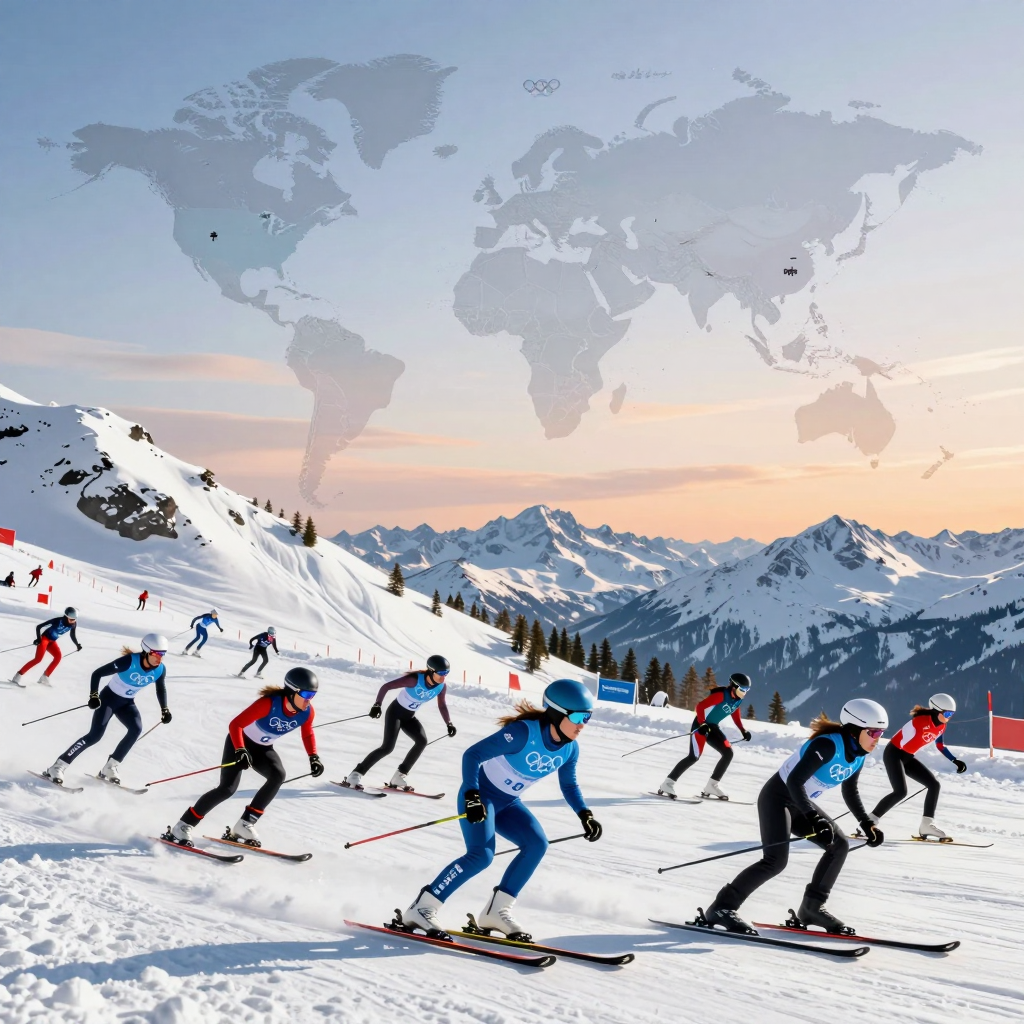
The 2026 Milano-Cortina d'Ampezzo Winter Olympics Begin
Over 3,500 athletes from 93 countries around the world are battling it out in winter sports across two Italian cities. What stories will this edition's slogan, ‘IT’s Your Vibe,’ unfold?
Making History in Northern Italy at the 2026 Winter Olympics
Spanning approximately 17 days from February 6 to 22, the 2026 Winter Olympics welcome the world’s winter sports champions to Milano and Cortina d’Ampezzo in Northern Italy. A total of 116 events across 16 disciplines are underway, marking an unprecedented scale of winter Olympic celebration.
With the mascot Tina and the slogan ‘IT’s Your Vibe,’ this Games embraces the Olympic philosophy of honoring personal emotions and experiences. It conveys a message beyond mere medal counts — each athlete and spectator is invited to create their very own Olympic story.
South Korea’s Team Aims for More Than Three Gold Medals
South Korea has dispatched a delegation of 130 athletes and staff members to the 2026 Winter Olympics, setting ambitious goals: winning at least three gold medals and securing a spot within the top 10 overall rankings.
The spotlight shines brightly on snowboarders Choi Gaon and Chloe Kim, who are fiercely competing while showcasing teamwork aimed directly at podium finishes. Their battles, fueled by national pride, are expected to captivate and rally support from fans across the entire country.
A Historic International Sports Festival of Unmatched Scale
With participants from 93 nations, the 2026 Winter Olympics mark a landmark moment in the history of winter sports. Over 3,500 athletes compete on ice and snow, fueled by dreams of national glory, delivering thrills and inspiration to fans who have waited four years for this global spectacle.
Following the Games, the Winter Paralympics will be held at the same venues in March, continuing with courageous challenges from differently-abled athletes. Northern Italy is proving itself once again as the epicenter of world-class winter sports, capturing the attention of the entire globe.
South Korea’s Quest for Gold and Star Athletes to Watch at the 2026 Winter Olympics
South Korea has set ambitious goals for the 2026 Winter Olympics. Targeting at least three gold medals and a top-10 overall ranking, the Korean delegation is sending 130 athletes and staff to Milan-Cortina d’Ampezzo, fully prepared with strategic plans to seize podium finishes.
Korea’s Bold Goals and Strategy
South Korea’s objectives at the 2026 Winter Olympics go beyond mere participation, focusing firmly on delivering tangible results. The concrete aim of winning three or more gold medals not only showcases the growth of Korea’s winter sports but also serves as a powerful statement of its competitiveness on the world stage. To achieve this, the Korean team is sharpening teamwork centered around key athletes in each discipline, locking in on their medal ambitions with intense focus.
The Snowboarding Showdown: Choi Gaon vs. Chloe Kim
The most captivating battle to watch at the 2026 Winter Olympics is undoubtedly in snowboarding, where South Korea’s Choi Gaon will face off against the internationally renowned Chloe Kim, sparking excitement among sports fans worldwide.
Choi Gaon is the rising star of Korean snowboarding, rapidly establishing a strong presence on the global stage. The 2026 Olympics will be his grand arena to prove his skills directly against world-class competitors.
Chloe Kim, already a global snowboarding icon, represents Korea in halfpipe and slopestyle events. Her exceptional technique and experience make her a formidable contender for a medal at the Games.
This rivalry is far more than a personal contest—it's a symbolic clash that signals the future of Korean snowboarding. When Choi’s emerging talent meets Chloe’s seasoned expertise, the Korean snowboarding team stands poised to claim multiple medals.
Aiming for Medals Through Teamwork
Korea’s delegation is focusing not only on individual excellence but also on strong team synergy to realize its medal targets. Beyond snowboarding, Korean athletes are expected to shine in a variety of disciplines at the 2026 Winter Olympics. The close cooperation and spirited support among athletes across different events will enhance Korea’s overall competitive edge.
Setting the goal of three or more gold medals along with a top-10 finish is more than just numbers—it’s a historic moment to showcase South Korea’s winter sports prowess to the world and to inspire the next generation of athletes with dreams and hope. Keep your eyes on the Korean team’s thrilling performances at the 2026 Winter Olympics!
Section 3: Climate Change Threatens the Future of the Winter Olympics
Research shows that by the 2050s, only 52 locations will be capable of hosting the Winter Olympics. This is a grave warning for the history of winter sports. The ongoing 2026 Winter Olympics in Milan-Cortina d’Ampezzo is taking place amidst the harsh realities of this climate crisis.
The Reality of the Winter Olympics Replaced by Artificial Snow
The 2022 Winter Olympics in Beijing relied on nearly 100% artificial snow for the first time in history. The fact that approximately 2 million cubic meters of water were used for snowmaking is not just a number; it signals that natural conditions no longer suffice to meet the requirements for hosting the Winter Olympics.
With winters shortening and snowfall decreasing due to climate change, organizing committees have no choice but to depend heavily on large-scale snowmaking facilities. This reliance not only incurs high costs but also raises new concerns over water resource wastage.
Shrinking Venues Suitable for Hosting
Studies predict that if current climate policies remain unchanged, the number of areas capable of hosting the Winter Olympics will sharply decline. By the 2050s, only 52 locations will meet the standards, dropping to 46 by the 2080s.
This trend suggests the Winter Olympics will increasingly concentrate in specific regions—primarily mountainous and high-latitude areas—potentially depriving athletes from many countries of the opportunity to participate.
The Intersection of the 2026 Winter Olympics and Climate Change
The 2026 Winter Olympics currently underway are by no means exempt from the challenges posed by climate change. Although held in the favorable geographic setting of the northern Italian Alps, the organizing committee heavily relies on artificial infrastructure to ensure stable competition conditions.
With over 3,500 athletes from 93 countries competing, this event starkly highlights the urgency of environmental issues. The International Olympic Committee and organizing committees worldwide are now facing a reality where the climate crisis can no longer be ignored.
Challenges for the Sustainability of the Winter Olympics
A fundamental transformation is required to secure the future of the Winter Olympics. This includes strengthening climate policies, developing eco-friendly hosting methods, and carefully reconsidering venue selection processes.
The Winter Olympics now stand as more than just a sporting event—they symbolize humanity’s response to climate change. How the 2026 Winter Olympics unfold during its remaining period and how future Games are managed will become a crucial indicator for the future of winter sports, and indeed, the future of our planet.
The Hidden Challenges of the 2026 Winter Olympics and Its Message of Peace
Amid the chaos of construction sites, protests, and strikes, the Olympics reveal two faces: one calling for peace and an end to war. How will the complex international landscape impact the athletes and the event itself?
The Realistic Struggles of the 2026 Winter Olympics Host Cities
Set in Milan and Cortina d’Ampezzo, the 2026 Winter Olympics is a massive international sporting event featuring over 3,500 athletes from 93 countries. Yet behind the dazzling stage lie the very real challenges faced by its hosts.
With just weeks remaining before the opening, some venues are still under construction—a clear sign that this colossal project is not progressing as planned. On top of that, relentless protests and strikes fueled by economic troubles continue to unsettle the atmosphere in Italy, creating a tumultuous environment in the host cities.
Despite this turmoil, the organizing committee and the host nation are sparing no effort to prepare the world’s premier winter sports festival. Meanwhile, athletes must persist in their training, shouldering the immense pressure to perform at their peak amid these challenging conditions.
The Olympics’ Message for Peace
Another striking face of the 2026 Winter Olympics is its strong hope for peace. The United Nations and the International Olympic Committee have called for a global ceasefire during the Games. The Olympics aim to become much more than a sporting event—they seek to be a platform where the world unites in pursuit of peace.
Yet reality paints a more complicated picture. Israel, affected by the Gaza conflict, is sending nine athletes, while Palestine has no participants—a poignant reflection of how international politics seep onto the Olympic stage.
The Solidarity and Hope Brought by Sports
Despite these challenges and setbacks, the 2026 Winter Olympics will become a stage where athletes from around the world showcase their highest skill and spirit. South Korea, for example, will send 130 athletes and staff members, aiming for at least three gold medals and a top-10 finish in the overall rankings.
The greatest value the Olympics offer is the spirit of humanity and mutual respect that transcends borders. Even amid the clamor of construction and political strife, moments of competition and cooperation among athletes carry a universal yearning for peace and harmony. This is why the Olympics must continue to be held—and why the world must keep watching.
A Winter Sports Journey Toward the Future: Who Will Be the New Star of the Winter Asian Games?
With Saudi Arabia relinquishing its hosting rights, Almaty, Kazakhstan has been confirmed as the host city for the 2029 Winter Asian Games. Where will the evolving landscape of winter sports lead us next?
Saudi Arabia’s Withdrawal and Kazakhstan’s Choice
The scenario surrounding the hosting rights of the 2029 Winter Asian Games took a dramatic turn. Saudi Arabia, initially spearheading the bid, ultimately withdrew from hosting, sending ripples through the international sports community. Yet this upheaval quickly paved the way for a positive new chapter as Almaty, Kazakhstan, was officially selected as the host city, ushering in a fresh era for winter sports on Asia’s stage.
This change goes beyond a mere shift in venue—it offers a moment to reflect on the future of winter sports. Amidst shrinking viable locations for winter Olympics due to climate change, regions like Kazakhstan with stable winter environments are gaining ever more significance.
Kazakhstan’s Experience and Readiness
Kazakhstan’s selection as host of the 2029 Winter Asian Games comes with solid reasons. Having successfully hosted the 2011 Astana-Almaty Winter Asian Games, Kazakhstan demonstrated both experience and a strong commitment to staging this prestigious event. The previous hosting experience translates into valuable assets across infrastructure development, event management, and athlete support systems.
Almaty boasts world-class winter sports facilities and enjoys a geographical advantage of naturally consistent snow conditions. This stands in stark contrast to the heavy reliance on artificial snow seen in Beijing during the 2026 Winter Olympics. As climate change intensifies, the value of host locations that can leverage natural winter environments will only rise.
The Future of Winter Sports Amid Climate Change
The shift in the Winter Asian Games’ host city is far more than an administrative decision; it reflects the stark realities winter sports face in a warming world. As the 2026 Winter Olympics unfold in Italy, projections suggest that if current climate policies persist, only 52 regions by the 2050s—and 46 by the 2080s—will remain suitable to host winter Olympics.
In this context, places like Almaty, Kazakhstan, with naturally stable winter conditions, become vitally important. The ability to host international-level winter sports events without heavy reliance on large-scale artificial snow-making is a growing asset that will define the future of the sport.
New Opportunities for Asian Winter Sports
The 2029 Winter Asian Games in Almaty open exciting new doors for the advancement of winter sports across Asia. It provides a platform to showcase Central Asia’s winter sports heritage and infrastructure on the global stage, creating a dynamic arena for competition and cultural exchange among athletes from across Asia. Moreover, Kazakhstan’s ongoing investments in winter sports development could serve as a catalyst for elevating the entire Central Asian region’s sporting culture.
This means many athletes who gain experience on the global stage at the 2026 Winter Olympics will have a fresh opportunity to grow further at the 2029 Winter Asian Games. From the perspective of sustainable growth and the spread of winter sports, Almaty’s hosting stands as a pivotal moment to enrich Asia’s winter sports ecosystem.
Comments
Post a Comment