 \n
\n
2026 Winter Olympics Alpine Skiing: Milan-Cortina Olympics Ignite High Expectations
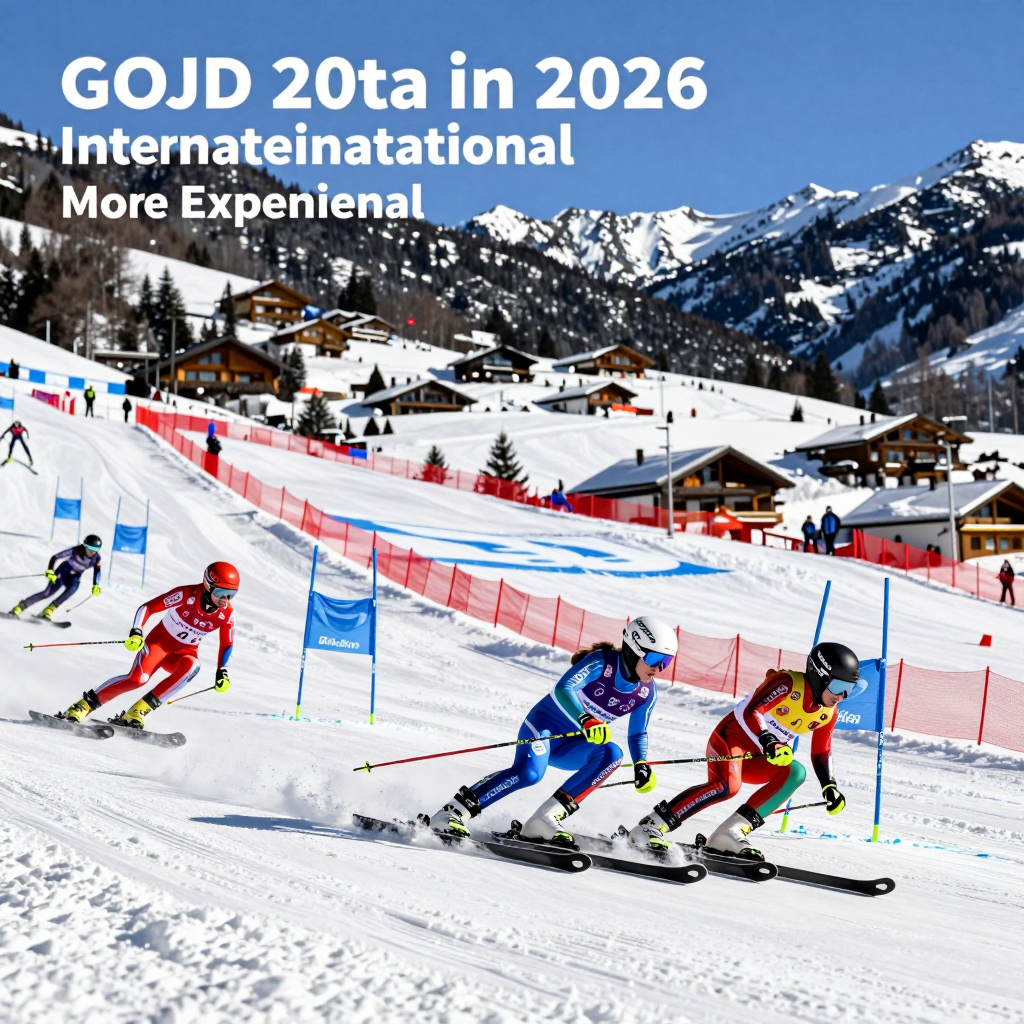
How is the U.S. team gearing up and strategizing to take on the thrilling challenges of alpine skiing, the highlight of winter sports? Let’s dive deep behind the scenes. The snowy slopes of Milan-Cortina 2026 are more than just a battleground for record-breaking—they’re a stage where technique, speed, and mental strength are simultaneously put to the ultimate test. Especially in the 2026 Winter Olympics alpine skiing events, races as diverse as Downhill, Slalom, Giant Slalom, Super-G, and Combined come thick and fast, making it nearly impossible for a single superstar to carry the team alone.
The U.S. team’s rising expectations are crystal clear. Backed by consistent competitiveness in the technical disciplines (Slalom, Giant Slalom), they now hold strong, realistic medal prospects. On the women’s side, Mikaela Shiffrin remains the fiercest medal contender, while the men’s squad boasts impressive growth from rising stars like Giant Slalom’s River Radamus.
However, formidable obstacles stand in the U.S. path this Olympic season. The European powerhouses—Austria, Switzerland, and France—continue to wield an imposing edge with their well-established athlete pipelines and expert race management honed over decades. Traditionally, the U.S. has struggled more in the Downhill speed events, and with the ever-present threat of injuries, turning “possible medals” into “guaranteed podium finishes” demands meticulous conditioning and razor-sharp focus on event specialization.
Ultimately, the core question is clear: Can the U.S. team secure stable medals in their strong technical events while pulling off unexpected podium finishes in the speed races? Milan-Cortina’s alpine skiing will reveal the answers in the most brutally honest way—through sheer, unforgiving results.
Heroes of the U.S. Alpine Ski Team: The Triumphs of Women and Men (2026 Winter Olympics Alpine Skiing)
From the legendary Mikaela Shiffrin to rising stars, the stories of American athletes shining on the edge of technique and speed make the 2026 Winter Olympics alpine skiing a must-watch event. The U.S. team showcases a blend of “perfect technicians” and “explosive speed specialists,” delivering different flavors of competition across events.
Women’s Team: Pinnacle of Technique and High-Stakes Speed
Mikaela Shiffrin
The symbol of American alpine skiing and the most reliable medal contender in technical events like slalom and giant slalom. Shiffrin’s strength isn’t just about times but minimizing mistakes against changing courses and snow conditions. On a stage like the Olympics, where one slip could change everything, this steadiness is her greatest competitive edge.Aleksandra Rodionova
A growing presence in the technical field, her precise line choices and rhythm stand out. To close the gap with the top ranks, maintaining speed after the start through the mid-section is crucial, but once she hits her flow, she’s a genuine threat to the leaders.Breezy Johnson
Considered the U.S. team’s “speed ace” in downhill and Super-G. Medaling in speed events long dominated by European powerhouses requires a daring racer like Johnson who can aggressively ramp up speed on straight sections. It’s a thrilling balance of risk and reward to watch how her bold style will play out on the Olympic stage.
Men’s Team: A Lineup Poised for a Strong Comeback
Ryan Cochran-Siegle
A speed specialist with a downhill edge. Olympic courses punish the smallest wobbles with big consequences, so stability at high speed and skill in handling pressured terrain changes can make or break results. This is exactly why he’s considered the U.S.’s “big shot” for a breakthrough.River Radamus
A promising talent with clear upward momentum in giant slalom, hailed as the future of the American technical squad. On courses that allow rhythm to emerge, he frequently closes in on the front-runners, and as his experience grows, so does his potential for stable finishes in major competitions.Tommy Ford
A frequent name in speed events, adding depth to the team’s overall strength. The Olympics demand peak condition timing per event, meaning unexpected rank jumps can happen when form aligns perfectly on race day.
In One Sentence: “Built on Technique, Turned Around by Speed”
The U.S. alpine ski team steadily secures medal possibilities in technical events while aiming for a dramatic “one-shot comeback” in speed disciplines. Ultimately, the American athletes’ story at the 2026 Winter Olympics alpine skiing hinges on who can best showcase near-perfect technique and dare to challenge the limits with bold speed.
Strengths and Weaknesses of Alpine Skiing at the 2026 Winter Olympics: The Reality and Challenges Facing the U.S. Team
Behind outstanding technical skills always lurks an ‘invisible variable.’ On the stage of 2026 Winter Olympics alpine skiing, the U.S. team shows strengths in technical events like slalom and giant slalom, yet simultaneously must navigate structural gaps with European powerhouses and the ever-present risk of injury. How will these realities shape the medal race?
Technical Mastery: The U.S.’s Undeniable Domain
The greatest asset of the U.S. team lies in its consistent competitiveness in technical events. Their sharp responsiveness to course changes, precise line choices, and fluid turn transitions are weapons that keep them in the top ranks. Moreover, the team’s structure—where multiple athletes contribute points rather than relying solely on a star player—adds resilience.
Especially the women’s technical squad, led by Mikaela Shiffrin, boasts clear advantages in race management skills and real-world experience.
The Speed Challenge: Relative Weakness in Downhill and Super-G
By contrast, in speed disciplines like downhill and super-G, the European teams (Switzerland, Austria, France) with their ingrained ‘racing cultures’ and data-driven setups still hold the edge.
These events demand far more than raw skill; long-term expertise factoring in snow conditions, course length, visibility, and wind is crucial. Even if the U.S. threatens the top tier, differences emerge in completing the course steadily and shaving off that final crucial 0.3 seconds.
Systemic Differences: Individual Talent vs. Depth of Infrastructure
While the U.S. shines with standout athletes, European powerhouses command deeper national systems comprising coaching philosophies, equipment testing, and junior-to-senior athlete pipelines. This structural thickness becomes especially apparent in Olympic events, where results hinge on brief, intense moments.
In short, the U.S. is more likely to “explode” spectacularly in one or two races, but struggles to build a dominant regime that controls multiple events simultaneously.
Injury as a Turning Point: The Most Realistic Risk Threatening Medal Prospects
Alpine skiing is unforgiving; even minor dips in condition translate directly to results, and injuries can upend entire seasons. The U.S. team is no exception—injury-induced losses could slash expected technical event medals (e.g., from 2–4 down to 1–2) almost instantly.
What’s even more daunting is who gets sidelined. Events relying heavily on specific athletes feel the gap more deeply, and ripple effects can impact team events like the mixed team competition.
Practical Takeaway: Maximize Strengths Without Letting Weaknesses Drag You Down
Ultimately, the U.S. team’s strategy is clear: maximize points in technical events where victory is more certain and approach speed events by prioritizing course completion and securing strong top finishes over risky gambles. Coupled with effective injury management, this approach can confidently position the U.S. as a stable upper-middle contender at the 2026 Games.
The Current State of Medal Competition in Alpine Skiing at the 2026 Winter Olympics: Performance Predictions and Expectations
With discussions of a 2 to 4 medal potential in technical events underway, the real point of interest is not mere “possibility” but who will turn those odds into reality. The U.S. team, in particular, has shown consistent performance in unpredictable events like slalom and giant slalom, yet the final medal color is ultimately decided by one decisive run and perfect timing.
Why Technical Events Are the ‘Medal Gateway’
The reason the U.S. team’s medal hopes are focused on technical disciplines is clear:
- Consistent Competitiveness: There is accumulated top-tier experience in slalom and giant slalom, paired with strengths in race management—adapting to the course and managing risks.
- Clear Role Distribution Among Athletes: The technical squad has more clearly defined medal contenders compared to the speed events.
- Manageable Variables: Unlike downhill, which can be volatile due to weather and course changes, technical events present a comparatively lower ‘explosive’ risk, allowing prepared strategies to take hold.
Why Shiffrin Is the ‘Top Performer’: More Than Just Medals
Mikaela Shiffrin is far from just a leading candidate — she serves as a benchmark that elevates the entire U.S. team’s expectations.
- Reliability that Raises Medal Odds: Her high completion rate and race management skills in technical events are especially crucial where “one mistake” can be fatal at the Olympics.
- Psychological Anchor for the Team: As the ace, her presence influences teammates to adopt more aggressive strategies, boosting the team’s overall medal projections.
- Diversified Podium Scenarios: Rather than relying on a single event, Shiffrin opens the door to medal opportunities across multiple disciplines simultaneously.
Outlook on the Mixed Team Event: ‘Lineup Balance’ Over One Star
Unlike individual events, the Mixed Team competition exposes the U.S. strengths and weaknesses more starkly. Here, the key factor is not Shiffrin’s presence alone but the team’s lineup balance.
- Strengths: A solid core in technical skiing translates to stability in the team format.
- Challenges: When compared to European powerhouses like Austria, Switzerland, and France, the U.S. may face pressure in speed and power matchups during crucial heats.
- Key to Watch: How the team assigns roles—who guarantees a “safe finish,” and who takes on the “decisive gambit” section—will determine medal outcomes.
A Realistic Expectation Summary
Overall, the U.S. is well-positioned to target 2 to 4 medals, mainly from technical alpine skiing, at the 2026 Winter Olympics. However, this vision crystallizes not as a mere “possibility” but when Shiffrin’s assured points and a well-rounded Mixed Team lineup come together seamlessly.
The Road Ahead: Hopes and Challenges for the U.S. Alpine Ski Team After the 2026 Winter Olympics
The U.S. Alpine Ski Team reaffirmed its status as a stable mid-to-upper-level contender at this recent competition. But here is where the real question begins: Will they settle for these results, or change what’s needed to narrow the gap with Europe’s powerhouses? The 2026 Winter Olympics alpine skiing stage revealed their “potential,” and now it’s time to turn that potential into “sustainable success” with a solid strategy.
Hope: Transforming a Strong Technical Foundation into a ‘Medal-Producing Machine’
The U.S. team’s strength still lies in consistent performances in technical disciplines like Slalom and Giant Slalom. Mikaela Shiffrin’s leadership isn’t just a flash of star power—it reflects a coaching and training system built to deliver results.
To convert this foundation into Olympic medals, relying on just one or two top athletes isn’t enough. Instead, the focus should be on:
- Building a deep roster resistant to performance fluctuations (2-3 solid options)
- Fine-tuning gate training based on World Cup standards, broken down by snow conditions, slope, and rhythm
- Standardizing mental preparation and routines to minimize shaky moments in major competitions
Elevating the “repeatability” of strengths is key. Doubling down on what they already do well offers the most realistic path to expanding the medal count.
Challenge: The Gap in Downhill and Super-G Starts with ‘Structure’
On the flip side, the team’s struggles in Downhill and Super-G can’t be chalked up to individual talent alone. European teams boast a wealth of course adaptation data, strong domestic leagues, and extensive sparring opportunities. To make the next leap, the U.S. needs structural remedies such as:
- Institutionalizing year-round speed discipline camps that prepare athletes in a range of snow and speed conditions throughout the season
- Enhancing equipment and setup R&D to provide tailored engineering support for skis, bindings, and boots
- Upgrading high-speed safety and injury management systems, as risks in speed events directly translate to performance loss
In particular, injuries aren’t just random variables—they’re a constant threat that can undermine competitiveness in speed events. Boosting the “completion rate” on courses directly correlates with improved results.
The Real Key: Focus Over Funding—Balancing Selection and Expansion
Whether the U.S. remains comfortably mid-tier or rises to claim the top spot hinges less on “how much is invested” and more on where and how that focus is applied.
- Strengthen the technical disciplines with a broader field of medal contenders to maximize expected medal returns
- Narrow the speed gap through systematic investment in training, equipment, and injury prevention
- Use events like the Mixed Team competition as a prime opportunity to show depth and strategic management
Ultimately, the U.S. faces a clear choice: Should it settle for stable mid-level finishes as its “goal,” or should it leverage that stability as a springboard to redesign its structure for podium dominance? The 2026 Winter Olympics alpine skiing competition laid this crossroads bare.
Comments
Post a Comment