2026 Milan Winter Olympics Women's Figure Skating Singles: Who Will Take the Gold? Complete Analysis of Free Skating
 \n
\n
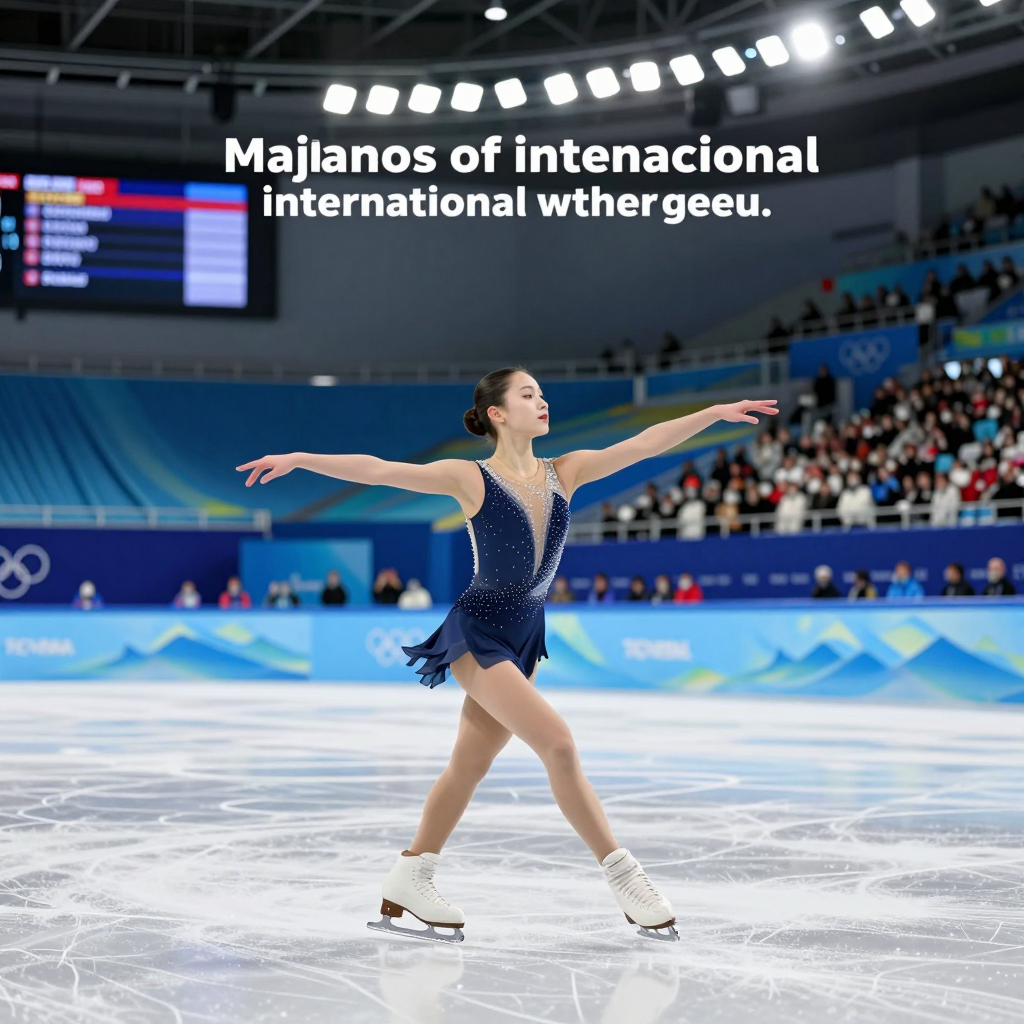
2026 Milan Winter Olympics Women’s Singles Free Skating: The Drama of the Day Unfolds
The short program scores are just the opening act. The fate of the medals is ultimately decided in the final battle—the free skating—where the scores from both the short program and free skating are combined. A single jump landing, a slight wobble in a spin, the speed and edge quality of a step sequence can instantly flip the rankings—who will rise to the very top?
The women’s singles free skating at the 2026 Milan Games took place on the evening of Thursday, February 19, serving as the ultimate stage where medals are sealed. The free skate demands a longer and more complex routine than the short, and with its heavier scoring weight, there’s no guarantee the leaderboard from the short program will hold firm. In fact, the free skate is less about defending a lead and more about seizing an opportunity.
The key focus is clear. After the short, the leader was Ami Nakai (Japan), closely pursued by Kaori Sakamoto (Japan), with Alysa Liu (USA) eyeing her chance from the top ranks. Particularly, Liu was seen as a crucial variable who could realistically catapult into medal contention if she flawlessly executed a high-difficulty free program. However, given the nature of the free skate, even a minor mistake could cascade into significant point deductions, causing rankings to fluctuate in an instant.
Another gripping element was the scale and order of the competitors. A total of 24 skaters took to the ice for the free skate, with the short program leader Nakai stepping out last as the 24th skater. The pressure was immense—carrying the weight of the points and atmosphere built by the preceding skaters. This very structure completes the drama of the free program. In the end, the night’s verdict is simple: Who can maintain the highest difficulty, the cleanest execution, and the most compelling performance ‘to the very end’? That answer becomes the medal.
2026 Winter Olympics Women’s Single Skating Free Skating: A Nail-Biting Battle That Shook the Scoreboard After the Short Program
After the short program, the top ranks were literally a heart-stopping close race. Leading were 1st place Ami Nakai, 2nd place Kaori Sakamoto, and 3rd place Alysa Liu, packed tightly together, making many wonder, “Could the medals really be decided just like this?” But as always in women’s singles, the real game changer remained: the 2026 Winter Olympics women’s single skating free skating.
The free skating carries heavier weight and more elements due to its longer routine, making it ripe for dramatic shifts. The narrow margins created in the short program can be overturned in an instant during the free skate. Even the same jump’s score can fluctuate wildly depending on GOE (Grade of Execution), and as stamina and focus wane toward the program’s end, jump quality can plunge. In other words, the short program lead was not a ‘security blanket’ but rather a spark for fierce chasing and potential comeback.
What made the battle even more intense was the presence of Alysa Liu, sitting in 3rd place. If she executed a clean and high-difficulty free skate, she had every chance to erase her short program deficit and climb into medal territory. Conversely, the front runners faced immense pressure—any small mistake could plunge their rankings, turning what looked like cautious ‘defense’ into riskier ground.
Another crucial factor was the starting order. With 24 skaters competing in the free skate, the short program leader, Ami Nakai, skated last as the 24th. This meant she took the ice after watching all preceding scores and performances, skating under ultimate pressure to perform flawlessly. The razor-thin competition after the short program boiled down to who could hold steady and execute their plan flawlessly until the very end in the free skating.
The Stage of Free Skating: Strategies and Risks of Athletes Who Choose to Challenge — 2026 Winter Olympics Women’s Single Skating Free Skating
Free skating is not just a “second program.” It is the biggest game-changing moment that can overturn the tightly packed rankings from the short program with a single decision. So everyone is asking: Will Alysa Liu, who aims for a medal with a complex and high-difficulty routine, succeed or crumble under pressure?
Why Free Skating Becomes the Decisive Move
Free skating is long (stamina), packed with many elements (variables), and carries a large scoring weight (impact). In other words, the top ranks formed by a narrow margin in the short program can be reshuffled in an instant by just one jump or one combination during the free skate. Because multiple jumps and combinations, spin and step density, and overall program quality are evaluated all at once, an aggressive composition offers great upward potential but also comes with steep risks for mistakes.
The Common Strategy of Risk-Taking Skaters: “Leveraging Technical Scores”
The goal is clear for skaters who choose to take risks.
- Securing base points with high-difficulty jumps and combinations: A single successful element is the fastest way to climb the rankings.
- Placing jumps in the latter half to raise perceived difficulty: Although the risk increases when jumps are attempted as fatigue sets in, a clean execution changes one’s presence on the ice dramatically.
- Safety nets to minimize mistakes: While the overall program is aggressive, certain elements are strategically selected to maintain rhythm and secure reliable points.
This strategy is especially effective for skaters close to medal contention after the short program. Even if not perfectly clean, accumulating successful high-difficulty elements can threaten the top ranks.
Alysa Liu’s Choice: When ‘All-In’ Works and When It Collapses
For Alysa Liu, free skating is both a ladder to the podium and a trap that can lead to a fall. With a tight race at the top after the short program, if she raises the difficulty and executes near flawlessly, she can quickly reach the podium. On the other hand, if her rhythm falters on early jumps, the many elements in the free skating increase the likelihood that one mistake could cascade into a chain reaction.
Ultimately, the key point to watch in the 2026 Winter Olympics women’s single skating free skating is simple. Will Liu control her aggressive technical content to dominate the entire program, or will one slip cause a total collapse? Free skating demands an answer to this brutal question with a single performance.
The Greatest Moment, The Worst Mistake: Tension and Emotion Woven by 24 Skaters at the 2026 Winter Olympics Women’s Singles Free Skating
Free skating is long, complex, and brutally fair. A single shaky jump landing can instantly erase the lead built in the short program, while one flawless combination can completely overturn the rankings. Though all 24 skaters stepped onto the same ice, the temperature they felt differed with every athlete. For some, it was a "defensive battle," while for others, it was a "stealing game."
The tension at the 2026 Winter Olympics women’s singles free skating peaked sharply as the performance order progressed. With the top ranks tightly packed after the short program and free skating holding significant weight in the overall score, one routine in the later group could very well deliver the decisive blow that would determine the medal colors.
The viewing highlights were clear:
- For Kaori Sakamoto, the free skate was a 'proof of stability.' The strength of a veteran lies in completing the program without major errors, and in this competition, that weight silenced the crowd even before the scores appeared.
- For Alysa Liu, the free skate was a 'launching pad for ascent.' As a contender chasing from behind the top ranks after the short, high difficulty and crisp execution could trigger a leap in standings. Conversely, a small stumble could turn a 'challenge' into a 'risk.'
And all eyes fixed on the very last moment: Ami Nakai, performing 24th and final. The last skater always steps onto the ice armed with the most information—scores of previous skaters, the mood, the judges’ tendencies—all of it serves as a clue but also a pressure.
Ultimately, the question converged into one: Could Ami Nakai’s flawless free skate completely flip the outcome? Free skating is a contest of possibilities, but those possibilities materialize under only one condition: error-free execution. The instant that razor-thin margin seals the tension and emotion of all 24 skaters into medals, the rink falls into its quietest, yet most thunderous roar.
Announcing the Results and Beyond: A Moment Where Emotion and Regret Coexist — 2026 Winter Olympics Women’s Single Skating Free Skate
From the short program to the free skate, what can we learn from the dramatic comebacks and fierce competition that unfolded? On the evening of February 19th in Milan, the free skate was far more than just the “final event” — it was the stage where the rankings from the short program could be completely overturned. And this stage, as ruthless as it was thrilling, delivered moments where a single landing or a fleeting wobble transformed the color of a medal.
The free skate demands a longer and more complex routine, testing athletes’ stamina, skill, and mental strength all at once. Even those leading after the short program risk losing their position if they fail to combine daring difficulty with flawless execution during the free skate. Conversely, skaters trailing behind can flip the standings by delivering a “clean” and highly difficult performance. This is the heart of the tension that this competition revealed.
A total of 24 skaters competed in the free skate, with Ami Nakai—the short program leader—performing last as the 24th competitor. The final skater always carries the heaviest pressure, having to navigate their program while calculating the necessary scores and risks with all previous results displayed on the scoreboard. Meanwhile, veteran Kaori Sakamoto reminded us just how powerful “steady, unwavering performance” can be, and USA’s Alysa Liu highlighted how successfully landing high-difficulty elements can dramatically shift rankings — while also underscoring just how much risk that carries.
The announcement of results is always a double-edged sword. For some, it marks the pinnacle of their career; for others, a solitary mistake leaves lingering regret. Yet the greatest message from the 2026 Winter Olympics women’s single skating free skate is surprisingly simple: only those who persevere until the very end seize the chance to overturn the outcome, and those who falter carry that weight forward into their next season. While medals are awarded to only three, that day’s ice bore witness to 24 athletes each overcoming the “ultimate pressure” in their own way.
Comments
Post a Comment