 \n
\n
2026 Winter Olympics Men’s Snowboarding Slopestyle: The Fiery Stage of the 2026 Winter Olympics Men’s Snowboarding Slopestyle
Amid the snowstorms in Livigno, Italy, where the world’s top athletes gather to challenge themselves, what is the real story behind this competition? The answer is not simply “who flew the highest,” but how one run was completed amid fickle weather and intense pressure.
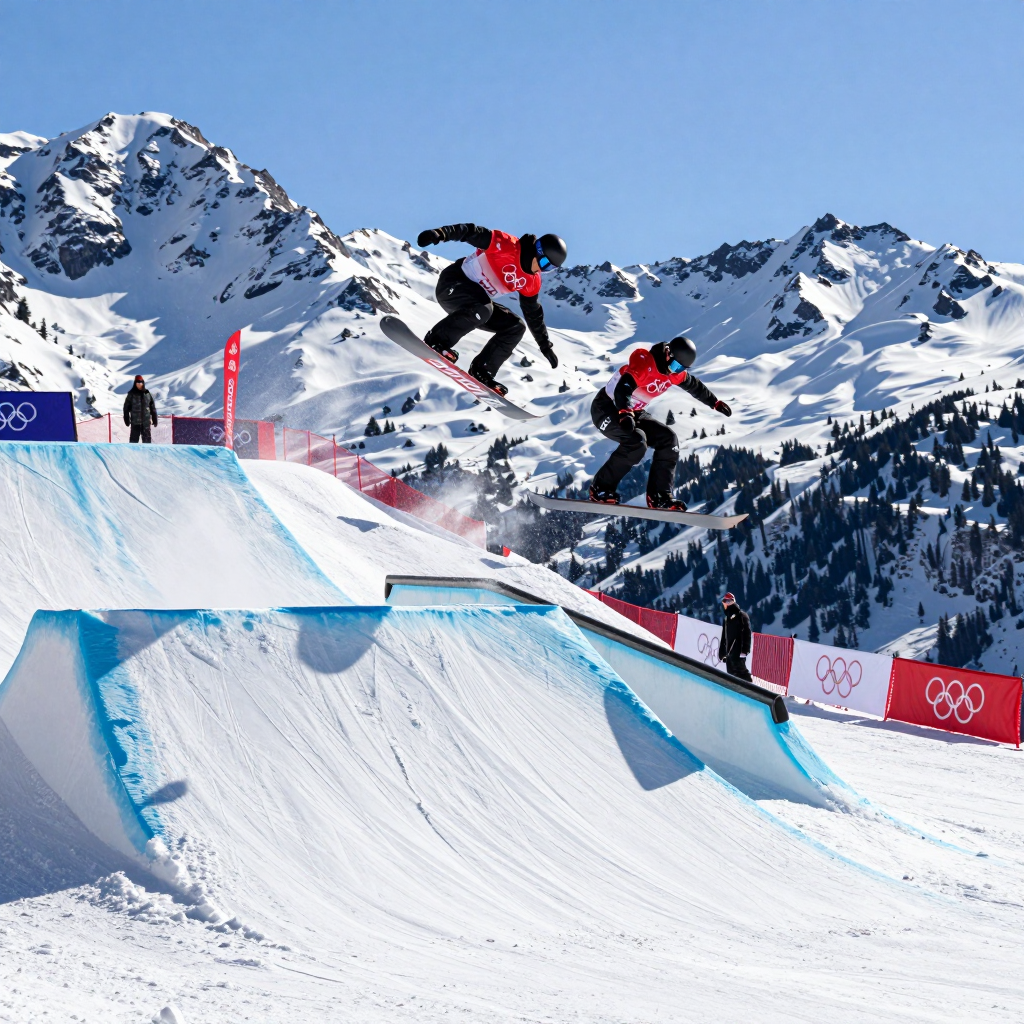
The men’s slopestyle final took place at 5:20 AM ET on February 18 at the Livigno Snow Park. Conditions were tricky, with a strong snowstorm on the previous day (February 17) causing some events to be postponed, but the men’s final went ahead as scheduled while the organizers continuously prioritized safety by monitoring weather conditions. What makes this stage special is clear: Livigno Snow Park is a high-difficulty course combining metal rails and massive jumps, demanding a “precision competition” where even the smallest mistake by experienced riders can lead to loss of points.
Another key point to watch was the athletes’ stories.
- Red Gerard, who burst onto the scene as a teenager eight years ago, is now aiming for a slopestyle medal once again in his third Olympics. However, he barely made it to the final, scraping through in 11th place out of 30 in the qualifiers, making his breakthrough in the finals even more crucial.
- Su Yiming, who has been on a streak of medals since 2022, has already cemented his reputation as a “big-event player.” With impressive achievements including a big air gold and a slopestyle silver, the key question for him in this final was how to balance technical difficulty with execution perfection.
- Adding to this fierce lineup was Mark McMorris, turning the final into a direct clash of experience and explosive power.
The competition followed a three-round format (local time), forcing athletes to choose between “securing safe scores” and “taking their toughest shots” within limited chances. Ultimately, the essence of the event lies not in flashy tricks alone but in the ability to artfully connect a run—calculating snow and wind, speed, and landing angles—like a seamless work of art. The tension created by Livigno’s snowstorm transformed the 2026 Winter Olympics men’s snowboarding slopestyle into more than just a competition—it became a survival drama on the slopes.
Endless Pursuit of the Medal: The Stories of Three Star Athletes — 2026 Winter Olympics Men's Snowboarding Slopestyle
From the young prodigy Su Yiming to history-maker Red Gerard, and the undisputed contender Mark McMorris—though they share the same course, each views the medal chase in a distinctly personal way. The 2026 Winter Olympics men’s snowboarding slopestyle feels hotter not just because of the tricks themselves, but because the tightly woven stories of their “now” are hidden between the jumps and rails.
Su Yiming: The Weight of a 21-Year-Old Proving Life After ‘Prodigy’
Su is already a name that needs no introduction. With a gold in big air and silver in slopestyle at the 2022 Olympics, along with recent season achievements, he has amassed four Olympic medals. Yet, it’s precisely that record that presents the challenge.
Once at the top, the crowd asks, “Can you do it again?” Su’s battle isn’t just about adding new tricks—it’s a contest to overcome the relentless pressure of soaring expectations. The colossal jumps at Livigno Snow Park are both his golden opportunity and a trap; a single misstep leaves the spotlight on mistakes rather than success.
Red Gerard: History’s Glory—and Its Shadows
Red Gerard etched himself into snowboarding lore eight years ago with a shocking breakthrough as a teenager. Now aiming for his third Olympics, the journey is bittersweet. He barely secured a final spot, ranking 11th out of 30 in qualifiers.
This moment matters not simply for rank. Gerard is often celebrated as “the one who made it,” but in reality, he must prove himself anew each competition. The finals aren’t just a page to reaffirm past fame; they’re a battleground where survival hinges on today’s condition and focus. The very fact he’s made it to the finals sends a powerful message.
Mark McMorris: The Ever-Strong—and Therefore Fearsome—Benchmark
McMorris is the kind of rider whose presence alone exerts pressure, beyond flashy titles. Athletes who shift the entire landscape of a sport generally fall into two categories: explosive stars who light up the scene in bursts, and consistent top contenders who become everyone’s standard. McMorris belongs to the latter.
He’s feared not only for his skill but for his near-flawless consistency that minimizes mistakes. Such athletes can alter the flow of competition. Even if someone sets a high score, the mere possibility that McMorris can respond with a “calculated perfection” on the next run forces others to rethink their strategies.
Same Final, Different Battles
Livigno Snow Park, famed for its metallic rails and massive jumps, tests even the most experienced riders. Ultimately, the 2026 Winter Olympics men’s snowboarding slopestyle final converges on one question:
- Can Su open the “next chapter” beyond prodigy?
- Can Gerard prove the “present” beyond history?
- Can McMorris pressure everyone as the unwavering standard?
Though the medal is the ultimate outcome, for these three riders it becomes a defining narrative to push their careers to the next level.
Tension Amid the Blizzard: Schedule and Weather Variables — 2026 Winter Olympics Men's Snowboarding Slopestyle
How did athletes’ challenges evolve when a fierce blizzard upended the competition schedule? Despite delays and uncertainty, the ultimate showdown pressed on.
On February 17, a powerful snowstorm swept through the Livigno area, shaking the very rhythm of Olympic operations. With multiple events postponed, the scene quickly shifted from following a “planned schedule” to prioritizing the “ability to adapt to changes.” Notably, the women’s slopestyle finals and women’s aerials qualifiers were delayed, triggering a domino effect that forced major adjustments in venue usage, broadcast scheduling, and staffing.
Yet, the 2026 Winter Olympics men’s snowboarding slopestyle finals went ahead as planned. This decision was no mere stubborn push forward; rather, it was based on a real-time, second-by-second monitoring system closely assessing weather shifts and course safety. In snowboarding slopestyle, a heavy snowfall day doesn’t automatically mean an advantage. Reduced visibility, shifting winds, and altered landing surface textures completely change the timing required for rails and jumps.
Such schedule uncertainties also piled psychological pressure on athletes. While other events faced postponements, the looming “we might be next” doubt made warm-ups and equipment setups cautious. Conversely, once the final was confirmed, competitors had to rapidly elevate their condition in a compressed timeframe. At Livigno Snow Park, infamous for its metal rails and massive jumps, even the slightest change in snow conditions can cause the difficulty level to spike dramatically. Ultimately, the storm was more than just a backdrop—it became an additional competitive factor, influencing line choices, trick composition, and the very approach to ‘attacking safely.’
Livigno Snow Park Accelerates the Challenge with Thrilling Competition Format: 2026 Winter Olympics Men’s Snowboarding Slopestyle
The intense atmosphere of this rugged course, packed with massive jumps and metal rails, and the fierce competition across three rounds resonates beyond the screen for a simple reason. Livigno Snow Park’s design leaves virtually no room for error, and the three-round format pushes athletes’ strategic choices to the extreme.
Livigno features a tightly combined layout of metal rail sections and large jump lines on a single course, forcing riders to manage speed, balance, and rotations simultaneously from start to finish. Even the slightest shift in weight on the rails directly affects the entry angle to the next jump, and that subtle wobble can trigger a collapse of the rotational axis in mid-air or an unstable landing. This course serves not only as a “stage to showcase technical skills” but also as a “test paper demanding precise connection moves.”
The competition format intensifies the tension further. The finals unfold over three independent rounds, each becoming a battleground on its own. In the first round, athletes typically secure a baseline score with a safer run, raising the difficulty and risk in the second and third rounds to chase a comeback victory. In other words, a single flawless run can earn a medal, but a single slip on landing can shatter momentum. This structure perfectly conveys the unique thrill of the 2026 Winter Olympics men’s snowboarding slopestyle—the pressure that “anything can happen in the next run”—directly to viewers.
When weather variables are factored in, the perceived difficulty escalates even more. Even slight changes in course conditions affect rail slipperiness, jump takeoff timing, and landing firmness, requiring athletes to fine-tune their line choices and technical setups every round. Ultimately, Livigno’s appeal lies not in just the ‘big tricks’ but in the details that make those big tricks possible—the approach speed, precision on rails, mid-air posture, and landing stability—which are demanded until the very end.
2026 Winter Olympics Men’s Snowboarding Slopestyle: Challenges and Passion That Shined Through the Snow—and What They Mean to Us
The extreme challenges faced by athletes on the Olympic stage deliver emotions and inspiration far beyond mere sports. Join us in sharing the conclusion of this extraordinary journey. The metal rails and giant jumps of Livigno Snow Park did not simply ask if the riders could perform well. They pushed athletes to the very end, testing how well they could refocus no matter how much they wavered and whether they could transform fear into skill.
This message was especially clear in the men’s snowboarding slopestyle at the 2026 Winter Olympics. Red Gerard’s journey, barely making it from qualification to the finals, defies the notion that “perfection is the only thing that matters.” Even on the greatest stage, it is possible to falter—and yet the process of getting back on the board proves true skill. Conversely, a decorated athlete like Su Yiming showed that every round is not about “proving” himself but “renewing” his mastery. The top spot is not a destination but a starting line that must be reset each time.
There is also an unforgettable moment worth remembering. Even as heavy snowfall unsettled the schedule and organizers monitored conditions for safety, athletes accepted the variables they could not control and instead focused on what they could—speed, timing, and landing angles. This mindset extends beyond slopestyle into our daily lives. Though environments often twist our plans, what ultimately defines growth is the ability to maintain balance amid uncertainty.
In the end, what moves us in this event is not the dazzling tricks themselves, but the attitude behind them. The courage to step back onto the ramp despite the risk of failure, the perseverance to update oneself with each round, and the sharpened focus that grows with harsher conditions—all shine brightly through the snow. Their challenge and passion seem to say: “It’s worth trying once more, just as I am now.”
Comments
Post a Comment