 \n
\n
Cha Jun-hwan Embarks on a New Challenge After PyeongChang: Men’s Figure Skating at the 2026 Winter Olympics
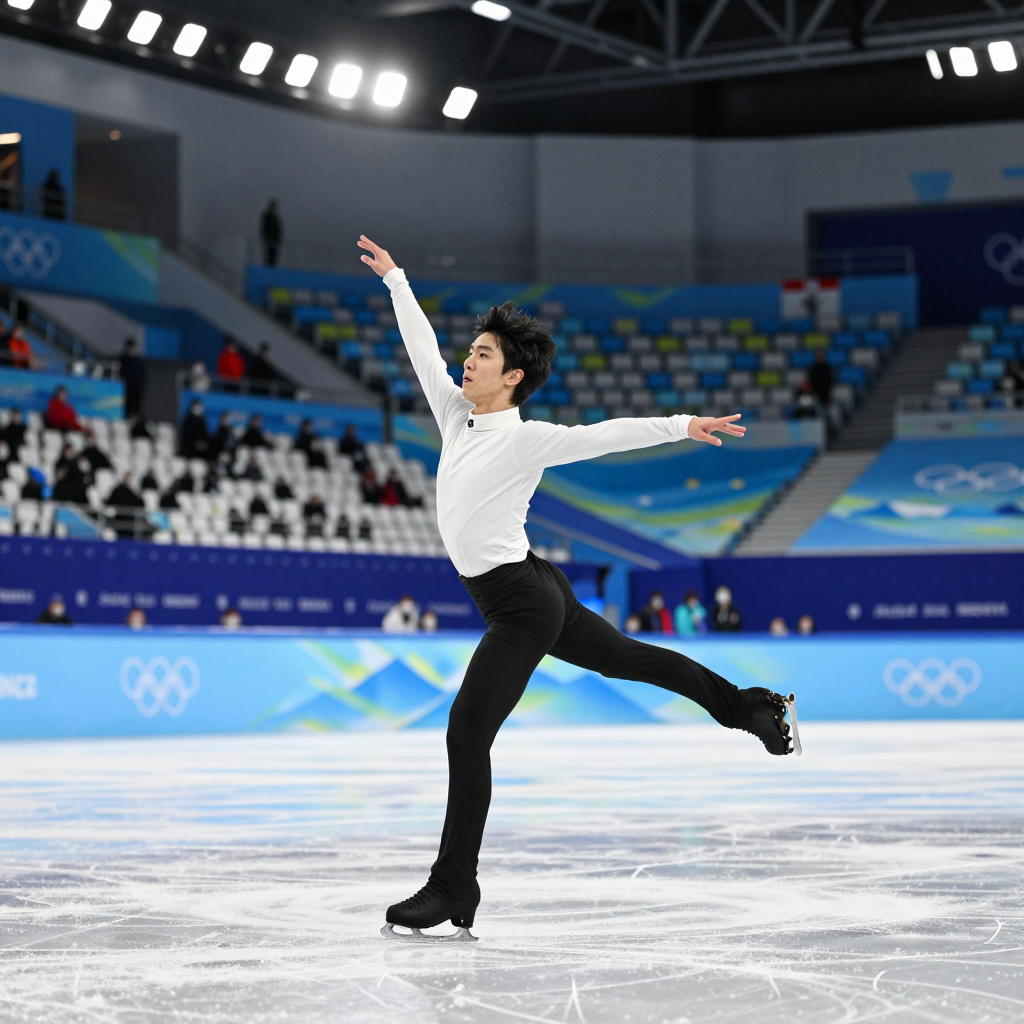
Aren’t you curious about what miracle Cha Jun-hwan, the face of Korean figure skating, will create at the 2026 Winter Olympics? At the Milan-Cortina stage, he kicked off with a short program score of 92.72 points, landing in 6th place and sending a clear signal once again that he “can do it.” This season-best record is more than just a number; it represents proving himself under the immense pressure of the Olympics.
The key to this short program was technical excellence. He linked the quadruple salchow, a triple Lutz-triple loop combination, and the triple Axel without major mistakes, while the flying camel spin achieved the highest difficulty level, Level 4. However, as he himself expressed some regret, lower-than-expected scores in detailed judging such as the step sequence level and the triple Axel evaluation created a gap from the medal contenders.
Yet, hope remains clear. The gap with 3rd place stands at 9.83 points. Though not an easy margin, Cha Jun-hwan has chosen a strategy of perfecting his current program’s execution instead of pushing for higher difficulty in the free skate. In the Olympics, where “a single mistake” can change everything, his chosen path is a realistic play to reduce risk and increase odds.
What makes this challenge truly special is that Cha Jun-hwan’s performance represents more than just an individual result—it reflects the current standing of Korean men’s figure skating. Korea secured two Olympic spots in men’s singles and reopened opportunities for the team event. After the long wait following PyeongChang, Korean figure skating is now ready to speak not of ‘potential’ but of real ‘achievement.’
The Light and Shadow of the Short Program: What Happened to Cha Jun-hwan in the Men’s Figure Skating at the 2026 Winter Olympics?
Although his technical execution was top-notch, his score fell short of expectations. In the short program of the men’s figure skating at the 2026 Winter Olympics, Cha Jun-hwan started with 92.72 points (6th place). Yet, even he admitted right after the event that he was “disappointed by the score being lower than expected,” leaving a curious divide in the outcome’s perception. So, exactly which moments in the short program cast this play of ‘light’ and ‘shadow’?
The Light: A Clean Jump Layout with Season-Best Conviction
Cha Jun-hwan’s short program was fundamentally a “near-clean composition.”
- He handled high-difficulty jumps, including the quadruple Salchow, with stability,
- and seamlessly connected the triple Lutz–triple loop combination and the triple Axel without major wobbles.
Adding to this, he secured a level 4 flying camel spin, making the technical elements’ execution unquestionably competitive among the top ranks. The technical element score (TES) of 50.08 and performance component score (PCS) of 42.64 — both season bests — signaled positive form and delivery.
The Shadow: Perceived Score Drop Due to ‘Levels’ and ‘Judgment’
The issue wasn’t about a “major mistake,” but rather the gradual cuts made in the scoring breakdown. In the short program, the level of individual elements and minor judging decisions translate directly into the total score, and this time these factors overlapped.
- The step sequence was rated at level 3, one step below expectations,
- and a quarter landing judgment on the triple Axel halted the momentum of bonus points.
To the audience, the performance appeared “clean,” which makes the lower-than-expected score all the more puzzling. Since the short program contains fewer elements than the free skate, such cumulative losses due to levels and judgments become more palpable and impactful.
The Remaining Challenge: Choosing ‘Precision’ Over Increased Difficulty
The gap to third place stands at 9.83 points. While not out of reach, overturning the standings in a single free skate will require careful calculation. Nevertheless, Cha Jun-hwan has chosen to prioritize maximizing the quality and polish of his current program over reckless difficulty upgrades. Ultimately, the key focus in the free skate will not be unveiling “new weapons,” but rather how effectively he can reduce the risks tied to levels and judgments from the short program and elevate the overall program’s density and execution.
Strategic Choices Toward a Medal in Men’s Figure Skating at the 2026 Winter Olympics
After the short program, the gap with third place stood at 9.83 points. Faced with this margin, most would instinctively think, “Raise the difficulty of the jumps in the free skate.” However, Cha Jun-hwan made a completely opposite choice. Rather than pushing the difficulty to the limit, he focused on delivering a cleaner, more polished execution of his current program.
The key lies in ‘probability.’ Adding a quad jump or upgrading to more complex combinations can lead to a huge score boost if successful, but the penalty for failure is immediate and severe. The Olympic free skate is a one-shot stage where a single mistake can drastically affect rankings, and a shaky jump can cascade into poorer spins, steps, and stamina in the latter half. Cha Jun-hwan’s strategy of “maintaining the program composition + maximizing execution quality” is essentially a risk-controlled approach designed to raise the floor of his total score.
Another factor revealed by the short program was the ‘variability of scoring.’ He himself noted that his score felt lower than expected, with specific details like a quarter call on the triple Axel and a level 3 for the step sequence being pointed out. In this scenario, rather than adding more difficult elements to increase judging variables, the more realistic comeback card is a performance that minimizes possible deductions while maximizing GOE (Grade of Execution) points. Instead of piling on extra jumps, the goal is to accumulate points steadily through clean landings, smooth transitions, and flawless connecting movements.
Ultimately, this choice is not a concession to give up on a medal but a selection of the most reproducible winning strategy in the high-stakes single round of the Olympics. The free skate at the 2026 Winter Olympics for men’s figure skating will be the stage where Cha Jun-hwan tests whether he can narrow the 9.83-point gap not with a risky shot, but with a sum of higher precision and refined execution.
The Resurgence of Korean Figure Skating and Its Hidden Significance: How Men’s Figure Skating at the 2026 Winter Olympics Will Redefine Its Status
The renewed opportunity to compete in the team event since the 2018 PyeongChang Olympics holds far more meaning than simply “participation.” This Olympics will serve as proof of how far Korean figure skating has risen on the international stage and whether that growth represents a sustainable system rather than a one-time feat. So why does the 2026 Winter Olympics, especially the men’s figure skating event, directly tie into redefining Korea’s “status” in figure skating?
The team event results come from a ‘depth of talent,’ not just a single star.
Securing a spot in the team event isn’t achievable through the flash of one player’s success. It requires cumulative performances from multiple disciplines and athletes on the international circuit. This opportunity clearly indicates that Korean figure skating is moving from an ‘individual-dependent’ model to one of ‘broad-based expansion.’The Olympics is the ultimate stage where the world remembers the story.
While achievements at the World Championships or Grand Prix events matter, the Olympics draw unrivaled attention from viewers and media alike. If Korean men’s singles can show real competitiveness here, Korean figure skating will begin to be recognized not just for strength in specific disciplines but as a comprehensive powerhouse in the figure skating world.Cha Jun-hwan’s presence elevates both ‘results’ and ‘symbolism’ simultaneously.
Being chosen as the flag bearer for the opening ceremony symbolizes his importance, and his potential to rank highly in the short program embodies the current state of Korean figure skating. In particular, if the men’s singles secure steady points during the team event, it will ease the pressure on other skaters and enable a more aggressive strategy for the entire team.
Ultimately, this Olympics is not just about the medal count. The team event’s re-entry symbolizes ‘structural growth,’ and the ripple effect that men’s figure skating at the 2026 Winter Olympics will generate sits at the heart of transforming Korean figure skating’s resurgence from a mere ‘incident’ into a genuine ‘change.’
The First Step Toward Shaping the Future of Figure Skating: Men's Figure Skating at the 2026 Winter Olympics
Cha Jun-hwan’s appearance as the flag bearer at the opening ceremony was more than just personal glory; it was a scene that reflected both the present and the next generation of Korean figure skating. In the men’s figure skating at the 2026 Winter Olympics, he started the short program in 6th place, but the more important story lies in the message he left behind. “Rather than pushing for unrealistic difficulty, focus on perfecting what I can do now.” This choice clearly demonstrates what unwavering standards mean on the Olympic stage.
Especially at this event, Korea secured two spots for the men's singles, laying a foundation to elevate the competitiveness of the entire team beyond individual events. Cha Jun-hwan’s stable technical execution and competitive philosophy concretely show younger athletes “the way to prepare that truly works on the world stage.” Regardless of the results, the more these standards accumulate, the greater the chance that Korean figure skating will build a sustainable momentum rather than relying on a one-time shining performance.
What lies ahead now is the free skate. The barrier for medal contention is high, but the Olympics often flip the script in the final performance. As the opening ceremony flag bearer, watch closely to see what changes Cha Jun-hwan’s challenge will bring to Korean figure skating until the very end.
Comments
Post a Comment