 \n
\n
2026 Winter Olympics Alpine Skiing: The Perfect Harmony of Speed and Skill at Milan-Cortina 2026
How much do you know about the thrilling world of alpine skiing, from downhill speeds exceeding 130 km/h to intricate turns? The 2026 Milan-Cortina Winter Olympics alpine skiing is far more than just a “race down the mountain.” It’s an event where speed disciplines pushing the limits of velocity and technical races decided by precise edge control intertwine seamlessly, delivering both excitement and strategic tension to spectators.
Alpine skiing consists of 10 medal events, split evenly between men and women, across five distinct disciplines. The key lies in the unique characteristics of each style:
- Downhill: the fastest and boldest event demanding sheer courage
- Super-G: a speed race balanced delicately between velocity and turns
- Giant Slalom: the quintessential technical event where rhythm and line design are crucial
- Slalom: a precision sport featuring short, rapid turns decided by hundredths of a second
- Alpine Combined: the ultimate test combining contrasting skills in one competition
The schedule is crafted to maintain viewers’ interest and fairness. The competition typically spans around 10 to 12 days, starting with speed events like Downhill and Super-G, transitioning through Alpine Combined in the mid-phase, and concluding with the technical Giant Slalom and Slalom disciplines. This deliberate order isn’t just tradition—it’s designed to manage athlete fatigue and minimize disadvantages due to changing snow conditions, enhancing fair competition.
Currently, the Giant Slalom races are underway, with the women’s event split into rounds such as Round 1 at 4:00 AM and Round 2 around 7:20 AM local time. Medal events generally kick off between 9:30 AM and 12:30 PM, chosen carefully to capture the ‘decisive moments’ during the more stable morning window before sunlight and temperature shifts drastically alter snow quality.
Ultimately, the allure of the 2026 Winter Olympics alpine skiing boils down to one phrase: “the fastest sport and the most delicate sport.” When speed and skill collide on the same stage, alpine skiing creates some of the most dramatic and unforgettable scenes of the Winter Olympics.
The 5 Alpine Skiing Events at the 2026 Winter Olympics: What’s the Hidden Strategy?
Curious about the different strategies and techniques athletes choose for each alpine skiing discipline, from downhill to slalom? While alpine skiing may seem like a simple race to see who gets down the mountain fastest, in reality, each course demands a completely distinct racing philosophy. The difference becomes even clearer when you look at the five alpine skiing events at the 2026 Winter Olympics.
Downhill: Since maximum speed is key, the strategy leans toward “safe aggression.” Even the smallest mistake can cost precious seconds, so athletes aim to follow a line as straight as possible, focusing on stabilizing their posture over terrain changes (jumps and rollers) to reduce turns. Here, technique takes a backseat to minimizing air resistance and maintaining smooth glides, which ultimately decide the results.
Super-G (Super Giant Slalom): Nearly as fast as downhill but with tighter gates, this event demands a perfect balance between speed and technique. Skiers meticulously plan their runs during course inspections, breaking down where to gain speed and where to minimize losses. The angle of turn entry and the timing of ski edge transitions become make-or-break moments. Choosing a bolder line increases risk, making split-second judgment a crucial factor.
Giant Slalom: At moderate speeds, precise turn quality determines the clock. The strategy here isn’t just “go fast,” but to maintain a consistent rhythm through every gate to build speed. With wider turns, any wobble midway creates significant loss. Fundamentals like upper body stability, lower body lead, and maintaining edge angles are prominently on display. Since Giant Slalom usually sums times from two runs, managing risk is vital.
Slalom: This event demands navigating the tightest gates at the fastest pace, so the strategy focuses on a “continuous series of micro-adjustments.” Any brief lapse in rhythm can lead to disqualification or major time loss. Athletes maximize upper body stability during short turns and exploit pole/guard contacts to shorten their line. Compared to other events, reaction speed and course adaptability play an even bigger role.
Alpine Combined: Combining speed events (downhill or Super-G) with technical slalom, the core strategy boils down to “how to capitalize on your strength.” Speed specialists aim to build a lead early, while technical skiers try to overturn deficits during the slalom. Athletes and coaches therefore set target times (allowed leads or losses) for the first run and fine-tune their attack intensity for the second run with surgical precision.
Ultimately, while all five alpine skiing events at the 2026 Winter Olympics descend the same mountain, each one is a completely different puzzle: speed maintenance (downhill) → balance (Super-G) → rhythm accumulation (Giant Slalom) → precision and reaction (Slalom) → comprehensive strategy (Combined).
The Secret Behind the 2026 Winter Olympics Alpine Skiing Schedule: The Science of Designing 10 Days Around 'Fatigue'
Why does the event kick off with speed disciplines like Downhill and Super-G, and wrap up with technical ones like Giant Slalom and Slalom? While it may appear to follow a "traditional flow," the real core of the schedule lies in the practical concern of managing athlete fatigue.
Early Stage: Scheduling Speed Events (Downhill & Super-G)
Speed events involve driving at breakneck speeds exceeding 130 km/h with repeated intense impact absorption. Placing these races early allows athletes to compete in the most dangerous events when their accumulated fatigue is minimal, providing advantages for both safety and performance.Mid Stage: Transition through Alpine Combined
Incorporating the combined event midway connects speed and technical elements while serving as a buffer zone that prevents overloading any single discipline. This phase offers athletes a chance to adjust their training and condition, helping them reset their rhythm for the upcoming technical challenges.Final Stage: Technical Events (Giant Slalom & Slalom) as the Grand Finale
Technical events hinge on precision turns, rhythm, and gate strategy. Though endurance naturally wanes over the course of the competition, technical races involve relatively less exposure to extreme high-speed impacts, making them more manageable toward the end of the schedule. Additionally, their clear focal points heighten the tension, delivering a thrilling climax to the event.
Thanks to this structure, the 2026 Winter Olympics alpine skiing is crafted to balance disciplines across roughly 10 to 12 days, reducing athlete overload while ensuring fair competition. For reference, current formats split events like the women's giant slalom into rounds (Round 1 at 4 a.m., Round 2 around 7:20 a.m.), concentrating medal races in mid-morning hours when snow conditions are most stable.
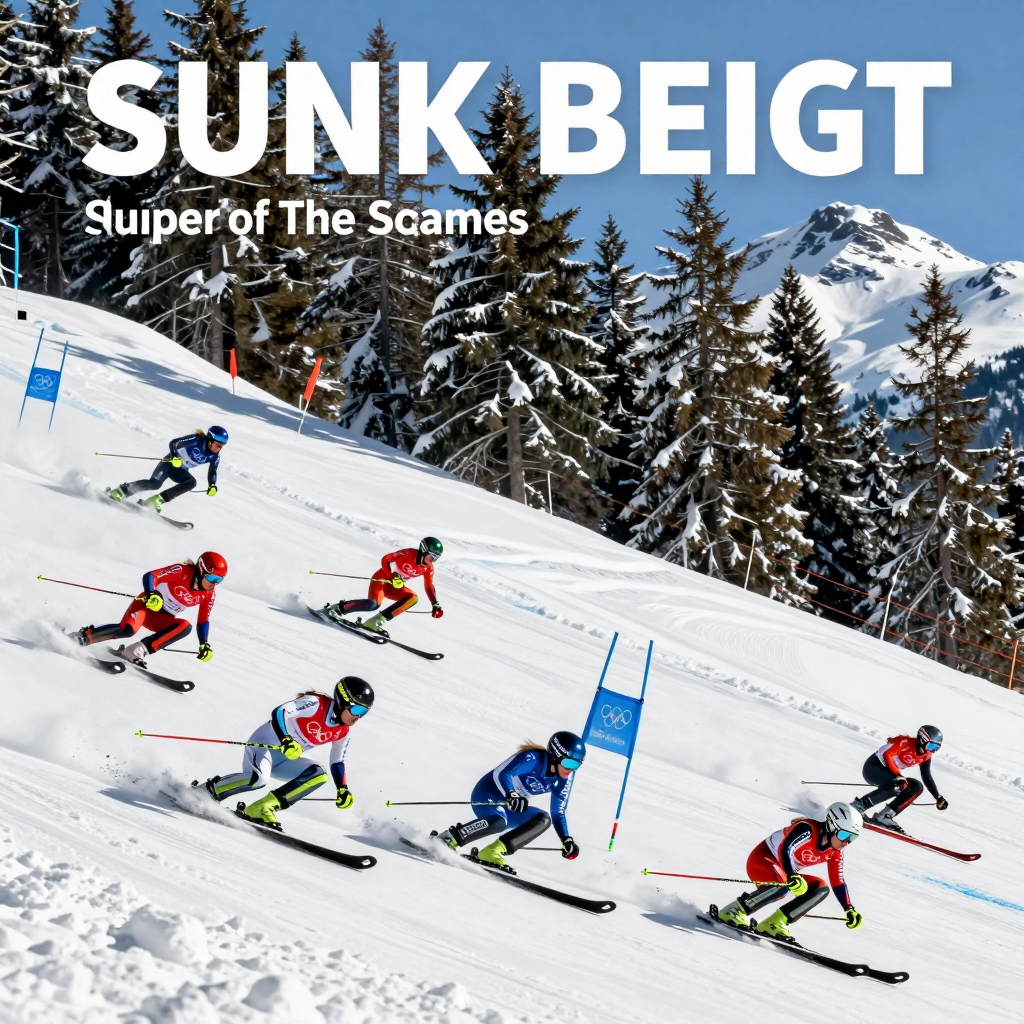
A Fierce Battle Unfolds: Women’s Giant Slalom in Progress (2026 Winter Olympics Alpine Skiing)
Shall we follow the thrilling clashes of the ongoing Women’s Giant Slalom 1st and 2nd runs, capturing the tense moments of the athletes? The giant slalom at the 2026 Winter Olympics alpine skiing is far more than just a race against speed. Victory hinges on line selection through each gate, subtle edge control adapting to changing snow conditions, and unwavering concentration that leaves no room for a single mistake.
This women’s giant slalom is divided into the 1st run (4:00 AM) and the 2nd run (around 7:20 AM). In the first run, skiers face the pressure to “set a record,” pushing aggressively. Meanwhile, the second run demands careful risk management and stability, as athletes race carrying their earlier performance on their shoulders. Notably, because the gate spacing in giant slalom is wider than in slalom, speeds ramp up—meaning even slight fatigue mid-course directly impacts the depth of turns and ski responsiveness.
There’s a clear reason why race times are scheduled mainly between 9:30 AM and 12:30 PM local time. Medals must be contested under relatively consistent conditions, before the snow quality deteriorates sharply. Even on the same course, differences in start order and time cause subtle variations in the snow, and in a discipline where races are often decided by just 0.01 seconds, every detail counts. At this very moment, the tension stoked by these two runs is rising hotter than in any other event.
An Epic Showdown Crafted by Perfect Timing and Snow Conditions: Alpine Skiing at the 2026 Winter Olympics
Why are medal events concentrated in the mid-morning every day? The secret lies in optimal snow conditions and maximizing performance. This subtle scheduling difference creates breathtaking finishes decided by mere 0.01 seconds at the finish line.
Why Mid-Morning Offers the “Fairest Snow Conditions”
Alpine skiing is profoundly affected by weather and snow quality. That’s why major events are typically scheduled between 9:30 AM and noon local time, minimizing both variables and risks simultaneously.
- Firm snow surface before temperatures rise: Too early at dawn, the snow hardens into ice posing dangers; too late, it softens, carving deep ruts and making record comparisons unfair. Mid-morning perfectly balances these extremes.
- Clear visibility and stable wind conditions: With the sun up, visibility improves and strong afternoon winds—common later in the day—are less frequent, offering steadier conditions.
- Minimizing course damage (ruts): Especially in technical events, once the course starts to rut, later racers are disadvantaged. Mid-morning secures the maximum window where snow quality holds firm.
“Round Separation” Also Protects Snow Quality
Taking the current women’s giant slalom as an example, with 1st run around 10 AM and 2nd run circa 11:20 AM, this schedule isn’t mere convenience.
In events requiring multiple runs, the snow conditions during each round heavily impact outcomes, so organizers carefully manage the time between rounds and start times to control changes in snow quality.
The Sequence from Speed to Combined to Technical Peaks Performance
The 2026 Milan-Cortina schedule progressing from speed events early on, to combined in the middle, to technical events later also aligns with this logic. It reduces athlete fatigue while optimizing the conditions and concentration levels demanded by each discipline—ensuring peak performance at the decisive moment.
In the end, the legendary alpine skiing battles at the 2026 Winter Olympics aren’t forged by star athletes’ skills alone. It’s when the best snow, the fairest time, and the most meticulous schedule perfectly converge that races worth remembering are born.
Comments
Post a Comment