 \n
\n
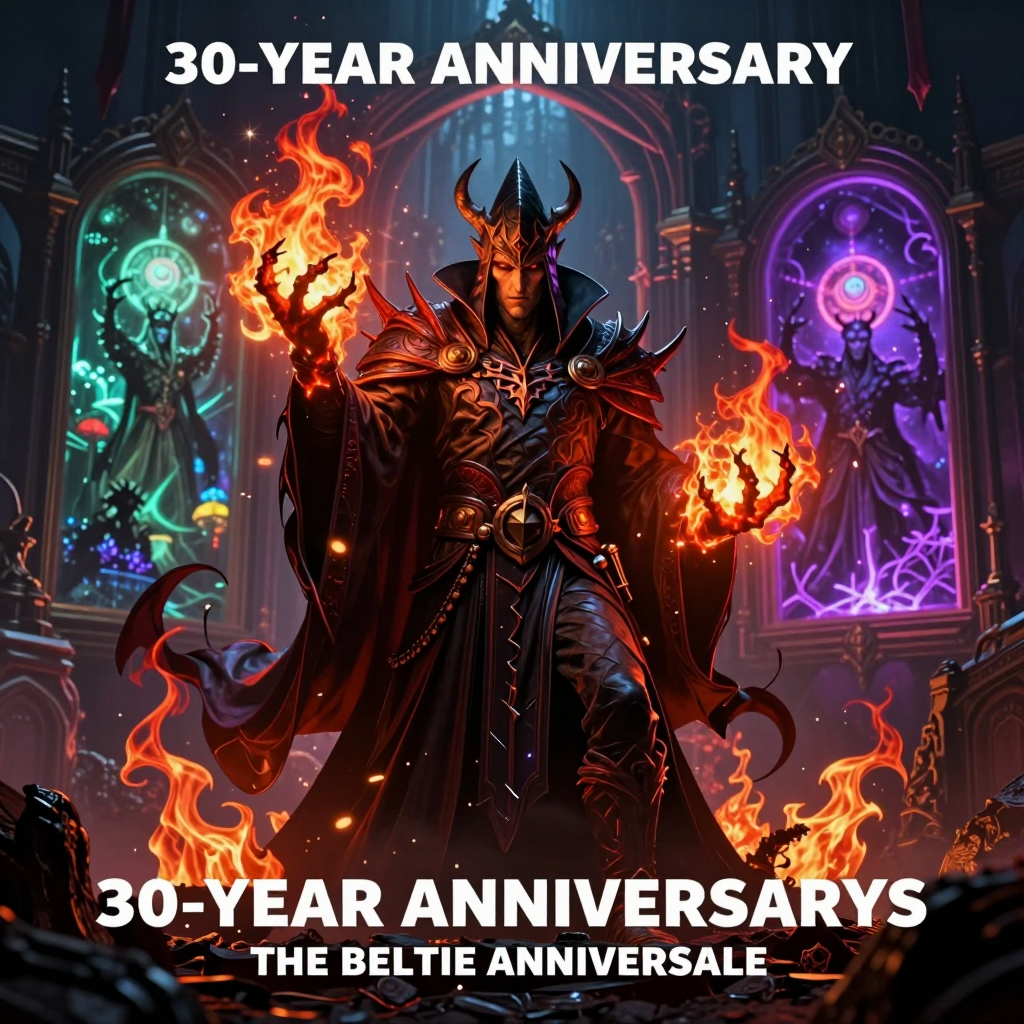
Diablo 30th Anniversary Warlock: The Darkness Awakens
What kind of change will the newly introduced class, the Warlock, bring to the Diablo universe after 25 years? This Diablo 30th Anniversary Warlock is far more than just a new character addition. To celebrate the Diablo franchise’s 30th anniversary, Blizzard has expanded its ‘cross-franchise class’ across three titles (Diablo II: Resurrected / Diablo IV / Diablo Immortal), plunging the world’s darkness to an unprecedented depth.
The core concept of the Warlock is crystal clear: a master of darkness who ‘repurposes’ hellish powers to dominate demons. Rather than confronting evil head-on like a Paladin or Monk, the Warlock shakes up the battlefield by wielding forbidden forces through summoning, binding, and domination. This alone has the potential to disrupt the combat dynamics established by existing classes.
In particular, Diablo II: Resurrected will immediately introduce the Warlock’s reign — a momentous event marking the first new class in 25 years. The arrival of a new class always reshuffles the deck in a world where established builds and metagames have solidified. Should summoning and infernal flames become the new norm, everything from farming efficiency to party composition—the choices players took for granted—may be fundamentally redefined.
But this wave does not stop here. Diablo IV will launch a major expansion centered on the Warlock on April 28, introducing a new region called ‘Scovos’ and epic endgame content like the rare event ‘Echoing Hatred.’ Most importantly, regardless of whether players purchase the expansion, all classes will undergo skill tree overhauls. What began as a change to accommodate a single class is poised to ripple across all playstyles.
The Diablo 30th anniversary is less of a “celebration” and more of a bold declaration ushering in Blizzard’s next chapter. And standing at the forefront of this beginning—you, soon to wield the power of the Warlock.
The Devil Magician That Shakes Up Each Diablo Title: Diablo’s 30th Anniversary Devil Magician
It’s rare for a single class to be introduced simultaneously across three Diablo titles. This Diablo 30th Anniversary Devil Magician event is essentially a "cross-franchise event," ready to shake up each game’s rhythm and meta in uniquely different ways. Although the class shares the same name, the way it dominates changes with each stage.
Diablo II: Resurrected — The Ripple Caused by a ‘New Choice’ After 25 Years
The addition of the Devil Magician to Diablo II: Resurrected isn’t just a simple update. As the title “first new class in 25 years” suggests, it opens the door to reorganizing builds, farming, and party compositions that have long been set in stone.
The concept of summoning or binding demons to control the battlefield injects a “new form of dominance” into the familiar combat flow. When combined with system improvements like enhanced loot filters, stash improvements, and the expansion of the Realm of Terror, this means the new class could transform seasonal gameplay routines to be faster and more aggressive rather than just a casual side taste.
Diablo IV — The Pillar of the Expansion + Complete Overhaul of All Class Skill Trees
In Diablo IV, the Devil Magician stands as the centerpiece of the expansion releasing on April 28th. With new endgame content such as the ‘Skovos’ region and the rare event ‘Echoing Hatred’ announced, the Devil Magician is far from “just another class addition”—it’s the protagonist driving the expansion experience.
Particularly noteworthy is the overhaul of all class skill trees, which applies regardless of whether you purchase the expansion. In other words, the waves the Devil Magician sends out affect not only new class players but also rewrite the build choices for every player. The meta will inevitably shift dramatically, encompassing not only “who plays the Devil Magician” but also “how other classes respond.”
Diablo Immortal — Summer 2026’s Late Arrival Promises a Major Shake-up
Diablo Immortal is set to introduce the Devil Magician with the summer 2026 update. Thanks to the time gap, there’s a strong possibility it will arrive in a more refined form, reflecting player feedback and balance data accumulated from other titles. Given the live service nature, a new class instantly influences content consumption speed, party composition, and PvP environments, making it more than just an “addition”—it becomes a game-changer that can flip the entire seasonal atmosphere.
In other words, this Devil Magician event isn’t a one-off announcement. All three games will test their own versions of the ‘new Devil Magician-centered standard,’ and this process itself represents the greatest significance of Diablo’s 30th Anniversary Devil Magician.
Innovation in Combat Unveiled Through the Diablo 30th Anniversary Necromancer
What if you could not just “cast” the flames of hell, but actually “command” them? The Diablo 30th Anniversary Necromancer isn’t just another ranged caster; it rewrites the rules of battle by combining summoning, binding, and zone control into a single cohesive experience. While traditional classes focus on landing powerful hits, the Necromancer excels at managing enemy movements and crafting the very flow of combat.
Hellfire + Summoning: Winning Through Battlefield Control, Not Just Damage
At its core, the Necromancer harnesses infernal energy to summon demons and bind them, dominating the battlefield with cunning strategy. This fundamentally changes gameplay:
- Strength in controlling the battlefield over direct confrontation: Using area pressure, summoned minions, and binding effects, the Necromancer restricts enemy advances and retreats to lock fights into their favor.
- Shift from single-burst combos to sustained combat: Instead of finishing fights with one massive strike, protracted battles leverage summoned allies, sustained damage, and suppression effects to steadily build advantages.
- Clear role in party play: Rather than simply dealing damage from afar while tanks hold the front, the Necromancer’s playstyle revolves around entangling and disrupting foes, shaping openings that amplify the team’s damage potential.
Amplified Immersion in Diablo II: Resurrected — Convenience That Changes Combat Rhythm
This update isn’t just about adding a new class; it’s also about system improvements that transform the flow of gameplay, especially striking in Diablo II: Resurrected where the Necromancer’s operational combat style shines:
- Enhanced loot filters: Longer battles mean more time digging through dropped items, but smarter filters let you swiftly pick out what matters—keeping the combat-farming rhythm uninterrupted.
- Improved stash tabs: Managing gear, runes, and crafting materials is critical for summoning and binding setups; better organization lightens this load, making gear experimentation feel effortless.
- Expanded “Realm of Terror”: More variety in repetitive hunting zones gives you the perfect playground to test diverse Necromancer builds—whether focused on summoning or sustained pressure—to fit any situation.
Extending to Diablo IV: Skill Tree Overhaul Paving the Way for a ‘New Meta’
With the Necromancer’s debut in Diablo IV comes a sweeping revamp of all class skill trees. This means it’s not just about a powerful new class changing the meta; it’s about the entire build architecture being reshaped. When new classes and system overhauls arrive together, long-established strategies are shaken up, unleashing a thrilling new era where multiple solutions to combat emerge.
Ultimately, the Necromancer’s true power lies not in “Are their skills strong?” but in “Can you design the battle on your own terms?” The enhanced loot filtering and quality-of-life improvements quietly but decisively accelerate this process, making it smoother and more dynamic than ever before.
Expansion Packs and Future Updates: The Diablo 30th Anniversary Demon Hunter Journey Continues
With the Diablo IV expansion pack set to release on April 28 and the Diablo Immortal update scheduled for summer 2026, the Demon Hunter is shaping up not as a one-time new class appearance, but as a pivotal force driving the future of the Diablo saga. Especially with the expansion’s stage set in the ancient Mediterranean-inspired new region, Scosgos, players can expect a fresh layer of intriguing mystery that diverges from the familiar hellish wasteland tones.
Diablo 30th Anniversary Demon Hunter and the Diablo IV Expansion: Secrets of Scosgos
Centered around the Demon Hunter, the expansion brings the new region of Scosgos to the forefront. As "the birthplace of humanity," this setting naturally intertwines with themes like primordial myths, taboos, and rituals. Since the Demon Hunter’s concept revolves around "turning hellish powers against themselves," Scosgos promises to delve deeper than mere demon slaying, exploring the origins of power and its cost.
Additionally, a rare event called the ‘Echoing Hatred’ is teased, hinting that exploration will become a core endgame driver. As discovery-based content grows, the Demon Hunter’s gameplay will expand from just “skill execution” to encompass “dynamic situational responses.”
Post-Diablo 30th Anniversary Demon Hunter Changes: Complete Overhaul of All Class Skill Trees
One especially notable aspect of the expansion is that the extensive skill tree overhaul will apply regardless of whether players purchase the expansion or not. This signals that adding the Demon Hunter isn’t just a simple class expansion—it reshapes the entire Diablo IV combat rhythm and build meta.
Players will be choosing not only whether to start fresh with the Demon Hunter but also how to reinterpret their existing classes with the new skill trees. This is the kind of sweeping change a true expansion evokes, shaking the very foundations of the game.
Diablo 30th Anniversary Demon Hunter and Diablo Immortal: A Sign of the Long-Term Roadmap in Summer 2026
The Demon Hunter update for Diablo Immortal is slated for summer 2026. This staggered timing strongly suggests Blizzard envisions the Demon Hunter not as a one-off event but as a long-term, evolving content pillar.
Given Immortal’s nature, adding a class impacts not just seasons but also the farming loop and PvE/PvP balance in a cascading fashion. How the Demon Hunter’s battlefield dominance concepts—summoning, binding, and control—will be optimized for mobile, and which content types (raids, field events, dungeons) will best align with the class, will be fascinating to watch.
Diablo’s 30th Anniversary Begins with the Demon Hunter: A New Era’s Dawn and Blizzard’s Bold Challenge
Why did Blizzard place the Demon Hunter at the center of their 30th anniversary project? The answer is simple. They needed not just a “new class added with a single update,” but a symbolic device to reforge the entire franchise’s trajectory. Introducing a brand-new class in Diablo II: Resurrected after 25 years, making it the star of the Diablo IV expansion, and teasing its inclusion in Diablo Immortal’s long-term roadmap sends a clear message: reconnecting the fanbase with the same universe, the same anniversary, and the same core theme.
What makes the Demon Hunter celebrating Diablo’s 30th anniversary especially powerful is that its very design suits this “monumental turning point.” The Warlock, who turns hellish powers against demons themselves, boldly foregrounds Diablo’s signature darkness and taboos while delivering a completely fresh playstyle. What Blizzard needed right now wasn’t just “newness,” but an impact that shakes the meta without sacrificing the series’ identity — and the Demon Hunter fits that role perfectly.
Another point worth highlighting is the overhaul happening on a system-wide scale, not stopping at a single class. Resurrected has improved convenience and replay motivation with features like loot filters, stash upgrades, and “Terror Realm” expansions, while Diablo IV is set to revamp every class’s skill tree regardless of expansion purchases. This signals a departure from merely “adding content” toward a bold declaration to redesign the way players engage with the game itself.
Lastly, Blizzard’s framing of this spotlight as the “start of the 30th anniversary” carries deep meaning. The Demon Hunter is not a finish line but the opening salvo of a large-scale content relay leading up to BlizzCon. As Blizzard guides the franchise’s momentum in one direction, they are expected to build on it with a chain of events, endgame features, expansions, and seasonal updates. Now, the key question is clear: how will Blizzard stack its next cards—both in scale and pace—upon the “new link” forged by the Demon Hunter? The 30th anniversary has become the stage for that grand experiment.
Comments
Post a Comment