 \n
\n
The Dawn of Iran’s Upheaval: The 1979 Islamic Revolution
There is a historic moment when a nation’s modern history changed overnight. What exactly happened in Iran in 1979, when the Pahlavi monarchy was toppled and a theocratic regime was established? Though it’s often summarized by the single word “revolution,” the outcome that day was the result of long-standing fractures explosively coming to the surface all at once.
Under the support of the United States, the Pahlavi dynasty aggressively pushed Western-style modernization, turning Iran into one of the most secular states in the Middle East. However, this rapid Westernization sparked backlash from conservative factions, while social dissatisfaction grew amid widening gaps between the rich and poor. In other words, the pace of change was swift, but not everyone experienced its effects fairly.
The crucial turning point was the rise of the Shiite fundamentalist forces led by Ruhollah Khomeini. In April 1979, they ousted the Pahlavi monarchy and declared the Islamic Republic. This moved Iran into a globally unique theocratic system, where Khomeini established himself as the ‘Supreme Leader,’ wielding authority beyond that of the presidency. It was not simply a change of names; the legitimacy and mechanism of power itself had been completely overturned.
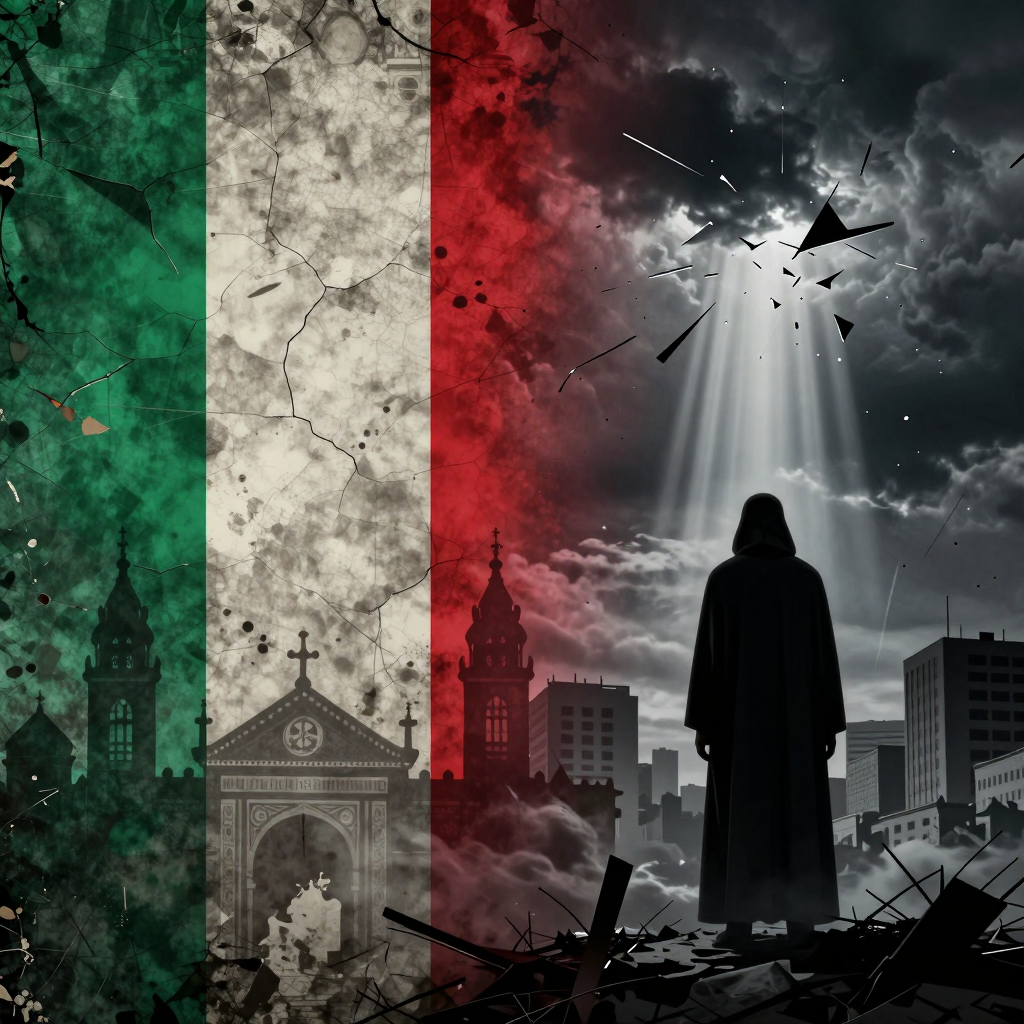
The revolution’s symbolism was soon etched into the face of the nation. By July 1980, the flag was officially adopted as a horizontal tricolor of green, white, and red, featuring a central emblem symbolizing Allah and embodying the concept of “protection.” This demonstrated that the revolution was not only a political event but a comprehensive project to redesign national identity.
Moreover, this upheaval swiftly reshaped Iran’s diplomatic course. The previously “steadfast alliance” with the United States rapidly cooled after the revolution, culminating in the November 1979 hostage crisis at the U.S. Embassy in Tehran, a defining moment that exposed the rupture to the entire world. Iran’s revolution was as much about reorganizing domestic order as it was about repositioning itself within the international system.
Ultimately, the “secret” of 1979 can be summed up in one phrase: the monarchy’s collapse was not a sudden outburst—it was the result of the accelerated pace of Westernization, social backlash, the resurgence of religious authority, and accumulated inequality simultaneously reaching a breaking point. Since that day, Iran entered an entirely different era, and today’s crises remain deeply rooted in the continuity of that profound upheaval.
Westernization of the Pahlavi Dynasty in Iran: Light and Shadow
Young people roamed the streets in miniskirts and blue jeans. At one time, the bustling cityscape of Iran looked nothing like the image we have today. From the 1920s to the 1970s, the Pahlavi dynasty pushed a modernization agenda supported by the United States, transforming Iran into one of the most Western-friendly and secular countries in the Middle East. On the surface, it appeared as a “leap toward a modern nation,” but beneath the dazzling facade, seeds of conflict grew—conflicts that could not be easily healed.
The Allure of ‘Rapid Modernization’ That Changed Iranian Society
The westernization of the Pahlavi regime was most vividly reflected in lifestyle changes. As popular culture and urban consumerism flourished, the younger generation began to experience freedoms and tastes that earlier generations never knew. The military and state systems were also modernized, crafting an image of a “strong nation.” During this period, Iran was regarded as a relatively open partner in the international community.
The Dark Side of Iran’s Westernization: Conservative Backlash and Growing Inequality
However, the rapid pace and direction of change did not mean the same to everyone. The swift Westernization sparked strong resentment among conservative factions who valued traditional values and religious identity. At the same time, the fruits of growth were not shared evenly, deepening the gap between rich and poor and fueling the question, “Who is this modernization really for?” throughout society.
The dazzling urban transformation was easily perceived as “a story for certain classes,” and marginalized groups moved toward distrust of the regime itself. Ultimately, the secular and Westernized landscape created by the Pahlavi dynasty paradoxically became the stage for a backlash against it.
Cracks Foretelling Iran’s Next Chapter
Though outwardly sophisticated and rapidly changing, internally, clashes of values and economic deprivation were accumulating. These cracks, over time, laid the groundwork for a political eruption beyond a mere cultural debate and became a crucial clue to understanding the dramatic turning points in modern Iranian history.
The Birth of Iran's Theocracy and the Symbolism of the New Iran
What is the unprecedented theocratic system led by Supreme Leader Khomeini, and what profound meanings are embedded in the newly emerged flag and emblem? The 1979 Islamic Revolution was not merely a regime change but an event that redesigned the fundamental principles of Iran’s governance into a system where religion stands at the center of politics.
The Rise of the ‘Supreme Leader’ That Transformed Iran
At the heart of the Islamic Republic established after the revolution was a power structure with the Supreme Leader (Khomeini) above the president. This system placed the nation’s direction and legitimacy on Islamic law and religious authority, surpassing the powers of a democratically elected executive, marking a decisive break with the secular state model of the previous Pahlavi monarchy.
As a result, Iranian politics evolved beyond a mere contest between “Western-style modernization vs. tradition” to becoming a matter of belief concerning the legitimacy of the regime itself.
The Message Embedded in the Iranian Flag and Emblem: A Declaration of Identity
The political transformation swiftly led to a change in national symbols. Following the revolution, Iran redefined its flag and emblem, visually proclaiming “What kind of country are we now?”
- Flag (adopted July 1980): While retaining the horizontal green, white, and red tricolor, the center now features an emblem shaped to represent Allah.
- Sword-shaped emblem: Symbolizing the defense of God and Islam, it ties the nation’s very reason for existence to the protection and embodiment of religious values.
In other words, Iran’s new symbols were not mere design changes but a political statement that encapsulates how the newly born theocratic state defines itself—by faith, authority, and the boundaries of community—following the revolution.
From Honeymoon to Catastrophe: The Worst Relations Between the U.S. and Iran
Once, the United States and Iran were so close they were called a “strong alliance.” During the Pahlavi dynasty, Iran pushed for Western-style modernization with U.S. support and was considered the most Western-friendly country in the Middle East. But how did this relationship spiral into irreparable hostility?
The turning point came with the 1979 Islamic Revolution. With the monarchy overthrown and a theocratic regime established, the U.S. within Iran was no longer seen as a ‘patron’ but rather as a foreign power colluding with the old regime. The tension born from the revolution erupted in the form of the November 1979 seizure of the U.S. Embassy in Tehran. Iranian students took over the embassy, holding 52 American diplomats and staff hostage, locking the two countries into a structural state of hostility far beyond a temporary diplomatic crisis.
The impact of this event went well beyond a hostage crisis. For the U.S., it was a shocking attack on diplomatic grounds and the long-term captivity of its citizens. Within Iran, it became a symbolic moment that united revolutionary anti-American sentiment. As a result, mutual distrust was institutionalized, transforming a relationship that had once been between ‘partners capable of cooperation’ into one of ‘irreconcilable adversaries.’
The ongoing chill between the two nations was not created overnight. However, the 1979 takeover of the U.S. Embassy in Tehran remains a decisive moment that fundamentally reshaped how the United States and Iran perceive each other.
Iran in 2026: Crisis and the Future
With sudden air strikes, counterattacks, and prolonged anti-government protests, what kind of future awaits Iran amid all this upheaval? By February 2026, Iran has entered a phase of ‘complex crisis’ where external conflicts and internal fractures are simultaneously intensifying. This is no isolated incident; rather, it is a massive eruption of political and social tensions accumulated since the 1979 revolution, making the repercussions profound.
The Two Pillars of Iran’s Crisis: External Conflict and Internal Turmoil
- Escalation of External Conflict: Following surprise air strikes by the US and Israel and Iran’s counterattacks, tensions quickly morphed into a prolonged standoff. Repeated military clashes deepen economic sanctions and deter investment, which in turn likely worsens the everyday hardships of ordinary citizens.
- Prolonged Internal Turmoil: Anti-government protests, ongoing for over two months since December 2025, have evolved beyond simple expressions of discontent, amplifying social fatigue and division. Compounding this, Reza Pahlavi—the last crown prince of the Pahlavi monarchy—publicly declared that “The Islamic Republic is collapsing,” intensifying disputes over the regime’s legitimacy.
Iran’s Future Scenarios: Three Possible Paths
Short-Term Stability Through Hardline Measures, But at Increasing Cost
The regime may strengthen security and control to quickly restore order. However, deepening social grievances and worsening international isolation during this process could spark greater long-term backlash.Limited Reforms and a ‘Band-Aid’ Approach
The government might implement partial institutional and policy adjustments to prevent further alienation of public sentiment. While this could reduce the intensity of clashes, without addressing structural problems, the crisis risks recurring.Rising Pressure for Regime Change
As external conflict prolongs and internal protests widen, cracks within the power structure or new political alliances may emerge. Yet, such changes are unpredictable and may bring heightened uncertainty and chaos as they unfold.
Key Variables That Will Determine Iran’s Trajectory
Iran’s future likely hinges on whether military clashes escalate, the pace of worsening sanctions and economic conditions, the persistence and organization of protests, and the extent of internal cohesion fractures within the regime. Currently, Iran sits at a critical crossroads where “external pressures” and “internal demands” converge at a tipping point. Depending on the choices made, the crisis may either be contained or spiral into a larger turning point.
Comments
Post a Comment