 \n
\n
Iran’s 70 Years of Turmoil: The Dawn of Modern Iranian History
How did Iran and the United States, which enjoyed a friendly relationship in the 1920s, transform over decades into fierce adversaries? The answer lies not in a single event, but in layers of change shaped by the methods of modernization, legitimacy of power, and collective memory of foreign intervention.
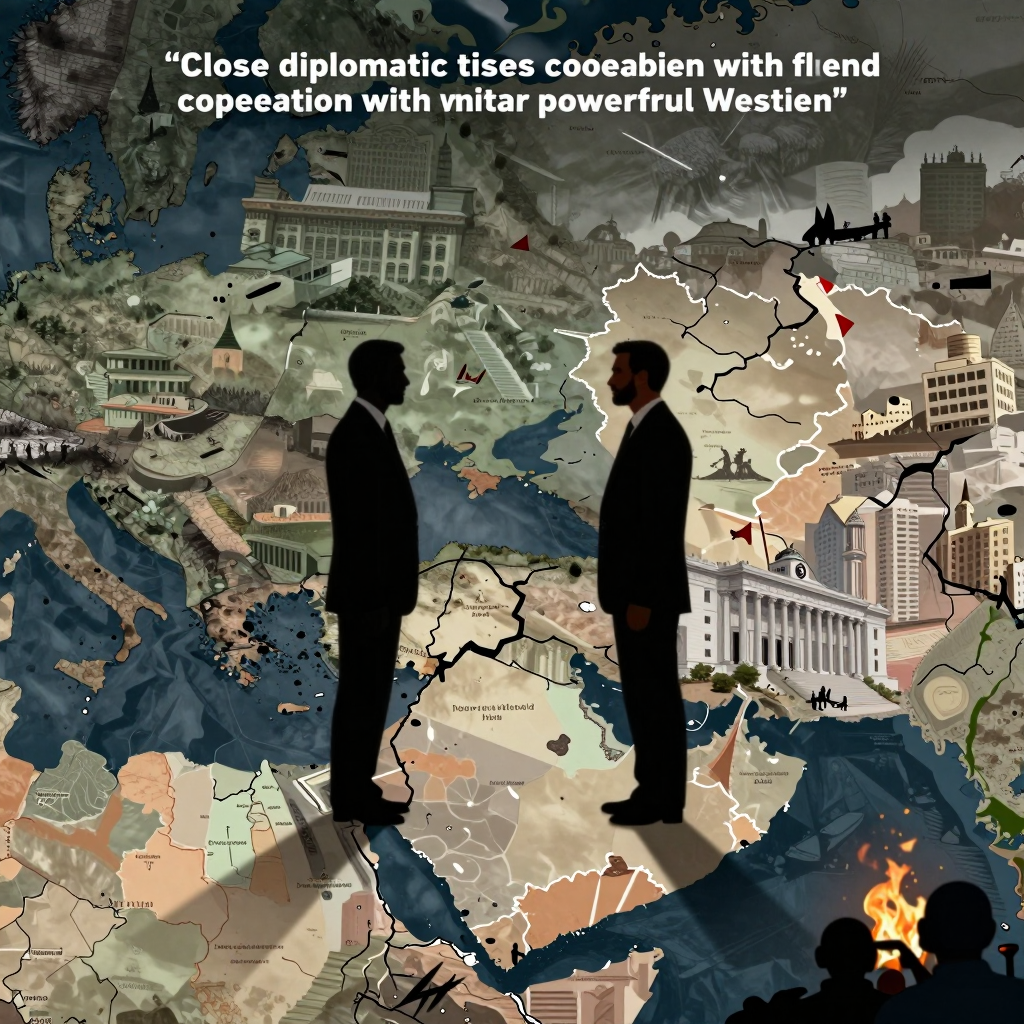
From the 1920s through the 1970s, Iran maintained relatively cordial ties with the U.S. The Pahlavi dynasty, which seized power through a coup, aggressively pursued Western-style modernization, while the U.S. viewed Iran as a strategic partner to counter Soviet influence amid Middle Eastern oil interests and the Cold War order. During this era, the two countries appeared tightly aligned, a relationship often summed up as “cooperation.”
Yet beneath the surface, cracks were forming. The monarchy’s undemocratic nature, widening wealth gaps, and rapid Westernization that displaced tradition and religion accumulated widespread social grievances. Adding fuel to the fire was the 1950s overthrow of Prime Minister Mossadegh, a process revealing American and British interference that left a lasting sentiment of “foreign powers meddling in domestic affairs,” sowing seeds of resentment.
The defining turning point came with the 1979 Islamic Revolution. Even until just before the revolution, leaders of both nations publicly displayed friendship; however, afterwards, Iran established a theocratic regime that boldly embraced an anti-American, anti-Western stance. The seizure of the U.S. embassy in Tehran that November and the ensuing hostage crisis shattered relations irreparably. From then on, the conflict transformed from mere diplomatic friction into a clash of regimes and identities.
These twists in modern Iranian history hold the key to understanding today’s crisis. The journey from a once-sweet honeymoon to bitter hostility was shaped by the interplay of international politics and domestic fury alike.
From Iranian Honeymoon to Hostility: The Dramatic Shift in U.S.-Iran Relations
Why did Iran, once toasting with U.S. presidents under the Pahlavi monarchy, become one of America’s “most challenging adversaries” starting in 1979? The answer lies not in a simple diplomatic shift but in an event that overturned the very legitimacy of the regime and the nation’s identity.
Why Iran and the U.S. Could Be ‘Friendly’
From the 1920s to the 1970s, Iran and the U.S. shared aligned interests. The Pahlavi dynasty aggressively pursued Western-style modernization, while the U.S. saw Iran as a critical outpost to counter the Soviet Union amid Middle Eastern oil stakes and Cold War tensions.
Though their relationship was publicly framed in terms of cooperation, it masked deep internal dissatisfaction. Political repression, widening economic inequality, and rapid Westernization combined to create not “stability” but a precarious balance on the brink of explosion.
The 1979 Iranian Revolution: A Turning Point That ‘Reset’ Relations
The 1979 Islamic Revolution was far more than a regime change; it fundamentally redefined how Iran saw itself—its governing principles and foreign policy.
With Khomeini at the helm of a new theocratic regime, anti-American and anti-Western stances became central pillars of the regime’s legitimacy. The reason relations, close until just before the revolution, suddenly froze was that the U.S. ceased to be a “partner” and became instead a symbolic enemy the revolution had to overcome.
The Tehran U.S. Embassy Seizure: An Irreversible Incident
In November of the same year, the seizure of the U.S. embassy in Tehran and the hostage-taking of 52 American diplomats and staff cemented the conflict. This was no mere diplomatic dispute but a political trauma etched into the minds of both nations, imprinting the belief that the “other side was not a negotiable partner.”
As a result, U.S.-Iran relations veered off any track of negotiation or exchange, entering a long-lasting spiral defined by sanctions, blockades, and proxy conflicts.
Iran’s Isolation and Nuclear Development: The Survival Strategy Iran Chose
Why did Iran, isolated in the international community, opt for the risky card of nuclear development? Simply saying “to acquire weapons” falls short of the full explanation. The reality Iran faced after the revolution was a complex mix of diplomatic isolation, insecurity over regime survival, and trauma left by war experience. In this void, nuclear capability emerged as both a tool for ‘negotiation leverage’ and ‘deterrence.’
Moments When Iran Felt Isolation: Where Allies Disappeared
The 1979 Islamic Revolution completely transformed Iran’s identity and dramatically shook the diplomatic landscape. As anti-American and anti-Western stances hardened, relations with the West rapidly froze, and at the same time, Shia revolutionary ideology heightened tensions with neighboring Sunni-led countries.
Most decisively, the Iran-Iraq War painfully imprinted the harsh reality of “what happens when a nation becomes isolated.” The accumulation of war, sanctions, and mistrust led Iran to conclude that traditional alliances or international norms could no longer guarantee its security.
The Hidden Purpose of Iran’s Nuclear Development: A Negotiation Table Over Weapons
Iran’s nuclear development was not purely for military purposes but carried a strong diplomatic strategy. Rather than a tool for immediate use, the nuclear card aimed to achieve several goals simultaneously:
- Securing deterrence: Raising the ‘cost’ of external interference and regime change attempts to deter attacks
- Enhancing negotiation power: Leveraging sanctions relief, security guarantees, and regime recognition
- Domestic unity: Framed as a “national survival project” during crises to rally internal support
In other words, for Iran, nuclear capability was not just a technology but the most powerful bargaining chip available in an isolated environment.
Iran’s Dilemma: The Survival Strategy That Invites Greater Crisis
The problem is that this strategy paradoxically risks pushing Iran deeper into isolation. Nuclear development is easily perceived internationally as a ‘threat,’ triggering intensified sanctions and pressure, which in turn fuels domestic calls for even stronger deterrence—creating a vicious cycle.
Ultimately, Iran’s nuclear card is both a choice for survival and simultaneously an option that invites the danger of more severe confrontation.
Iran’s 2026 Middle East Crisis: Operation ‘Epic Fury’ and Its Aftermath
Amid simultaneous airstrikes by the United States and Israel, how did Iran retaliate, and what is the true nature of the tensions shaking the entire Middle East? On February 28, 2026, under the operation name ‘Epic Fury,’ Tehran, Qom, Karaj, Qeshm, and other key strongholds were struck all at once, pushing the crisis beyond a ‘localized clash’ and swiftly onto the brink of a chain reaction of widespread escalation.
The Message Behind the Simultaneous Strikes Targeting Iran
The defining features of this airstrike were speed and scope. Targeting multiple cities simultaneously was not mere retaliation but a message aiming to pressure Iran’s nuclear and military capabilities as well as its overall command structure. In other words, it was a strategic offensive designed to limit Iran’s possible next moves, going beyond simply neutralizing specific facilities.
Iran’s Retaliation: Expanding the Battlefield to Encompass the Entire Middle East
Immediately after the strikes, Iran launched retaliatory attacks targeting not only the U.S. but countries across the Middle East. This was less of a typical tit-for-tat response and more of a move to share the cost of conflict with neighboring states, thereby raising the difficulty of managing the crisis. As a result, the axis of conflict risks spreading beyond a bilateral showdown to regional hotspots including allies, bases, and vital maritime routes.
The Core of Middle East Tensions: A Clash Beyond Military Skirmishes, Centered on ‘Regime and Symbolism’
What makes this crisis particularly dangerous is that alongside military strikes, political narratives are spiraling out of control simultaneously. While Reza Pahlavi, the last crown prince of the Pahlavi dynasty, proclaimed that “the Islamic Republic is collapsing,” Iran’s Foreign Ministry firmly declared it would “not hesitate to defend the homeland,” signaling a hardline stance. As the battlefield extends beyond physical spaces to issues of regime legitimacy, national unity, and regime survival, the room for compromise shrinks drastically.
Ripple Effects: A Crisis Phase Where Uncertainty Becomes the Norm
The Middle East following ‘Epic Fury’ is structured in a way that makes short-term de-escalation difficult. The combination of simultaneous airstrikes, widespread retaliation, and hardline political rhetoric has created an environment where even a small miscalculation can trigger a full-scale escalation. The critical question now is no longer who can deliver the most devastating blow but who can design a viable exit strategy first.
Iran’s Future on the Brink of History: Which Path Will It Take?
The heir to the dynasty cries out that “the Islamic Republic is collapsing,” while the government stands firm, vowing “not to hesitate in defending the homeland.” Amid these sharply contrasting voices over the same reality, Iran has entered a critical phase where the legitimacy of its regime and the survival of the nation are simultaneously being put to the ultimate test.
Crossroad 1: Internal Unity vs. Internal Fracture—Iran’s Choice
The greater the external pressure, the more a nation tends to seek internal cohesion. However, in a situation burdened with prolonged sanctions, economic hardship, and growing social discontent, ‘unity’ does not automatically translate to ‘stability.’ With repeated airstrikes and retaliations, inside Iran, two conflicting currents may intensify simultaneously:
- The rise of hardline factions emphasizing security above all
- The expansion of public backlash driven by worsening living conditions
Ultimately, the crucial question becomes: “Who can more convincingly offer a vision for the future?”
Crossroad 2: Return to Negotiations or a Vicious Cycle of Escalation?
Remembering Iran’s historic use of nuclear development as a ‘negotiation card,’ this crisis could paradoxically reopen the door to dialogue. Yet, as military operations escalate, the momentum to draw adversaries to the negotiating table weakens, while ‘face-saving’ and ‘revenge’ increasingly dominate policy decisions. In other words, resuming talks and repeated escalation exist precariously in a delicate and unstable balance.
Crossroad 3: The Realism of Regime Change—and What Comes After
The message from Reza Pahlavi symbolizes not so much the rise of an ‘alternative power’ as the reignition of a deep-seated desire for change within Iranian society amid crisis. However, even if regime change unfolds, stability does not automatically follow. Considering power vacuums, social strife, and the possibility of foreign intervention, “change” itself could mark the beginning of yet another era of uncertainty.
Conclusion: Iran’s Future Depends Not on ‘Victory’ but on Finding an ‘Exit’
The greatest challenge Iran faces today is not simply the scale of military conflict but whether it can choose a viable exit strategy. As slogans of hardline resistance clash with calls for transformation and preservation, Iran’s next seventy years will likely be shaped not by the outcome of war but by the “political architecture managing the crisis.”
Comments
Post a Comment