 \n
\n
Kimi K2.5: The Birth of the Next-Generation AI Multimodal Agent
What new possibilities await us as artificial intelligence evolves to seamlessly navigate between text and images? Moonshot AI’s kimi k2.5 presents a realistic answer to that question. Designed as a next-generation AI that goes beyond being a mere “chatbot that reads images,” it combines native multimodality with agent-based execution capabilities to handle real-world tasks.
Not a Model That Simply ‘Added Vision on Top of Text’—kimi k2.5 Is Multimodal from the Start
Many multimodal models expand their capabilities by building on text models and then attaching separate vision modules. In contrast, kimi k2.5 adopts a native multimodal architecture that treats images, videos, and text equally from the very beginning of training. This approach means that visual understanding isn’t just a supplementary feature—instead, the core ability to comprehend language and vision together is embedded into the model’s foundation.
Technically, it features an impressively bold configuration:
- MoE (Mixture-of-Experts) structure: Selects 8 experts per token from 384 total, optimizing both computational efficiency and performance.
- MLA (Multi-head Latent Attention): An attention mechanism designed to boost efficiency in handling long contexts, excelling in large-scale context processing.
- MoonViT Vision Encoder (400M parameters): A dedicated encoder that processes visual information at high resolution, enhancing multimodal input quality.
- 256K Context Window: Long enough to intake lengthy documents, codebases, and vast datasets in one go, maintaining seamless workflow continuity.
This combination forms the foundation that enables the model to be deployed not just as a “great conversationalist” but as an active player in real work environments where documents, images, and code intermingle.
kimi k2.5 Works ‘Simultaneously’ with Agent Swarm
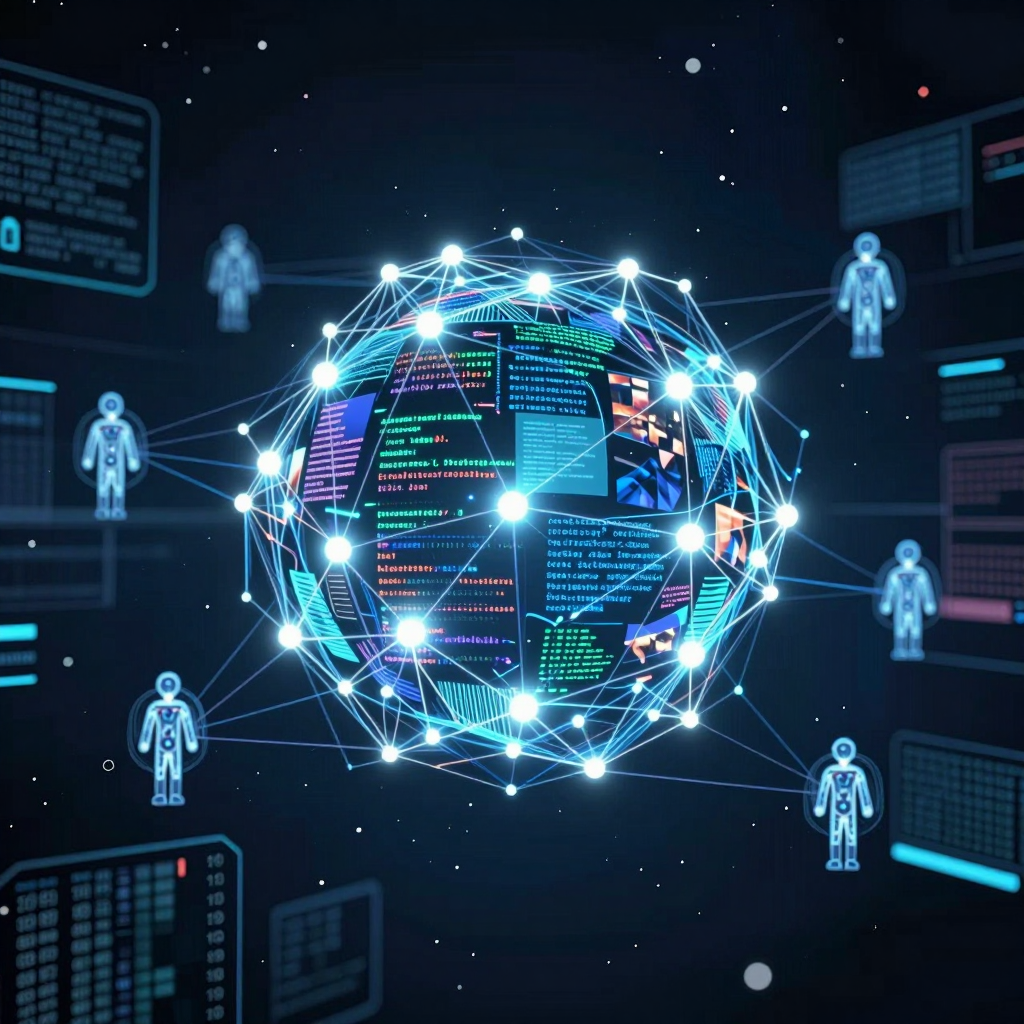
Another core feature of kimi k2.5 is the concept of Agent Swarm. Instead of one agent tackling complex tasks in a sequential manner, multiple sub-agents are automatically generated and coordinated to divide work in parallel. By deploying nearly 100 sub-agents and massively parallelizing tool calls, this approach substantially accelerates task completion.
This is crucial because real problems typically combine multiple demands at once:
- Data gathering (browsing/extraction)
- Summarizing and organizing (documentation/reporting)
- Verification (cross-checking/consistency validation)
- Output creation (code/slides/reports)
Agent Swarm transforms these multi-step tasks from “a long, single chain” into an execution system that splits work units and progresses concurrently.
Indicators That Prove Its Value Lie in ‘Work Deployment’ rather than Just ‘Performance’
kimi k2.5 demonstrates powerful results in coding and reasoning areas. For example, scores like SWE-bench Verified 76.8% and AIME 2025 96.1% signal that the model’s focus extends beyond simple knowledge-based Q&A—it can solve, debug, and verify problems. The inclusion of multilingual coding capabilities (SWE-bench Multilingual 73.0%) further broadens its usability in global development environments.
Mode Design Reflects Its Identity: kimi k2.5 Is Closer to a ‘System’ than a ‘Chatbot’
kimi k2.5 offers multiple modes depending on the use case: Instant / Thinking / Agent / Agent Swarm (Beta). This indicates the model’s multi-faceted personality as a product designed with various practical demands in mind:
- Situations requiring quick responses (Instant)
- Scenarios that need deep reasoning (Thinking)
- Workflows based on tool usage (Agent)
- Complex projects demanding parallel processing (Agent Swarm)
In other words, the strength of kimi k2.5 lies not in “being a good conversationalist,” but in its execution structure that pushes tasks through to completion.
Now the question shifts: not “What does AI know?” but “How far can our work be automated when AI understands text and images together, uses tools, and works in parallel?” At the heart of that evolution stands kimi k2.5.
kimi k2.5 Native Multimodal Architecture: A New Paradigm in AI Design
Why is it crucial not to simply “add an image processing module on top of a text model,” but rather to integrate text, images, and video at the same level from the very start? In short, the success of multimodal AI hinges not on “adding features” but on its design philosophy (its very origin). kimi k2.5 takes a distinctly different path at this critical juncture compared to conventional approaches.
Why kimi k2.5 Is Truly “Native Multimodal”
Many multimodal models traditionally follow this sequence:
- Step 1: Train a large language model (LLM) on vast amounts of text
- Step 2: Attach an image encoder and connect via adapters/projectors
- Step 3: Fine-tune on specific data to make it appear as if it “understands images”
While this approach allows for quick product development, internally it often results in a language-centric representation space where visual information is merely “translated and inserted.” Consequently, when dealing with complex visual contexts (such as layouts, relationships in charts, or dynamic UI states), the model’s reasoning can break down or suffer from text bias.
By contrast, kimi k2.5 embraces a native multimodal architecture that treats images, video, and text as equal modalities right from the start. In other words, it does not regard “text as primary and vision as optional”—multimodality is the default.
The Difference Made by kimi k2.5’s Unified Design: Consistency in Representation and Reasoning
The key advantage of native multimodality lies in the consistency of representation. When multimodal inputs arrive, the model doesn’t process them separately and then force alignment; instead, it learns the relationships within a single integrated semantic space from the outset.
- Objects in images, text, and layout elements are less likely to be reduced to simple “descriptive text” and are more likely to retain structural information.
- When handling long contexts (e.g., reports combined with tables, graphs, and screenshots), the design goal is to ensure multimodality does not interrupt the flow of reasoning.
- The transformation cost between “seeing” and “verbalizing” is minimized, benefiting tool use and agent workflows by reducing misinterpretation (grounding errors).
Components of the kimi k2.5 Architecture: MoonViT + MoE + Long Context
On a technical level, kimi k2.5 implements multimodal integration not as a slogan but as a concrete tech stack.
- Vision Encoder: MoonViT (~400M parameters)
Robustly encodes images (and video frames), serving as the foundation connected to the language reasoning components. - MoE (Mixture-of-Experts) Structure: 1T parameters, 32B active / 8 experts selected per token out of 384
Dynamically selects specialized experts based on the input token’s (text or visual) characteristics, maintaining the expressive power of a giant model while controlling costs. - Context Window of 256K Tokens
“Previous context” is especially critical in multimodal tasks. For work involving UI screenshots, document pages, or code changes with extended context, reasoning continuity is key to performance. - Multi-head Latent Attention (MLA) + SwiGLU
Efficiently optimized for large-scale, long-context multimodal processing, designed to handle lengthy inputs with minimal loss in model expressiveness.
How kimi k2.5 Solves Practical Challenges Often Missed by “Add-on Multimodality”
In real-world scenarios, multimodality isn’t just about simple image captioning—it presents as complex tasks.
- Inferring frontend code structure from a screenshot
- Accurately citing key evidence in materials mixing tables, graphs, and text
- Drawing consistent conclusions from multiple documents and image evidence together
With “text model + vision adapter” approaches, reducing image information to text often leads to information loss. In contrast, kimi k2.5’s native integrated design aims to better preserve visual structure while seamlessly connecting it to language reasoning, offering significant advantages in grounding accuracy and reasoning stability across complex inputs.
Ultimately, the next stage of multimodality is not merely “reading images” but processing the real-world tasks that mix images, text, and video simultaneously. kimi k2.5’s native multimodal architecture marks a paradigm shift in AI design by moving the starting point from “adding features” to an inherently integrated design from the very beginning.
kimi k2.5 Agent Swarm: The Secret of AI Self-Organizing Parallel Work
Even the smartest single agent often operates on one thread at a time. But what if up to 100 sub-agents simultaneously investigate, write code, call tools, and combine results? How much faster could the work get done? kimi k2.5’s Agent Swarm presents a practical answer to this question. Instead of entrusting complex tasks to a “one-man all-round intern,” it automatically assembles a team to push forward in parallel.
Why kimi k2.5 Agent Swarm is a ‘Parallel Processing Revolution’
The core of Agent Swarm is not just launching multiple agents but that the model leads the orchestration of breaking down tasks, assigning roles, and integrating results.
- Autonomous Orchestration: Without preset sub-agent templates, it analyzes the problem and divides roles like “researcher,” “developer,” and “verifier” on its own.
- Parallel Execution: Different sub-agents operate simultaneously, massively handling tool calls such as web browsing, code execution, and document analysis in parallel.
- High-throughput Tooling: Designed to execute up to 1,500 tool calls concurrently, significantly reducing the bottlenecks that occur when a single agent handles tasks sequentially.
- Speed-up: According to Moonshot AI’s report, it aims to complete tasks up to 4.5 times faster than a single agent.
Ultimately, Agent Swarm is engineered not just for “smarter answers” but for answers that finish faster. It’s especially effective in multi-step workflows (research → extraction → organization → creation → verification).
Inside kimi k2.5 Agent Swarm: Decompose → Parallelize → Synthesize
Technically, Agent Swarm can be understood as a three-stage process:
Task Decomposition
The model breaks a goal into sub-tasks. For example, “write a competitor analysis report” splits into market research, product feature comparison, pricing policy summary, and risk factor evaluation.Sub-agent Spawning & Parallel Execution
Sub-agents tailored to each sub-task are created and run simultaneously. Crucially, each sub-agent progresses independently while using its own tools. Unlike sequential processing where delays accumulate the longer the task, this structure drastically cuts overall lead time.Synthesis & Verification
Since parallel outputs can overlap or conflict, a final agent consolidates and cross-checks the pieces into one deliverable. This step transforms Agent Swarm from a “multi-agent chat” into a practical productivity pipeline.
Where You’ll Notice the Difference: The Longer and More Complex, The Better
Agent Swarm shines brightest not in short Q&A but in multi-stage, parallelizable workflows like:
- Real-world coding tasks in SWE-bench style: simultaneously analyze issues, reproduce, fix, test, and draft PR explanations
- Large-scale documents/research: split and summarize multiple texts, then blend common conclusions and evidence
- Data extraction + report generation: gather tables, logs, and web data in parallel, organize, and structure final reports
- Multimodal workflows: analyze image/screenshot-based requirements in parallel and link them to code and documentation
The key is turning “what one agent would take a long time to do sequentially” into “multiple agents finishing simultaneously.” kimi k2.5’s Agent Swarm naturally implements this parallelism at the model level, boosting both speed and throughput.
kimi k2.5 Performance and Optimization: The All-Rounder for Math, Coding, and Large-Scale Document Handling
With 96.1% accuracy in mathematical reasoning, 73% multilingual coding performance, and the ability to process massive documents, kimi k2.5 isn’t a model that’s all-in on just one strength—it aims to be a universal, practical workhorse that pushes reasoning, development, and document tasks all at once. So, what’s the secret behind achieving such high performance while keeping costs and speed in check?
Why kimi k2.5 Excels at Math and Reasoning
kimi k2.5’s prowess in math is first proven by its numbers:
- AIME 2025: 96.1%
- HMMT 2025: 95.4%
- IMO AnswerBench: 81.8%
- GPQA Diamond: 87.4%
What this level of performance signifies is not just raw computational ability, but reasoning stability—maintaining a coherent, lengthy solution flow without breaking down. Two key factors underpin this strength:
- 256K-token context window: Designed to remember “what assumptions were made earlier” even when conditions or intermediate steps get long. This is crucial for reducing common errors like forgetting problem conditions in math and proof-based tasks.
- Multi-head Latent Attention (MLA): Viewing all tokens equally in long contexts leads to explosive computational costs. MLA mitigates this burden by enabling efficient access to necessary information, boosting reasoning efficiency in long contexts.
Why kimi k2.5’s Coding Benchmarks Reflect Real-World Use
Its coding ability is evaluated not just by “problem-solving code,” but by the ability to catch and fix bugs in actual codebases.
- SWE-bench Verified: 76.8%
- SWE-bench Multilingual: 73.0%
The strong multilingual results prove it surpasses “models that only handle English comments and docs well.” It’s ready to jump into multilingual repositories, local documentation, and multilingual issue-tracking environments right out of the box.
Moreover, kimi k2.5 supports multimodal workflows often required in development (e.g., screenshot/mockup-based frontend generation, API and DB schema design, debugging, and refactoring), making it powerful at bridging UI requirements that are hard to explain through text alone and turning them into code.
kimi k2.5’s Large-Scale Document Handling: It’s Not About Reading Speed—It’s Retention
The challenge in real-world document summarization isn’t length; it’s about consistently retaining key issues, exceptions, numbers, and definitions all the way through. kimi k2.5 tackles this head-on with:
- A 256K context window to minimize context breaks in massive reports, papers, contracts, and more
- A native multimodal design (not just “attaching” vision to text, but fully integrated from the start) makes handling mixed documents containing tables, images, and body text feel natural and seamless
This results in outputs better suited for advanced document tasks like checking for clause conflicts, scope of definitions, and requirement tracing—not just rough summaries.
Core of kimi k2.5 Optimization: Getting It Fast, Cheap, and Still Powerful
A big bottleneck for high-performance models is usually “inference cost.” kimi k2.5 combines structural efficiency with training-based optimization:
- MoE (Mixture-of-Experts) architecture: Though it boasts 1 trillion parameters in total, it activates just 8 out of 384 experts per token (32B active parameters per inference). This means it stores massive knowledge but avoids computing everything for every request, dramatically boosting efficiency.
- QAT (Quantization Aware Training)-based native INT4 quantization: Plain quantization harms quality, but QAT incorporates quantization during training to minimize performance loss. Moonshot AI highlights this achieves a 2x speedup in inference.
- SwiGLU activation + MLA combo: A setup that maintains high performance while ensuring computational efficiency, especially advantageous for long contexts and large models.
In summary, the optimization strategy tightly weaves MoE to “use only what’s needed,” INT4 to “run lighter,” and MLA to “prevent cost explosion in long contexts.” This synergy empowers kimi k2.5 to juggle math, coding, and document workloads simultaneously, aiming for a practical balance of speed and cost in real-world use.
Leading the Future with the Open-Source AI Platform, kimi k2.5
Automatically organized agent swarms, continuous pretraining, and a commercial open-source license—this powerful combination elevates kimi k2.5 beyond being just a “high-performance model” to a platform that transforms the way technology ecosystems work. The key is not merely becoming smarter but being designed to perform more tasks faster, at lower cost, and “like a team.”
How kimi k2.5’s Agent Swarm Redefines the Unit of Automation
Traditional agents usually rely on a single brain (a single agent) that sequentially calls multiple tools to complete tasks. In contrast, kimi k2.5 automatically generates and coordinates up to around 100 sub-agents within an Agent Swarm, distributing work in parallel. This structure creates distinct advantages:
- Parallel division of labor: Tasks like research, data extraction, code editing, and documentation happen simultaneously
- Large-scale tool invocation: Designed to handle up to 1,500 tool calls in parallel
- Speed and throughput: Can complete tasks up to 4.5 times faster than a single agent
Technically, this means evolving from agents who merely “use tools” to agents who can form and organize teams. Going forward, the competitive edge in automation is likely to shift beyond prompt engineering or single workflow sophistication, toward how effectively tasks can be decomposed into graphs and parallelized.
‘Scalable Comprehension’ Through Continuous Pretraining and Native Multimodality
At kimi k2.5’s core lies continuous pretraining on roughly 15 trillion mixed visual-text tokens. The critical point here is not just frequent updates but that the model steadily expands its universality by absorbing broader data distributions and task formats.
Moreover, kimi k2.5 is designed from the ground up as a native multimodal architecture treating visual and textual inputs equally, rather than simply “adding” multimodality to a text model. Supporting features include:
- MoE (selecting 8 out of 384 experts per token) for efficient large-scale model operation
- MLA (Multi-head Latent Attention) to efficiently handle long contexts
- 256K context window for maintaining context over massive documents and codebases
- MoonViT vision encoder (400M parameters) for enhanced visual input processing
- Native INT4 (QAT-based) quantization aiming to double inference speed while minimizing performance degradation
This fusion goes beyond merely “reading images,” converging toward understanding complex real-world inputs—documents, screenshots, code, tables, diagrams—in a single step and executing agent workflows accordingly.
Accelerating Ecosystem Growth with a Commercial Open-Source License
The most pragmatic challenge kimi k2.5 throws down is its license. Providing a commercial open-source license delivers two simultaneous benefits:
- Lowering corporate adoption barriers: Facilitates easy building of customized agents tailored to internal data and workflows
- Expanding the developer ecosystem: Establishes a foundation for rapid growth of community-driven tools, plugins, and reference workflows
In other words, kimi k2.5 competes not just on “model performance” but as a platform enabling developers to build real products and automation systems. If the future battleground in AI shifts from API call cost or benchmark scores to reusable agent templates and operable multimodal workflows, such openness will play an even greater role.
The Future kimi k2.5 Presents: It’s Not the Model but the ‘Organization’ That Works
To summarize, kimi k2.5’s advances highlight three clear futures:
- Automation scales not as a single agent but as a swarm (an organization).
- Continuous pretraining and native multimodality become the foundation for processing real-world work inputs directly.
- Commercial open-source accelerates both technology adoption speed and product viability.
The question now shifts from “which model is smarter” to which platform integrates deeper into more teams and products. Positioned at the heart of this shift, kimi k2.5 delivers a meaningful challenge to the technology ecosystem.
Comments
Post a Comment