 \n
\n
A Historic Moment: Seung-hoon Lee's Challenge — 2026 Winter Olympics Freestyle Skiing
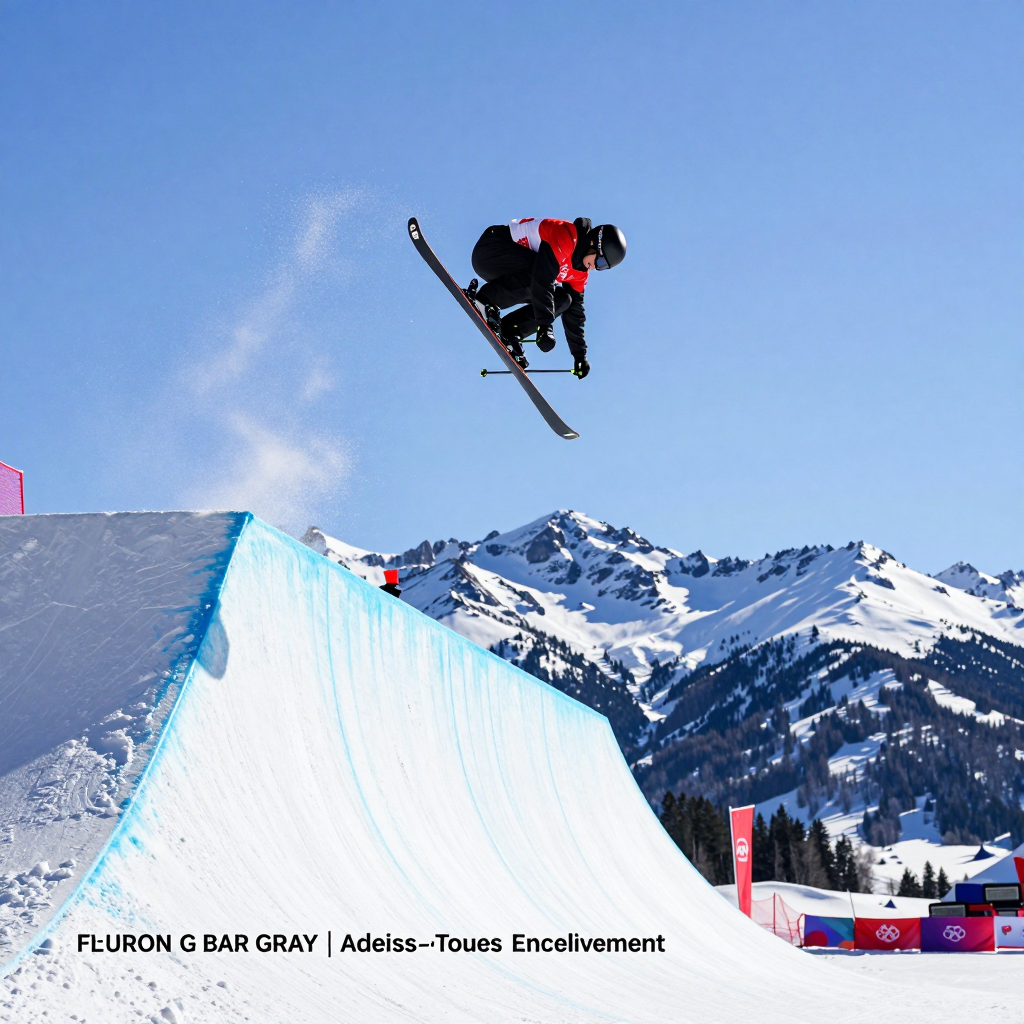
Seung-hoon Lee made history as the first Korean freestyle skier to advance to the halfpipe final at the Winter Olympics. This achievement is significant not just because he made the final, but because it symbolizes breaking open a stage rarely accessible to Korean athletes through sheer skill.
At the men’s halfpipe qualifiers held at Livigno Snowpark in Italy, Seung-hoon scored 76.00 points, securing the 10th spot out of 25 competitors and clinching a ticket to the finals. Only the top 12 moved forward, and he set a solid benchmark with a flawless run on his first attempt. Although he failed to stick a high-difficulty jump on his second run, his initial score stood firm as an unshakable “insurance,” confirming his place in the final. This moment perfectly demonstrated how critical one perfect run can be on a grand stage.
What makes this endeavor even more remarkable is that it wasn’t a sudden breakthrough. Seung-hoon had already stirred momentum by winning Korea’s first-ever gold medal in freestyle skiing at the 2025 Harbin Winter Asian Games. At the 2026 Winter Olympics freestyle skiing stage, that momentum transformed from mere “possibility” into “reality.” His debut on the final stage is more than a career highlight—it becomes a milestone that pushes the entire sport’s next generation forward.
The fact that his fellow countryman Hee-sung Moon failed to reach the final underscores just how ruthless this sport can be. And that makes Seung-hoon’s success even clearer: his final qualification was no stroke of luck but the result of preparation, execution, and sound judgment under pressure. Now, the only question left is—how far can he climb on this historic foundation of being the first Korean freestyle skier to reach an Olympic final?
Lights and Shadows of the Qualifiers: The Tense Arena of Competition — 2026 Winter Olympics Freestyle Skiing
What secret lies behind Seung-hoon Lee’s qualifying record, achieved despite a failed high-difficulty jump landing yet unwavering stability that secured his spot in the finals? The men’s halfpipe qualifiers at the 2026 Winter Olympics Freestyle Skiing event offered the stage to answer this question.
In his first qualifying run, Seung-hoon delivered a flawless performance, scoring 76.00 points and ranking 10th out of 25 competitors, comfortably meeting the cut-off of the top 12 to advance to the finals. The key was a “single perfect run.” In halfpipe, the flow and consistency of the run are just as critical as technical brilliance, and Seung-hoon firmly established his baseline with an unshakable line and flawless execution in the first run.
In contrast, his second run, which targeted higher difficulty jumps, ended with a failed landing, revealing the risks he took. However, since qualifiers are decided by the best score out of two attempts, the points secured in the first run acted as a ‘safety net.’ Although the aggressive strategy did not elevate his score, the previously earned points gave him the psychological steadiness to prepare confidently for the finals.
On the same stage, Hee-sung Moon scored 35.00 points in his first run and failed to improve in the second, ending up 22nd. This stark contrast highlights the unforgiving nature of the qualifiers. In this arena, one stable run is the survival strategy—a reality that defined the 2026 Winter Olympics Freestyle Skiing qualifiers.
A Shining Backdrop: The Journey of an Asian Games Gold Medalist — Freestyle Skiing at the 2026 Winter Olympics
Lee Seung-hoon, who dazzled with a gold medal at the 2025 Harbin Winter Asian Games. How did he transform from a promising domestic talent into a world-renowned athlete? His path to advancing to the finals, ranking 10th out of 25 competitors with a score of 76.00 in the 2026 Winter Olympics freestyle skiing halfpipe qualifiers, reveals not a “flash in the pan,” but a “process of relentless accumulation.”
A Turning Point Made by the Gold Medal and the Changing Standards of ‘Competition’
The gold medal in Harbin held significance beyond records. As the ‘first’ achievement in the history of Korean freestyle skiing, it ignited not only the athlete’s confidence but also shifted priorities in training environments and support systems. From that point on, Lee Seung-hoon’s goal was reset—not merely to be a top domestic competitor, but to prove his lines, spins, and landings meet international judging standards.
The Core of His Growth Revealed in the Olympic Qualifiers: Stability and Resilience
In the Livigno Snowpark qualifiers, Lee laid the foundation for his finals advancement by scoring 76.00 with a flawless first run. Despite a failed high-difficulty jump landing in the second run, his strong first score ensured he placed within the top 12 to qualify for the finals. This moment highlights that on the grandest stage, managing mistakes is just as crucial as attempting the “highest difficulty,” confirming the precision of his growth trajectory.
What ‘First Finals Appearance’ Signifies: The Next Stage for Korean Freestyle Skiing
This qualification for the finals marks a historic milestone—it is the first time a Korean freestyle skier has reached the finals at a Winter Olympics. Beyond a personal achievement, it becomes a “realistic next goal” for future athletes. If the gold medal in Harbin was the ignition of a leap forward, advancing to the finals at the 2026 Winter Olympics proves that flame continues to burn on the global stage. Now, only one question remains: beyond completing a stable run, how far can he push the technical composition and execution to contend for a medal?
Shared Reality and Challenges: Moon Hee-sung’s Disappointing Outcome — Freestyle Skiing at the 2026 Winter Olympics
On the day Lee Seung-hoon made history as the first Korean athlete to reach the freestyle skiing halfpipe finals and grabbed the spotlight, Moon Hee-sung faced a different reality on the same stage. Moon scored 35.00 points in the first qualifying round but failed to improve his score in the second round (DNI), finishing 22nd overall and missing the finals.[1] Same competition, different results. This very point reveals the cold reality of freestyle skiing at the 2026 Winter Olympics and the immense pressure athletes bear in every moment.
It’s far too simplistic to label Moon Hee-sung’s result as merely “disappointing” because the halfpipe demands unforgiving precision. Only the top 12 from qualifying advance to the finals[1], meaning a single major mistake or a risky choice in difficulty can immediately impact rankings. Particularly, failing to raise his score in the second run and ending as DNI suggests either it was too risky to attempt new tricks, or that the competition’s intensity left little room to maneuver.
Still, Moon Hee-sung’s participation carries clear significance. If Lee Seung-hoon’s finals appearance marked a new milestone for Korean freestyle skiing, Moon’s effort underscores that this milestone cannot rest on one athlete’s talent alone. Competing together on the national team, each athlete’s attempts and outcomes become invaluable data for the next generation, gradually expanding the foundation of Korean halfpipe skiing. Though the scores were harsh, the experience gained on this stage is the most realistic asset for preparing the next season and future Olympics.
Dreaming of a Medal: Beyond the Finals Stage — Freestyle Skiing at the 2026 Winter Olympics
Korea’s historic first advancement to the freestyle skiing finals marks only the true beginning. The moment Lee Seung-hoon scored a clean 76.00 in the first qualifying round and clinched the finals ticket as the 10th-ranked athlete among the top 12, “possibility” transformed into “reality.” Now, the stage shifts from the stability of the qualifiers to the finals, where a single run can overturn the rankings.
The key to chasing a medal in the finals is clear: how far can one push difficulty and execution flawlessly without mistakes? Given the slight landing flaws in the second qualifying round’s high-difficulty jump, the finals will likely hinge on deciding between risking it all with one bold move and securing a solid, reliable run. In halfpipe—a discipline where even the slightest wobble immediately affects scores—the precision of landings is just as critical as the audacity of tricks.
What makes this finals appearance especially significant is that Lee Seung-hoon has already set the momentum. His proven competitiveness, solidified by Korea’s first-ever gold medal in freestyle skiing at the 2025 Harbin Winter Asian Games, can continue not as a surprising upset but as a natural extension onto the 2026 Winter Olympic freestyle skiing finals stage. Now that Korea has reached the Olympic halfpipe finals for the first time, the question is clear: will this first finals appearance be the end, or the starting point for the very first medal?
Comments
Post a Comment