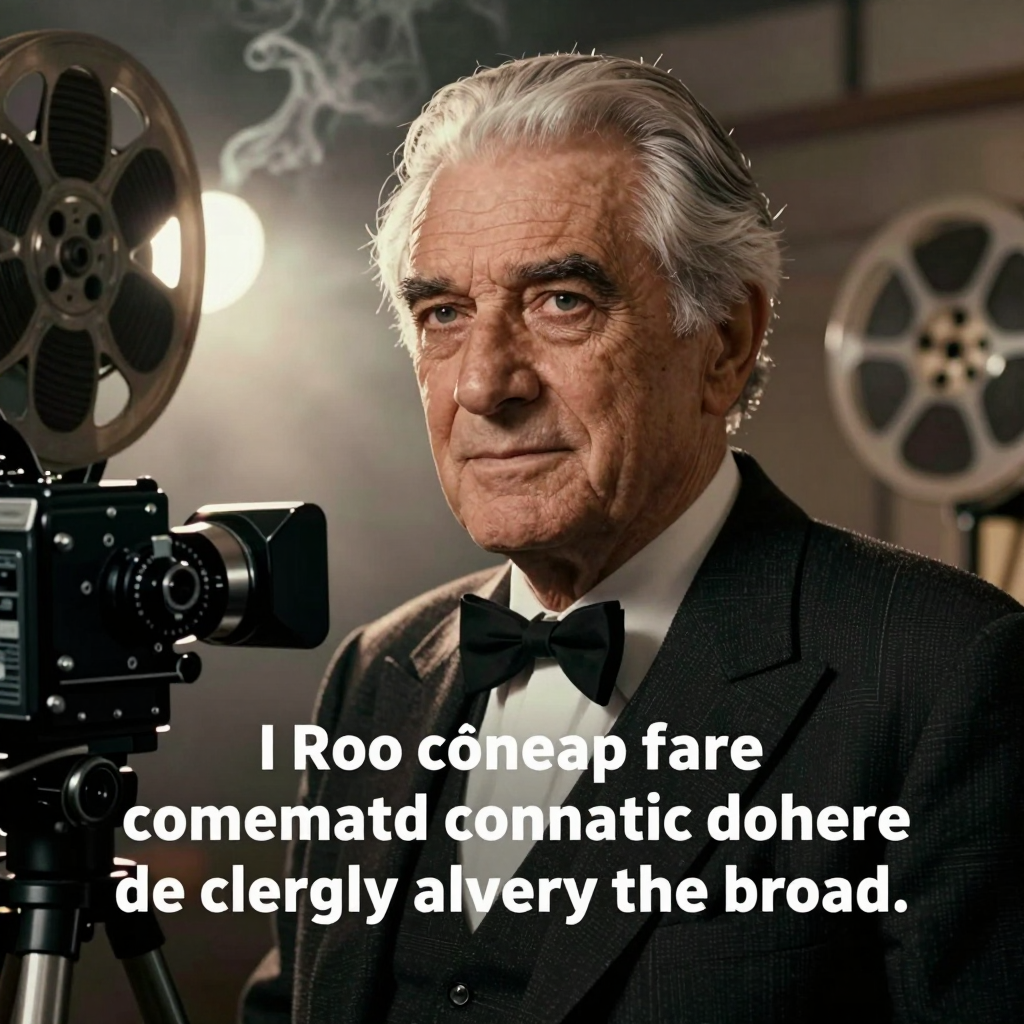
Legendary Filmmaker Robert Duvall Passes Away at 95... Renowned Actor from 'The Godfather' and 'Apocalypse Now'
 \n
\n
The Legendary Final Scene: The Life and Death of Robert Duvall
Robert Duvall passed away peacefully at the age of 95. His final moments, closed not with dazzling spotlights but in quiet dignity, leave a profound impression of the “true acting” he devoted his life to. His wife, Luciana Duvall, announced on Facebook that he peacefully died at home on Monday, February 16th.
Robert Duvall’s life resembled a filmography built not on a single explosive turning point, but on trust accumulated over a long time. Though he appeared briefly as ‘Boo Radley’ in 1962’s To Kill a Mockingbird, that short scene left audiences with the impression of “an actor who changes the story simply by his presence.” For more than 50 years since, he became an unforgettable face on the screen.
The scenes that etched his name into film history are unmistakable. His line “I love the smell of napalm in the morning” as Lieutenant Colonel Bill Kilgore in Apocalypse Now became a timeless quote beyond its era. In The Godfather series, his portrayal of Tom Hagen convincingly conveyed the complex humanity caught between coldness and loyalty. Then, in 1983’s Tender Mercies, he won the Academy Award for Best Actor playing a country singer consumed by alcoholism — even performing the songs himself, proving his talents went far beyond acting alone.
Above all, the powerful resonance Robert Duvall left behind lies in his “attitude.” He met preachers in person to study their voices and habits for authenticity, and often cast local residents with little acting experience in leading roles to bring the texture of reality to the screen. Thanks to this dedication, his characters never felt exaggerated — and because they weren’t, they linger longer.
Now he’s gone, but his final scene is not an end; it has become a standard. The gentle news of his passing strikes an even deeper chord for this very reason. What Robert Duvall left behind wasn’t just remarkable performances—it was the cinematic commitment to look at a human being with absolute truth to the very end.
Robert Duvall: The Hollywood Legend and the Untold Story of a Hidden Musician
A six-time Academy Award nominee and Best Actor winner. But what truly makes Robert Duvall extraordinary is that he didn’t stop at being “just a great actor.” In the 1983 film Tender Mercies, he portrayed Mac Sledge, a broken-down country singer, performing songs himself, including those he wrote, quietly stirring the audience’s hearts. If his acting convinced with emotion, his singing proved that emotion beyond doubt.
Duvall’s musicianship was less an event and more a habit. Having played guitar since childhood, that sensibility seeped into his characters’ breath and rhythm on screen. That’s why his acting is not completed by lines and expressions alone. The length of silence, the timing of a lingering gaze, the emotion dropping just a beat late—these are arranged with the precision of music.
Singing like a performer on stage, yet capturing trembling emotion like an actor before the camera. It was this “dual talent” that prevented Duvall’s characters from becoming flat in even the grandest narratives. Instead of flashy techniques, he chose sounds and expressions drawn from life—and that choice built his legacy as a Hollywood master proven not by “skill” but by “authenticity.”
Robert Duvall’s Relentless Pursuit of Authenticity
Where did Robert Duvall’s approach, which brought to life deeply nuanced characters rarely seen in Hollywood—performed alongside real locals—originate? His acting philosophy can be summed up as striving not to “look real,” but to be real.
Rather than pushing his characters into exaggerated drama, he obsessively embodied the lived experience behind them. For example, while preparing for the film The Apostle, he met with various preachers firsthand, studying even the tiniest habits—the pitch of their voices, their breathing, their gestures. The result? His on-screen sermons feel less like acting and more like scenes witnessed live.
Another crucial element was authenticity on set. Duvall boldly cast local residents with little to no acting experience in key roles. Instead of crafting a polished performance solely with seasoned actors, he chose moments when the real-life speech patterns and rhythms changed the atmosphere of the work. The reason his characters resonate so persuasively lies in capturing the texture of reality first—not merely delivering a “good performance” in front of the camera.
This dedication aligns closely with the roles he often took on. Though restrained on the surface, his characters were men who could become dangerous if deeply provoked—and the strength underpinning their complex inner worlds wasn’t flashy technique but an attitude committed to representing people as they truly are.
Robert Duvall: Passion and Challenge That Age Cannot Stop
How did he maintain his acting skills and energy that transcend eras while still performing on stage in his 90s? The answer is not some grand secret but the attitude of throwing himself into the field until the very end. Robert Duvall regarded age not as the endpoint of his career but as another condition to bring out deeper characters.
Even in old age, he did not choose roles "safely." In 2009’s Get Low, he appeared as a forest recluse, quietly building layers of loneliness and guilt. In 2011’s Seven Days in Utopia, he played a ranch owner and mentor, delivering a performance that slowed life's rhythm. In 2015’s The Judge, he portrayed a judge struggling with alcoholism and violence, openly exposing the contradictions of a person not easily judged by the audience. With this role, he became the oldest nominee for Best Supporting Actor, proving himself that age cannot define the limits of acting.
His energy came less from physical strength and more from a relentless dedication to authenticity. For each role, he observed voices and habits, followed the character’s ethics and wounds to the very end, and chose to prove emotions naturally within situations rather than exaggerate them. That’s why his final works captivate audiences not with flashy tricks but with the density and composure crafted by time.
Ultimately, Robert Duvall’s old age was not a time of enduring but a time of renewal. His challenge, which even aging could not stop, continues as a question left on the screen until the very end. Good acting isn’t measured by how long you perform, but by how sincere you remain until the last moment.
The Holistic Artist Robert Duvall, and His Immortal Legacy
As an actor, director, and writer, what legacy did he leave us? Amid the heartfelt tributes of loved ones, as we wrap up the shimmering film life of Robert Duvall, we revisit why his name is remembered as that of a “holistic artist.”
Duvall’s greatness cannot be reduced to just one or two iconic works. He proved that even a brief appearance could shake the narrative to its core, while simultaneously being a craftsman who relentlessly pursued authenticity. His choice to meet real preachers to study their voices and habits, and to cast local residents to transform the atmosphere on screen, was not about “plausibility” but an insistence on the “genuine.” That dedication ultimately became the power that allowed audiences to reach a character’s emotions without explanation.
Moreover, Robert Duvall shaped stories beyond the realm of acting. He directed documentaries, wrote and directed dramas with a perspective rooted in community, and remained an artist who observed ‘people’ even off-camera. What he left behind wasn’t just awards or memorable lines, but a mode of respecting characters—a methodology that translates reality’s textures onto the screen without erasing them.
Finally, his legacy becomes even clearer in the memories of those who loved him. Being both a “storyteller” and someone who knew life’s joys, his characters always breathed like living humans. Though he has passed on, the scenes he left ask us continually: What is acting, and what does it mean to understand a human being? And that very question may be the most enduring cinematic legacy Robert Duvall ever gave us.
Comments
Post a Comment