 \n
\n
Intense Champions League Playoff: PSG vs AS Monaco
PSG, on the verge of an incredible milestone with 14 consecutive seasons reaching the Round of 16, faced off against AS Monaco. Despite carrying the “defending champion” title, this playoff was a relentless thriller from start to finish, with the scoreline hanging by just a single goal throughout. How did the fiery clash between PSG and AS Monaco ultimately conclude?
PSG took the upper hand by winning the first leg 3-2, but the start of the second leg was far from comfortable. Although PSG dominated possession at Parc des Princes, their finishing lacked sharpness. Meanwhile, Monaco cleverly exploited the flanks to break the deadlock in the 45th minute of the first half. That goal leveled the aggregate score at 3-3, resetting the stakes.
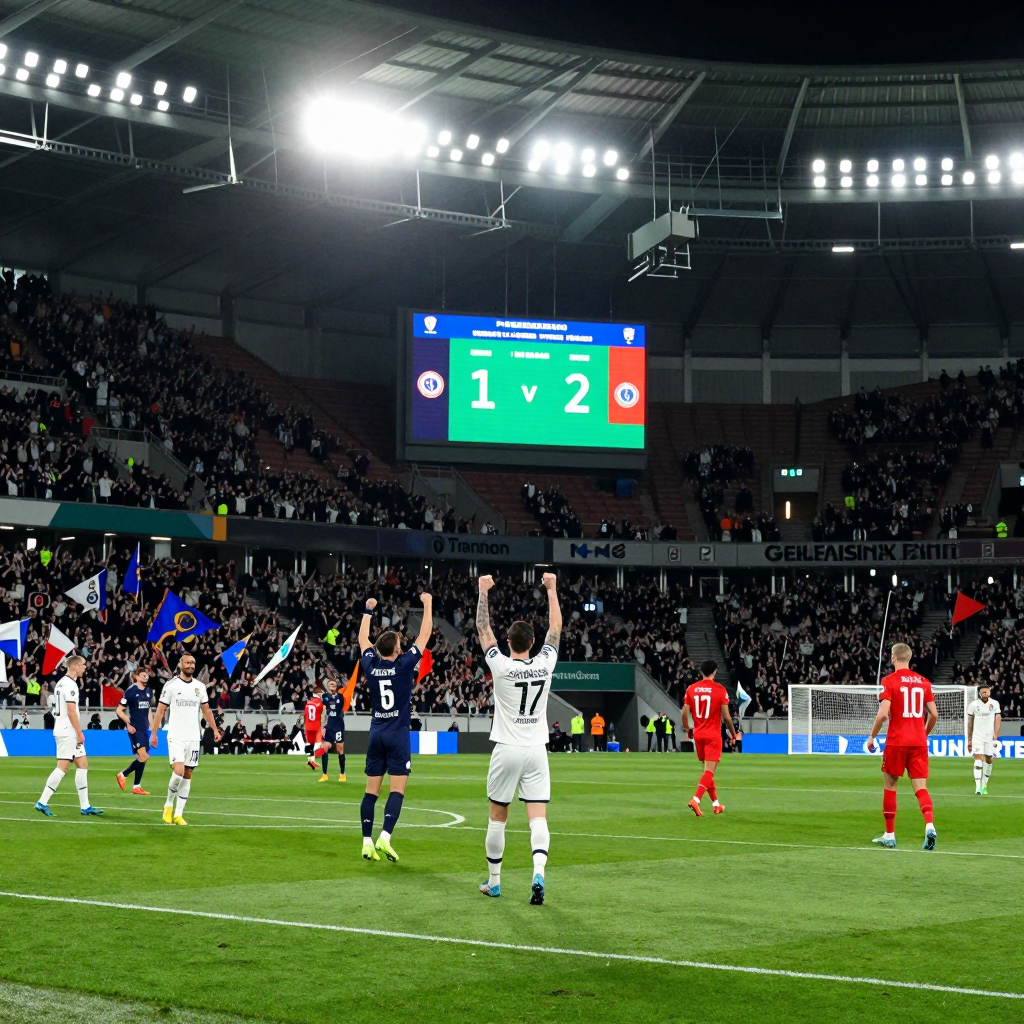
The turning point came early in the second half. Monaco’s defensive mainstay received a second yellow card and was sent off, forcing the team into a numerical disadvantage once again. PSG capitalized on this opportunity without hesitation. In the 15th minute of the second half, Marquinhos scored the equalizer, followed by Khvicha Kvaratskhelia’s goal in the 21st minute, extending the aggregate lead to 5-3 and flipping the momentum entirely. Although Monaco managed to pull one back late in the game, making it 2-2, PSG held firm to secure their place in the Round of 16 with a 5-4 aggregate victory.
Ultimately, this PSG vs AS Monaco playoff showed how “one critical moment (the sending off)” changed the entire complexion of the match. PSG’s ability to convert their numerical advantage into decisive goals in the second half sealed both their record and the result. Thus, the remarkable feat of reaching the Round of 16 for the 14th straight season was achieved.
PSG vs AS Monaco: The Goal That Broke the Deadlock, The First Half Story
At first glance, the match belonged to PSG. At Parc des Princes, PSG dominated possession and led the attack, but lacked sharpness in finishing. Although they held the ball for a long time, the absence of a decisive strike only heightened the tension in the first half.
It was Monaco who precisely exploited that gap. In the 45th minute, Monaco created space through a flank attack, and Magnus Akliush calmly finished to open the scoring. That single goal made the second leg score 0-1, leveling the aggregate score at 3-3, completely reshaping the game.
The significance of this opening goal went beyond just taking the lead. Scoring first in two consecutive matches, including the first leg, symbolized that the PSG vs AS Monaco playoff was not a one-sided affair dominated by PSG, but a battle where momentum could shift in an instant. That late first-half goal served as a stark warning to PSG: “Possession alone does not guarantee progression.”
PSG vs AS Monaco: The Game-Changer Created by the Numerical Advantage in the Second Half
Until halftime, Monaco’s plan was much clearer. While PSG dominated possession but struggled to finish, Monaco exploited the flanks to score the opening goal, leveling the aggregate score. However, everything changed completely at the 53rd minute, when Monaco’s key defender, Mamadou Koulibaly, was sent off due to an accumulation of yellow cards.
From that moment on, the flow of PSG vs AS Monaco translated the “11 vs 10” numerical difference directly into tactics. Forced to drop their defensive block, Monaco focused on compressing the spaces between their lines and holding firm, while PSG picked up the tempo, increasing options around the box to intensify their pressure.
There were two key factors behind PSG’s ability to capitalize on this opportunity:
- Immediacy: The moment they confirmed the numerical advantage, PSG didn’t wait to organize their attack. Instead, they quickly ramped up shots and cutbacks around the penalty area, depriving Monaco’s defense of crucial decision-making time. This swift action led to a rapid equalizer and ultimately reversed the aggregate score in PSG’s favor.
- Clarity in approach: Rather than forcing risky central breakthroughs, PSG consistently produced high-percentage chances by expanding play to the flanks → cutbacks/second balls. The subsequent goal was a textbook example of leveraging numerical superiority, patiently converting a rebound chance.
What’s particularly intriguing is that Monaco ended up playing with ten men in both legs, compounding the risk of “consecutive dismissals”. While a single red card can act as a game variable, two send-offs shake the entire game plan. PSG exploited this fracture swiftly and efficiently. Ultimately, the numerical advantage in the second half was not just a simple edge; it was the definitive game-changer that sealed the outcome.
Dramatic Finish in PSG vs AS Monaco: Last-Minute Equalizer and Heart-Stopping Tension
There are few moments as brutal in flipping the momentum as when a substitute scores a last-minute equalizer. The second leg between PSG and AS Monaco was exactly that moment—an atmosphere that felt like the game was “already over” was instantly upended.
After Koulibaly’s red card, PSG capitalized on their numerical advantage with consecutive goals, taking the aggregate lead and seemingly sealing their fate. Yet Monaco relentlessly exploited the wings until the very end, never letting the chances slip away. In the dying moments of the second half, a cross delivered from a wing breakthrough found the precise touch of substitute Jordan Teze, leveling the score at 2-2. The stadium went eerily silent, and for PSG, it was the last scenario they wanted to face come true.
Still, the outcome remained unchanged. Instead of pushing players forward recklessly after conceding, PSG opted to manage the remaining time, while Monaco advanced in search of one final chance but failed to create a decisive opportunity. Ultimately, the match ended 2-2, with PSG narrowly progressing to the next round on aggregate 5-4.
This late equalizer meant far more than just the numbers on the scoreboard. The PSG vs AS Monaco clash dismantled the notion that “numerical superiority guarantees an easy win,” delivering a vivid reminder that in knockout tournaments, even a brief lapse in concentration can come at a costly price.
The Decisive Factor of Victory and Future Challenges: PSG vs AS Monaco
Attacking efficiency, decisive assists, and relentless competition throughout the match. The key phrase that defined the PSG vs AS Monaco playoff was ultimately “that one game-changing moment.” Despite drawing 2-2 in the second leg, PSG capitalized on their numerical advantage and momentary precision in the second half to secure a 5-4 aggregate win, earning their ticket to the Round of 16.
The Difference Made by Attacking Efficiency
PSG struggled early on to convert their high possession into goals, but the second half told a different story. As the expected goals (xG) statistics reveal, the quality of their attack did not falter, and the speed at which they translated dominance into goals became the turning point of the match. Especially when Monaco’s defense showed cracks due to a red card and wavered in reacting to second balls, PSG wasted no time to put the finishing touch inside the box.
The “Decisive Assist” That Shifted Momentum
The heart of this match was not merely the goals themselves, but the choices made just before scoring. Desire Doue’s crafted cutback was not just a simple pass but a solution that transformed numerical superiority into the most definite opportunity. By accelerating before the opposing defense could organize and delivering the ball to the highest-probability spot, PSG turned the game around with their equalizer.
The Tough Lesson Left by a Fierce Battle: Risk Management in the Round of 16
Despite facing the setback of consecutive red cards in both legs, Monaco fought tooth and nail until the end, forcing PSG to stay alert after conceding a late goal. This signals that in the Round of 16, concentration when leading, responding to wide crosses, and closing out matches will become even more crucial against stronger opponents.
PSG’s next challenge is clear. Simply maintaining ‘dominant moments’ is not enough; the details that lock in a stable victory will determine the success or failure of their quest for back-to-back titles.
Comments
Post a Comment