Real Madrid Advances to Champions League Round of 16 by Defeating Benfica! Valverde Shines with Two Assists
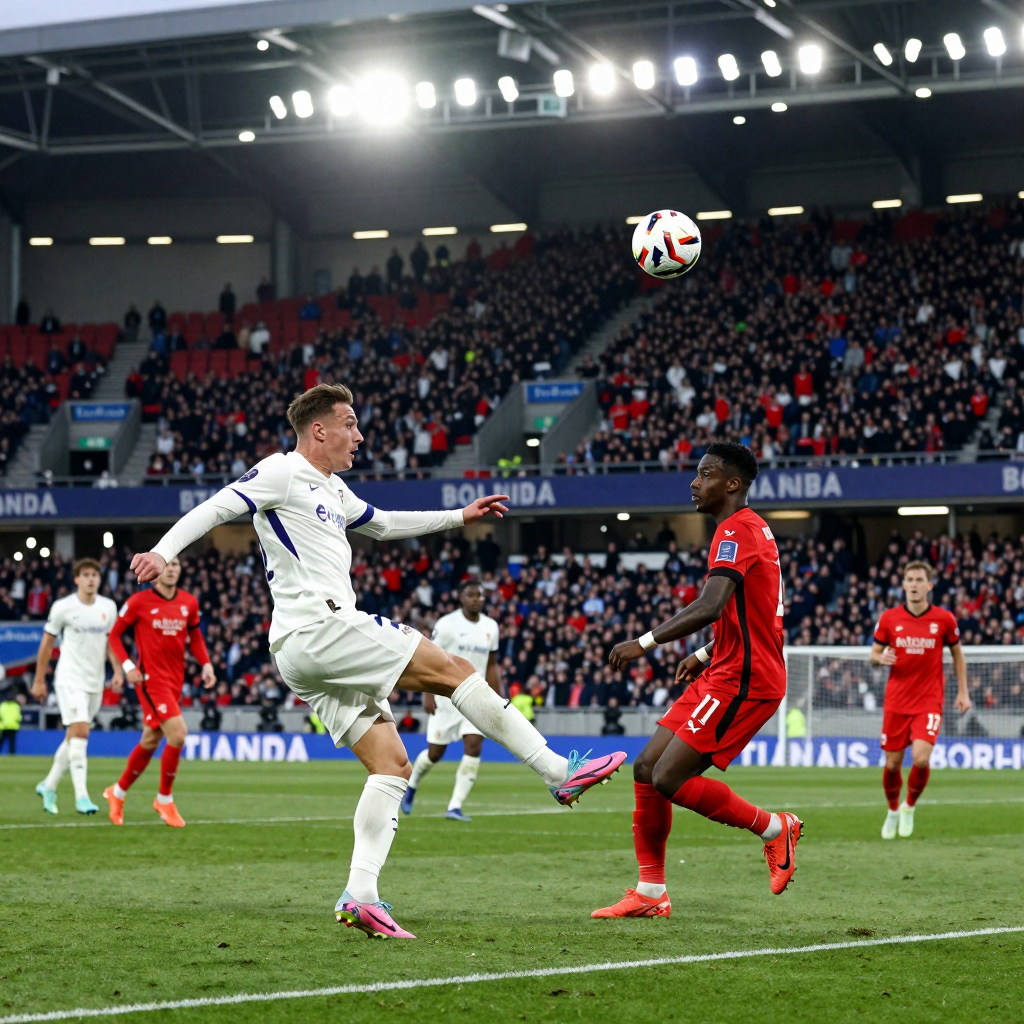 \n
\n
A Dramatic Champions League Showdown: Real Madrid vs. Benfica
Real Madrid secured their 29th consecutive Champions League Round of 16 appearance, and the second leg of the Real Madrid vs. Benfica playoff proved this record is far from being ‘just momentum.’ The February 25th match at the Bernabéu was a tactical and mental battlefield where a single decisive choice determined the outcome of a fierce 90-minute war.
Starting with a 1-0 advantage from the first leg, Real Madrid faced a Benfica team that flipped the atmosphere from the kickoff. At the 14th minute, Rafa Silva’s opening goal leveled the aggregate score at 1-1, sending tension soaring. Yet Real Madrid stood firm. Just two minutes later, Aurélien Tchouaméni, assisted by Federico Valverde, struck back immediately, revealing their identity as “a team that responds faster the harder they are pressed.”
In the second half, Benfica pushed aggressively in stats like corner kicks, tackles, and touches inside the box, but Real Madrid landed the critical blow. At the 80th minute, Vinícius Júnior once again connected with Valverde’s cross to seal a 2-1 victory, confirming a 3-1 aggregate and their ticket to the Round of 16. This moment illustrated that when stats and actual scorelines diverge, ‘efficiency’ ultimately claims victory.
Even more impressive was that Real Madrid was not at full strength. Despite the setbacks of Kylian Mbappé’s knee injury sidelining him, injuries to Jude Bellingham and Éder Militão, and Rodrygo’s suspension, the team maintained their winning formula. Gonzalo García filled the gaps, and Raúl Asencio’s return stabilized the defense. The match’s defining figure was Federico Valverde, who assisted both goals. Dominating the game with precision over flair, his performance was truly MVP-worthy.
In the end, the Real Madrid vs. Benfica battle was won not by “the team that tried more,” but by “the team that finished more accurately.” This result secured Real Madrid’s 29th straight Champions League tournament appearance. Although they may face Sporting CP or Manchester City in the next round, this match alone fully explains why Real Madrid remains Europe’s most dangerous survivor.
The Early Opening Goal and Chances in Real Madrid - Benfica, and the Moment of Reversal
Benfica sharpened their blades right from the start. At the 14th minute, when Rafa Silva scored the opening goal, the stadium momentarily froze, and the aggregate score suddenly felt reset to zero. Benfica’s early pressure and pace of attack were so threatening that the question naturally arose, “Is the momentum about to shift this way?”
But what decided the outcome of Real Madrid - Benfica was the fact that Real Madrid’s answer to that question came in just “2 minutes.” Right after Benfica’s momentum hit its peak, Real immediately pushed forward and counterattacked, and Tchouaméni, connecting off Valverde’s pass, quickly scored the equalizer. The crucial point in this moment was not just the goal itself, but the speed of transition that didn’t lose tempo even after conceding a goal. Before Benfica could gather breath and press again, Real erased the lingering effect of conceding.
The decisive turning point was completed here. Benfica failed to hold the psychological edge they had gained with the opening goal for long, and the game realigned itself—not as “Benfica destabilizing the flow by leading,” but as “Real calmly resetting the standard.” Ultimately, this instant response goal became the foothold that allowed Real Madrid to control the match thereafter with efficiency and execution.
Team Spirit and Strategy Shining Through Injuries and Absences: Real Madrid vs. Benfica
Amidst a series of injuries and suspensions sidelining key players, how did Real Madrid maintain their full strength and clinch victory? While it outwardly appeared as a false crisis of "weakening forces," the real secret behind the second leg of Real Madrid vs. Benfica lay in a game plan centered on role reassignment and execution.
First, the way they filled the gaps was not by mere "replacement" but by "redesign." The absence of a focal point in attack due to Mbappé’s unavailability wasn’t simply compensated by inserting Gonzalo García. Instead, Real Madrid raised the quality of chances by betting on the timing of side crosses and second-line runs rather than forcing individual breakthroughs upfront.
Secondly, there was stabilization in the center. Benfica tried to unsettle the game with intense pressing and high activity, but Real steadied the midfield around Tchouaméni and quickly regained balance. Especially telling was the rapid equalizer right after conceding—a result of calmly executing a rehearsed pattern without panic. This rapid reset shifted the entire rhythm of the match back in Real’s favor.
Finally, the heart of this match was Valverde’s role as a ‘tactical hub.’ His assists creating both goals weren’t coincidences but the result of careful design. Even when losing in metrics like possession or corners, Real Madrid repeatedly chose the most decisive options in crucial zones. In the end, injuries and absences did not weaken the team; rather, they acted as a catalyst that highlighted Real’s strengths—organization, transition speed, and clinical execution—more vividly than ever before.
The Real Story Behind the Numbers in Real Madrid vs. Benfica: The Power of Effective Game Management
Although Benfica led in several statistics like corner kicks, successful tackles, and touches inside the box, the result was a 2-1 win on the day and a 3-1 aggregate victory for Real Madrid. What separated the two in the Real Madrid - Benfica showdown was not “the team that created more chances,” but simply “the team that finished more accurately.”
Real’s secret weapon was not flashy tactical changes but steadfast game management at critical moments. A perfect example was how, just two minutes after conceding the opening goal at 14 minutes, Tchouaméni’s equalizer reset the momentum. This swift response halted Benfica’s buildup of their narrative of dominance and shifted the emotional tide decisively back to Real. Before Benfica could gain confidence to “turn up the pressure,” Real sent a clear message: “We’re still going according to plan.”
Moreover, Real’s efficiency shone most clearly through Valverde’s two assists—one sparking the equalizer and the other leading to Vinícius’s winning goal in the 80th minute. While Benfica often breached the box area, Real made fewer but higher-quality finishing chances count. In other words, Real focused less on possession and more on the design and flawless execution of decisive moments, a choice that ultimately settled the match.
It is also crucial to note how Real remained composed despite variables like injuries and absences (Mbappé, Bellingham, Militão) and suspension (Rodrygo). Even with substitute players stepping in, they opted for risk-minimizing game management that preserved roles and turned Benfica’s greater activity into a lack of decisive blows. On paper, Benfica seemed better, but the outcome was determined by the precision of choices that led directly to goals.
The Upcoming Clash and Ongoing Challenges: Real Madrid’s Future After the Real Madrid - Benfica Match
Facing Sporting CP or Manchester City in the next round, Real Madrid—continuing their incredible streak of 29 consecutive Round of 16 appearances—must prepare for another tough challenge based on the strengths and lessons observed in the real madrid - benfica playoff. As the opponent changes, so too must the winning formula become more refined.
Execution is the Weapon; Sharpening the Design of the “One Killer Move”
Against Benfica, Real Madrid wasn’t so much dominant by the number of chances as they were a team that made decisive choices at critical moments. Especially notable were two scenes created by Valverde’s crosses—beyond showcasing individual skill, they revealed the potential for a repeatable pattern (wide buildup → box penetration → finish).
If the next opponent is Sporting, Real must deal with intense pressing. If it’s Man City, they’ll have to handle possession and positional rotations. Ultimately, Real’s core focus lies in maintaining the “ability to finish when the opportunity comes” while enhancing the stability of the process that creates those chances.
The Completeness of ‘Plan B’ Amid Injury and Suspension Variables
The reality exposed in this match is clear. Even without key players, they can win—but in back-to-back ties against top teams, clarity of roles for substitute players directly influences results.
- The structure must remain fixed to ensure that players filling in for absentees stay solid in defensive transitions and second-ball battles.
- Upfront, Real must prepare distinct approaches for each situation: “accelerating the play at once” and “holding up the ball to buy time.”
Watchpoint for the Next Round: The Tempo Real Madrid Chooses
The teams Real will face differ in style but share a common goal: to test Real’s vulnerabilities. Key battlegrounds are likely to be space behind the defensive line, midfield pressing, and one-on-one battles with wide defenders.
Therefore, Real’s strategy is straightforward:
- In the early stages, control the game’s flow with a risk-managed tempo aimed at minimizing concession.
- In decisive moments, trigger clear attacking triggers through combos like Valverde and Vinicius.
Now, following the “efficiency” proven in the real madrid - benfica tie, Real must demonstrate not just continuation but an upgraded version of their Round of 16 performance.
Comments
Post a Comment