RWA Real Asset Tokenization to Watch in 2026: Revolutionary Technology Driving Micro-Investments to Payments
 \n
\n
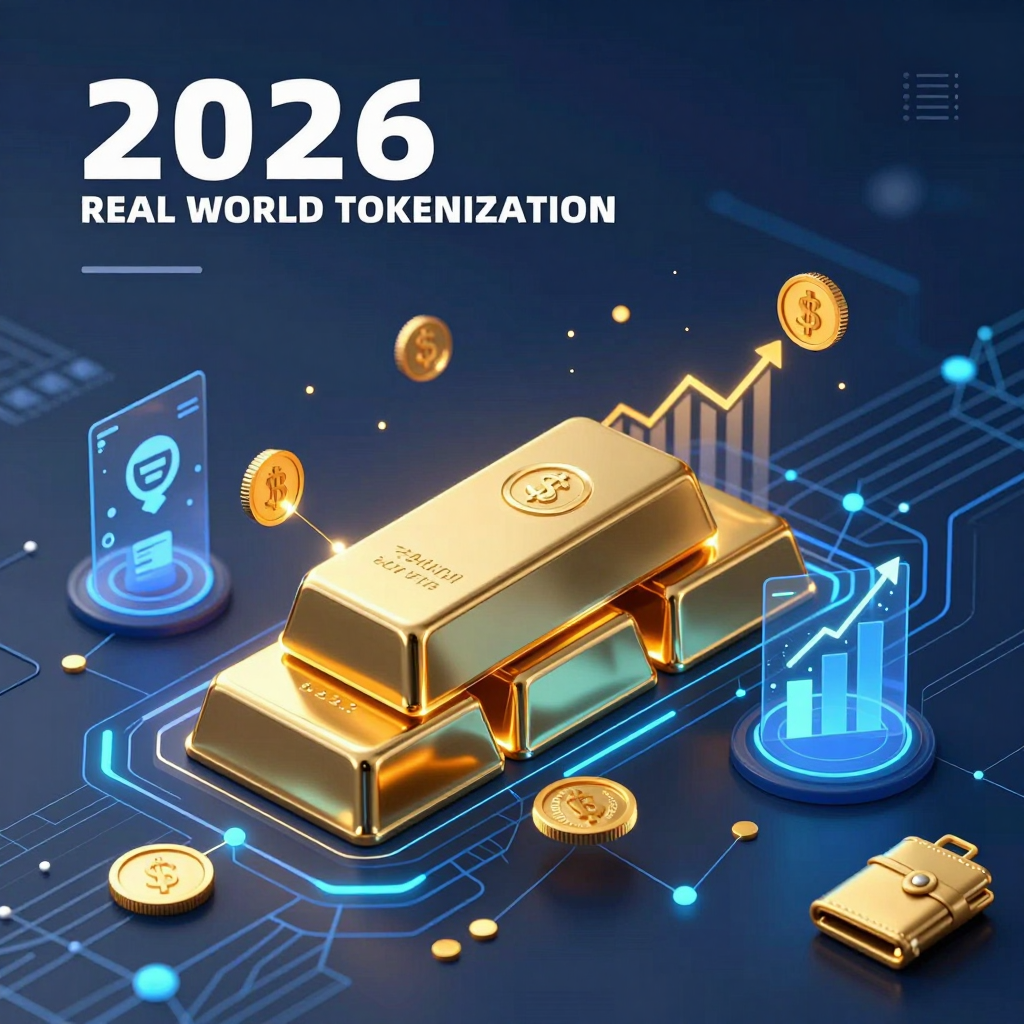
At the Heart of Blockchain Innovation: What Is RWA? — The Dawn of Real World Asset Tokenization in 2026
Real world assets are moving into the digital realm! Are you curious how Real World Asset tokenization (RWA) is shaking up traditional finance? In the blockchain trends of 2026, RWA is not just “the next hype”—it’s emerging as the core technology steering the transformation of financial infrastructure.
Defining RWA (Real World Assets) in the Blockchain Context
RWA refers to the technology that issues real-world assets (gold, stocks, bonds, real estate shares, etc.) as tokens (digital certificates) on a blockchain, enabling their trade, custody, and collateral use. The key is not merely “digitally representing” assets but migrating ownership rights and transaction processes on-chain, fundamentally redesigning trust and settlement mechanisms.
Why Blockchain-Based RWA Disrupts Traditional Finance: Reshaping Liquidity and Accessibility
Traditional finance faces inherent limitations with real-world assets:
- Lack of liquidity: Buying and selling take time and involve multiple intermediaries and procedures.
- High entry barriers: Large minimum investments or transactions dominated by select market participants.
- Inefficient collateral use: Even owning assets, leveraging them as collateral can be slow or onerous.
RWA compresses these constraints through blockchain technology. Tokenized assets offer near 24/7 trading availability, fractional investments in small units, and on-chain collateral and payment integration, dramatically enhancing asset usability. This shifts real-world assets from being purely “held” to becoming ‘financial Legos’ ready for active deployment.
How Blockchain RWA Works: A 1:1 Link Between “Physical” and “Token”
Technically, RWA typically comprises:
- Custody and management of underlying physical assets: Gold, securities, or traditional financial assets held and managed with reliable safeguards.
- Token minting and redemption: Tokens linked to the asset’s value are issued, with mechanisms to redeem tokens back into physical assets or rights when needed.
- On-chain trading and settlement: Tokens move on the blockchain, with immutable transaction records securely maintained.
- Compliance and verification frameworks: To ensure trust in asset linkage, audits, proofs, and regulatory compliance (KYC/AML, etc.) are integrated.
This structure matters because blockchain reinvents how trust is built. Transparent, tamper-resistant records tracing ownership and asset transfer history reduce costly middlemen and settlement inefficiencies common in traditional finance.
A Flagship Case of Blockchain RWA: The Promise Revealed by Tokenized Physical Gold
A clear example of RWA is tokenized physical gold. In a gold token model pegged 1:1 to real gold, users can go beyond merely “storing” gold to staking tokens for yield (around 1–3% annually) or using tokens as collateral for payments.
In other words, gold transforms from a static safe-haven asset into a fluid financial asset operating on-chain.
The Core Value of RWA from a Blockchain Perspective: “Micro-Investment + Inflation Hedge + Real-World Utility”
The reason RWA is gaining attention can be summed up in one sentence:
It makes highly value-preserving real assets accessible in smaller amounts, usable more frequently, and with greater flexibility.
- Enables micro-investment: Lowers entry barriers in traditional real asset markets.
- Stronger hedge against inflation/currency depreciation: The characteristics of physical assets like gold extend into the blockchain space.
- Collateral and payment utility: Shifts the paradigm from mere “holding” to active “utilization.”
This momentum extends beyond stablecoin-driven remittances to evolve payment infrastructures and to tokenize assets and finance on-chain—the next phase of Web3 finance. In 2026, RWA is the most tangible intersection where blockchain and traditional finance truly converge.
The Astonishing Potential of Blockchain-Based Physical Gold Tokenization
Would you believe it if there actually existed an ultra-highly liquid asset—a gold token directly linked 1:1 to physical gold—that offers 1–3% annual returns and can be used for everyday payments? In the realm of RWA (Real World Asset tokenization), physical gold tokenization stands out as one of the “easiest-to-understand yet profoundly impactful” use cases. While gold has traditionally been a powerful store of value, it suffers from cumbersome storage, transportation, and trading challenges. Tokenization virtually eliminates these drawbacks on the Blockchain.
How Does Physical Gold Tokenization Achieve ‘1:1 Pegging’? (Blockchain Mechanism)
The essence of physical gold tokens lies in the value peg: “One digital token = a specific amount of physical gold meeting defined standards.” Structurally, this is realized by combining the following elements:
- Separation of custody and issuance: Physical gold is securely stored by professional custodians (vaults/custody services), while token issuers mint tokens based on verified storage evidence.
- Minting and burning process:
- When a user deposits (or purchases) gold, tokens of equivalent value are minted.
- When a user redeems tokens, those tokens are burned and a matching quantity of physical gold is released (or converted to cash).
- On-chain transparency: The total token supply, transfer history, and collateral-to-issuance ratio are all trackable on the Blockchain. In other words, a public ledger logs “who holds how much and how it moves,” making fraud drastically harder.
When this structure works correctly, gold transforms from a “heavy, slow asset” into a transferable digital asset.
1–3% Annual Yield: How Gold Becomes a ‘Working Asset’ Even When Idle (Technical Highlights)
Traditionally, gold pays no interest. However, some physical gold token models offer annual yields of 1–3% by staking gold tokens (similar to DeFi lending or depositing). This yield typically arises through one or a combination of:
- Interest from liquidity provision/lending: Lending gold tokens to parties who need them (for collateral, trading, payment liquidity, etc.) and sharing the interest income
- Structured product design (combining gold with yield strategies): Maintaining gold price exposure while layering some operational returns (though risk profiles vary significantly depending on design)
The crucial point is that this yield doesn’t “magically appear.” It must be clearly based on real market demand. Don’t just look at yield numbers—verify redemption certainty (can you convert back to gold/cash anytime?), collateral management, and counterparty risk to ensure it truly resembles a reliable RWA.
Everyday Payments: The Moment Gold Becomes a ‘Payment Method in Your Wallet’ (Using Blockchain)
Physical gold tokens are intriguing because their value proposition extends beyond “investment” into payment.
- Collateral-backed payments: Using gold tokens as collateral to generate stablecoin or credit lines for payments
- Direct payment (settlement) scenarios: Merchants accept fiat or stablecoins, while gold tokens are automatically sold and settled behind the scenes
- The significance of ultra-high liquidity: Selling physical gold normally involves finding buyers, checking prices, fees, and settlement time, but tokenization enables “transfer → exchange → settlement” in mere moments.
Ultimately, gold’s advantages (inflation hedge, value store) combine with Blockchain’s strengths (instant settlement, traceability, programmability), redefining gold from a mere “stored asset” into a usable financial asset.
Checklist: How to Choose a ‘Genuine’ Physical Gold Token
Stronger tokenization structures lead to more robust models. At minimum, verify the following:
- Is 1:1 redemption guaranteed by contract and policy? (conditions, fees, turnaround time)
- Is there a physical gold custodian and an audit (verification) framework? (regular reporting, verification methods)
- Is the supply-to-collateral ratio transparent and strictly controlled? (preventing over-issuance)
- Are the risks of extended features like payment/loans transparent? (liquidation rules, collateral ratios, counterparty risk)
Physical gold tokenization merges “gold’s trust” with “Blockchain’s liquidity.” When properly implemented, gold ceases to be an inert vault asset and becomes a modern store of value that generates yield and supports payments.
Blockchain Web3 Finance: A Roadmap of Four Evolutionary Stages
From stablecoins to on-chain assets, Web3 finance is expanding not by “changing the world” all at once, but by gradually integrating with the real economy step by step. Understanding this roadmap reveals at a glance why the current race in RWA (Real-World Asset tokenization) and payment infrastructure is so crucial.
Blockchain Stage 1: Remittance Innovation Centered on Stablecoins
The starting point of Web3 finance is stablecoin-based remittance. While traditional international transfers are slow and costly due to multiple intermediaries, blockchain-based stablecoins have become the “gateway” to real-world finance by delivering these features:
- Instant Settlement: Payments finalize quickly through network consensus.
- Cross-border Capability: Moves seamlessly across countries and banking systems as a uniform digital unit.
- Low-cost Structure: Reduced intermediary layers mean lower fees.
- Stability (Mitigated Price Volatility): Pegged to fiat currencies or equivalents, making them suitable for payments and remittances.
In essence, Stage 1 doesn’t mean “coins become money,” but rather the digital economy is connected to real finance through a gateway.
Blockchain Stage 2: Connection with Real-world Payment Infrastructure
The next phase expands beyond “remittance” to everyday payments. The key is the integration of payment infrastructure seamless enough that users don’t even notice the blockchain. With global payment network companies now experimenting with on-chain payments and building infrastructure, Web3 finance is evolving from a closed ecosystem where “just a wallet is enough” to an open system linked to actual commerce.
Technically, these are critical:
- Integration among wallets, cards, and merchant systems
- Real-time currency exchange and settlement (stablecoins ↔ fiat currency)
- Balancing regulation compliance (AML/KYC) with user experience (UX)
Blockchain Stage 3: On-chain Assets and Finance (Emergence of Tokenized Financial Products)
If Stage 2 is the “payment rail,” Stage 3 is about bringing assets and financial products onto the blockchain itself. Traditional financial products like tokenized funds and tokenized stocks are reconstructed in on-chain forms.
Key technological points here include:
- Tokens represent ‘rights’ and ‘value’: Not just tradeable items, but digital definitions of ownership, claims, and profit rights
- Programmable Finance (Smart Contracts): Automatic execution of interest distributions, collateral management, liquidation conditions, etc. via code
- 24/7 Market Potential: More flexible trading hours and settlement cycles than traditional markets
However, once connected to real assets, “real-world constraints” such as regulations, custody, accounting/auditing, and price discovery (oracles) must be incorporated through technology.
Blockchain Stage 4: Real Economy Integration Centered on RWAs (Full-scale Expansion of On-chain Assets)
The final stage is the on-chain integration of the real economy, led by RWAs. When various traditional assets—ranging from commodities like gold to bonds, real estate, and stocks—are circulated in token form, blockchain transforms from a mere transaction network into a standard infrastructure for trust and value transfer.
Take a tokenized physical gold model as an example, which aims to satisfy these simultaneously:
- 1:1 Value Peg (physical custody/verification and redemption mechanisms)
- Liquidity Expansion (fractional trading and rapid transfers)
- Additional Financial Functions (deposit yields, collateralized loans, payment utilities)
The key isn’t just “issuing a token” but designing a trust system—both on-chain and off-chain—that covers custody, verification, redemption, and dispute resolution of the underlying physical asset. Ultimately, the four stages of Web3 finance represent not just a technological trend, but a transformative reshaping of how finance fundamentally operates.
The True Meaning Behind Global Financial Giants Racing Toward Blockchain Innovation
Why are the world’s top financial firms so focused on RWA (Real-World Asset tokenization)? The reason goes beyond “new products emerging”—it’s because the very way trust is built and value is transferred is being redesigned on the Blockchain. RWA goes far beyond merely digitizing the surface of traditional finance; it integrates issuance, distribution, settlement, collateral, and clearing into a unified structure, fundamentally changing how finance operates.
Why RWA Is Becoming Infrastructure, Not Just a “Tech Experiment” on the Blockchain
Traditional finance separates where assets reside (custodians), where trades occur (exchanges/brokers), where ownership is recorded (depositories/registries), and where settlements happen (clearing/payment institutions). This compartmentalization makes transactions convenient but settlements slow (business days, country-specific regulations), accumulates intermediary costs, and restricts small investments and cross-border trading.
RWA reconfigures this separation as follows:
- Standardizing asset ‘rights’ into tokens: Expressing the rights of physical assets like gold or stocks as tokens allows fractionation into smaller ownership units.
- Combining trade and settlement (atomic settlement): Trades are designed so that payment and ownership transfer complete simultaneously upon execution.
- Connecting collateral, loans, and payment in a single layer: Tokenized assets are instantly usable for deposits, collateralization, and payments, enabling financial services to operate in a “connected” state.
The implication is crystal clear. The core value global financial firms see is not a new coin, but a structural shift that reduces operating costs and frictions in financial infrastructure.
Three Ways Blockchain RWA Fundamentally Transforms Traditional Finance
1) Redefining liquidity: from ‘easy-to-sell assets’ to ‘always-movable assets’
For example, a 1:1 value-linked model like tokenized physical gold places assets traditionally cumbersome to store, move, and trade onto a digital distribution network, dramatically increasing accessibility. Here, liquidity expands beyond just trade volume to usability — being usable as collateral (for loans), earning yield via deposits, and facilitating payments when needed.
2) Small investments and global accessibility: lowering market entry barriers
RWA’s power lies in splitting high-value assets into token units, enabling micro-investments. This lowers the bar for asset allocation and opens up investment opportunities beyond select countries or institutions to a broader participant base. Ultimately, the old formula of “who can access” determining market size is overturned.
3) Changing the nature of trust: from institutional reliance to code and verifiable records
Trust is the foundation of finance. Blockchain leaves verifiable transaction histories and ownership transfers, minimizing intermediaries and enabling automation. Therefore, RWA is not just “technology adoption” but a systemic shift in the way trust is established.
The Signal Behind Global Financial Giants’ Participation from a Blockchain Perspective
The evolution of Visa and Mastercard’s payment infrastructure, large asset managers’ on-chain funds, and attempts at tokenized stocks all speak to one thing: RWA is no longer a peripheral experiment but a mainstream financial execution strategy.
The competition now shifts from “who can issue a token” to who can first realize:
- Institutional-grade on-chain operating standards linked with regulation and compliance (AML/KYC)
- End-to-end pipelines connecting trading, custody, collateral, and settlement
- Clear, tangible benefits felt by users in cost and time reduction
Ultimately, global financial firms are engrossed in RWA not just to digitize assets, but to reposition the entire flow of finance on a Blockchain foundation. This signals that the future battleground won’t be “which assets get tokenized,” but “how tokenized assets integrate into everyday finance.”
Future Prospects of a Korea-Style Web3 Financial Ecosystem Based on Blockchain
The Korea-style Web3 financial platform envisioned by Dunamu and Naver is poised to evolve beyond “virtual asset services” into a financial operating system that connects real-world asset tokenization (RWA), payment, and investment infrastructure all on a single screen. The key lies in combining a super app experience familiar to domestic users (Naver) with digital asset infrastructure (Dunamu), making Web3 finance not just an arena for select investors but a fundamental function of mass finance.
How the Platform Will Transform User Experience: From Wallet to ‘Financial Hub’
As Korea-style Web3 finance takes off, users will naturally experience the next flows within everyday apps rather than managing complex separate wallets.
- On-chain asset custody and transfer: Experience the immediacy and low cost of stablecoin-based remittances, simplifying domestic and international payment and settlement.
- Popularization of RWA investment: Structures enabling fractional purchases of tangible assets like gold as tokens and use as collateral will spread.
- Integration of payments and investments: Payment backed by tokenized assets or automatic linking of balances to interest-bearing products (e.g., deposit or lending yield models) may emerge.
In other words, instead of “separate investment and payment apps,” one platform will likely connect the full spectrum from asset creation (tokenization) → circulation (trading) → utilization (collateral/payment) → settlement.
From a Technical Perspective: The Bottleneck of RWA Is the ‘Trust Link,’ and Blockchain Standardizes It
RWA is not merely technology that “packages” assets as tokens, but must connect ownership, custody, and audit of real-world assets (where they are and who guarantees them) to the digital world. Here, blockchain structurally offers solutions to reduce bottlenecks:
- Immutability of ownership and transaction history: Issuance, transfer, and collateral steps remain as tamper-proof records, lowering dispute costs.
- Programmable finance (smart contracts): Automation of interest payments, collateral liquidation, and repayment conditions reduces operating costs.
- Enhanced auditability and transparency: More frequent verification of key metrics like issuance volume, reserves, and collateral ratios accelerates trust formation.
However, the “truth of the physical” resides outside the chain. Success for Korea-style platforms depends on how they design custody, auditing, insurance, and oracle (real-world data bridging) systems—this will be their competitive edge.
Anticipated Changes in the Domestic Financial Market: The Competition Axis Shifts from ‘Products’ to ‘Infrastructure’
Once platforms driven by Dunamu and Naver take root, domestic financial firms will likely reorganize, competing not just on products but on leadership over on-chain infrastructure.
- Redefinition of securities and banks’ roles: As tokenized stocks, deposits, and bonds expand, traditional players will compete in issuance and sales channels as well as in token standards, custody, and risk management.
- Layering of the payment market: Alongside card network-centric payments, stablecoin-based settlement rails will coexist, potentially changing merchant settlement speed and fee structures.
- Shift in individual investment patterns: With traditionally tokenized assets like gold, dollars, and stocks available in small fractions, retail funds may evolve from a simple “savings vs. stocks” dichotomy to basket-style portfolios.
Remaining Challenges: Regulation, Security, and Accountability Will Determine the Speed of Adoption
Technology alone cannot drive mass adoption; the following conditions must be met:
- Regulatory compliance: Clear determination is required on how to apply legal classifications of tokens (securities, electronic finance, deposits, etc.) and disclosure and suitability principles.
- Custody and incident response: Institutional frameworks are needed to define responsible parties and compensation systems for key management, hacking, internal controls, or reserve verification failures.
- Standardization: As multiple chains and services intertwine, token standards, data standards, and audit criteria grow critical. Those who lead in standard-setting are likely to dominate the platform space.
Ultimately, the question that the Korea-style Web3 financial platform created by Dunamu and Naver poses to the domestic market converges to one: How quickly can the method of building and transferring trust shift from traditional centralized systems to blockchain-based infrastructure? The answer to this will shape the future of Korea’s Web3 financial ecosystem.
Comments
Post a Comment