The Secret Behind Lunar New Year Surviving 2000 Years: Our Holiday Preserved Even During the Japanese Occupation
 \n
\n
Into the Time of Lunar New Year 2000: The Origin and History of Seollal
Our nation’s Seollal, carried on since the Three Kingdoms era, holds stories hidden within its more than 2000-year-long history. The lunar January 1st we celebrate every year is not just a date on the calendar but a ‘community time’ that has remained unbroken despite changing eras.
The Beginning of Seollal: The Original New Year Crossing 2000 Years
The tradition of celebrating Seollal on the first day of the lunar calendar, the first day of the lunar January, dates back over 2000 years. Defining the start of the new year on a specific day and welcoming it with rites and festivals is a social consensus and rhythm of life cultivated over a long time.
The Roots of Seollal: Traces of Seollal in Records from the Three Kingdoms Period
Traces of Seollal customs in our history reach back to the Three Kingdoms period. Records that Buyeo, in the Proto-Three Kingdoms era, performed rites in the twelfth lunar month reveal an early tradition of marking the year’s end and the beginning of the new year with ‘ritual ceremonies.’
Especially in Silla, records tell of exchanging greetings on Seollal morning, the king hosting banquets to encourage officials, and making offerings to the sun and moon deities. This passage hints at the origin of today’s Seollal core customs: bowing, exchanging good wishes, and the ‘first greeting’ of the new year.
The Expansion of Seollal: Becoming a ‘National Festival’ through Goryeo and Joseon Dynasties
During the Goryeo Dynasty, Seollal clearly established itself as a state event. Records that the king offered sacrifices to heaven, earth, and ancestors, and gave officials leave with feasts around the first lunar month show that Seollal functioned beyond personal celebration as a public holiday.
In the Joseon Dynasty, this atmosphere became even more pronounced. The period from Seollal to the first full moon festival was regarded as a single festive season, during which not even debt collections were pursued, marking Seollal as a sacred time to ‘pause everyday rules.’ The reason Seollal has survived for centuries is not merely tradition but because society as a whole shared its profound significance.
The Meaning of Lunar New Year Traditions: The Profound Spirit and Culture Behind Tteokguk, Sebae, and Charye
A bowl of tteokguk, a respectful bow to elders, a memorial ceremony for ancestors. These scenes of Lunar New Year may be familiar, yet they hold the secret of ‘resetting’ and ‘restoring relationships’ that allows us to live anew every year. This is precisely why Lunar New Year has remained more than just a holiday—it has preserved communal time itself.
Lunar New Year’s ‘Reset’: The Sense of a Fresh Start in a Bowl of Tteokguk
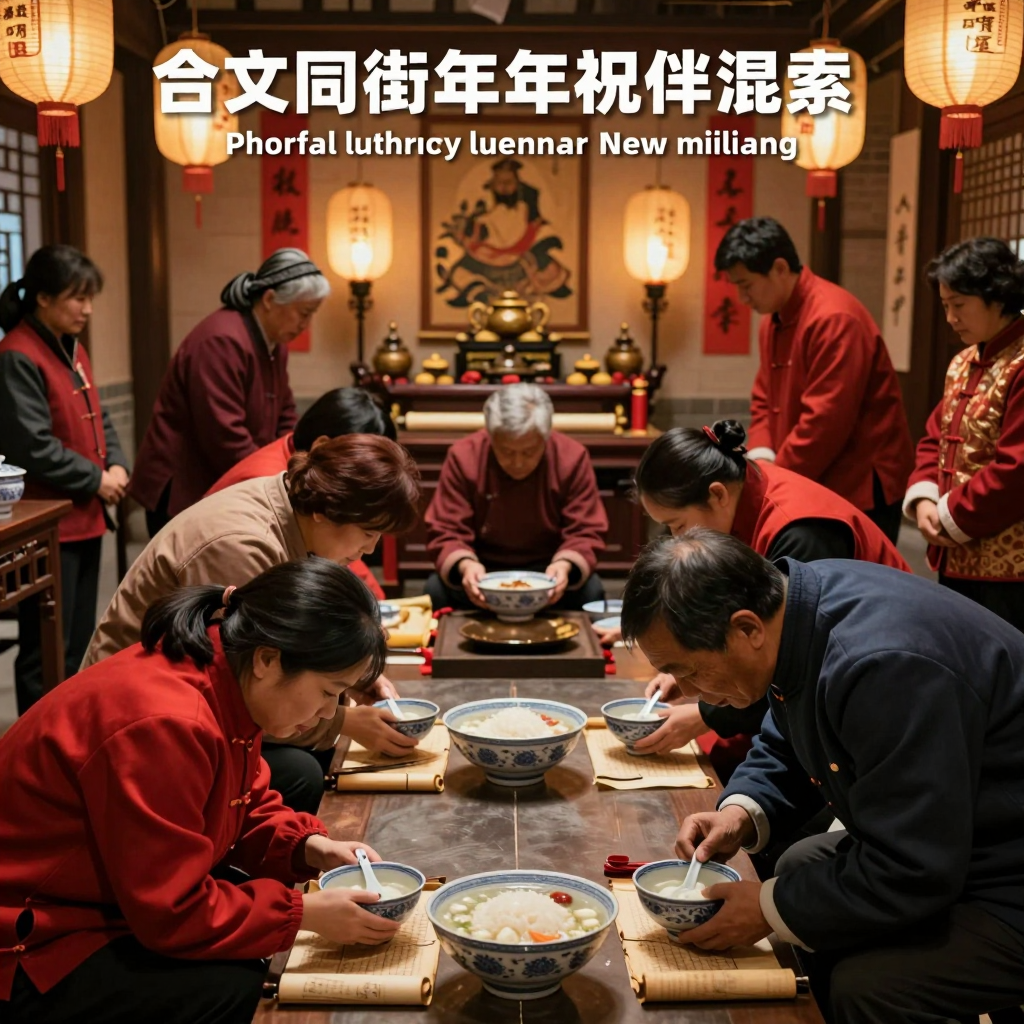
Tteokguk eaten during Lunar New Year is more than just food to fill the stomach. The white broth and rice cakes symbolize purification and a new beginning, bringing the feeling that “no matter what happened last year, you can start again” into everyday life.
This sense of reset is not merely a personal resolution but a collective fresh start where the whole community takes a synchronized breath and moves forward together.
Lunar New Year’s ‘Relationship Restoration’: Sebae as a Social Safeguard
Sebae is not just a formal greeting but a ritual reconnecting relationships. Difficult emotions that are hard to express in everyday words can be safely exchanged within the framework of Lunar New Year’s respectful bows and well-wishes.
Elders encourage the younger generation with kind words, and the youth express gratitude and respect, confirming their roles and positions. In this way, Lunar New Year has acted as a social mechanism to realign relationships that might have become shaky over the past year.
Lunar New Year’s ‘Generational Connection’: The Depth of Time Given by Charye
Charye is not simply an act of honoring the past but a link connecting generations, a way for us who live in the present to trace where we come from. Remembering ancestors becomes a way to confirm the roots of family and community, making Lunar New Year a time to reassess this connection every year.
Through this process, individual time expands into family time, and further, into communal time.
Why Lunar New Year Has Endured: “A Day to Restart and Reconnect”
The true value of Lunar New Year lies not in grand ceremonies but in the power created by small, repeated rituals every year. Cleansing the heart with tteokguk, restoring relationships with sebae, and reaffirming roots with charye.
Because of this cycle, Lunar New Year has remained the core way to live ‘true to ourselves’ amid countless changes throughout the ages.
The Lost Time of Lunar New Year: The Japanese Occupation and the Challenge of Modernization
During the Japanese occupation, the Lunar New Year, once vibrant, was reduced to a dull "Old New Year," or ‘Gujeong.’ How did our people manage to keep this holiday alive in such bleak times? The answer lies not in grand resistance, but in a stubborn refusal to give up the rhythm of life.
The Wave of Modernization That Shook Lunar New Year, and the Stigma of ‘Gujeong’
In 1895, the introduction of the solar calendar through the Eulmi Reform started to change the nation’s timekeeping. Then, during the Japanese occupation, the Lunar New Year was belittled as ‘Gujeong (Old New Year)’ while the solar January 1st was promoted as ‘Sinjeong (New New Year),” injecting a “new order.” Changing the name was no mere semantic adjustment. It was an attempt to define the holiday as something old and outdated, aiming to erase people’s memories and habits connected to it.
Erasing Lunar New Year by Making It ‘Just a Weekday’
The pressure went beyond symbols. Government offices and companies enforced normal workdays, and schools pushed through exams, turning the Lunar New Year into just another ‘weekday.’ The logic was simple: if people couldn’t rest, they would gradually forget. As a result, from 1896 to 1989, the Lunar New Year endured a long period of lacking official acknowledgment.
Yet Why Lunar New Year Remained: The ‘Unofficial Tradition’ Within Homes
But holidays don’t live only on calendars. People kept living Lunar New Year outside the system. Even without official holidays, families carved out time to gather, offered respects to their ancestors in whatever ways possible, and cared for one another.
Though publicly called ‘Gujeong,’ in their hearts it remained the real Lunar New Year. No matter how much the state renamed it, it couldn’t erase the communal spirit—the tension and resolve of welcoming the New Year—repeated annually.
The Power That Protected Lunar New Year: Collective Memory and the Feeling of a “Fresh Start”
Lunar New Year is more than a traditional event; it’s an emotional promise to “start the year anew.” The stronger the institutional pressure, the more fiercely people clung to this promise.
Memories passed from parents to children, from neighbor to neighbor kept the Lunar New Year alive, and that persistent continuity laid the groundwork for its eventual restoration as a cherished holiday.
Lunar New Year’s Revival: The Moment of Resurrection in 1989
The day Lunar New Year became a public holiday again was not just a single box checked on the calendar. It was the moment we reclaimed a lost name and restored the rhythm of our lives. From that day forward, people began to share once more the feeling that “the new year truly begins now.” Among the countless travelers heading home, there was not mere movement, but a heartfelt journey to reaffirm identity.
On January 24, 1989, the government officially recognized Lunar New Year as a national holiday and declared the three-day period—from the day before to the day after—an official holiday. The lunar January 1st, long overshadowed under the name “Gujeong,” finally found its rightful place. As the holiday’s center, which had wavered for over 90 years, stood firm once again, people’s response was immediate and unmistakable. That year’s Lunar New Year holiday saw Seoul Station and express bus terminals flooded with homebound crowds, a vivid testament to the collective anticipation for this day.
What makes this scene so moving is crystal clear. For some, Lunar New Year means a bowl of rice cake soup; for others, it is the respectful bow of sebae; and for yet others, it is the generational bond felt around the ancestral rites table. On the day society officially recognized all of these once again as ‘official time,’ people set off for their hometowns carrying their unique stories. The revival of Lunar New Year was, ultimately, a process of reaffirming to ourselves what we truly cherish in life.
Seollal Today and Tomorrow: The Present and Future of a 2,000-Year Tradition
What does Seollal truly mean beyond being just a holiday on the calendar? For over two millennia, Seollal has been a day that brings the power of new beginnings and the wisdom of restoring relationships into our daily lives. While in the past entire communities pressed the reset button together, today we carry forward this spirit in a variety of diverse ways.
Why Seollal Still Matters: The Sense of "Reset" and "Connection"
In our fast-paced, often loosely connected modern world, the significance of Seollal shines even brighter.
- A ritual to organize time: Even if New Year’s resolutions fade quickly, Seollal offers a chance to realign our minds once again. The traditional view of cyclical time continues to provide psychological stability today.
- A tool to restore relationships: Bowing deeply, exchanging kind words, or even a simple phone call might seem formal, but these acts become essential promises to rekindle the ties that busy everyday life often loosens.
- Meaning endures despite changing family forms: As single-person households, unmarried individuals, and multicultural families increase, the ways of welcoming the New Year adapt flexibly—what remains core is the spirit of remembering and blessing one another, not strict uniformity.
The Evolution of Seollal Culture: Tradition Is Not Static but Adaptive
Seollal today isn’t the same as it was in the past; instead, tradition dresses itself anew to fit modern realities.
- Simplifying rituals and expanding choices: Every family has its own style, and reducing burdens has naturally become a trend. What matters is not a “correct” way, but mutual understanding and heartfelt agreement.
- Broader ways of gathering: When visiting is difficult, video calls can substitute for respectful bows. Though the method changes, the act of checking in and sharing goodwill remains steadfast.
- Awareness of holiday labor: Moving away from holidays built on the sacrifices of some, there is growing emphasis on sharing preparations and respecting rest—an up-to-date way of preserving community.
The Future of Seollal: What to Pass On to the Next Generation
The sustainability of Seollal doesn’t lie in strict preservation but in how its meaning is conveyed.
- Message over form: A simple bowl of rice cake soup or a short card of well-wishes can suffice—as long as the blessing, “May you be safe this year,” lives on.
- Creating memorable holidays: Even without grand events, making small family rituals (taking walks, capturing photos, sharing goals) turns Seollal from an obligation into a day everyone looks forward to.
- Expanding community connections: Seollal can extend beyond family to friends, neighbors, and colleagues. The spirit of connection inherent in Seollal thrives even in wider networks.
Seollal is not about simply replicating the past; it is a moment to revive the lasting spirit of two millennia in today’s language. Each year, as we pause to organize our thoughts and reconnect with others, tradition transforms from “the old” into a vibrant culture of here and now.
Comments
Post a Comment