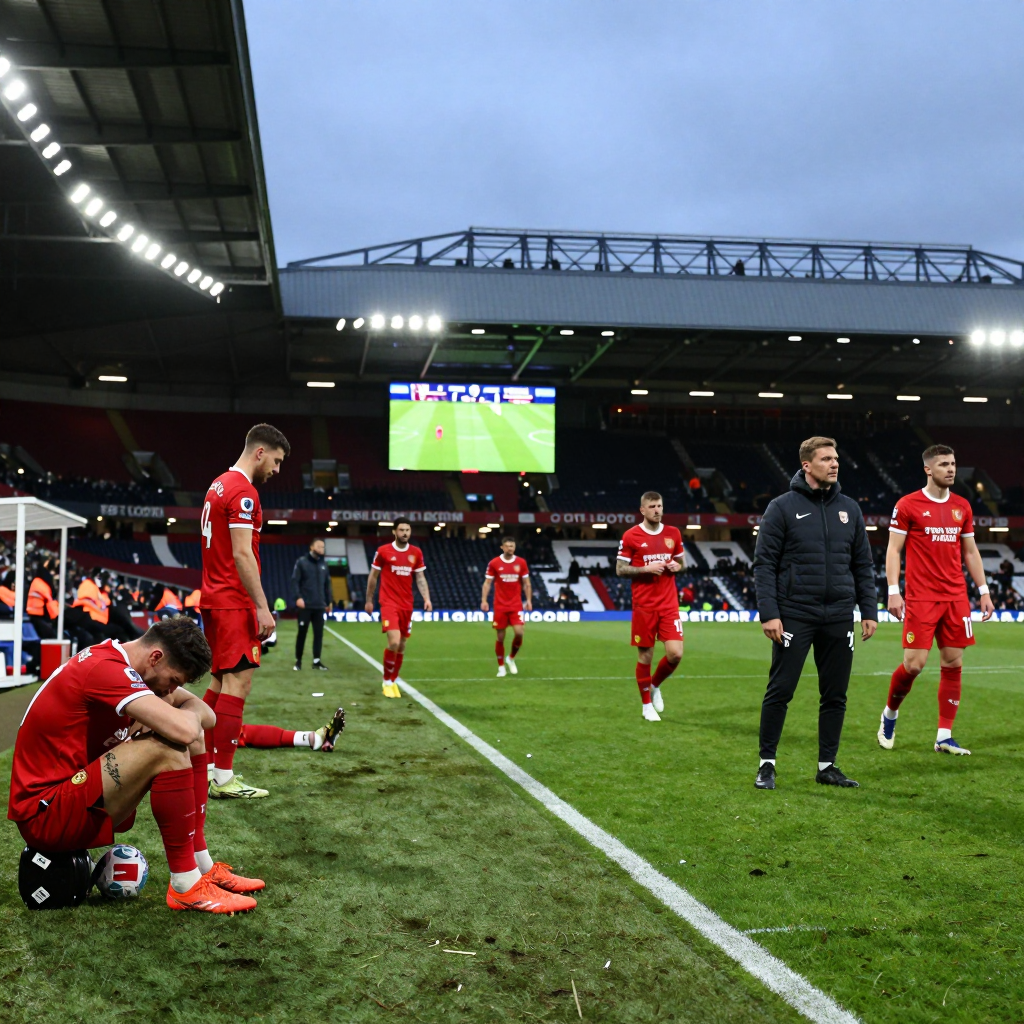
Tottenham Suffers a 1-4 Defeat in North London Derby: A Nightmare Debut for Tudor Amidst 12 Players Absent
 \n
\n
The Miserable Outcome of the North London Derby: Why Tottenham Suffered a 1-4 Defeat to Arsenal
Why did Tottenham face such a devastating 1-4 loss in Igor Tudor's first game as the new manager during the North London Derby? The answer is far more complex than simply "Arsenal was stronger." The match unfolded with Tottenham relinquishing control from the very start, enduring a defensive collapse concentrated in the second half, and grappling with an unrealistic personnel void they couldn’t fill—all these factors combined to tip the match overwhelmingly in Arsenal's favor.
The game looked ominous from the outset. Arsenal dominated possession and increased their pressing intensity, culminating in Saka’s cutback finished by Ødegaard in the 32nd minute, giving Arsenal the lead. Tottenham seemed to hold on by the skin of their teeth late in the first half thanks to Vicario’s crucial saves and intermittent defensive resistance—but this was more a temporary reprieve than an actual solution to their problems.
The critical breakdown came in the second half. Right after the restart, Ødegaard’s goal sealed the momentum completely for Arsenal, and before Tottenham could mount any meaningful counterattack, they conceded repeatedly. Although Muani briefly found the net, the goal was disallowed for a foul during the challenge—erasing a key chance to shift the game’s energy. Arsenal then capitalized further with Ødegaard’s brace and a late goal in stoppage time, cementing a 4-1 scoreline. In essence, Tottenham’s defeat was not due to a single mistake but the result of a persistent, structural collapse throughout the second half.
Adding to Tudor’s burden were brutally harsh conditions beyond his control. Several key players were sidelined due to injuries even before the match, reducing training numbers to about 13 and compounding the difficulty of expecting any cohesive team performance. Tudor’s favored three-center-back system demands robust rotation and sufficient training to take hold—but on this day, there was no luxury of “time to experiment” with tactics. Ultimately, this North London Derby between Tottenham and Arsenal was not a fresh start under a new regime, but rather a stark warning sign that the current squad’s limitations are plainly exposed.
Tottenham's Weaknesses Exposed in the Flow of the Tottenham vs Arsenal Match
The first half was literally a matter of ‘holding on.’ From the early stages, Tottenham was forced to drop their lines as they lost control of the game and were repeatedly unsettled by Arsenal’s cutbacks and second-line runs. The opening goal came as a direct result of failing to stop the pattern of players cutting inside from the flanks. Although Vicarious's saves and occasional defensive interventions prevented further damage toward the end of the half, this was more of a momentary resistance than a sign of structural stability.
The problems became even clearer in the second half. Right after conceding, Tottenham’s defensive block stretched, and their midfield pressure lost its timing. Once their defensive line was broken, Arsenal relentlessly targeted the space behind Tottenham’s defense through quick transitions and concise passing. Tottenham had to push forward to build attacks, but the moment they advanced, poor management and coverage of the space behind created a vicious cycle of ‘trying to defend but collapsing even more.’
The critical vulnerabilities exposed in this Tottenham vs Arsenal match can be summarized in two major points:
- Instability in wide defense and box area response: Marking was slow on cutbacks, and second-ball situations repeatedly broke down.
- Collapse of space between midfield and defensive lines: When pressing was delayed even by a moment, the defense dropped back, allowing Arsenal’s second line to penetrate the gaps.
In the end, the ‘struggling survival’ in the first half led directly to a ‘rapid collapse’ in the second. Despite the variable of a new head coach’s first match, it became clear that the weaknesses Tottenham must urgently fix lie not in tactics but in the spacing between defenders, the timing of their pressing, and the details of defending in the box.
Tottenham vs Arsenal: Injury Woes Adding to Relegation Threat
Sitting 16th in the league, just 4 points shy of safety, Tottenham faces a grim reality compounded by the absence of 12 key players. This Tottenham vs Arsenal defeat can’t simply be dismissed as “losing a derby”—it brutally exposed the harsh truth of Tottenham’s current plight.
With only 29 points anchoring them to the lower ranks, Tottenham’s distance from the relegation zone is effectively just a single match away. Even more troubling is the incomplete squad strength needed for a turnaround. Manager Tudor described the situation as “rare, with 10 players out including major injuries,” reflecting a squad on the brink of collapse, with only a limited number able to even train. Adding to the chaos, captain Romero’s suspension further stripped Tottenham not only of normal rotation but even the tactical options for match management.
Under these circumstances, tactical adjustments become almost impossible. Any attempt to stabilize the defense falters without the experience and work rate along the centerline—pressing becomes delayed, and defensive cover gaps open wide. As a result, Tottenham struggled to regain momentum after conceding, exposing a stark ‘structural limitation’ where substitution choices were painfully scarce as the scoreline slipped away.
In the battle to avoid relegation, the real enemy isn’t defeat itself but the damage (injuries, suspensions, and a thin squad) that causes those defeats to pile up. For Tottenham to not only shift the atmosphere but gain an edge in the survival struggle, the foremost priority must be a swift recovery to fill these critical gaps.
Tottenham vs Arsenal: The New Coach Tudor’s Challenge and Limitations
Coach Tudor gambled with a triple center-back system, but reality proved ruthless. His first test was none other than the fiercest battlefield—the Tottenham vs Arsenal (North London Derby)—forcing him to prioritize survival over tactical experimentation.
Tudor’s choice of a back three originally aimed for a virtuous cycle: defensive stability → line organization → effective counterattacks. However, this vision collapsed before it could be realized. The reason wasn’t simply about right or wrong tactics, but a lack of the very ingredients necessary to execute the strategy. With numerous injuries sidelining key players and limited training personnel, maintaining the needed spacing, cover timing, and the wingbacks’ up-and-down intensity demanded by a three-back system became nearly impossible.
Still, the path Tudor can take to overcome this challenge is relatively clear:
- Adjust to a pragmatic back three: Rather than an ideal build-up style back three, it’s crucial to drop the line boldly and secure defensive numbers close to the box first, adopting a more “practical” stance to hold firm.
- Simplify roles to reduce mistakes: The less stable the lineup, the more basic the rules should become—focusing on who blocks where and when, minimizing losses over tactical nuances.
- Redesign Plan A based on returning players: When attackers like Richarlison and Solanke return, the rhythm of pressing and transition will shift. Tudor must reset the three-back’s attacking structure—wingback overlaps, forward passing lanes—accordingly.
Ultimately, the Tottenham vs Arsenal clash was a warning for Tudor: before “painting a new style,” he must first “build an unbreakable foundation.” From the next match onward, how he structurally recovers from this heavy defeat will mark his true debut.
After Tottenham vs Arsenal, Tottenham’s Urgent Tasks for a Comeback
The crushing 1-4 defeat against Arsenal is a warning that can no longer be swept under the rug with excuses like “it was the first match.” Now, the spotlight immediately shifts to the upcoming Fulham game. This match isn’t just another fixture; it could be a turning point to temporarily escape the pressure of relegation battles. Moreover, if news of injured players returning materializes, Tottenham might finally find a lifeline out of their desperate crisis.
The challenges Tottenham must tackle right away for their resurgence are clear:
- Normalizing available squad numbers is the top priority: Without enough players in training, maintaining tactics or applying consistent pressure is impossible. The key isn’t just who returns but how many can regain full fitness. Once rotation becomes an option, the team’s tactical flexibility dramatically expands.
- Simplifying and stabilizing the defensive structure: After such a heavy defeat, the priority isn’t sweeping changes but blocking the patterns that lead to goals conceded. Even if Tudor’s strength is a back three, when personnel isn’t complete, it’s more practical to reduce roles and straighten the lines.
- Quickly re-establishing reliable scoring channels: The more depleted the attack, the lower the quality of chances. Against Fulham, Tottenham must create one or two clear scoring plans, whether through counterattacks or set pieces, rather than focusing solely on possession.
Ultimately, the Fulham game could mark “the start of a comeback” or “an extension of the crisis.” What Tottenham needs isn’t flashy declarations but a realistic recovery of strength and goal prevention grounded on injury returns. Time is running perilously short for Tottenham.
Comments
Post a Comment