Tottenham's Shocking Fall to 16th Place: 8 Matches Without a Win and Just 5 Points Above the Relegation Zone
 \n
\n
Tottenham vs Newcastle: Tottenham Falls into an 8-Match Winless Slump
Why has Tottenham failed to secure a league win in eight consecutive matches, teetering on the brink of relegation? The answer lies not in a single defeat, but in a repeated pattern of losses that has solidified into a damaging “momentum.” The recent Tottenham vs Newcastle clash vividly exposed this crisis.
Tottenham suffered a 1-2 home defeat to Newcastle, marking their eighth consecutive league game without a win, dropping them to 16th place (29 points: 7 wins, 8 draws, 11 losses). What’s more alarming is the mere 5-point gap separating them from the relegation zone. This is no longer just “mid-table struggles”; Tottenham has now stepped onto the precipice of relegation battle.
The flow of the match itself revealed the source of anxiety. Trailing after conceding a goal in injury time of the first half (45+5 minutes), Tottenham seemed to regain hope when Archie Gray scored the equalizer in the 64th minute. However, the joy was short-lived. Just four minutes later, Jacob Ramsey, assisted by Anthony Gordon, netted the winning goal, shaking Tottenham once again. Rather than sealing the game or pressing hard after equalizing, the team repeatedly displayed a pattern of losing concentration at critical moments.
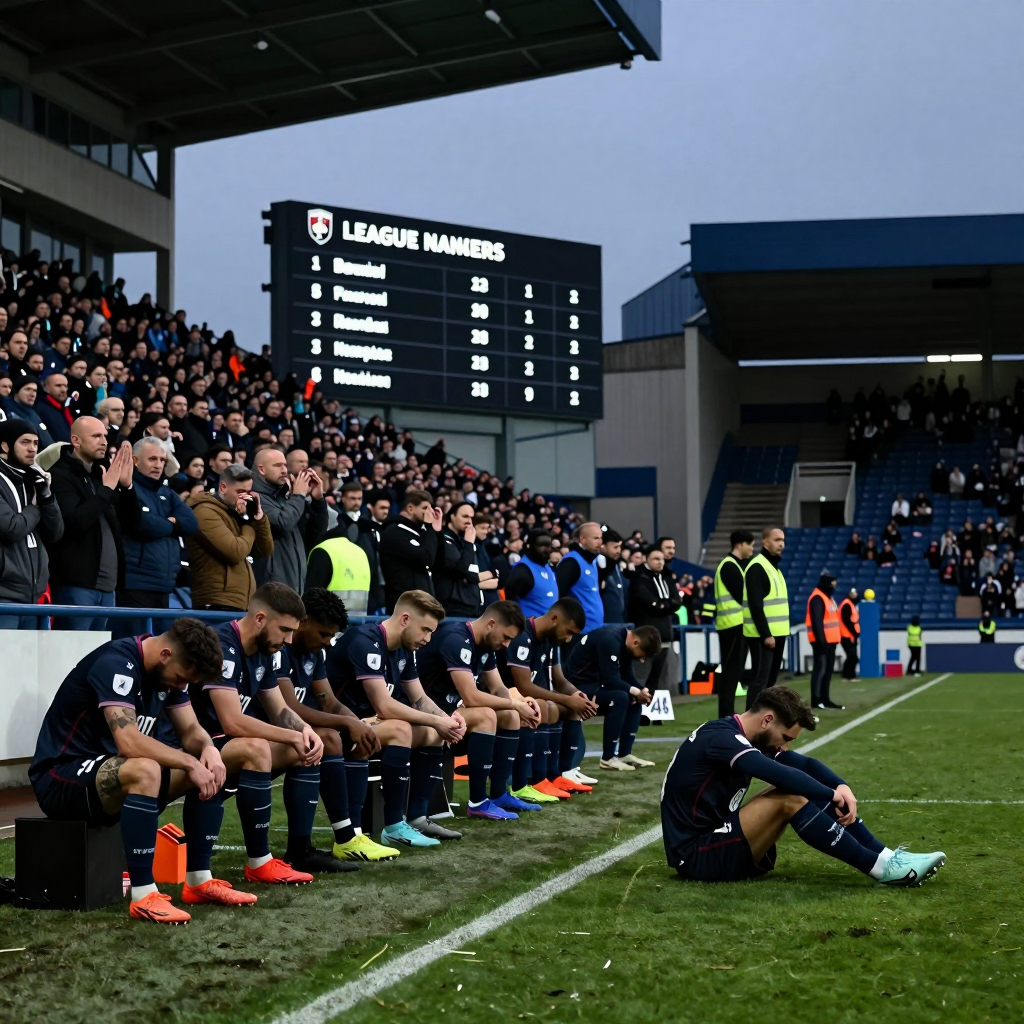
As the winless streak lengthens, the squad grows anxious—and anxiety clouds judgment. Indeed, Tottenham pushed until the very end but failed to alter the outcome, while fans were even seen leaving the stadium before the final whistle. When poor results seep into the stadium atmosphere and players’ psyche, the starting line for the next game is already set back.
Ultimately, Tottenham’s 8-match winless run is not merely a matter of bad luck but a confluence of vulnerabilities in conceding at critical times, flawed match management, and a rising atmosphere of distrust. If this vicious cycle continues, the talk of “crisis” may escalate into an undeniable relegation threat.
Tottenham vs Newcastle: The Decisive Moment That Sealed Their Fate
From the added-time header goal in the first half to the comeback winner in the 23rd minute of the second half, the flow of Tottenham vs Newcastle shifted dramatically with every passing moment. Although the game ended with just a one-goal difference, the true difference lay in the ability to “hold firm” and the strength to “finish strong.”
45+5 Minutes Into the First Half: A Set Piece Creates a Crack
The first crack in the match appeared during first-half stoppage time (45+5 minutes) with Newcastle’s opening header goal. Tottenham, who could have regrouped at halftime with the score level at 0-0, instead conceded right before heading to the locker room—a psychological blow at the worst possible moment.
That single strike severely limited Tottenham’s options moving into the second half. They became the team forced to push their lines forward to equalize, and from that moment on, the momentum tipped increasingly towards the side that capitalized on opportunities.
19th Minute of the Second Half: An Equalizer—But the Momentum Was Short-Lived
Tottenham reignited hope with Archie Gray’s 1-1 equalizer in the 19th minute of the second half. The crowd came alive again, and the atmosphere charged with the feeling that “now is the time.”
However, the problem became clear in the very next sequence. What Tottenham needed after equalizing was solid possession and risk management, but they faltered before regaining balance.
23rd Minute Second-Half Winner: Four Minutes That Changed Everything
Newcastle’s Jacob Ramsey finished off a pass from Anthony Gordon in the 23rd minute, taking the score to 2-1. Conceding the winning goal mere four minutes after leveling revealed that Tottenham lacked the minimum resilience a chasing team must have.
Instead of riding the momentum generated by the equalizer, Tottenham found themselves burdened with greater pressure and forced into a desperate chase.
Why Did the Late Push Fail? It Was Less About ‘Will’ and More About ‘Execution’
Despite their attempts to rally until the final whistle, Tottenham never found the equalizer, with some fans even seen leaving before the game ended. It can’t simply be chalked up to “bad luck with goals”—the process leading up to the finishing moments lacked precision.
- A rhythm broken by a crucial mistake: Failed to regroup properly after equalizing and conceded again
- Limited attacking options in the chase: Final passes and finishing lacked sharpness
- Growing impatience as time dwindled: Chances were created but no truly decisive moments emerged
The winner may have come from a single scene, but that moment was the culmination of mounting uncertainties. The match between Tottenham and Newcastle clearly showcased the difference between “the team that couldn’t hold firm when needed” and “the team that seized the flow when it came.”
Clear Warning Signs of Tottenham’s Deepening Crisis Revealed in Clash with Newcastle
7 wins, 8 draws, 11 losses, and only 5 points above the relegation zone. Looking at these numbers, the word “slump” doesn’t even begin to capture the gravity. Tottenham’s defeat to Newcastle isn’t just the result of a single match—it’s a vivid snapshot of how cracks within the team are surfacing throughout the game.
The Reality Behind the Scoreboard: Not Just a ‘Mid-Table Rollercoaster,’ but a Survival Battle
Tottenham has slipped to 16th place with 29 points and remains winless in their last 8 league matches. The most painful fact? The hope that they might “bounce back eventually” is losing all foundation.
- No official league wins this year
- Last league victory was against Crystal Palace on December 19
- Only 2 wins in the last 17 matches
At this pace, what’s more alarming than the drop in the standings is the clear sign that the team is losing the formula to win.
Structural Problems Reflected in the Match Flow: Catch Up, Then Collapse Again
Newcastle scored the opening goal in stoppage time of the first half, and Tottenham equalized in the 64th minute, raising hopes for a momentum shift. But just 4 minutes later, they conceded the winner and fell behind again — unable to fight back.
This pattern epitomizes Tottenham’s crisis.
- They can respond immediately after conceding, but
- They fail to maintain control of the game, and
- Even after equalizing, their defensive focus and transition play instantly crumble again.
In other words, a single comeback no longer signals a ‘turning point’—it has become just a fleeting event for this team.
Signs of a Moral Collapse: Early Fan Exits and Growing Pressure on the Manager
Fans leaving the stadium well before the final whistle is a striking image far heavier than mere results. When the home crowd’s “let’s wait and see” shifts to “can’t watch this anymore,” it shakes not only performance but also the psychological foundation of the team.
Meanwhile, pressure on manager Thomas Frank intensifies. With just 13 wins in 37 matches and only 1 victory in the last 10, whether due to tactical issues or squad management, these numbers are no longer sustainable with words alone. Even rumors of Mauricio Pochettino’s return highlight the club’s growing doubt—an internal signal that the current setup is no longer viewed as a “long-term plan.”
Conclusion: What Tottenham Needs Now Is Not a Comeback, but Normalization
The loss to Newcastle extended Tottenham’s winless streak and dangerously narrowed the gap to the relegation zone. But the more serious warning lies elsewhere: the team keeps collapsing in the same way every time it’s shaken, repeating this cycle while fan faith quickly erodes.
Now, Tottenham’s challenge isn’t just winning a single match but demonstrating at least the bare minimum of normalization—showing the world that this team can once again become a winning one.
Thomas Frank Faces Mounting Pressure After Tottenham's Defeat to Newcastle
When Tottenham crumbled 1-2 against Newcastle, extending their league winless streak to eight matches, all eyes naturally turned to the bench. The scoreboard is ruthless. Frank’s record reads a mere one win in his last 10 games and just 13 victories in 37 matches this season — a narrative defined more by a downward spiral than by any signs of revival.
What makes this loss particularly devastating isn’t just the defeat itself, but the fact that the team has slipped to 16th in the league, dangerously close to the relegation zone with only a five-point gap. This has shifted the conversation from a “tactical failure” to a “project failure,” fueling the rapid spread of calls for his dismissal.
The Question Born from Poor Results: “Is There Any Reason Left to Wait?”
When discussing a managerial change, one question stands above all: Is this slump a temporary dip or a sign of deep-rooted structural issues? Recent trends point toward the latter. Without any meaningful turnaround this year and with victories continuing to elude them, both the club and fans are beginning to doubt the assumption that “more time will bring improvements.”
Why Speculation About Pochettino’s Return Is Gaining Steam
Exploiting this uncertainty is the resurfacing rumor of Pochettino’s comeback. Regardless of its actual feasibility, the chatter gains traction because in crisis moments, clubs tend to favor a “proven narrative” over an untested new face. But as the rumor mill churns, it only deepens Frank’s predicament. The pressure to deliver immediate results intensifies, transforming each game from a chance to earn three points into a potential judgment on his tenure.
The Bottom Line: Frank’s Future Hinges Not on the Next Bounce Back, but on Avoiding the Next Slip
Tottenham’s current position isn’t just a struggling team—it’s a side that must seriously consider relegation. At this crossroads, clubs typically react faster to warning signs than to hopeful signals. Frank’s fate now depends less on whether he can stage a dramatic turnaround and more on whether he can stop the fall. Fans’ questions have boiled down to one: Is a managerial change truly the solution for Tottenham, or will the same problems surface regardless of who’s in charge?
After Tottenham vs Newcastle: Newcastle’s Revival and Tottenham’s Options
Unlike Newcastle, who ended their three-game losing streak, Tottenham has plunged deeper into trouble with 8 consecutive games without a win. Playing the same 90 minutes on the same pitch, the outcome sparked completely opposite trajectories. So, what changes should Tottenham choose after their defeat to Newcastle? Let’s explore the potential transformations this crisis could bring to the team’s future.
Newcastle’s ‘Signs of Recovery’ Revealed by the Tottenham vs Newcastle Clash
Newcastle’s victory was not just about snagging 3 points—it restored the team’s morale and momentum. Taking control with a goal in stoppage time of the first half, standing firm after Newcastle’s equalizer, and then regaining the lead with the winning goal exemplified a classic rebound pattern of a team breaking a losing streak.
Rising to 10th place in the league with 36 points, Newcastle secured not only their current standing but also a psychological safety net for the rest of the season.
Tottenham’s ‘Structural Crisis’ Exposed by the Defeat to Newcastle
In contrast, Tottenham briefly seemed back on track after an equalizer but quickly conceded the winning goal, causing the game to collapse. The painful truth is that this result isn’t just a one-off incident.
- No wins in 8 league games, no official league wins this year
- Dropped to 16th place with 29 points, just 5 points clear of the relegation zone
- Drastic slump—only 2 wins in the last 17 matches
Fans leaving early in the final moments of the game signals not “bad luck” but an accumulation of “shattered hopes.” Tottenham is now beyond simple tactical tweaks; they must decide what to change and what to hold onto.
Possible Change Scenarios Tottenham Can Opt for After Newcastle Clash
Tottenham’s options narrow down to three clear paths.
1) Shock Therapy through Managerial Change
Thomas Frank faces mounting pressure with a record of 13 wins in 37 games and just 1 win in the last 10. Rumors like Mauricio Pochettino’s return reflect the public desire for a “fresh vision.” While a change could be a quick fix, it also risks deepening mid-season chaos.
2) Maintain Current Regime + Reset Realistic Goals
If sticking with the current manager, the focus must shift from European competition ambitions to securing Premier League survival. This means prioritizing points accumulation over ideal playing style, emphasizing pragmatic management—game control, minimizing concessions, and closing out matches effectively—as the top priority.
3) Reprioritize Squad Management
The longer the losing and winless streak drags on, the more players lean toward avoidance rather than confidence. What’s needed then isn’t a major overhaul, but stabilizing core lineups and simplifying roles to reduce instability. Once results begin, morale can bounce back surprisingly fast.
The Message Left by Tottenham vs Newcastle: “This is the Crucial Turning Point for the Future”
While Newcastle’s victory laid the groundwork for a comeback, Tottenham now confronts the stark reality of a relegation battle. The Tottenham-Newcastle match was more than a single game result—it was a crossroads that revealed the paths these teams will take this season.
The sooner and clearer Tottenham makes their next choice, the more this crisis can become a launchpad for regrouping rather than a slide into further decline.
Comments
Post a Comment