 \n
\n
1. The Birth of openclaw: The AI with Hands
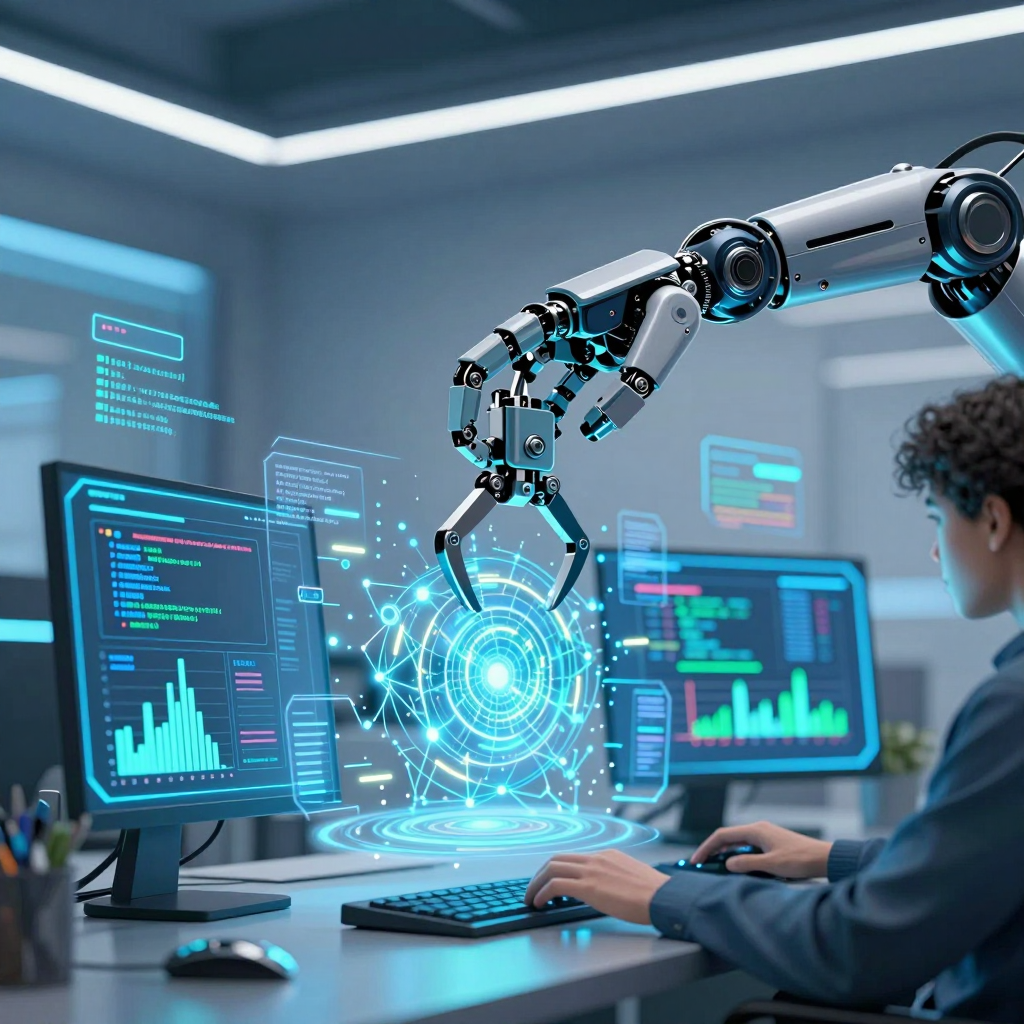
Would you believe it if we told you that beyond simple conversational AI, an AI that can actually control a computer directly has emerged? openclaw is leading this groundbreaking innovation. This project aims not at an AI that merely “talks well,” but at a real AI agent that executes tasks—automating system-level operations like manipulating browsers and handling files on the user’s PC. Its slogan boldly declares: “THE AI THAT ACTUALLY DOES THINGS.”
The Explosive Growth of openclaw, Born from a Weekend Project
openclaw started as a weekend project by Peter Steinberger in late 2025, created to enhance personal productivity and digital workflow automation. An intriguing fact is its evolving name:
- Initial name: Clawdbot
- Changed due to trademark issues: MoltBot
- Final settling in late January 2026: OpenClaw
This was more than mere rebranding—it was a declaration of identity as an open-source agent free from corporate constraints. The results speak volumes. Within a short time, it amassed over 100,000 stars on GitHub, making it one of the fastest-growing open-source projects in history.
openclaw’s Core Concern: From “Conversation” to “Execution”
Most chatbots often get stuck at “explaining” or “recommending.” But real work is different. It generally requires:
- Multi-step procedures (login → search → download → organize → report)
- Exception handling (page structure changes, permission errors, missing files)
- Integration of diverse tools (browser, local files, shell commands, messaging)
openclaw confronts this gap head-on. Its fundamental philosophy is that AI should click, type, and save directly within the user’s environment. This gives rise to the aptly coined expression: an AI with “hands.” Here, AI is not just a guide—it performs the final steps of action on behalf of the user.
2. The Fascinating Journey and Name Evolution of the openclaw Project
Starting as a simple weekend project, the untold story of openclaw—which evolved by changing its name amidst trademark issues and open-source ideals—serves as a prime example of “how technology becomes a community.” The project’s transformations were not just rebranding exercises but rather a meticulous refining of its identity: who is the tool truly for?
From a Weekend Project to Practical Automation
openclaw’s origins lie not in a grand corporate roadmap, but in a developer’s personal productivity challenge. In late 2025, Peter Steinberger began tinkering on weekends to create an “agent that actually gets stuff done on my computer.” Crucially, the goal was clear from the outset.
Rather than a chatbot that just converses, it aimed to be a system-level agent capable of reading files, manipulating browsers, and completing repetitive tasks end-to-end. This vision laid the foundation for its explosive growth later on.
Why the Name Changed: Not Style, But Survival and Philosophy
Initially, the project was known as Clawdbot. However, it soon faced trademark conflicts, a classic scenario where an open-source project meets real-world constraints.
The name was then changed to MoltBot, before finally settling on OpenClaw by late January 2026.
This final choice is especially significant, not just because a new name was needed, but because it embodied the identity of an open-source agent independent of any corporate or product ecosystem. The word “Open” encapsulates not only technical openness (integration and extensibility) but also an operational philosophy centered around community.
Explosive Growth After Rebranding: Proving Open-Source Trust
Once the name was finalized, the project’s spread accelerated rapidly. It garnered over 100,000 stars on GitHub in a short time, marking it as one of the fastest-growing open-source projects in history.
These figures signify more than mere popularity:
- The demand for AI that actually performs real work had reached a tipping point.
- Despite external challenges like trademark issues, the project transparently realigned its direction and secured community trust.
- openclaw was recognized not just as a demo, but as a practical agent ready to be deployed for workplace automation across diverse environments.
Ultimately, the name changes of openclaw weren’t just twists of fate—they represent the growing pains that any project must endure on its path from personal tool → public project → community-driven infrastructure.
3. Perfect Autonomy Realized by openclaw’s 3-Layer Architecture
What if you could just toss a message on WhatsApp saying, “Summarize this week’s competitor price list,” and an AI autonomously browses the web, organizes files locally, switches models as needed (Claude→GPT-4→Llama), and delivers the final output seamlessly? openclaw’s 3-layer architecture structurally bridges the gap between “message input → actual execution,” enabling fully autonomous task completion.
openclaw Layer 1: Interface — “The instant gateway from wherever you speak”
The first layer of openclaw standardizes the channels where users issue commands. It covers messaging platforms like WhatsApp, Telegram, Discord, Slack, and even real-time connections based on WebSocket, allowing users to instruct tasks from the environment they’re most familiar with.
Key technical highlights:
- Channel agnosticism: Regardless of the messaging app, the internal flow from “request → task” remains consistent.
- Real-time responsiveness: Through bidirectional protocols like WebSocket, progress updates (e.g., “Logged into the page,” “Screenshot captured”) are fed back instantly, ensuring automation isn’t a “black box.”
- Security from the start: This layer identifies “who sent the request” and implements a pairing policy that blocks unauthorized senders by default. Thus, autonomy here is designed as ‘controlled autonomy.’
openclaw Layer 2: Inference and Control (Gateway) — “Not just conversations, but running ‘work’”
The second layer, Gateway, is openclaw’s brain and command center. Written in TypeScript running in a Node.js environment, it executes locally on your machine and controls the “work finishing process” rather than just generating responses.
1) Execution-centric design with state memory
Gateway saves conversation history, session info, and user preferences on the file system to ensure persistence. The implications are clear:
- Long tasks (e.g., 20-step web collection + organization) maintain context without interruptions
- If failures occur mid-task, retries and recovery can resume exactly where they left off
- Different user rules (storage locations, file naming, report formats) can accumulate like learned preferences
In essence, this layer forms the foundation that lets openclaw operate as an operational agent, not merely an interactive chatbot.
2) Model agnosticism + failover: “Models are tools; work never stops”
openclaw shines with a model-agnostic design. It connects not only to commercial models like Claude, GPT-4, Gemini but also to open-source models like Llama. More importantly, it features automatic failover when a model fails.
- If a specific model hits an outage, quota limit, or degraded response quality,
- Gateway switches seamlessly to another model and keeps the task moving forward
- From the user’s perspective, the priority is “the task gets done,” not which model provided the response.
This design nails the agent’s essence—it’s not about conversational brilliance but about task completion rates as the core KPI.
3) Separation of planning and tool invocation
When a request arrives, Gateway doesn’t execute immediately. Instead, it typically runs this operational loop:
- Interpret goals (break down requests into task units)
- Devise step-by-step plans (assess needed tools, permissions, risks)
- Invoke skills (browser, shell, files, etc.)
- Verify results and decide next steps (retry, alternative routes, generate summaries)
This “plan → execute → verify” cycle transforms openclaw from a simple automation script into an autonomous workflow engine.
openclaw Layer 3: Execution and Tools (Skills) — “AI with mouse and keyboard”
The third layer, Skills, is where openclaw stops talking and starts acting. It encompasses capabilities such as:
- Browser control: Navigate pages, search, fill forms, click buttons, and collect data using headless browsers
- File system access: Read/write/organize files, create folder structures, save results
- Shell execution: Run scripts, perform conversions (PDF generation, etc.), automate development/deployment tasks
- Evidence generation: Capture screenshots, export PDFs—creating “auditable deliverables” for task outputs
Crucially, Skills doesn’t just operate via API calls; it replicates actions on the user’s computer. Even if websites lack APIs, openclaw interacts with them like a human would through a browser, continuing on to local file management in one seamless flow. This makes openclaw especially powerful for unstructured tasks (web-based repetitive work, manual operational duties).
The core impact of openclaw’s 3 layers: “Closing the triangle of platform-model-execution”
Most automation tools specialize in either the “input channel” or the “execution tool,” with AI models patching the gap. In contrast, openclaw is designed from the ground up as a single unified pipeline:
- Instruct from anywhere (Interface)
- Use any model (Gateway’s model-agnostic approach)
- Execute locally in reality (Skills)
The result? Even a “single message” from the user launches a system that breaks down, executes, verifies, and produces deliverables—running a complete autonomous work loop. This is the technical identity of ‘perfect autonomy’ embodied by openclaw’s 3-layer architecture.
4. The Real Power of openclaw: AI That Operates Your Computer Like Your Own Hand
From browser control to file system access and email checking. openclaw is not just a “responding AI,” but an “executing AI.” The key is simple. When the user gives a natural language instruction, openclaw moves through a flow of (1) planning what needs to be done, (2) choosing the necessary tools, (3) performing actual actions on the computer, and (4) leaving evidence of the results (logs/screenshots/files). This structure aligns perfectly with Claude’s Cowork (which grants computer control rights to read and edit folder files), showcasing that “giving AI control actually gets work done.”
How openclaw Transforms Commands into “Plans”: The Agent Execution Loop
When openclaw receives a request, it doesn’t jump straight into execution. Instead, it usually breaks down tasks in this sequence:
- Goal Clarification: Confirming the final deliverable the user wants
- Task Decomposition: Segmenting into stages like “collect info from web → organize documents → save files → share”
- Tool Selection (Calling Skills): Choosing the required means of execution such as browser, shell, file system, email, etc.
- Act + Check: Verifying intermediate results and advancing to the next step (retrying or rerouting if failed)
- Output Generation: Leaving results as PDFs, text files, screenshots, summary reports, and more
The crucial point is that openclaw doesn’t craft mere “answers.” Instead, it continuously runs a plan-execute-verify loop that changes the actual state—meaning the user’s computer becomes the active workspace.
openclaw Browser Control: Human-Like Clicking, Searching, and Form Filling
openclaw’s browser control goes beyond simple crawling to mimic actual user behavior (opening tabs, searching, navigating pages, entering forms, downloading). It launches a headless browser and proceeds step-by-step, capturing screenshots as needed to prove “what has just been done.”
Real-world examples
- “Find the price pages of 5 competitor sites and compile them into a table”
- Search → Visit each site → Extract price info → Create table → Save as local file
- “Download last month’s payment receipt as a PDF from this site and save it to a folder”
- Log in (if authorized) → Navigate to payment history page → Download PDF → Organize in designated folder
Even if page layouts or button positions change, openclaw dynamically adjusts its paths based on observed screen/DOM info during execution to keep tracking the goal.
openclaw File System Access: The Core of Automation from Reading to Editing and Organizing
The workflow doesn’t end with information fetched from browsers. Automation becomes truly valuable once it organizes, accumulates, and reuses files. openclaw accesses your local file system to perform:
- Browsing files in folders and reading their contents
- Editing documents and creating new files (e.g., drafting reports)
- Moving and organizing files (e.g., auto-sorting the downloads folder)
- Running shell scripts for post-processing like conversion, compression, and deployment as needed
Real-world examples
- “From this week’s meeting notes folder, gather last week’s action items into a ‘TODO.md’ file”
- Search files → Extract text → Filter items → Generate markdown → Save
- “Rename scattered contract files according to naming rules for each client”
- Scan file list → Apply naming rules → Rename → Save change logs
This point mirrors Cowork perfectly: once AI is handed control of the ‘folder where documents reside,’ it moves beyond conversation to actually create work outputs.
openclaw Email Checking: From “Notifications” to Seamless Task Handling
Emails can easily become a bottleneck at work. openclaw doesn’t just stop at summarizing emails but enables automated follow-up actions depending on conditions.
- Filter emails by specific senders or keywords
- Download attachments and normalize filenames in folders
- Extract requests to generate checklists
- Link to browser tasks (form submissions, system registrations) if necessary
Real-world example
- “Find tax invoice emails, save attachments to ‘/2026/Tax/’ organized by month”
- Search emails → Download attachments → Create/organize folders → Generate missing items report
Where openclaw Meets Cowork: From ‘Conversational Assistant’ to ‘Work Executor’
The essence of Cowork is clear: “If AI can read and edit folders, it creates actual work products—not just summaries or advice.” openclaw rides this wave but goes a step further, integrating browser, shell, file system, and messaging interfaces into a single execution system (an agent). So users simply say, “Do this,” and openclaw selects the right tools to complete the job.
Practical Benefits You’ll Notice When Using openclaw
- End of repetitive tasks: Automate entire routines like “download → organize → summarize → share”
- Multi-step workflows connected: Turn info found in a browser into organized files, then trigger follow-up actions based on those results
- Evidence-based execution: Screenshots, files, and logs record “what was done” for easy verification
Ultimately, openclaw’s true appeal isn’t a list of features—it’s that it creates ‘actions’ on the user’s computer. This is why we truly realize why an AI “with hands” is hailed as the next step in workplace automation.
5. Security and the Future: The Choices and Challenges of the ‘Entrusting Your Computer’ Era Opened by openclaw
Even with strong pairing policies, sandboxing, auditing tools, and model failover in place, one question remains: What do we gain and lose the moment we hand over control of our computers to AI? openclaw, championing “AI that takes real action,” elevates the standards of security and responsibility to a whole new level beyond the chatbot era.
openclaw’s Security Philosophy: “Safer” Over “Smarter”
At its core, openclaw prioritizes access control over model performance. In other words, it first confines what the agent can “do,” then allows automation strictly within those boundaries.
- Pairing (Trust-Based Connections): Unknown senders are ignored, interaction starts only with explicit user approval—crucial especially in messaging platform integrations.
- Sandboxing (Isolated Execution): High-risk tasks run in isolated environments to minimize the spread of mistakes or malicious commands to the entire system.
- Real-Time Monitoring/Audit Tools: Continuous vulnerability checks and keeping agent actions traceable are integral parts of the approach.
However, a vital premise underlies this: “Controlled automation” is not the same as “risk-free.” Granting AI access to file systems and browsers means that the broader the permissions, the greater the potential impact of incidents.
Realistic Risks When Entrusting Your Computer to openclaw
An agent actually handling tasks also means it can genuinely cause “accidents.” The main risk areas include:
Risk of Data Exposure
When file reading/writing/deleting is enabled, sensitive documents might be unintentionally transmitted externally (or leave traces in logs/caches), or access paths may widen.
→ Therefore, a design that excludes folders containing sensitive information from the start is practically an essential operational rule.Impact of Privilege Abuse and Account Takeover
Powerful browser automation combined with session cookies, auto-login, and password managers means risks escalate. Once an agent becomes a “login-capable entity,” attackers target “users with PC access” rather than “AI.”Non-determinism and Operational Risks
LLM-based agents may choose different actions under the same instructions. This non-determinism can be fatal in tasks like form filling, email sending, or file deletion.
→ Given the significant ROI from automation, the placement of verification steps (approval, dry run, replay) is critical to safety.
Failover Is Not a Cure-All: The Trade-Off Between Continuity and Consistency in openclaw
One compelling feature of openclaw is its model-agnostic failover: if one model fails, another takes over to continue the task, boosting availability from an operational standpoint.
From a security and quality perspective, though, new questions arise:
- Changing models means changing reasoning styles: Planning, tool invocation patterns, and error handling vary, destabilizing outcomes.
- Consistency in policy compliance: Some models behave conservatively; others act more aggressively. While failover may improve “success rates,” it can reduce “behavioral consistency.”
- Increased audit complexity: In case of incidents, reconstructing which model was switched in, why, and what decisions followed becomes necessary.
In short, failover is a device for uptime—not a silver bullet for security. Operators must design “switching criteria” and “post-switch approval rules” separately.
The Future Opened by openclaw: Automation Evolves from ‘Tool’ to ‘Proxy Executor’
Nonetheless, the future enabled by agents like openclaw is clear: the unit of automation moves beyond scripts/macros to executing entire workflows of unstructured tasks.
- Standardizing click-based tasks humans used to perform: Connecting browser manipulation, data gathering, document creation, and follow-up reporting into seamless flows.
- Expanding enterprise automation from APIs to UIs: Agents can handle legacy systems lacking APIs, broadening automation’s scope.
- ‘Workflow design’ as a competitive edge: More important than model selection are permission frameworks, validation steps, rollback plans upon failure, and logging/audit systems.
Ultimately, in the “era of entrusting computers to AI,” the winners won’t be the teams using the largest models but those standardizing the safest methods to do so. openclaw is the catalyst bringing that transformation to life.
Comments
Post a Comment