 \n
\n
Unexpected Blackout: YouTube Stalls Due to Its Own Glitch
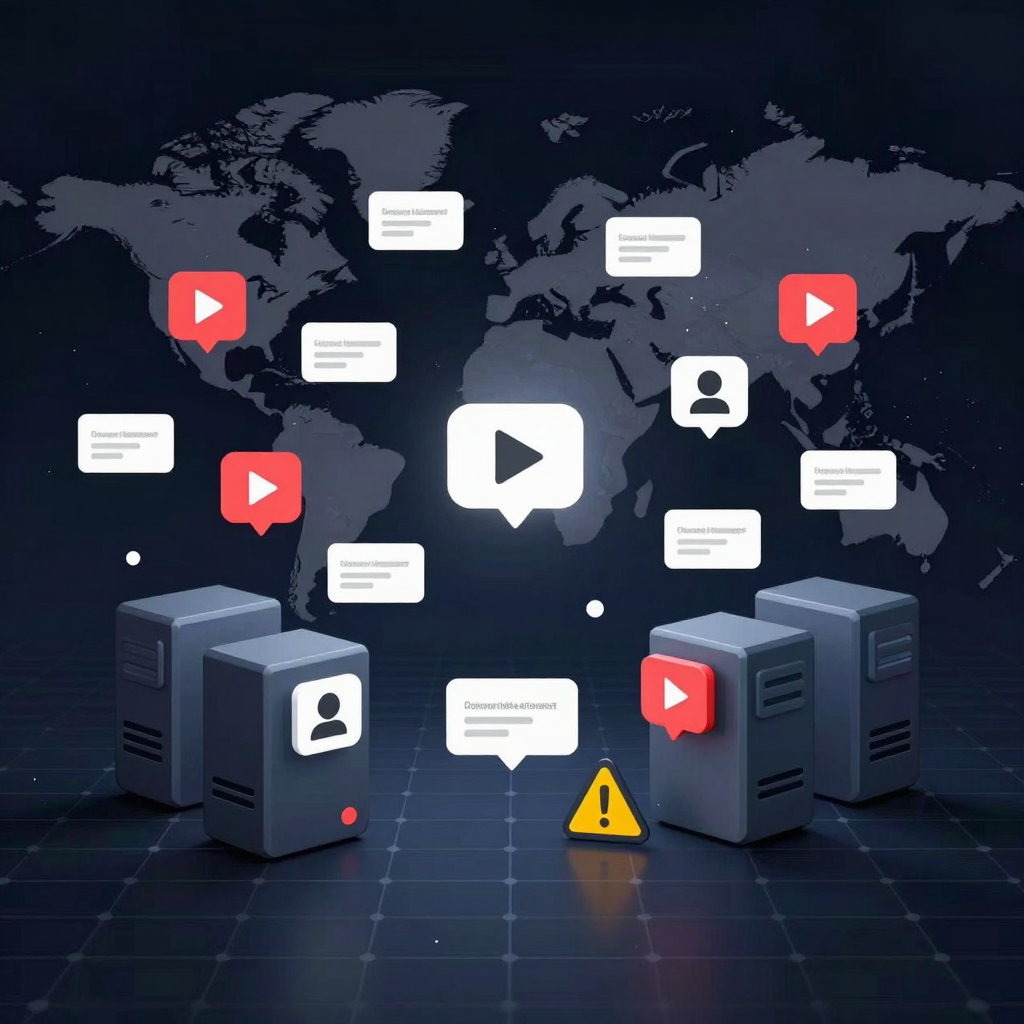
What if YouTube, used by hundreds of millions worldwide, suddenly froze for over an hour on February 18th due to a malfunction in its recommendation system? This unprecedented large-scale outage began with a deceptively simple symptom. The home screen appeared blank or displayed a “Something went wrong” message, and the usually nonstop stream of video recommendations abruptly stopped, leaving users instantly wondering, “Is it just me right now?”
Around 10 a.m. that day, the home screen failed to load across major access points—including the mobile app, website, and smart TV apps. Content seemed to vanish “as if it didn’t exist,” giving users the impression that YouTube had completely crashed. Interestingly, embedded YouTube videos on external websites played normally, suggesting the issue wasn’t a full server outage but rather a problem centered on the display and exposure phase linked to the recommendation system.
The impact spread globally in no time. The error tracking platform DownDetector recorded over 320,000 access failure reports just from the U.S., with similar outages reported in India, the U.K., and other countries. This was a truly worldwide YouTube problem that couldn’t be dismissed as a local network glitch or regional issue.
At approximately 11:21 a.m., YouTube announced via its official X (formerly Twitter) account that a recommendation system issue was causing videos to fail to display across all platforms. While the home screen gradually returned to normal, they confirmed ongoing efforts to fully resolve the problem. Adding fuel to user uncertainty and speculation, simultaneous outage reports also surfaced from Google, AWS, and Cloudflare. This incident vividly proved the fact: “When recommendations stop, the entire service comes to a halt.”
A Dark Screen and Vanished Videos Due to YouTube Issues
Imagine opening YouTube in the morning, only to find the home screen completely empty, and nothing appearing no matter how many times you refresh. Whether on the mobile app, website, or the smart TV app in your living room, all you see is a message saying “An error has occurred,” with empty spaces where your usual recommended videos should be. This was the exact moment many users faced during the recent outage.
What made it especially unsettling was how quickly the doubt grew: “Is it just my phone acting up?” Restarting the app, switching from Wi-Fi to LTE, even logging out—all attempts failed to change the situation. But as friends and others shared similar experiences, it became clear: this wasn’t a personal tech glitch but a global YouTube problem happening simultaneously around the world.
Here’s the intriguing part. Although the home screen and recommendation sections appeared completely frozen, YouTube videos embedded on external websites continued to play normally. This created a strange sensation that “The videos themselves weren’t taken down, but they just didn’t show up inside YouTube.” In the end, the inconvenience users felt wasn’t due to simple loading errors, but rather a near-total halt of YouTube’s very starting points—the ‘Recommendations’ and ‘Home’ features that guide your viewing experience.
A Digital Blackout Strikes the Globe: The Widespread YouTube Outage
With over 320,000 reports filed in the United States alone, this outage echoed similarly in countries like India and the United Kingdom. Far from a localized glitch, the phenomenon of a simultaneously blank home screen appearing worldwide prompted many to ask, “What exactly collapsed all at once?”
At the heart of the issue was YouTube’s officially acknowledged recommendation system failure. It wasn’t merely a video playback disruption; users encountered an empty home feed — the very first thing they see when opening the app or website — accompanied by a “problem occurred” message. Intriguingly, while video searches and embedded clips on external sites continued to function relatively normally, YouTube’s gateway—the home screen—was effectively blocked, creating a unique and puzzling scenario.
Another critical point: on the same day, major network services like Google, AWS, and Cloudflare also reported outages. While this doesn’t directly confirm a single cause, it vividly illustrates how deeply large-scale services are intertwined with and sensitive to shifts in common infrastructure and network segments. In the end, this YouTube incident went beyond a mere “temporary glitch” in a video platform—it starkly revealed just how quickly user experience can feel like a ‘digital blackout’ when recommendation and distribution systems grind to a halt.
YouTube Issue: The Truth Revealed by YouTube Itself, the Collapse of the Recommendation System
What exactly was the problem? This recent YouTube issue wasn’t just a simple “videos not showing up” glitch—it was a core engine shake-up serious enough that YouTube officially labeled it a ‘recommendation system problem’. This is why users saw empty home screens or only “an error occurred” messages when they opened the app.
The Core of the YouTube Issue: It Wasn’t ‘Playback’ But ‘Discovery’ That Stopped
An intriguing point is that in some cases, videos could still play. For example, YouTube videos embedded on external websites reportedly played just fine. This means it wasn’t the entire video server going down; rather, the service felt broken because the recommendation and exposure flow (home screen, feed) that helps users discover videos within YouTube itself was blocked.
Confirmed by Official Announcement: “Videos Didn’t Appear on Any Platform”
Around 11:21 AM, YouTube confirmed via their official X account that due to recommendation system issues, videos were not appearing on any platform. The simultaneous breaking of the home screen across mobile apps, the web, smart TVs, and major access points clearly signals that this wasn’t a bug affecting a specific app, but a widespread failure in the central recommendation layer (or its related components).
Clues From the Recovery Process: “Home Screen Restored, But Complete Fix Still Underway”
After the announcement, the home screen was restored, but YouTube emphasized that they were still working on a full resolution. This indicates the recommendation system isn’t a simple on/off switch—it involves multiple stages like data collection, ranking, caching, and API integration, meaning some features recovered first while others followed. For users, this might have felt less like an instant fix and more like intermittent screen changes or unstable exposure.
Why It Felt So Massive: A Global Simultaneous Outage Created an Explosive Impact
This YouTube issue happened worldwide at once, sparking hundreds of thousands of reports just in the U.S. alone. Additionally, outage reports from Google, AWS, and Cloudflare on the same day fueled speculation about a broader network issue. However, since YouTube directly pinpointed their recommendation system as the cause, the key takeaway is that an internal failure within YouTube’s recommendation and exposure infrastructure escalated into an impactful large-scale disruption.
The Shadow of Cloud Giants and the YouTube Issue: It Was Not Just YouTube's Problem
Interestingly, on the same day, outage reports also came in from Google, AWS, and Cloudflare. This detail is crucial because it makes it difficult to view the incident simply as a "YouTube internal bug." While users experienced videos disappearing from the YouTube home screen, the event actually highlights how intricately interconnected the global network ecosystem truly is.
YouTube officially cited a problem with its recommendation system as the cause. When recommendations halt, the home feed can appear empty, leading to a "something went wrong" message. However, the fact that other major infrastructures reported anomalies around the same time urges us to see the YouTube problem in a broader context. Today’s services do not rely on a single server but operate atop multiple layers of dependencies such as CDN, DNS, authentication, logging, advertising and analytics, and cloud infrastructure.
The takeaways here are clear:
- A ‘single point of failure’ can appear as a ‘full outage’ to users: When a core path like the recommendation system gets blocked, even if video playback is possible, the perception that “YouTube is down” spreads rapidly.
- The larger the platform, the more vulnerable it is to cascading effects: If outage reports spike across multiple infrastructures at similar times, it calls for an examination of the structural weaknesses in the “connected internet.”
- Design matters more than recovery: When critical features wobble, mechanisms like fallback feeds, caches, or alternative routes that prevent the home screen from going completely blank are what determine service reliability.
Ultimately, this case goes beyond “YouTube paused briefly” to demonstrate what can simultaneously collapse when the shared foundations built by cloud giants are shaken. While the YouTube issue may be over, the vulnerabilities of the networks we depend on remain very much a current, ongoing challenge.
Comments
Post a Comment