 \n
\n
Austin vs LAFC: The End of Silence, LAFC’s 4-Game Winning Streak Halted
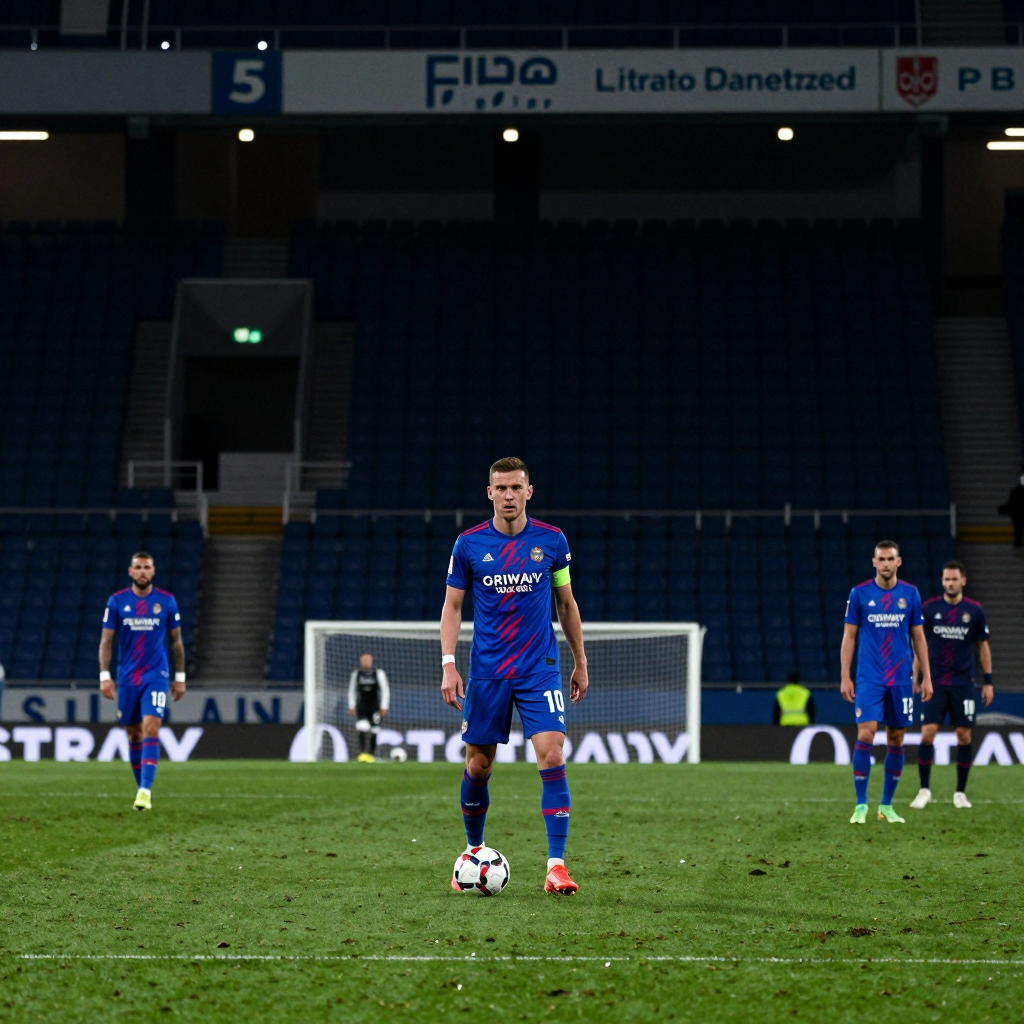
LAFC’s 4-game winning streak came to an end with a 0-0 draw at Austin FC’s away ground. On the surface, it’s “one point gained on the road,” but the Austin vs LAFC match vividly exposed why LAFC suddenly came to a halt. The problem was not the result, but the process, and the glaring attacking void revealed in that process.
The most painful fact was the zero shots on target. Rather than dominating the game, LAFC appeared trapped within Austin’s structure, just letting time slip away. They lost possession and rhythm in the first half, and although they pushed forward in the second half, no attacking conclusion ever came. They reached the opponent’s box but the “decisive moments”—the final pass and the shot—were completely missing.
Son Heung-min’s return as a central striker failed to turn things around. Extremely isolated with very few touches, he was stopped by defensive tackles at crucial moments, unable to break the pattern of ‘chances created but not finished.’ Ultimately, this draw delivers a message beyond just ending the winning streak. The challenge LAFC must tackle now is not merely scoring goals, but rebuilding the very structure that connects their attacks to meaningful shots on target.
Austin vs. LAFC: The Shocking Reality of Zero Shots on Target Amid an Offensive Crisis
The fact that there wasn’t a single shot on target throughout the entire match is a warning signal that can’t simply be brushed off as “bad luck.” Although the game ended 0-0, Austin vs. LAFC laid bare just how stifled LAFC’s attack was. They failed to control possession and, trapped within Austin FC’s defensive block, LAFC never managed to create a truly decisive moment.
The key point is that while attacks were attempted, they failed to translate into actual threat. Even as LAFC pushed harder in the second half, their shots never tested the opposing goalkeeper—indicating that multiple factors simultaneously faltered: pass speed, timing of penetration, and quality of link-up play. Whenever the ball was launched forward, Austin’s defensive line held firm, making the attack a predictable sequence destined to be blocked.
What hurts the most is the complete absence of a method to break down a defensively parked opponent. As long balls and sideways detours increased from midfield, LAFC’s attack became monotonous and easy to anticipate. From that moment onward, Austin FC comfortably maintained their shape and effectively “managed” LAFC’s offensive efforts. Zero shots on target is the ultimate proof that this defensive management was flawless.
This crisis sends a clear message: for LAFC to sustain their standing as a league powerhouse throughout the season, they must rebuild not only their ability to regain possession but also the structure to convert possession into opportunity—through penetration, second-line support, and recovering second balls. Otherwise, expect to hear the same story repeated in their next match: “They dominated the game, yet posed no real threat.”
Austin vs. LAFC: Son Heung-min’s Silence and the Weight of a 9-Match Goal Drought
We thought the turnaround would start once he returned to center forward. But in the Austin vs. LAFC match, Son Heung-min remained silent once again—and that silence has become less about individual slump and more a warning sign for the entire team’s attacking system. The fact that his season tally consists of just one penalty goal cannot be brushed off as a simple finishing issue.
Why Nothing Changed Despite Returning to Center Forward
Son played closer to his original role as a center forward in this game, yet the moments we hoped for barely appeared. Isolated to the point his touches were extremely limited until the middle of the second half, he was denied a decisive one-on-one chance by a last-ditch defensive tackle—failing to materialize the image of a clutch “problem solver.” Simply put, repositioning him as a striker didn’t change the underlying structure needed for a striker to thrive.
There seem to be two major reasons behind this:
- Cut-off in Supply: The quality and timing of passes from midfield to Son were lacking, forcing the striker to repeatedly hold his back to goal or get swallowed up between defenders.
- Monotonous Attack Patterns: Even in the second half, many attacks leaned heavily on long balls, which ironically resulted in Son and Vela being “boxed in” by opposing defenders.
The Impact of a 9-Match Goal Drought on LAFC’s Attack
Son’s nine consecutive matches without a field goal goes beyond personal stats. When a striker stops scoring, a team loses two crucial elements simultaneously: the fear they instill in opponent defenses and the confidence that their attacks will come off.
The most shocking statistic from this game was LAFC’s zero shots on target. This isn’t just because Son was shut down—it signals that there was no effective second or third plan to break through when Son was contained. His silence inevitably makes LAFC’s offense more predictable and gives the opposing defense more reason to drop deeper and stand firm.
What’s Needed Now: Fixing ‘Structure’, Not Just ‘Form’
For Son’s scoring to pick up again, mere “returning to form” won’t cut it. A fluid connection from midfield and the flanks that activates Son, quick, short combinations near the box, and alternative routes to exploit when the defense crowds Son must all be built together. Returning to center forward is only the beginning—and to make that return meaningful, LAFC must completely change the language of their attack.
The Limitations of Tactical Adjustments and Repetitive Long-Ball Passes: Structural Issues Revealed in Austin vs. LAFC
Coach Dos Santos opted for a “momentum shift” in the 73rd minute by substituting Tilman and Martínez for Amin Budhir and Tyler Boyd. However, the flow of Austin vs. LAFC barely changed. It wasn’t that the substitutions failed; rather, the structural problems in the attacking setup were already deeply entrenched and beyond what substitutions could fix. So why is LAFC’s attacking pattern so resistant to change?
Why Substitutions Didn’t Work: It Wasn’t the ‘Roles’ But the ‘Connections’ That Broke Down
LAFC ramped up their attack in the second half, but it rarely translated into real chances. The key is simple: when the link between the forward line (Son Heung-min and Buanga), midfield, and wings is severed, no matter who you put on, the ball inevitably becomes a “long pass forward.”
In other words, the substitution only changed personnel, but it didn’t alter the paths (passing lanes) or rhythm through which the ball advanced.
- There were insufficient “intermediate waypoints” in midfield to break pressure and feed forward passes
- Second-line penetrating runs failed to synchronize, leaving no outlet to support Son when he held up the ball
- Even with the wings stretched wide, short combinations near the box disappeared, reverting to reliance on crosses and long balls
Repetitive Long-Ball Switching Passes: The Easiest Offensive Option Became the Default
The scenes LAFC displayed in the closing stages were all too familiar:
A long-ball switching pass from midfield → blocked by tight wing pressure → ball recycles backward or forced into another long ball.
This repetition isn’t just because their defense is strong—it’s because LAFC themselves haven’t developed enough “rules (pattern play)” involving short passes to unsettle the defensive line.
Consequently, their attack boils down to two simple options:
- A risky long ball targeting the space behind the defense (low success rate)
- Winning by individual dribbles despite the defense being prepared (even more difficult)
Against a team like Austin that digs in deep, this simplification inevitably leads to extreme outcomes like zero shots on goal.
Hidden Problem: Attacking Design Leaving Son Heung-min and Buanga ‘Isolated’
It’s especially critical that Son, despite returning as the central striker, remained isolated. When a striker is isolated—whether a “link-up 9” or a “penetrating 9”—their influence drastically diminishes. Naturally, the team resorts to kicking the ball long toward the striker, but if that ball gets cut off, the attack resets and the rhythm vanishes.
What LAFC needed to change against Austin wasn’t player names but these two things:
- Instead of fixing Son’s receiving position, create ‘receiving spaces’ through second-line players vacating their zones and making crossing runs
- Beyond relying on Buanga’s wing bursts, insert a third connector operating in half-spaces to provide short, quick combinations
Though new faces came on as substitutes, the “connection design” remained unchanged, so the result stayed the same. LAFC’s attack didn’t shift not due to a lack of tactics, but because the channels through which those tactics operate—the connections and positional rules—were blocked throughout the match.
After Austin vs. LAFC: Facing Mid-Season Challenges, What Lies Ahead for LAFC’s Offense?
Their first draw after four consecutive wins is more than just a result—it’s a clear warning. Especially notable in the Austin vs. LAFC match was the “zero shots on target” statistic, signaling that LAFC’s offense isn’t merely off its game for one match; rather, the entire attacking system is blocked. If this crisis isn’t addressed promptly, the mid-season may see not only their points but also their confidence and game control crumble first.
Why the Attack Stalled: It’s Not ‘Individual Slumps’ but a ‘Structural Problem’
Repeated scenes of Son Heung-min and Buaanga getting isolated point to an issue beyond just someone’s form.
- When forward passes dry up, the striker loses the position and timing to receive the ball.
- If the midfield only resorts to long balls, the attack turns into a low-probability contest for possession.
- Ultimately, options near the box shrink, allowing opposing defenders to simply drop their lines and withstand attacks to avoid conceding.
In other words, LAFC’s silence stems from the vanishing process of creating chances rather than just a “lack of finishing.”
Mid-Season Remedies: Three Key Areas to Rebuild
LAFC now enters a phase that’s less about “doing more of what worked” and more about fixing what hasn’t.
1) Redefining Son Heung-min’s Role: Designing Movement to Reduce Isolation
Simply placing Son as a central striker isn’t enough. For his strengths—timing, penetrating runs, and finishing—to shine, simultaneous runs and link-ups from the second line are essential. This demands a quick recovery of short passing connections on the flanks and half-spaces.
2) Increasing ‘Entry’ into Attacks over Mere ‘Transitions’ from Midfield
Like in the Austin match, relying solely on transition passes makes the attack predictable. They need to amplify methods that unsettle defensive blocks (quick ball injections from the third line to the second, one-two passes, cutback routes near the box) to boost the actual number of box entries.
3) Clarifying Substitution Objectives: Switching Roles, Not Just Players
The lack of impact from second-half substitutions came down to ambiguity—not “who” came in but “what” they were meant to change. Whether it’s to speed up the tempo, create numerical superiority on the sides, or engineer 2-on-1 situations centrally, a substitution must serve as a tactical signal.
The Next 3 to 5 Matches Will Decide LAFC’s Fate
The 0-0 draw against Austin wasn’t just a cautious stalemate typical in top-table battles. It was a classic standstill experienced by teams whose scoring channels have dried up, and ignoring this warning risks the “next phase” becoming not a winning streak but a chain of winless games.
On the flip side, catching this issue early presents an opportunity. Midway through the league, LAFC’s future boils down to one defining question:
“After opponents adapt, can we still engineer new ways to score?” The team that answers this will remain a genuine title contender.
Comments
Post a Comment