 \n
\n
The Historic Opening of the Women’s March Madness Tournament
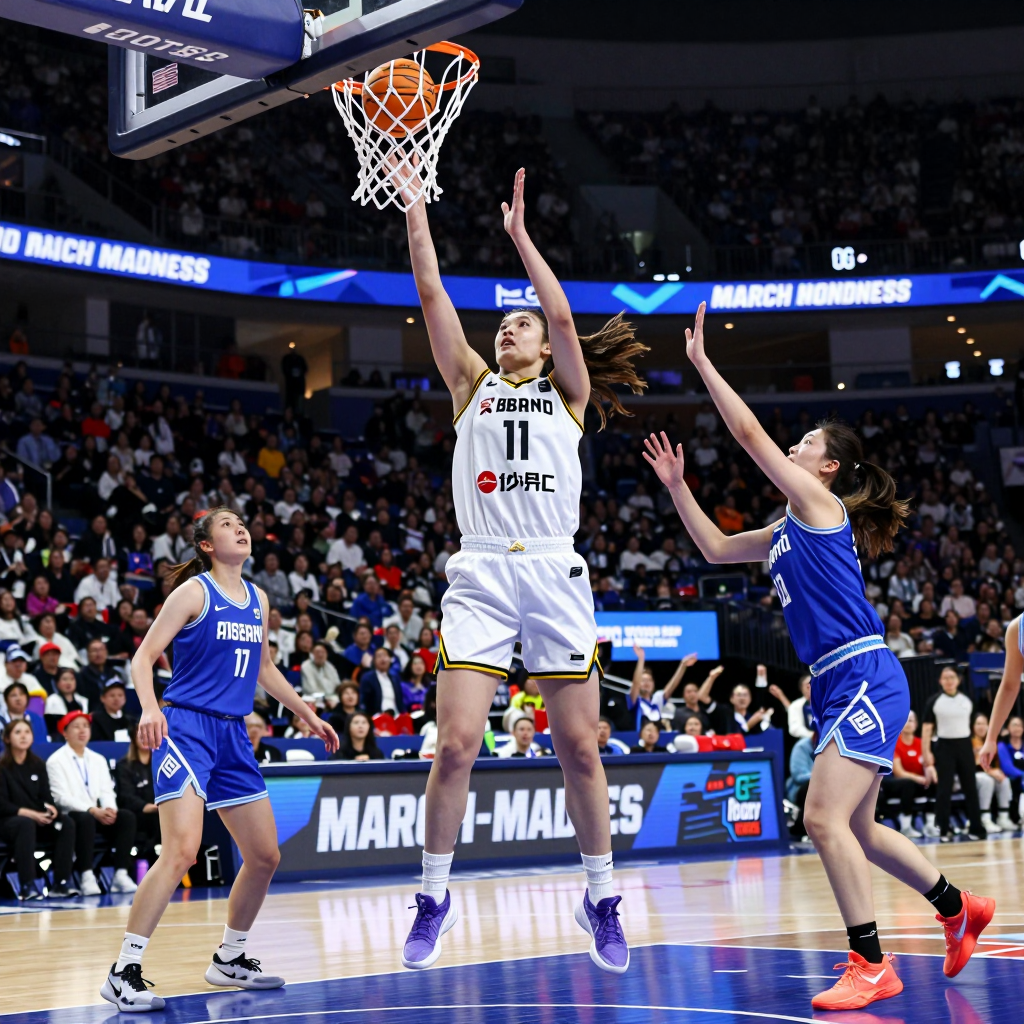
As the 2026 Women’s March Madness kicks off, what historic moments await us? With the tournament underway, records are already being rewritten, and the atmosphere is heating up. This year’s Women’s March Madness has proven the saying, “History is made from the very first game,” delivering powerful and unforgettable scenes right from the start.
The standout star is Olivia Miles of TCU. In the first round against UCSD, she recorded a triple-double with 12 points, 16 rebounds, and 14 assists — but the true significance of this feat goes deeper. She became the first player in NCAA tournament history to achieve both 14+ assists and 14+ rebounds in a single game. This wasn’t just an individual milestone; it set a new benchmark in tournament history.
Meanwhile, the competition is fierce from the very start in the First Four matchups. The 16-seed clash between Southern and Samford, along with the 10-seed face-off between Virginia and Arizona State, quickly shaped the round of 64. These early battles ramp up the tournament’s signature tension, where every game and every moment can alter a team’s fate — even before the higher seeds take the floor.
Ultimately, the allure of Women’s March Madness is crystal clear. Whether it’s the narrative of dominant powerhouses or a single player shaking up the game with historic plays, it all happens right here, right now. And in 2026, that potential is already becoming reality from the very first whistle.
Olivia Miles, the Record-Setter of the NCAA Tournament: A ‘First Ever’ Moment in Women’s March Madness
12 points, 16 rebounds, 14 assists in a single game. The numbers alone are overwhelming, but what’s even more astonishing is that this achievement is the first of its kind in NCAA tournament history. Olivia Miles didn’t just record a triple-double—she became the first player ever to post 14+ rebounds and 14+ assists simultaneously in Women’s March Madness, setting a new milestone. So, where did this ‘unbelievable productivity’ come from?
Miles’ secret can be summed up in three key areas:
- Mastery of game rhythm management: She doesn’t just focus on scoring but engineers the entire offense from start to finish, elevating the team’s efficiency. Her 14 assists aren’t just about frequent passing—they’re proof she consistently created high-quality scoring opportunities.
- Rebounding instincts beyond a guard’s norm: The 16 rebounds weren’t accidental; they were the result of her ability to predict where the ball would land and move swiftly into position. Her rebounding shows it’s not just about height but also timing and angle.
- Unwavering focus under tournament pressure: In the intense do-or-die atmosphere, she didn’t rely on moments of brilliance but built her performance cumulatively over the full 40 minutes. This kind of steadiness transforms stars into legends in Women’s March Madness.
Ultimately, Miles’ performance wasn’t just ‘a good day for a good player’—it was the product of maximizing her strengths on the grand stage of the tournament. And this very combination has become a powerful signal, strong enough to shift the entire flow of this year’s competition.
First Four: The Fiery Beginning of the Tournament — Women’s March Madness
Just before the Round of 64 begins, the hottest battleground is always the First Four. This year is no exception. As the matchups between Southern and Samford, and Virginia and Arizona State kick off, tension explodes over the fight for the “final ticket” to the main tournament. Who will emerge victorious in this do-or-die clash?
The reason First Four stands out is clear. The condition that defeat means elimination accelerates the game's tempo, and a single small mistake can end an entire season. That’s why players clash fiercely from the start, and benches and coaching staffs are forced to make the most realistic decisions on every possession. It’s precisely here that the unique drama of women’s March Madness is born.
Another key point to watch is the significance of “making it to the main tournament.” Teams that pass through the First Four don’t just join the Round of 64—they face higher seeds having already conquered tremendous pressure once. With that experience and confidence, these teams gain the power to flip the early momentum, and that one upset can change the entire atmosphere of the tournament.
In the end, the First Four is no mere preview. It is the true start where the tournament’s flames ignite first. Right now, it’s time to watch who will open the door to the Round of 64 on this stage where fate is decided in just one game.
A New Horizon in Basketball Unveiled by Women’s March Madness: Individual Skill and Teamwork in Women’s March Madness
This year’s women’s March Madness has become a stage not just to prove “who performs better,” but “how working together amplifies strength.” Even though the tournament has just begun, explosive individual performances that shift the course of games and the organizational prowess that maximizes them are simultaneously emerging, raising the intensity of the competition.
The most iconic moment was delivered by TCU’s Olivia Miles. In the first round, she recorded a triple-double with 12 points, 16 rebounds, and 14 assists—not merely a statistical feat, but the first time in NCAA tournament history that a player has achieved both 14+ assists and 14+ rebounds in a single game. This stat speaks volumes: it reveals not just an “ace who dominates through scoring,” but a leader orchestrating the entire game—regaining possession through rebounds (16R), creating opportunities with precise passes (14A), and stepping up to score when needed (12P).
What’s truly fascinating is that such individual skill does not clash with teamwork. On the contrary, given the single-elimination nature of the tournament where one momentum shift decides the outcome, a playmaker star who expands the team’s offensive options often proves more powerful than a star who clings to the ball. Miles’s achievement is also a product of perfect timing among teammates’ cuts, preparation for outside shooting, and orchestrated transition plays. In short, it’s a vivid example of personal talent shining even brighter on the foundation of a team’s tacit promises—spacing, movement, and decision speed.
Another compelling aspect is the intense tension forged by the First Four matchups early in the tournament. These single-elimination battles among lower seeds prioritize execution and chemistry over tactical experimentation, turning into wildcards when lower seeds face top seeds in the round of 64. In this unforgiving environment where a single mistake can be fatal, the fusion of slight individual edges and team precision crafts the ultimate competitive drama.
Ultimately, the new horizon illuminated by this year’s women’s March Madness is clear. Records may be written by individuals, but victories are often crafted by how a team supports an individual’s decisive moments. And as this synergy deepens, the tournament evolves into a more unpredictable spectacle and a higher level of basketball excellence.
The Future and Excitement of the 2026 Tournament: Why Women’s March Madness Is Heating Up
Judging by the current trends, this season is unfolding with a growing blend of “strong team stability” and “explosive individual player performances.” In particular, Olivia Miles’ historic triple-double signaled that this year’s women’s March Madness is more than just wins and losses—it’s a stage where new records and stories can be rewritten in every game.
Looking ahead, the key points to watch are clear. First, as the tournament deepens, the pace slows and defensive intensity rises, but ‘all-around guards/forwards’ who maintain productivity in these conditions are likely to elevate their teams. Players like Miles, who combine rebounds, assists, and scoring seamlessly, create multiple offensive solutions in tight contests.
Second, teams advancing through the First Four can become ‘game-changers’ in the early rounds. Having already experienced tournament pressure, these teams adapt quickly to the intensity and can disrupt higher seeds’ rhythm with bold rotations and aggressive defense. As the matchups tighten, there will be more moments when “one crazy game” can shake up the entire landscape.
Finally, what’s truly exciting is that this tournament could be more than just a showcase for a single star—it might mark the birth of new faces. Whether it’s a guard breaking records, a big man turning the tide in the post, or a shooter changing momentum with clutch three-pointers—this year’s women’s March Madness is impossible to predict. One thing remains certain: the early signals we’re witnessing are primed to expand into even bigger stories on the grander stage.
Comments
Post a Comment