 \n
\n
The Future Transformed by IoT Edge AI: Are You Ready?
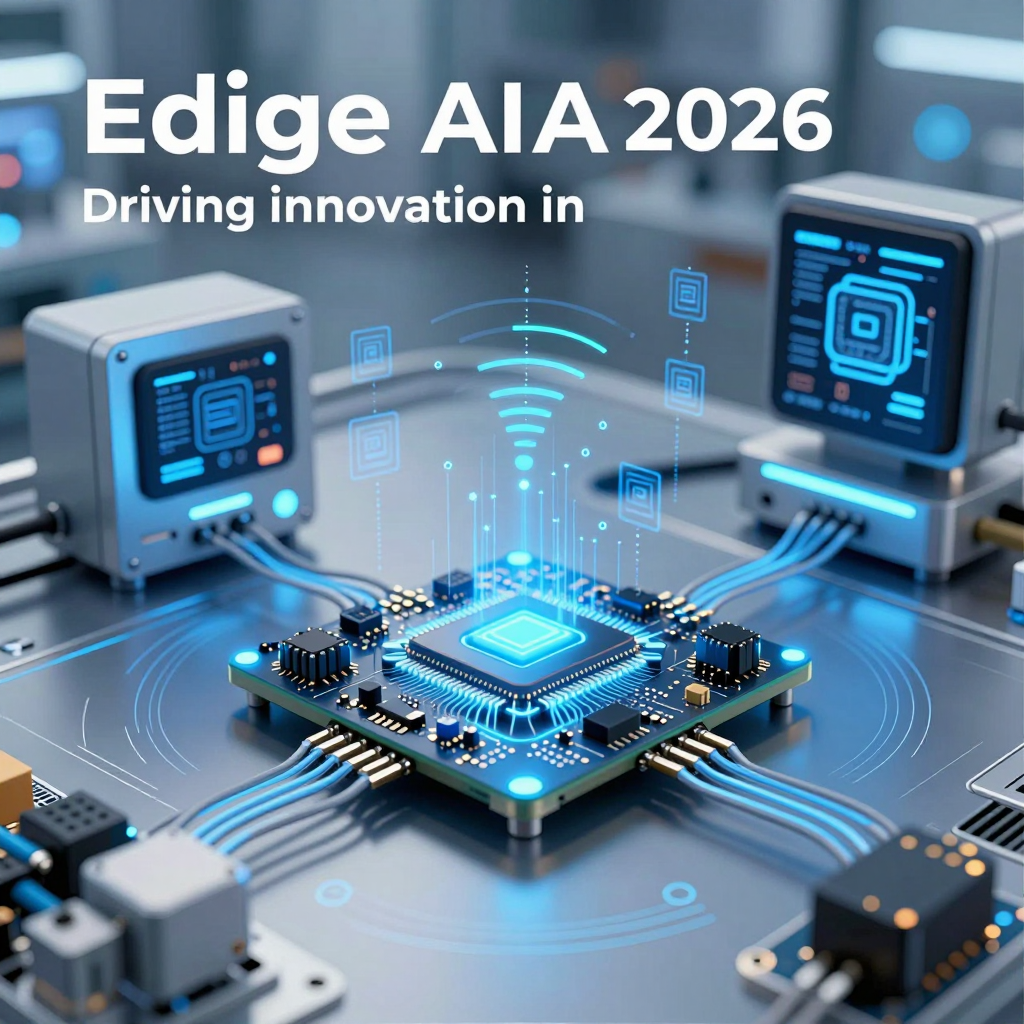
Curious how this astonishing technology—embedding AI-dedicated processors into MCUs—is sparking a revolution in IoT? The key lies in “bringing AI not to the cloud, but inside the device.” Recently, edge AI has redefined IoT performance standards by integrating dedicated accelerators like NPUs (Neural Processing Units) within microcontrollers (MCUs), enabling data collected by sensors to be immediately inferred on-site.
How Edge AI Eliminates ‘Latency’ in IoT
Traditional IoT setups typically follow the path: “Sensor data → Network transmission → Cloud analysis → Result delivery.” The problem? Latency creeps in at every step. Network congestion, communication failures, server processing queues—these hurdles create clear limits when real-time responses are crucial on the ground.
Edge AI flips the script by completing inference within the device itself before sending data out. Take, for example, TinyEngine NPUs optimized for MCUs. They execute deep learning operations—which a general MCU would handle via software—in parallel and highly efficiently on dedicated circuits. The outcome is crystal clear:
- Faster response times: From event detection to decision-making and control—all in one seamless flow
- Reduced network dependency: Core functions stay operational, even if connectivity falters
- Improved power efficiency: Local processing often outperforms “sending” energy-wise
The Technical Heart of IoT Edge AI: MCU and NPU Role Sharing
Inside an edge AI device, roles are distinctly divided.
- MCU: Oversees sensor control, communication, system logic, and power management
- NPU (or AI accelerator): Handles bottleneck operations like convolutions (Conv) and matrix multiplications (GEMM) during inference
This architecture matters because it elevates deep learning inference from merely “possible” to genuinely “usable” within the strict constraints of edge devices—low power, small size, low cost. In essence, IoT endpoints evolve beyond simple sensor hubs into intelligent nodes capable of autonomous judgment.
IoT and Industry 4.0: Why Edge AI Makes Smart Factories Real
Manufacturing floors are veritable IoT data goldmines. Signals—motor vibration, temperature, current, sound, pressure—constantly pour in, and the speed of interpreting this data controls costs. Edge AI enables:
- Predictive maintenance: Spotting failure signs instantly on-site to minimize downtime
- Real-time quality control: Quickly classifying defects without halting production lines
- Safety automation: Detecting danger signals and triggering alarms or shutdowns immediately
Industry leaders like Siemens, Honeywell, and GE are championing edge AI for Industry 4.0 because it delivers the speed and reliability on-site that cloud-only analysis just can’t match.
Real-World Benefits of IoT Edge AI: Cost, Security, and Scalability
Edge AI’s appeal goes far beyond speed alone:
- Cost reduction: Sending less raw data to the cloud slashes bandwidth and storage expenses
- Enhanced security and privacy: Processing sensitive data locally lowers exposure risks
- Scalability: As devices multiply, cloud bottlenecks grow; edge’s distributed processing alleviates this strain
Ultimately, edge AI answers IoT’s longstanding challenges—real-time performance, efficiency, and reliability—all at once. The question now is simple: Is your IoT strategy stuck on “connectivity,” or are you ready for “on-site intelligence”?
Straight from the Device, No IoT Cloud Needed! The Secret of Edge AI
Why has it become crucial to process sensor data immediately on the device before sending it to the cloud? The answer is simple: latency, cost, and security—these three everyday IoT challenges can no longer be neatly solved by a “cloud-centric processing” approach alone. The technology that directly tackles this is edge AI with AI-dedicated processors integrated into MCUs, especially embedded NPUs inside MCUs like the TinyEngine NPU.
Why Cloud Dependency in IoT Has Hit a Ceiling
Sending data to the cloud for AI inference offers scalability, but the IoT environment often faces the following bottlenecks:
- Latency: As network round-trip times increase, control and safety systems that require “real-time” decisions respond too late. For example, detecting equipment abnormalities and needing to stop immediately means delays of hundreds of milliseconds to seconds can be fatal.
- Bandwidth/Cost: Constant transmission of high-frequency sensor data (vibration, sound, video, etc.) rapidly drives up communication costs and can cause data loss in unstable network conditions.
- Security/Privacy: Once sensitive manufacturing or personal data leaves the device, the attack surface widens. Even with encryption and tough access controls on transmissions, nothing is as simple and powerful as the solution of “not sending it at all.”
For these reasons, IoT is rapidly shifting toward a structure that demands immediate on-site decision making, not cloud-only analytics.
The Core of IoT Edge AI: Structural Advantages of ‘On-Device Inference’
At its heart, edge AI means performing AI computations (inference) locally without cloud transmission. This fundamentally reshapes system design:
- Real-time decision-making: Sensor input → local inference → instant control all happen inside one device, reducing sensitivity to network conditions.
- Sending only essential data: Instead of uploading raw data continuously, only meaningful results like events, summaries, or alerts are sent to the cloud, cutting costs and bandwidth.
- Stronger on-site autonomy: Basic functions remain operational even in factories, farms, or moving objects with unstable connectivity.
In short, it evolves toward IoT’s goal of an autonomous, intelligent device network.
The TinyEngine NPU Solution: ‘Fast, Lightweight AI Even on MCUs’
The challenge is that “running AI locally” isn’t as easy as it sounds. MCUs have limited power and memory, and running deep learning solely on general CPUs drastically reduces speed and efficiency. This is where MCU-dedicated neural processing units (NPUs) like the TinyEngine NPU come into play.
- Hardware acceleration optimized for deep learning inference: Specialized circuits handle repetitive calculations such as matrix operations and convolutions, enabling faster inferences with lower power compared to generic MCUs.
- Latency reduction: With computations completed internally and acceleration by the NPU, the “sensor → decision” path shortens dramatically.
- Maximum efficiency: Within the same battery and power limit, it supports higher inference frequency or more complex models.
In essence, TinyEngine NPU goes beyond “edge AI is great” to offer a practical, efficient, and high-performance hardware solution for MCU-based IoT.
Real-World IoT Scenarios Where You Feel the Impact Immediately
Edge AI combined with MCUs featuring embedded NPUs shines especially in the Industry 4.0 context. When manufacturing equipment collects condition data through sensors, local inference enables instant actions such as:
- Anomaly Detection: Immediately recognizing abnormal vibration, current, or temperature patterns on-site.
- Predictive Maintenance: Early estimation of potential failures to shift to planned maintenance.
- Safety and Quality Automation: Applying instant judgments for safety interlocks or quality inspection assistance.
Throughout this process, the cloud focuses on “remote monitoring and long-term analysis,” while immediate decisions are handled by the device itself. This role division leads to IoT systems that are faster, safer, and more cost-effective to operate.
Edge AI Meets IoT Industry 4.0: The Revolution of Smart Factories
What if industrial equipment connected wirelessly could detect and resolve problems in real-time by themselves? This is exactly where edge AI completes the “on-site intelligence” of Industry 4.0. Companies like Siemens and GE are aggressively adopting edge AI-based smart factories not just for simple automation, but because it allows them to transition to an operating system that makes immediate decisions and takes prompt actions right on the floor.
How Edge AI Transforms Decision-Making in IoT Smart Factories
Traditional factory operations often involve sensor data being sent to the cloud or central servers for analysis, after which the results are sent back to the field. However, factories face consistent challenges such as:
- Network latency and interruptions (wireless environments, metal structures, radio interference)
- Bandwidth costs (large volumes of high-resolution vibration, acoustic, or video data)
- Data security and compliance demands (minimizing external data transmission)
- Process characteristics requiring “immediate stoppage or quick adjustment”
Edge AI solves these bottlenecks through local inference at the device (sensor/MCU) level. For example, with an MCU integrated with an NPU (Neural Processing Unit) like TI’s TinyEngine NPU, it’s possible to process sensor signals—vibration, current, temperature, acoustic—right on-site to classify and predict anomalous patterns immediately. As a result, IoT devices evolve from simple meters into nodes capable of autonomous “judgment.”
Core Technology of IoT Edge AI: Ultra-Low Latency Inference Based on MCU+NPU
In smart factories, what matters is not just accuracy but also low latency and continuous operation efficiency. An NPU embedded within an MCU accelerates deep learning operations (e.g., convolutions, matrix calculations) in hardware, enabling:
- Millisecond-level responses: instantaneous speed adjustments, line stoppages, or alarming upon detecting risk signs
- Maximized power efficiency: allowing near-continuous operation even on battery-powered wireless sensor nodes
- Minimized data transmission: sending only summarized insights like anomaly scores/events instead of raw data continuously
In short, edge AI transforms the factory IoT network from a “data collection structure” into a distributed intelligent system operating on-site.
Key IoT Use Cases: From Predictive Maintenance to Process Optimization
Edge AI’s strength in smart factories lies in its wide range of applications:
- Predictive Maintenance (PdM): Learning vibration and noise patterns from motors, pumps, bearings to detect early warning signs of failure
- Quality Anomaly Detection: Real-time classification of subtle signal changes during processes to instantly flag potential defects
- Safety and Hazard Detection: Immediate local detection of harmful gases, overheating, abnormal currents, or equipment overloads to prevent accidents
- Closed-Loop Process Control: Adjusting parameters immediately on-site without waiting for centralized analysis results
These capabilities move factories beyond “reacting to problems” to preemptively adjusting before problems occur.
Why Siemens and GE Are Focusing on This: Solving IoT Data ‘Speed, Cost, and Security’ Simultaneously
The reason large enterprises are rapidly embracing edge AI is clear. Industry 4.0 is not completed by mere connectivity; its success hinges on where, how fast, and at what cost and risk the connected IoT data is processed.
- Speed: Minimizing decision delays with on-site inference
- Cost: Cutting bandwidth, storage, and processing expenses by reducing cloud data transmission
- Security/Privacy: Reducing exposure and regulatory risks by limiting raw data outflow
Ultimately, edge AI is a core technology that evolves smart factories into factories that operate more autonomously, not just more connected, and it represents the most practical way to realize the value of IoT as a self-governing, intelligent network of devices right at the source.
IoT Edge AI Market Outlook and Expansion into Diverse Industrial Sectors
Edge AI, which simultaneously achieves cost savings, privacy protection, and real-time performance, is no longer “a technology used only in factories.” Thanks to the architecture that performs inference directly on devices (MCU+NPU) without sending data to the cloud, its application is rapidly expanding across almost every industry that requires IoT. The core is simple: reduce transmission (cost↓), keep sensitive data local (security & privacy↑), and make immediate decisions on-site (latency↓).
Market Growth Drivers of Edge AI from an IoT Perspective
The spread of Edge AI is driven not by technology trends but by economic feasibility.
- Bandwidth and Cloud Cost Reduction: Instead of continuously uploading raw sensor data, extracting and sending only “anomalies/events” at the edge drastically reduces network traffic and cloud storage/analysis costs.
- Real-Time Control and Safety Enhancement: For IoT systems requiring millisecond-level responses, such as process or mobile control, cloud round-trip delays are fatal. Completing inference on MCUs equipped with NPUs shortens control loops and increases safety margins.
- Privacy Protection and Regulatory Compliance: Data in healthcare, home, and mobility sectors is highly sensitive. Edge AI can be designed to avoid exporting raw data externally, using only local features or results, structurally minimizing privacy risks.
Technically, NPU acceleration within MCUs is the key. Dedicated accelerators like TinyEngine NPU handle deep learning bottleneck operations such as convolution and matrix multiplication in hardware, boosting power efficiency compared to general MCUs. This makes “always-on” inference feasible even for battery-powered IoT devices.
IoT Healthcare Sector: “On-Site AI That Does Not Send Data Outside”
In healthcare, the value of Edge AI lies as much in its data handling approach as in accuracy.
- Wearable Vital Sign Anomaly Detection: Local inference of heart rate, SpO₂, respiration, and temperature can record and transmit only abnormal states like arrhythmia suspicion or hypoxic events—saving battery and communication costs while speeding up alerts.
- In-Hospital Equipment Monitoring (Predictive Maintenance): Edge analysis of vibration, current, and temperature patterns from pumps, refrigerators (vaccine storage), and imaging devices can detect faults early, reducing costly downtime compared to reactive responses.
- Privacy-Centered Design: For example, fall detection based on room cameras and sensors can compute pose and behavior features locally, transmitting only fall probabilities—without uploading raw video—to the server.
IoT Agriculture Sector: Edge AI Stronger in Unstable Connectivity Environments
Agriculture, with poor communication infrastructure and expansive fields, suits Edge AI especially well.
- Precision Irrigation and Fertilization Optimization: Immediate on-site interpretation of soil moisture, sunlight, temperature, humidity, and crop growth data can control valves to reduce water and fertilizer usage while maintaining quality.
- Early Pest and Disease Detection: Local classification of patterns collected by trap cameras and sensors rapidly notifies pest presence, allowing targeted treatment instead of broad spraying—cutting costs and environmental impact.
- Offline Robustness: Even when networks fail, local inference and control continue. IoT evolves from “nice-to-have connectivity but stops if disconnected” to a system that autonomously endures on-site.
IoT Mobility Sector: Latency and Safety Accelerate Edge AI Adoption
In moving objects, latency directly affects safety. Edge AI brings decisions closer to reduce risks.
- Condition-Based Maintenance (CBM) for Vehicles and Logistics: Edge analysis of engine/motor current, vibration, and temperature data triggers communication only upon fault signs, lowering operational costs while increasing uptime.
- Driver/Operator Safety Monitoring: Local inference of drowsiness, distraction, and risky behaviors can provide immediate alerts to prevent accidents. Designs can also avoid sending sensitive video data externally.
- On-Site Decision Making for Robots and AMRs (Autonomous Mobile Robots): Obstacle avoidance and path adjustments in warehouses or factories must be immediate. Edge inference enables operation less affected by communication delays or server loads.
Technical Checkpoints for IoT Deployment
Realizing industrial applications requires more than just “uploading models.”
- Model Compression and Integer Quantization (e.g., INT8): Models must be compressed to fit MCU resources (memory/compute/power) and optimized into operation types best handled by the NPU.
- On-Device Security (Key Management, Boot Chain, Firmware Updates): Edge operates in distributed environments, so device-level security equates to total IoT security. Secure OTA updates and integrity verification are essential.
- Event-Driven Data Pipeline: Designing to transmit “anomalies/summaries/features” instead of raw streaming reduces both cost and latency simultaneously.
Edge AI simultaneously addresses IoT’s long-standing challenges of cost, security, and real-time performance, expanding rapidly beyond manufacturing into healthcare, agriculture, and mobility. Ultimately, the market demands devices that operate smarter with minimal connectivity—not just more connections—and edge AI is the technology that answers this demand most directly.
The Completion of IoT Autonomous Intelligent Networks: The Future of Edge AI
The ultimate goal of IoT is to create a fully autonomous network of devices that observe, reason, and act on their own, going beyond merely “connected devices.” The key enabler of this vision is Edge AI. With AI-dedicated accelerators like NPUs integrated into MCUs, the traditional structure of sending sensor data to the cloud and waiting for analysis is transforming. Now, devices themselves perform real-time inference, enabling immediate on-site decision-making even when the network is temporarily unstable.
The Technical Principle Behind Edge AI Creating ‘Autonomy’
Edge AI autonomy goes beyond simply “running AI locally.” The core lies in completing closed-loop control at the edge.
- Sense: Sensor data such as vibration, current, temperature, and acoustics continuously flows in.
- Infer: The NPU inside the MCU accelerates deep learning inference (e.g., anomaly detection, state classification). Computation is optimized around MAC (multiply-accumulate) operations, which are central to models like CNNs and TCNs. The NPU processes these in parallel to reduce latency and power consumption.
- Decide: The inference results are combined with thresholds, state machines, and policy logic to make decisions such as “stop,” “reduce load,” “send alert,” or “switch to precise diagnostic mode.”
- Act: Physical systems are directly controlled through motor drives, valve adjustments, or process parameter corrections.
When this cycle closes at the edge, the cloud no longer serves as the “center of judgment” but rather as a hub for learning, deployment, and monitoring. In other words, the field reacts swiftly, while the cloud optimizes the big picture.
From Distributed IoT Inference to ‘Network Intelligence’: The Evolution of Edge-Cloud Collaboration
The future of IoT envisions Edge AI as the “brain” of each device, while devices collaborate to form greater intelligence. The following architecture becomes crucial:
Hierarchical Inference
- Ultra-low latency decisions are handled immediately at the device edge
- Correlation analyses across multiple devices are integrated at the gateway/field server
- Long-term trends and model improvements are done in the cloud
Event-driven IoT Communication
Instead of continuously transmitting all data, only meaningful changes (such as anomalies, quality degradation, risk states) are compressed and summarized at the edge before being sent. This reduces bandwidth, cost, and the attack surface for security breaches simultaneously.Continuous Model Operations (Edge MLOps)
Models deployed at the edge may degrade over time due to environment changes (wear, seasons, process variation). Future IoT operations demand:- Secure OTA updates of models and firmware
- Retraining or parameter tuning based on on-site data
- Device-specific performance monitoring (drift detection)
These “operational technologies” will become key competitive advantages.
The Next Stage of IoT Edge AI: Smaller, Safer, and More Explainable Autonomy
To realize a truly autonomous device network, Edge AI must emphasize reliability as much as performance. Key future trends include:
- Ultra-low power, always-on AI: Continuous anomaly detection even on battery-powered sensor nodes becomes possible, a game-changer for widely distributed IoT environments like manufacturing, logistics, and agriculture.
- Enhanced On-device Security: Building on the advantage of localized data, combining model and firmware integrity verification, secure boot, and key management will realize “field autonomy + security” simultaneously.
- Explainability at the Edge: In industrial sites, understanding “why a stop occurred” is critical. Beyond simple classification results, it’s expected to expand how contribution of features or evidence for anomalies is provided alongside decisions.
Ultimately, the future of Edge AI moves beyond each IoT device getting independently smarter; it evolves into distributed intelligence where devices understand each other’s situations and collaborate to optimize processes and environments. A structure that works without the cloud but works better with it—this is exactly where the “fully autonomous device network” shifts from concept to reality.
Comments
Post a Comment