 \n
\n
Austin Shooting: The Shocking Moment of the Downtown Austin Massacre
In the early hours of March 1, 2026, what should have been a peaceful night at Buford's bar in Austin instantly turned into a scene of tragedy. What could have triggered this horrific shooting?
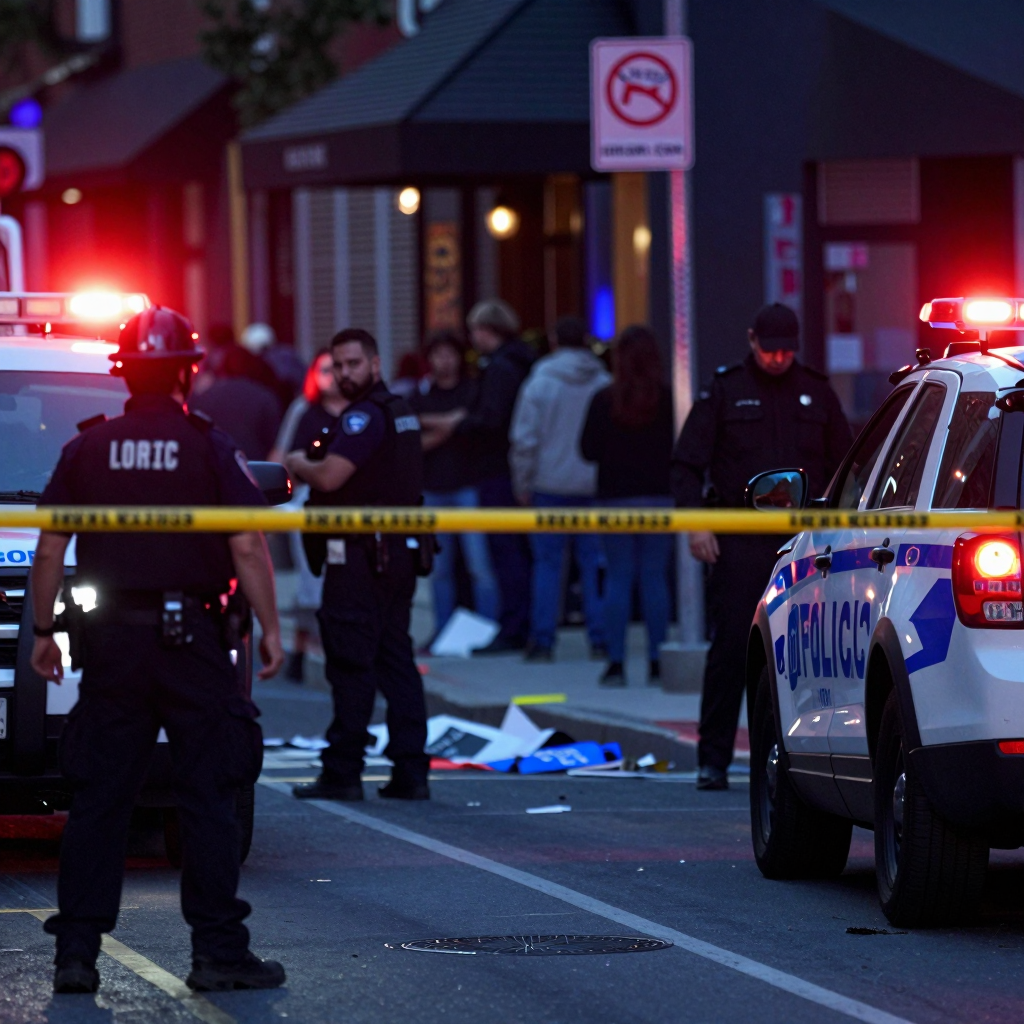
The incident began around 1:39 AM with a distress call. Police and paramedics arrived at the scene within 57 seconds, but even in that brief time, the situation escalated rapidly. The suspect, 53-year-old Ndiaga Diagne, circled the bar multiple times in a large SUV, watching for an opportunity before lowering his vehicle window and opening fire on guests seated on the bar’s terrace with a handgun.
He didn’t stop there. After stopping the vehicle, he got out and continued shooting with a rifle at pedestrians along 6th Street, turning a bustling nightlife area into chaos in an instant. Eventually, three police officers stationed on 6th Street returned fire, and the suspect was fatally shot at the scene.
The Austin shooting left three dead, including the suspect, and 14 hospitalized, with three in critical condition. What was once "a street like any other early morning" instantly became a life-or-death moment, leaving people grappling with why such violence erupted—and anxiously wondering where it might strike next.
Austin Shooting: The Hidden Story of Suspect Ndiaga Diagne
Ndiaga Diagne, a 53-year-old U.S. citizen originally from Senegal — how did he end up wielding a gun in the heart of Austin? And why did this act of violence target the bustling crowds on 6th Street that very early morning?
According to information released so far, Diagne entered the U.S. on a tourist visa in 2000, obtained permanent residency in 2006, and was naturalized as a U.S. citizen in 2013. Judging by this history, he appears to be “someone who has lived within American society for a long time.” Which raises a deeper question about this Austin shooting: Was it a mere moment of rage, or the explosive result of a long-brewing fracture of beliefs, psychology, and environment?
Clues Revealed in the Austin Shooting: Two Firearms and Items Interpreted as a ‘Message’
Police reported he was armed with a handgun and a rifle. Authorities also found Iranian flags and photos of Iranian leaders at his residence, and the Quran was discovered in his vehicle. During the incident, he was reportedly wearing a sweatshirt bearing the phrase “Property of Allah.”
These items do not instantly indicate a motive or organizational ties. The FBI mentioned a possible “terror connection,” yet the precise motive remains unclear. However, given that such symbolism is easily interpreted by media and the public as significant, the investigation must carefully distinguish between symbols and actual facts.
Two Angles to the ’Why’ of the Austin Shooting: Extremism vs. Mental Health Records
Investigators are exploring two main avenues:
- Influence of extremist ideology and potential international terror links: The core issues include what the FBI’s “potential connection” truly implies, whether this was a lone act, or if outside contacts were involved.
- Mental health issues and past records: Authorities have confirmed they are also looking into Diagne’s mental health history and previous related incidents in Austin.
These angles are not mutually exclusive. Psychological instability can lead an individual to latch onto certain ideologies or symbols as ‘convictions,’ or conversely, ideological fanaticism can distort one’s judgment, escalating to violence. Thus, the key question here is not simply “what triggered the act,” but how the violence became ‘justified’ in his mind.
What Makes the Austin Shooting Even More Alarming: The Gap Between a ‘Long History’ and ‘Sudden Violence’
Diagne spent a long time—from his arrival to naturalization—in the U.S. Yet much about his life remains fragmented, and these gaps only deepen the mystery. What kinds of jobs and social networks was he involved in? Had there been recent changes in his life — financial stress, broken relationships, or conflicts? And what was the immediate reason that led him to acquire firearms?
Authorities currently believe the suspect acted alone. This leads to an even more crucial question: Instead of “who told him to do this,” what really “led him to this point”? The answers to this question could reveal that the Austin shooting is far from an isolated incident; it could become a mirror reflecting issues in urban safety, mental health systems, and radicalization pathways.
Austin Shooting Terrorism Possibility: The Shadow of a Potential Threat Within the U.S.
What do the Iranian flag, photos of Iranian leaders, the Quran, and a ‘Property of Allah’ sweatshirt found on the suspect and his vehicle signify? If these symbols go beyond mere personal belongings and serve as deliberate clues meant to send a message, then the recent Austin shooting should be seen not as a spontaneous crime but within a much broader context.
The reason investigators mention a “potential connection to terrorism” is that the evidence found at the scene makes it difficult to dismiss the possibility of an ideological motive. Particularly, the symbols discovered in the suspect’s residence and vehicle could be interpreted very differently depending on whether they are simply expressions of religious identity or signs of radicalization in response to specific political and international conflicts. The problem is that, for now, the motive remains unclear, and the investigation is at the critical point of distinguishing among ideology, political symbolism, and personal delusion.
The FBI is examining not only the influence of extremist ideology and the possibility of international terrorist links but also the suspect’s mental health and past records. This signals a refusal to rush to a single conclusion. In reality, some incidents feature radical symbolism but act independently, while others that appear to be lone acts may have been influenced by online networks or incendiary content. This nuance underlies the authorities’ statement that “so far, the suspect is considered to have acted alone.”
Another crucial angle is the international situation and heightened local security measures. The Texas governor’s reference to Middle East tensions and increased vigilance is less about labeling this specific case and more about anticipating the risks of simultaneous copycat or retaliatory attacks. Ultimately, the question raised by the Austin shooting is clear: “Is this an individual’s explosive act, or a sign of a potential threat surfacing within the U.S.?” While the investigation will seek the answer, what demands our attention is not merely the ‘existence’ of evidence but the ‘context in which these pieces connect.’
Austin Shooting: Swift Response and the Community’s Unyielding Defense
In less than a minute, the scene shifted from chaos to action. Just 57 seconds after the 1:39 a.m. report, police and emergency medical teams arrived near Buford’s Bar, and the injured were rapidly transported to hospitals. Given the heavy toll of the Austin shooting, the timely response within this critical golden hour proved to be the pivotal factor in preventing further harm at the scene.
The reason for this rapid deployment was the already substantial police presence in the 6th Street entertainment district. Officers immediately returned fire in response to the suspect’s continuous shooting, neutralizing the threat on-site. The speed of arrival was not just a number—it became a clear indicator that the city’s safety system was working exactly as intended.
Beyond the immediate response, the community’s defense extended into policy and structural measures after the incident. Texas Governor Greg Abbott ordered intensified patrols and surveillance in downtown 6th Street through a state defense operation, firmly drawing the line against any further threats that might exploit tensions. This decisive stance sent a powerful message during a vulnerable aftermath: the city is not defenseless.
Ultimately, the question left behind by this incident is clear. Crises may come again, but the speed of response and the unity of the community remain choices that can always be made. From the swift deployment of law enforcement and emergency transport to strengthened ongoing vigilance—Austin refuses to loosen its grip on defense, even amid shock.
Reality and Response: Challenges and Hope Ahead — The Tasks Facing Austin After the Austin Shooting
This incident, intertwined with international dynamics, goes beyond a simple crime, revealing how the potential for extremism and mental health issues can become entangled within a single event. The shock left by the Austin shooting does not stop at the question of “Why did this happen?” Now, Austin faces the far more difficult question: “What will we change next?”
A Complex Reality: Beware of Single Interpretations of ‘Motivation’ — Lessons from the Austin Shooting
Authorities have mentioned potential links to terrorism while also examining mental health records. The key lesson here is clear: If we narrow down the cause of violence to a single factor, the solutions for prevention become simplistic and vulnerable to gaps.
- International conflicts, ideology, personal isolation, and mental health issues are factors that can influence each other mutually.
- Therefore, policies and discussions should move beyond binary choices like “terrorism or not” or “mental illness or not” toward a multilayered approach.
Standards for Response: ‘Prevention’ as Crucial as Swift Intervention — Safety Strategies After the Austin Shooting
Rapid response on the ground helped prevent further harm. However, the city now must advance to the next level.
- Early detection of risk signs: When threats, weapon access, or repeated unusual behaviors are observed in the community, procedures must be refined to ensure timely reporting and assessment.
- Safety design tailored for entertainment districts: Given the heavy foot traffic, enhanced patrols should be complemented by managing movement flows, improved lighting, and clear emergency evacuation guidance.
- Balancing transparency in information sharing: While investigative openness builds trust, spreading speculative information can fuel hatred and fear. Both speed and caution in fact-checking are vital.
Conditions for Hope: Lessons for the Community Beyond the Austin Shooting
The greatest challenge left by this incident is not the fear itself, but preventing fear from dividing the community.
- Assumptions and stigmatization based on religion, origin, or immigrant identity do not enhance safety. In fact, they can suppress reporting and cooperation, thereby increasing risks.
- Conversely, if the community improves access to mental health support and cultivates a culture that encourages seeking help during crises, the likelihood of “the next incident” can be reduced.
Ultimately, Austin’s future depends on building both “strong response” and “wise prevention.” The question posed by the Austin shooting is heavy, but the answer is clear: Safety is not completed by responses after a shooting—it begins with a social safety net before the incident.
Comments
Post a Comment