Austria vs South Korea: What's Behind Coach Rangnick's Quest for an Unbeaten Home Record in 13 Matches?
 \n
\n
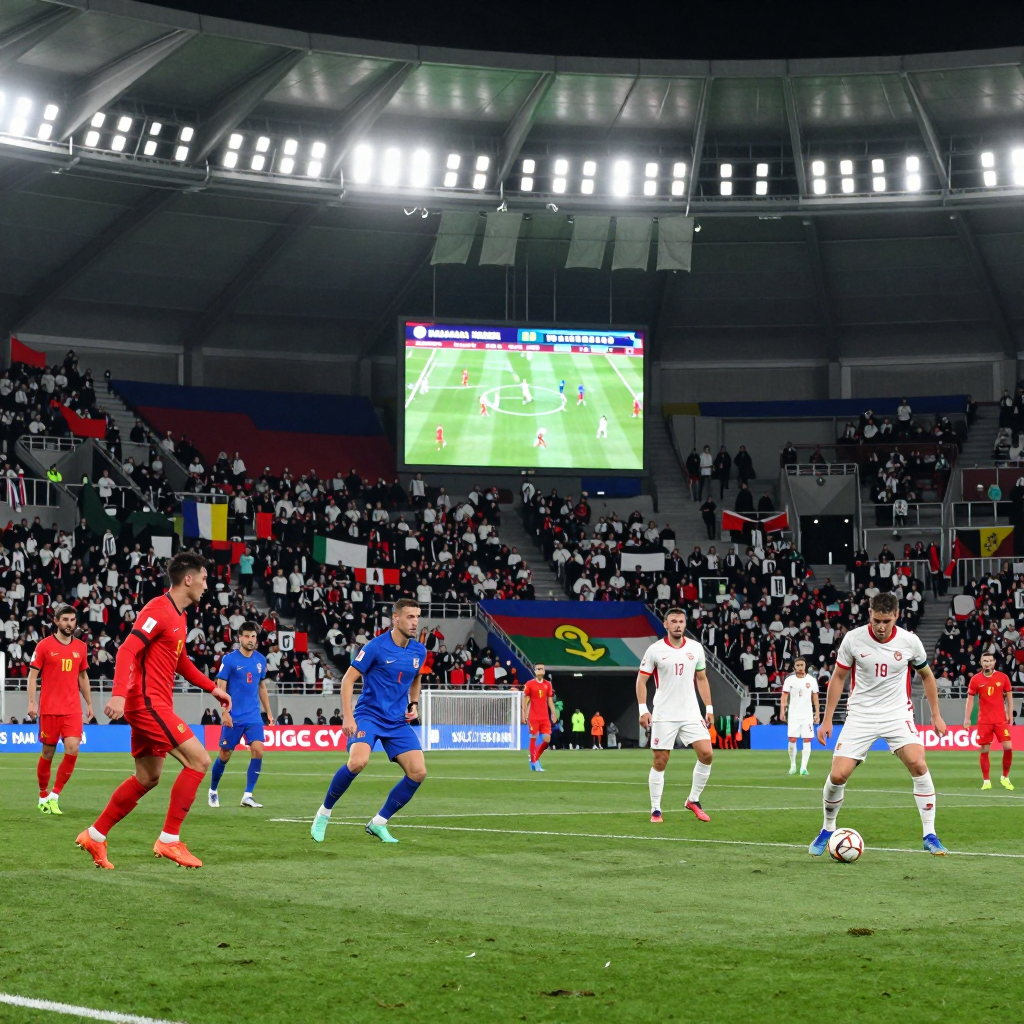
World Cup Prelude: The First-ever Clash Between Austria and South Korea
Ranked 22nd in FIFA standings, South Korea faces 24th-ranked Austria in their historic first-ever matchup. On the surface, it’s a ‘friendly,’ but this Austria vs. South Korea game serves as a crucial turning point to gauge where both nations currently stand ahead of the 2026 World Cup. The outcome of this inaugural duel will quickly raise the question: “Which team is truly World Cup-ready?”
What makes this match even more compelling is the stark contrast in each team’s situation. Austria, having already secured their spot in the World Cup finals, is in a phase of fine-tuning and enhancing their squad’s cohesion. Meanwhile, South Korea faces the imperative task of reversing their shaky momentum following a recent heavy defeat. Although both matches are friendlies, one side can afford to ‘experiment,’ while the other desperately needs a ‘comeback.’
Another key point to watch is the ‘direction of preparation.’ Austria appears to be testing South Korea as a specific style of opponent in anticipation of their World Cup group stage. Conversely, South Korea must evaluate how their teamwork and transition speed hold up against a strong European side, as well as how effectively they can manage the game when their performance falters. The unfamiliarity of this first encounter only adds to the unpredictability, making these 90 minutes far more than just a match—they will be a litmus test illuminating both teams’ World Cup prospects.
Austria vs. South Korea: The Secret Behind 12 Unbeaten Home Games and Their Momentum
An unbeaten streak at home spanning 12 consecutive matches. At first glance, this might look like just another typical “home advantage” stat, but in the history of Austrian football, it stands apart. This record aligns with the rare unbeaten runs seen only during the eras of Hugo Meisl from 1922 to 1925 and Leopold Šťastný from 1971 to 1975. In the upcoming Austria vs. South Korea friendly, a win or even a draw will set a new milestone: 13 consecutive home games without defeat.
So, where does Austria’s rising momentum come from?
1) Home Strength Built Not on ‘Momentum’ but on ‘Structure’
Austria’s recent form is not just a matter of good condition but stems from organized game management. Coach Ralf Rangnick described South Korea at a press conference as “a well-organized and tactically prepared team,” which ironically highlights that Austria itself is a team that builds its game on systematic foundations. The longer their unbeaten home streak goes on, the more players share the confidence that “we won’t be easily broken today,” creating a positive feedback loop that stabilizes their game management.
2) Confidence from a Big Win, Composure from Unbeaten Consistency
The commanding 5-1 victory over Ghana was a signal that Austria’s attacking power could explode. However, the more important factor is not just one big win, but the consistency that follows. Their unbeaten home record draws strength from unseen elements like conceding control, transition response, and in-game rhythm management rather than flashy displays. With this foundation, Coach Rangnick maintains caution—“I don’t expect to score three or four goals easily”—while confidently managing his team’s operations.
3) The ‘Squad Confidence’ Revealed by Starters Left Out
Another sign of their upward trajectory is bold rotation choices. Rangnick made the decision to leave out midfield key player Nicolas Seiwald from the starting lineup. This doesn’t reflect underestimating their opponent; rather, it shows that on the stability built through the unbeaten home run, they can simultaneously manage player fitness and experiment with combinations. The hallmark of a strong team isn’t just the best eleven players but how well the “next options” function.
Ultimately, the upcoming Austria vs. South Korea match will serve as a litmus test to see whether Austria’s unbeaten home run is just a streak or a sign of a long-lasting era like those legendary coaches created. For South Korea, breaking this record would itself be a powerful signal of comeback strength heading into the World Cup.
Austria vs. South Korea: Coach Rangnick’s Masterstroke—Victory Lies Within the Gambit
“South Korea is organized and quick on the counterattack. They won’t easily score three or four goals.” This remark by Coach Ralf Rangnick sounds like a warning, yet beneath it lies a calculation brimming with confidence. The Austria vs. South Korea friendly is far from a mere exhibition match; it’s poised to unfold as a ‘game of strategy’ where both sides acknowledge each other’s strengths while striving to control the field ahead of the World Cup finals.
Words of Caution, Gestures of Experimentation
Publicly, Coach Rangnick emphasizes South Korea’s tactical discipline and speed, maintaining a cautious stance. Yet his actual choices convey the exact opposite message: a bold ‘experiment with new combinations.’
This is where “we do not underestimate the opponent” and “we remain unshaken with various options” coexist. Riding high on an undefeated streak in 12 home games, Rangnick now has the luxury to focus not only on results but also on discovering the optimal structure in preparation for the finals.
What Leaving Out the ‘Iron Man of Midfield’ Signifies
The most symbolic move is the decision to exclude Nicolas Seiwald—the stalwart at midfield—from the starting lineup. Though it may seem radical, the intent is crystal clear.
- Managing stamina + Risk control: Avoiding overburdening key starters in friendlies, prioritizing a roadmap toward peak performance at the finals.
- Field-testing alternative combinations: Seeing how pressing intensity, buildup flow, and second-ball responses shift without Seiwald in midfield.
- Testing response to Korean transitions: Assessing whether other midfielder pairings can hold their ground in covering space and executing counter-pressing against South Korea’s famed rapid transitions.
In short, Seiwald’s omission isn’t a weakness but rather an “experiment that gains more from facing a strong opponent.”
The Real Gambit Lies Not in Tactics, but in Match Management
Rangnick’s masterstroke against South Korea is unlikely to be a singular tactical tweak, but rather a layered approach to managing the match.
Early on, he’s expected to minimize risk and scrutinize South Korea’s transition speeds. Once confident that his midfield combinations can hold firm, he will gradually raise the pressing intensity. His warning that “it won’t be easy to score” ultimately reflects a promise not to force risky attacks that could crack the team’s structure.
The decisive point comes down to one question. Will Rangnick’s ‘experiment’ expand and fortify Austria’s organizational strength, or will Seiwald’s absence open cracks for South Korea’s rapid transition game? The outcome will hinge on this razor-thin balance of power.
Can South Korea Bounce Back from the Crushing Defeat to Ivory Coast? The Turning Point in Austria vs. Korea
The 0-4 thrashing was more devastating not because of the scoreline, but because it exposed fractures within the team. With the World Cup looming, the Austria vs. Korea match isn’t just a “friendly evaluation game” — it is a critical test that will determine whether the mood reverses or anxiety deepens. The problem is clear: Austria is strong at home (undefeated streak continuing), with rapid transitions and intense pressing. Korea must confront these strengths head-on, but first, they need to erase the self-inflicted errors that lead to their downfall.
Austria vs. Korea: The ‘Conceding Patterns’ Korea Must Break First
The most painful takeaway from the heavy loss against Ivory Coast was the scene where “once shaken, the team collapsed in a chain reaction.” To break this cycle, match management principles must come before tactics.
- Stabilize the first 15 minutes: Instead of forcing forward passes, Korea should increase ball possession time to gauge Austria’s pressing intensity. Early goals conceded quickly erode the entire game plan.
- Ensure speed in defensive transitions: If the defense line crumbles within 5-8 seconds after losing the ball, Austria’s fast break becomes a direct threat. Designing to leave more “players guarding counterattacks” than attackers is key.
- Manage set-pieces well: Teams under pressure can be turned around by a single set-piece. Whether by creating scoring chances or preventing goals, set-piece control offers psychological stability.
Austria vs. Korea: Pragmatic Solutions by Exploiting Opponent’s Strengths
Austria relies on organized pressing and their home advantage, but given the nature of a friendly with rotations and experiments, their pressing precision may falter. Korea should aim for these very gaps.
Attack the spaces behind the press in two stages, not all at once
When Austria presses forward, reckless straight long passes risk being cut off. Instead, first break the press by moving to the flanks or half-spaces, then in the second wave, exploit the space behind the defensive line. This approach is steadier.Unsettle the defense not by fixed wing plays but through ‘crossing runs’
Austria’s defense line isn’t instantly aligned during transitions. Instead of winger and fullback running side-by-side, one moving inside and the other outside in crossing runs effectively disturbs the defensive shape.Rather than insisting on a high defensive line, lure the opponent into a mid-block and then counterattack
Austria’s strength lies in their quick transitions; Korea must respond with quality in transitions. Playing too high risks vulnerability. A realistic plan is to draw Austria into a mid-block, win the ball, and quickly launch a sharp attack with 2-3 players up front.
Austria vs. Korea: The ‘Momentum’ Korea Must Gain in This Match
Counterattacks can’t be proven solely by the scoreline. The momentum Korea needs to find in this Austria match includes three key points:
- Eliminate scenes of collapse even if conceding goals (preventing consecutive concessions)
- Demonstrate organized defensive transitions (failed attacks don’t instantly lead to goals against)
- Secure at least 1-2 clear scoring channels (creating “repeatable patterns” on set-pieces, counterattacks, or wing crosses)
Erasing the shock of a 0-4 defeat doesn’t mean achieving a “perfect victory,” but rather building a reproducible framework of performance that can carry through to the World Cup. This match is Korea’s final warning and, at the same time, their best opportunity for a dramatic comeback.
Austria vs. South Korea: A Friendly Match Beyond Win or Lose, Lessons Carrying into the World Cup
The upcoming Austria vs. South Korea match holds far more significance than a mere friendly. Victory brings confidence, defeat leaves sober tasks, and both become “real-game data” leading up to the 2026 World Cup. What truly matters is not the score, but what was confirmed and what was fixed.
Why Austria vs. South Korea Is a Crucial Test: Revealing Preparation Methods
With Austria already qualified for the finals, they can focus heavily on tactical evaluation and lineup experiments by treating South Korea as a virtual opponent (mimicking styles they might face in the tournament group stage). In fact, coach Ralf Rangnick’s decision to exclude a key midfielder signals “respect for the opponent but a commitment to experimentation as planned.”
On the other hand, South Korea must recover from a recent heavy defeat, making both results and processes indispensable. Ultimately, the match spotlights not only the current positions of both teams but also their attitudes toward World Cup preparation.
The Greatest Value of Victory in Austria vs. South Korea: Confidence in Structure Over Mood
If South Korea wins, the real prize is not just a morale boost but structural assurance that “this approach works.” Especially if the following points are confirmed, the victory’s influence will extend all the way to the World Cup.
- Speed of transitions (attack to defense) and spacing: Since Austria is wary of this, executing it effectively against a strong team makes it highly repeatable.
- Resilience of defensive organization: Whether the defensive line holds firm and reorganizes as planned after conceding.
- Pressure escape routes: In situations where buildup from the back is blocked, whether escapes are designed not only with long balls but also involving the ‘second ball.’
Victory changes the mood, but what’s more important is that the mood stands on tactical rationale.
Unexpected Lessons from Defeat in Austria vs. South Korea: A Game Plan for Winning the World Cup
Conversely, if South Korea loses, the lessons gained are clear. Actually, a loss in a friendly can be the cheapest warning preventing repeated mistakes in the World Cup finals.
- Recurrence of conceding patterns: First and foremost, identify whether the team repeats mistakes involving wide spaces behind defenders, second-ball responses, or set-piece defense.
- Actual competitiveness in midfield: More important than steals is the time and positioning to regain possession after losing it.
- Communication issues over mentality: Heavy conceding often starts not from psychology but technical problems like ‘cover instructions and line control.’
Defeat stings, but a well-analyzed defeat becomes a vaccination for the World Cup.
The Takeaway from Austria vs. South Korea: Confirmations Shape the Finals More Than Results
Austria pursues a new historic unbeaten streak at home while simultaneously experimenting for the World Cup. South Korea urgently needs a turnaround, but above all, how the team reorganizes after a heavy loss matters most.
Ultimately, this Austria vs. South Korea match goes beyond win or lose and asks the essential questions for the World Cup: “What are our strengths, and under what circumstances do our weaknesses emerge?” The team that finds these answers is the one genuinely ahead on the next stage.
Comments
Post a Comment