 \n
\n
Agentic AI Based on Edge AI Opens a New Horizon for Artificial Intelligence
What is possible when AI can judge and act on its own? By 2026, AI technology has evolved beyond simple responses to become Agentic AI, possessing “brain-level” cognitive abilities resembling humans. The crucial shift is not just that AI has become “smarter,” but that the cycle of setting Goals, making Plans, taking Actions, and Reflecting on outcomes to improve now runs as a closed loop within the AI itself.
To understand Agentic AI, it’s essential to first distinguish it from traditional AI roles:
- Perception AI: Recognizes and classifies inputs from cameras, radar, and sensors. It answers the question, “What do I see?”
- Generative AI: Produces outputs like text, images, or code based on recognized information or input prompts. It answers, “What should I create?”
- Agentic AI: Interprets the environment and prioritizes tasks to select the optimal action among multiple choices. It answers, “What should I do right now?”
In short, Agentic AI is not just a model generating outputs—it is an action-oriented decision-making system. This progression moves AI beyond merely “assisting tasks” toward actually “performing tasks.”
Why Edge AI Makes Agentic AI a Reality
For Agentic AI to deliver true value in industrial settings, an Edge AI (on-device AI) architecture is virtually indispensable. The technical reasons are clear:
Latency Issues
Delays in judgment cause delays in action. On-site environments where safety, quality, and productivity are critical cannot tolerate even tens or hundreds of milliseconds of lag. Edge AI closes the loop from sensor input to inference and action control locally, enabling instant responses.Reduced Dependence on Connectivity Stability
Cloud-based decision-making hinges on network quality, making performance susceptible to disruptions. Edge AI ensures core decisions continue uninterrupted even with unreliable or lost connections. If Agentic AI aims for autonomy, it must remain autonomous despite communication failures.Multi-Modal Real-Time Processing
Industrial decisions aren’t made from a single line of text. They require the simultaneous interpretation of video, audio, vibration, temperature, location, logs, and more. Edge AI fuses and reasons with these multiple data modes immediately on-site, enabling Agentic AI to act with a comprehensive understanding of the situation.Security, Privacy, and Cost Efficiency
Frequently moving sensitive video and equipment data to the cloud increases risk and cost. Edge AI minimizes data transfer, reducing leakage risks and bandwidth expenses, and transmits only summarized information or events as necessary.
In summary, if Agentic AI is the ‘brain,’ then Edge AI is the nervous system and muscles that allow it to move instantly on-site. This combination embodies the core AI trend of 2026 because the path from “generation” to “action” ultimately depends on real-world presence.
The Journey of AI Evolution with Edge AI: From Perception to Autonomy
How did AI evolve from merely sensing sensor data to independently setting goals and choosing actions? The fascinating transformation lies in AI’s gradual expansion from “the technology of seeing” to “the technology of judging and acting,” and the catalyst for this shift is none other than Edge AI.
Stage 1 Through the Lens of Edge AI: The Era of Perception AI
Early industrial AI primarily took inputs from sensor data—cameras, radar, vibration, temperature—and focused on identifying “what is happening” through tasks like object detection/classification and anomaly detection.
This stage was marked by clear characteristics:
- Outputs were mainly ‘recognition results’: defect yes/no, person detected, temperature abnormality, etc.
- Decision-making was handled by external systems (rules or humans): AI merely provided information for judgment
- Real-time processing became crucial, driving demand for Edge AI: In environments like manufacturing floors, robotics, and vehicles where latency is critical, processing had to be done on-site without round trips to the cloud.
In short, Perception AI created the “eyes and ears,” but it didn’t yet have the capacity to plan independently.
Stage 2 From the Edge AI Perspective: The Expansion of ‘Understanding and Expression’ Through Generative AI
The next generation introduced Generative AI that creates text, images, code, and more, going beyond simple classification to demonstrate abilities like summarizing context, linking knowledge, and generating new outputs. Here, key transformations emerged:
- Multimodal inputs: Combining images + text, sensors + logs, and multiple signals interpreted together
- Richer outputs: Instead of just saying “It’s abnormal,” it explains “Why it’s likely abnormal” and suggests corrective actions
- Expanded role of Edge AI in the field: As generative models grow larger, latency, cost, and security challenges increase—fueling a strong push to perform necessary inference close to equipment.
However, even Generative AI mostly responds to prompts rather than autonomously setting goals and executing continuous actions, limiting full autonomy.
Stage 3 From the Edge AI Viewpoint: Agentic AI and the Dawn of ‘Autonomy’
Agentic AI takes a significant leap forward by autonomously running cycles of interpreting situations → setting goals → planning → choosing/executing actions → incorporating feedback. In other words, it evolves from producing isolated answers to becoming an agent that carries out tasks to completion.
Technically, this involves integrating:
- State estimation and world modeling: Combining sensors, logs, and maps to build a current situational picture
- Planning and policy generation: Deriving sequences of actions to reach goals
- Tool use and actuation: Linking to APIs, robot controls, vehicle maneuvers for real-world execution
- Feedback-driven replanning: Instantly adapting strategies in edge cases or unexpected scenarios
Here, the critical importance of Edge AI becomes crystal clear. Since Agentic AI’s “judgment” directly leads to “action,” relying on unstable or latency-prone networks risks safety and performance. Especially in ultra-low latency fields like autonomous driving, a closed-loop of multisensor fusion, inference, and decision-making must operate on-device.
Summary: Edge AI Transforms Reactive AI into Autonomous AI
The evolution of AI is not just about bigger models—it’s about fundamentally shifting roles.
Perception AI gave us “eyes to read the field,” Generative AI added “language to understand and explain,” and Agentic AI finally equipped machines with the “power to act independently.” For this transformation to bring tangible industrial value, Edge AI must take center stage right where judgment meets action—at the frontlines of operation.
The Perfect Fusion of Edge AI and Agentic AI: Why Must It Run at the ‘Edge’?
Why should agentic AI operate not in the cloud, but in Edge AI? The answer is simple. Agentic AI is a system that performs judgment and action, not just “generation,” so it struggles to perform well in environments with latency and disconnects. In other words, the ability to interpret situations, set goals, and choose actions in real time is only fully realized when immediacy at the edge is ensured.
Technical Reasons Why Edge AI Is Essential for Agentic AI
Minimizing Latency: Judgment Must Happen ‘Now’
Agentic AI receives sensor inputs (cameras, radar, lidar, etc.), infers, and translates that into actions. When cloud round-trip delays are involved, it results in “late judgment” instead of “accurate judgment.” Because inference happens immediately where data originates at the edge, the perceive-decide-act loop can be kept extremely tight.Eliminating Connectivity Instability: AI That Stops When Cut Off Isn’t an ‘Agent’
Industrial environments and mobile platforms (e.g., vehicles) suffer from inconsistent network quality. Cloud-dependent systems risk degraded functionality during communication failures, whereas Edge AI performs core inference and control locally, providing continuous autonomy without interruption.Real-Time Multimodal Processing: A ‘Field Brain’ Handling Multiple Senses Simultaneously
Agentic AI excels when combining multimodal inputs (video, distance, speed, sound, location, etc.) rather than relying on single inputs. At the edge, sensor fusion results can be integrated instantly, and priority can be adjusted dynamically—making it ideal for constructing real-time, multi-modal inference pipelines.Safety and Accountability: AI That Acts Must Meet Standards and Utilize Redundancy
Especially in domains like autonomous driving, judgments directly translate into physical actions (acceleration, steering), making safety standards (e.g., ASIL levels) and redundant design imperative. Edge computing platforms can be architected to meet these safety requirements, maintaining 360-degree awareness through sensor fusion while boosting resilience against failures.
The ‘Judgment → Action’ Loop Perfected at the Edge
If cloud-centric AI excelled at “answering questions and generating content,” agentic AI’s core lies in the flow of perceiving the environment → deciding → acting. The bottleneck is rarely data transmission, but rather time and reliability. Ultimately, for agentic AI to become a true agent, its brain must reside on-site—and that brain runs on Edge AI infrastructure.
In the next section, we will delve deeper into how this fusion changes performance and cost structures in real industries, as well as the design strategies required to make it happen.
Innovation in Future Industrial Sites: Autonomous Vehicles and Edge AI Case Study
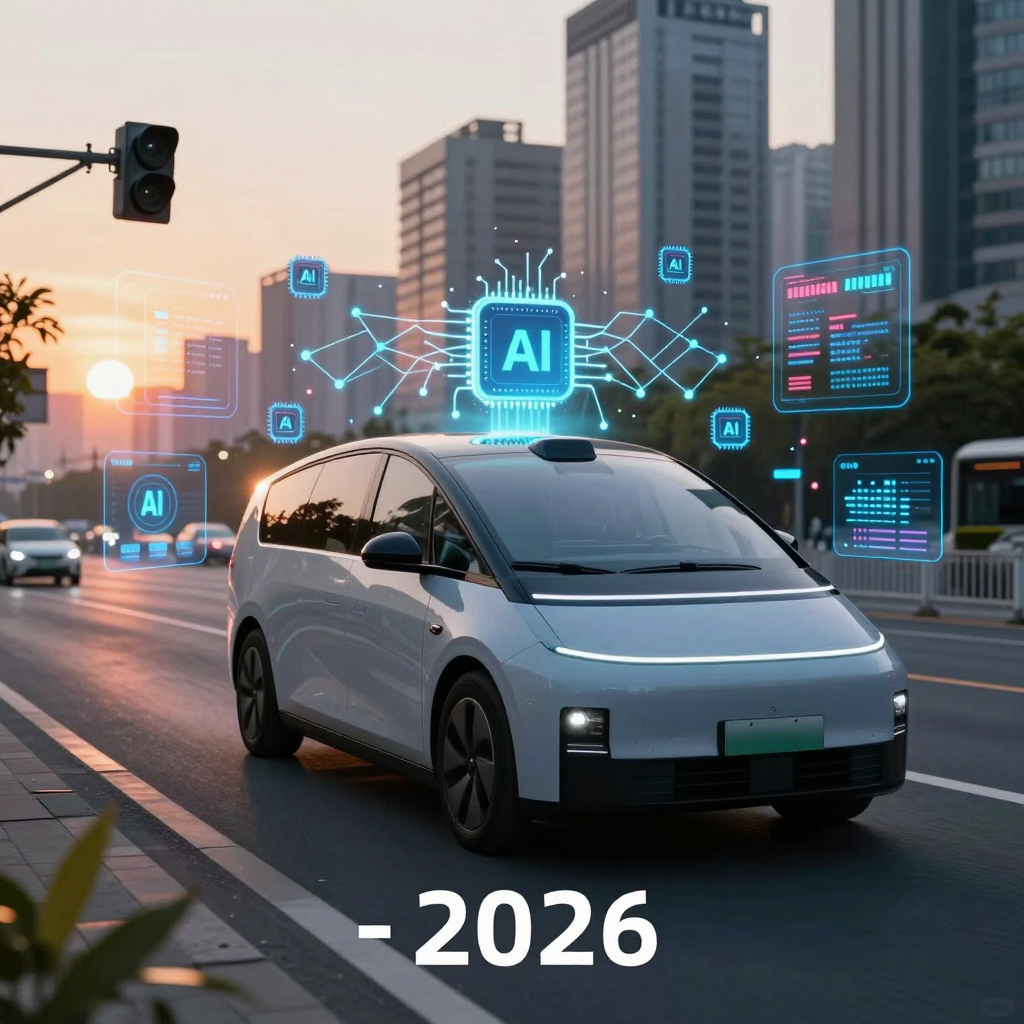
What is the technological secret behind the NVIDIA DRIVE AGX platform that enables autonomous vehicles to judge like human drivers amid complex road situations? The key lies in the Edge AI-based Agentic AI architecture, which flawlessly executes the entire process of “Perception → Decision → Action” inside the vehicle itself. This is essential because the vehicle must interpret situations and choose the next move autonomously without relying on the cloud.
How NVIDIA DRIVE AGX Delivers ‘Instant Decision-Making’ through Edge AI
Autonomous driving is not just about “seeing” objects; it is a decision-making challenge that involves predicting imminent dangers and determining the optimal response. To achieve this, DRIVE AGX is designed to simultaneously satisfy these critical elements within in-vehicle computing:
- Ultra-low latency processing: Unexpected cut-ins or sudden pedestrian appearances—rare, long-tail events—can become dangerous with even a few hundred milliseconds of delay. By processing sensor inputs to control outputs locally through Edge AI, response times are minimized.
- High-performance inference (High TOPS): With up to 254 TOPS of AI computing power, DRIVE AGX Orin can execute perception, prediction, and planning models in parallel with ample computational headroom.
- Continuous closed-loop control: Based on data from cameras, radar, lidar, etc., the system plans routes and continuously validates outcomes with updated sensor data in real-time within the vehicle.
Sensor Fusion and Multimodal Edge AI: The Foundation for 360-Degree Perception
Relying on a single sensor leaves autonomous vehicles vulnerable to glare, harsh weather, or occlusions. A standout feature of DRIVE AGX is its sensor fusion, integrating data from cameras, radar, lidar, and ultrasonic sensors to form a real-time 360-degree environmental model.
Technically, this involves aligning different sensors’ coordinate systems and timelines, and reducing uncertainty through probabilistic estimation and tracking. Running this multimodal processing at the Edge AI level delivers major advantages:
- Immediate conclusions without data transmission: It bypasses bandwidth limits and network instability entirely.
- Combining strengths situationally: Cameras excel at semantic understanding (signals, lane markings), while radar is superior for speed and distance estimation. Fusion compensates for individual sensor weaknesses.
DRIVE AGX from an ‘Agentic AI’ Perspective: AI That Chooses Actions
From the lens of Agentic AI, autonomous driving is not a system that outputs “the right answer,” but one that selects actions fulfilling goals such as safety, ride comfort, and regulatory compliance. Based on perception results, it must:
1) Interpret the situation: Estimate the intent (e.g., likelihood of a cut-in) and risk of surrounding objects
2) Predict: Simulate possible trajectories seconds ahead
3) Plan and decide: Choose the optimal action among slowing down, lane keeping, evasive maneuvers, or yielding
4) Execute control: Implement decisions through steering and acceleration/braking
When this process runs reliably within the vehicle’s Edge AI, autonomous cars transcend simple reactive behavior and sustain human-like “judgment → decision → action” continuity.
Safety and Reliability: Industrial-Grade Requirements with ASIL-D and Redundancy
In the industrial realm, autonomous driving demands not only performance but functional safety. DRIVE AGX addresses this by complying with ASIL-D standards and adopting redundant architectures to reduce failure risks and prevent single faults from causing catastrophic outcomes. This approach is fundamental for building systems that operate safely even under exceptional conditions—as opposed to “AI that works only when everything goes right.”
Ultimately, the autonomous vehicle case demonstrates that Agentic AI alone does not shine; rather, the fusion of Edge AI real-time processing, sensor fusion, and safety architectures together forms the foundation for transformative innovation in industrial applications.
Ushering in the Era of Autonomous AI: Technical Significance and Outlook (Edge AI)
Reactive AI remained at the level of “responding to inputs.” However, Agentic AI takes a step further by interpreting situations, setting goals, and choosing actions. This shift is not just a functional upgrade—it fundamentally transforms the design principles of industrial systems. The key enabler making this transition a reality is none other than Edge AI.
From Reactive to Autonomous Decision-Making: Redefining AI’s Role (Edge AI)
While traditional AI excelled at sensor data perception and generative outcomes, Agentic AI closes the loop by integrating reasoning, planning, and acting seamlessly.
- State Estimation: Integrating multisensor and multimodal inputs to structure what is “happening right now”
- Goal/Constraint Setting: Simultaneously considering industry constraints like safety, cost, time, and quality
- Action Selection and Validation: Simulating and evaluating candidate actions, and swiftly re-exploring alternatives upon failure
Crucially, the aim is not merely “generating answers” but making decisions that impact the real world. In other words, AI outputs translate into physical results such as control signals, work instructions, and path selections—not just text or images.
Why Edge AI Is Essential: Autonomy Demands Low Latency and Reliability (Edge AI)
For Agentic AI to deliver value on the industrial frontlines, decisions must be made quickly, uninterruptedly, and with predictability. Edge AI’s architecture uniquely fulfills these demands.
- Ultra-Low-Latency Decision-Making: Millisecond-level responses are vital for tasks like risk avoidance, braking, or defect prevention—delays caused by cloud roundtrips simply cannot be tolerated.
- Robustness Against Connectivity Issues: Edge AI maintains system independence in environments with uneven network quality, such as factories, logistics hubs, vehicles, and construction sites.
- Enhanced Data Governance: Sensitive visual and sensor data are processed onsite to meet security and regulatory requirements without external transmission.
- Multimodal Real-Time Processing: Combining inputs from cameras, radar, LiDAR, and more demands computations be performed at the edge, structurally favoring immediate judgments.
In summary, autonomy is not just about computational power. It comes alive only when the decision-making loop operates without interruption—an arena where Edge AI is indispensable.
Outlook for Industrial Transformation: Moving Toward “AI-Operated Systems” (Edge AI)
The fusion of Agentic AI and Edge AI transcends isolated task automation and drives a fundamental shift in industrial operating models.
- Expansion in Autonomous Driving and Robotics: Autonomous decision-making covering long-tail scenarios becomes achievable on edge platforms that fulfill sensor fusion and stringent safety standards (redundancy, functional safety, etc.).
- Smart Factories’ Shift to ‘Autonomous Operations’: Beyond anomaly detection, factories evolve into closed-loop control systems that estimate causes, plan responses, and autonomously adjust production lines.
- Standardization of On-Site AI: The benchmark for AI value moves from cloud-centric “analysis reporting” to on-site “real-time execution.”
Future competitiveness will hinge not on building “bigger models” but on how reliably autonomous decision-making loops can run atop Edge AI. The advent of autonomous AI beyond reactive AI marks a pivotal turning point, steering industrial environments from mere automation toward true autonomization.
Comments
Post a Comment