 \n
\n
A New iPhone Security Crisis Revealed by the Coruna Hack: The Democratization of Nation-State Tools
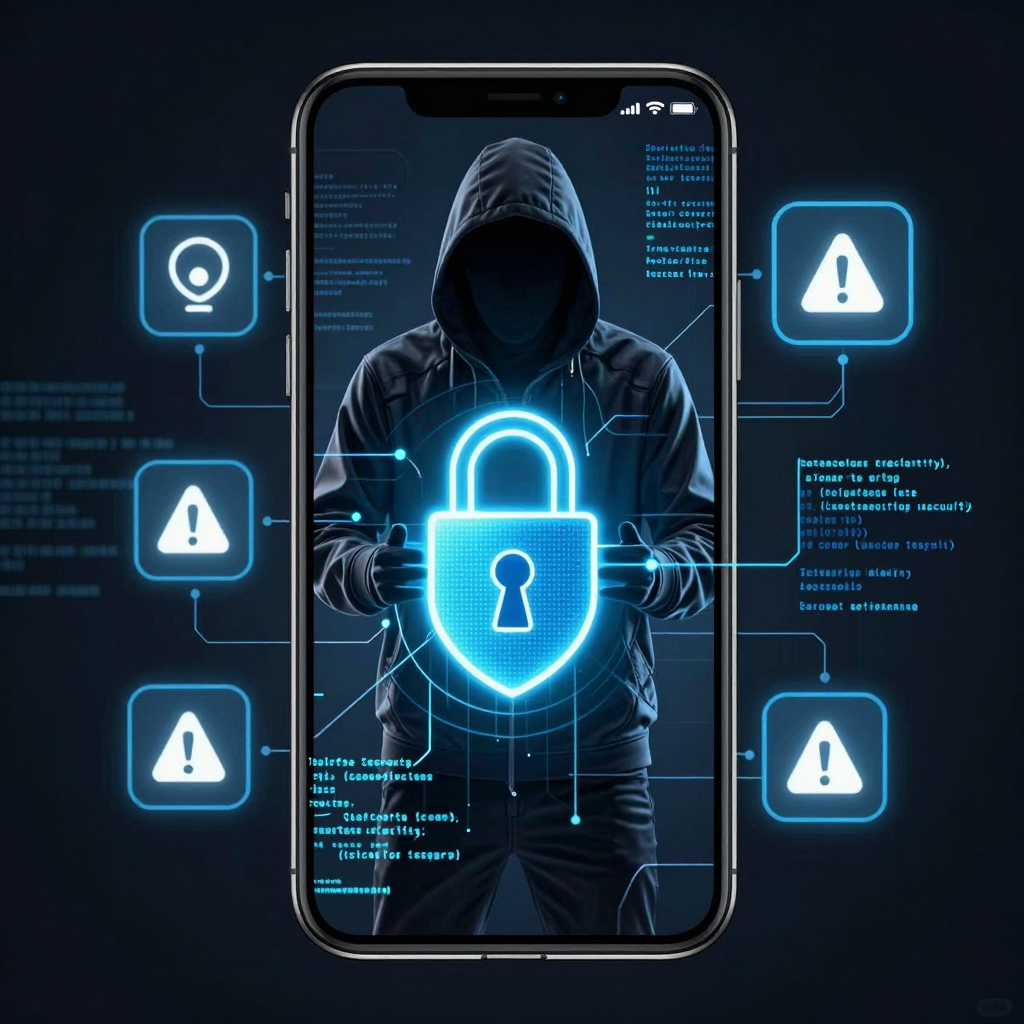
If hacking tools originally developed for exclusive use in nation-state espionage operations have now fallen into the hands of ordinary hackers, causing widespread damage, can we still find comfort in saying “iPhones are safe because they have a closed ecosystem”? The Coruna iPhone hack brutally exposes this uncomfortable reality.
Coruna is not just an ordinary attack exploiting a single vulnerability; it is known for systematically chaining together a staggering 23 iOS vulnerabilities in a multi-stage infiltration process. In other words, its core lies in a layered (multi-stage) attack structure engineered so that if one step is blocked, it immediately bypasses it through the next combination of vulnerabilities. This approach undermines the simplistic defense logic that “regular updates are enough.” Attackers knock on many doors simultaneously, and as long as one opens, they gain entry.
The infection pathway is equally menacing. Coruna infiltrates via a watering-hole attack, triggered the moment a user clicks on a link to a compromised website. What makes watering-hole attacks especially insidious is that they target sites frequently visited or topics users are interested in, creating scenarios where even security-savvy users let their guard down simply because they “clicked as usual.”
Once inside, the danger escalates beyond mere device damage—the malware morphs its behavior to achieve its goals:
- Reconnaissance Mode: Automatically scans the device for specific keywords (e.g., finance, accounts) to judge whether valuable information exists.
- Theft Mode: Once targeted value is confirmed, it intensifies actions aimed at accessing financial apps, account credentials, and other data that lead to real harm.
- OCR-Based Photo Album Scan: Using Optical Character Recognition, it reads text embedded in photos, pulling out security cards, passwords, and authentication info stored as images.
Another critical feature is its adaptive (modular) attack nature. Upon checking conditions like whether certain banking apps are installed, it downloads tailored hacking modules to “customize and expand” its assault. Instead of carrying all tools from the start, it arms itself incrementally based on the environment post-infiltration.
What truly makes this incident a “new crisis” isn’t just the technical sophistication but a shift in distribution channels. Initially a tool for government-level operations, Coruna has recently spread through dark markets to regular hacking groups, broadening its threat footprint. While nation-state attacks typically focus on limited targets, once such tools become democratized, the scale of damage rapidly extends into financial crimes, personal data theft, and identity fraud.
The question today is no longer, “Is the iPhone safe?” but rather, in this era where nation-state attack tools are turning into everyday crimeware, what habits and defense mechanisms must we adopt? The next section will delve into why Coruna’s attack methodology creates a burden across iOS as a whole and pinpoint immediate defense points users can implement from their standpoint.
Coruna iPhone Hack: A Multi-Layered Defense Bypass Strategy Built on a Chain of 23 Vulnerabilities
A single vulnerability can be patched and resolved. But what makes the Coruna iPhone hack so threatening is that it’s not just a “one-point” breach; it systematically weaves together 23 different vulnerabilities to dismantle iOS’s defenses step-by-step in a chained attack. This is why users feel like their security was instantly broken just by “clicking one link.” In reality, multiple stages automatically unfold in rapid succession—not a single instant breach.
The Core of Coruna iPhone Hack: Not a ‘Single Exploit’ but an ‘Exploit Chain’
iOS is originally designed so that if one layer of security is breached, the next line of defense steps in. For example, even if the browser (web) layer is compromised, the app sandbox still protects the system; if the sandbox fails, then the permissions/kernel layer blocks intrusion. Coruna directly targets this layered structure.
- Entry through Vulnerability A (Initial Execution)
- Privilege escalation or sandbox escape via Vulnerability B (Increasing visibility/accessibility)
- Persistence or detection evasion via Vulnerability C (Long-term stealth)
- Data access/theft via Vulnerability D (Achieving the objective)
By connecting multiple vulnerabilities “by function” in this way, if one point is blocked, the attack can bypass through alternative routes or proceed to the next stage. In other words, although the defense system does not rely on a single point of failure, attackers create multiple points of success.
The Multi-Layered Flow of Coruna iPhone Hack: Infiltration → Reconnaissance → Customized Expansion → Theft
Coruna’s attack flow can be quickly understood in four major stages.
1) Infiltration (Watering-hole/Link-based initial infection)
The moment a user clicks a malicious web link, vulnerabilities in the browser/web rendering layer are triggered. The goal at this stage is not “total device takeover” but to establish a foothold to execute code.
2) Reconnaissance (Automatic value assessment phase)
Rather than stealing everything immediately after infiltration, the malware scans the device for valuable targets automatically. If it finds clues like bank accounts or finance-related keywords, it moves on to the next phase. This reduces noise (detection risk) and increases the success rate (customized attack), a hallmark of sophisticated threats.
3) Adaptive Expansion (Real-time loading of environment-specific modules)
If a targeted bank app is installed or conditions are met, the malware downloads tailored hacking modules in real-time to extend its functionality. The advantages of this approach include:
- Avoiding heavy malicious features upfront, thus lowering initial detection risk
- Adding only the needed features for the target environment, boosting success rates
- Continuously swapping modules to evade blocks/patches, allowing persistent bypass
4) Theft (Stealing financial/account info in theft mode)
Once “worth stealing” data is confirmed in reconnaissance, the attack switches to theft mode to access financial apps and harvest account information. A noteworthy aspect of this stage is the OCR-based collection targeting the photo gallery.
Why the Coruna iPhone Hack Is So Deceptive: Extracting “Secrets in Photos” via OCR
Many users save security cards, temporary passwords, and account details as photos instead of notes. Coruna exploits this habit by extracting text from photos using OCR (Optical Character Recognition). This is far more dangerous than simply stealing files.
- Without ripping out photos themselves, only OCR text results are sent out, reducing traces
- Sensitive info leaks from an area users believe is “safe—their photos”
- It structurally undermines financial security measures (security cards/authentication data)
In essence, Coruna doesn’t stop at breaking iOS’s technical defense lines (sandbox, permission segregation); it turns everyday user habits into new attack surfaces.
Strategic Implications of Coruna iPhone Hack: Bringing Down “Multiple Layers at Once” Rather Than Just One
To summarize, Coruna chains 23 distinct vulnerabilities together to sequentially neutralize iOS’s multi-layered defenses. This means even if some vulnerabilities get patched, as long as other links in the chain remain, infiltration remains possible. This is exactly the most realistic fear when a state-level tool becomes widespread: the automated attack experience where multiple defense layers collapse in quick succession after just one slip (click) spreading down to ordinary users.
The Origin and Spread of Coruna iPhone Hacking: The Black Market Leak of a Nation-State Tool
A powerful spy tool once used exclusively by Russian and Chinese hacker groups is rapidly spreading through the black market. How does a "weapon meant only for nations" fall into the hands of criminals in an instant? The Coruna iPhone hacking case reveals that this process is more structural than expected—and the market around it has already solidified.
Why Coruna iPhone Hacking is Classified as ‘Nation-State Grade’
Coruna is not a tool that exploits a single vulnerability; it’s a chain-type attack tool that links multiple vulnerabilities in sequence to break down defenses step by step. Tools like this are usually considered nation-state grade when they meet criteria such as:
- Extremely high development costs: Multi-layered structures combining 23 vulnerabilities require extensive, costly research and development.
- Embedded operational know-how: It optimizes flows like reconnaissance post-intrusion → target confirmation → switching into theft mode to efficiently achieve its purpose.
- Detection evasion and adaptive modules: It checks the environment (installed apps, etc.) and downloads required modules, showing a level of sophistication beyond common malware.
In other words, these tools are originally meant to be “restricted-use” for specific countries’ intelligence or military purposes. But once this premise breaks, their impact quickly becomes widespread.
Key Routes Through Which Coruna iPhone Hacking Leaks into the Black Market
The leakage of nation-state tools is less about “a one-time mistake” and more about a supply chain that causes repeated leaks. The spread of Coruna-like tools into the black market can be explained by four main paths:
1) Internal leaks from development organizations (personnel, source code, build environments)
- As outsourcing increases, partners get involved, or operational personnel leave, parts of the tool (exploit modules, control panels, build scripts) are more likely to leak in fragments.
- A leak doesn’t require the “entire source code.” Having just one core vulnerability exploit and a loader (initial infection module) is enough to reassemble the chain.
2) Compromise of operational infrastructure (servers, control panels, logs)
- If attacker infrastructure (C2 servers, distribution servers, operation panels) is compromised or seized, attacker operational data is fully exposed.
- Particularly valuable for criminals are materials like watering-hole distribution pages or device-specific payload selection logic—these are the most prized assets for ‘cloning’.
3) ‘Packaging’ and trading of vulnerabilities and exploits
- Tools combining multiple vulnerabilities are easily broken down and traded by module.
- In the black market, products like “one initial entry exploit for a specific iOS version,” “one privilege escalation exploit,” and “one data theft module” are sold separately. Buyers combine these to build their own chains. Coruna’s multi-layered structure fits neatly into this market logic.
4) ‘Spread acceleration’ in political and war scenarios
- In conflict zones like Russia-Ukraine, attack tools are widely deployed, resulting in reuse, sharing, and resale during operations.
- Tools originally meant for state operations often shift to other uses (financial crime, ransomware, identity theft) at this stage.
The Technical Reasons Behind the Rapid ‘Mass Adoption’ in the Black Market
What makes Coruna iPhone hacking so dangerous is not just the leak itself but the design features that make post-leak reuse easy.
- Adaptive module downloads: Structures like “check if a banking app is installed → download a module specific to that app” allow criminals to rapidly expand by just changing the target industry.
- OCR-based photo album scanning: This works regardless of region or language, making it highly versatile. In the black market, this feature is traded as an “immediately monetizable option.”
- Wide version range for vulnerabilities: Affecting iOS versions 13 through 17.2.1 means attackers can “profit long-term from one tool.” This also accelerates distribution.
What Changed Ultimately: From ‘State Monopoly’ to ‘Crime-as-a-Service’
In summary, Coruna was originally a high-end tool used by specific countries for targeted operations. Yet by meeting the black market’s assembly and resale ecosystem, it has become close to an “attack service anyone can buy if they pay.” The takeaway for iPhone users is clear:
Even if attackers are less skilled, if the tool is high-level, the damage remains severe.
Coruna iPhone Hacking and Vulnerable iOS Versions: “Is It Really Safe Even If It’s the Latest?”
The most unsettling point is simple. With a wide range of versions from iOS 13 to iOS 17.2.1 included in the vulnerability scope, the belief that “I’m safe because I have the latest iOS” has been shaken. Moreover, users who missed one or two security updates create even bigger ‘gaps’ for attackers to exploit.
In conclusion, ‘update status’ and ‘usage habits’ matter more for safety than device specs.
Why Coruna iPhone Hacking Is Dangerous: It’s Not a Single Version but a Combination of ‘Accumulated Holes’
Typical hacks often target a single vulnerability and end once it’s patched. But Coruna iPhone hacking takes a different approach.
- It combines multiple vulnerabilities in a chain (multi-layered attack) to infiltrate.
- If one layer is blocked, it bypasses through another route to move forward.
- This means your hope of “My iOS must be protected against some vulnerabilities, right?” can become powerless.
In other words, it’s not about one specific iOS version being risky; rather, the cumulative vulnerabilities over time combine to amplify the impact.
Who Is More Vulnerable to Coruna iPhone Hacking: Users Who “Delayed Updates”
The most realistic risk group for this type of attack includes:
- Those who turned off automatic updates and skipped them for long periods
- Users who habitually delay security patches by saying “later” repeatedly
- Owners of older devices who avoid updates due to inconvenience or lack of storage space
Apple’s effort to deliver urgent patches even to relatively old devices proves this is not just a problem for the ‘latest model.’ It’s safer to assume that if patches were available but not applied, the attack window remained open during that whole time.
How Coruna iPhone Hacking Starts: A Single Click Becomes ‘The First Step of Infiltration’
The scariest point from a user’s perspective is that the infection’s starting point isn’t complicated. The known attack flow usually goes like this:
- Lure to a watering hole (malicious website) link via messages, communities, emails, and more
- Just clicking the link triggers a vulnerability for initial code execution (infiltration)
- After infiltrating, it switches to scouting mode to scan information inside the device and assess if it’s a “valuable target”
- If found valuable, it switches to theft mode focused on financial and account information
The key here is that you don’t need to “install an app” or “tap to grant permissions”—just clicking a web link can be the starting point.
User Behaviors That Coruna iPhone Hacking Targets: Photo Albums, Keywords, and App Installations Give Clues
As attacks get more sophisticated, hackers target usage habits more than simply the device itself. The following behaviors increase risk:
Storing passwords, security cards, and authentication codes as photos
- Coruna can extract sensitive information from pictures using methods like OCR (Optical Character Recognition).
- It’s not safe to assume “It’s just saved in the album,” because the album can become a ‘target database’ rather than a safe vault.
Targeting based on financial-related keywords and apps
- After infiltration, it scans for specific keywords (e.g., account, transfer, bank) to find valuable information,
- Then it downloads customized modules tailored to whether certain banking apps are installed for adaptive attacks.
In the end, even if you think “I’m not doing anything special,” your everyday storage habits and app usage patterns can complete the attack scenario.
Coruna iPhone Hacking Prevention Checklist: 3 Things to Check Right Now
- Verify whether the latest security update is applied via Settings → Software Update
- If updating is difficult, consider strong protection options like Lockdown Mode during critical periods
- Avoid clicking on links from unknown sources—even “just checking”—and do not store sensitive information as photos
The one burning question now might be: “Am I safe too?”
The answer is simple. If you don’t have all three—latest updates + link habits + photo album management—anyone can be exposed to danger.
Coruna iPhone Hacking Response Strategy: The Imperfect Security of iPhones and Building a Future Safety Net
The belief that “iPhones are safe because of their closed ecosystem” is appealing, but Coruna iPhone hacking directly exposes the cracks in that trust. The key issue is not that iPhones are “inherently unsafe,” but rather the reality that accumulated vulnerabilities (23 linked in a chain, no less) combined with state-level attack tools leaking into the black market can put defenders at a severe disadvantage. So what should you do right now, and what kind of safety net must be built going forward?
The Most Definite Top Priority to Block Coruna iPhone Hacking: The Technical Significance of iOS Updates
Coruna does not rely on a single vulnerability but infiltrates through a multi-layered bypass (chain exploit). This type of attack doesn’t fail by blocking just one point; rather, breaking even one link in the chain can collapse the entire attack flow.
Thus, iOS updates are not just simple feature improvements—they act as a ‘chain breaker’ that simultaneously:
- Patch web content processing vulnerabilities (browser/webview steps): Weakening watering-hole style entry points that start with a single link click
- Block privilege escalation and sandbox escape pathways: Removing the links that allow deep system penetration after initial intrusion
- Prevent exploitation of internal APIs for persistence and data theft: Disrupting the transition from reconnaissance mode (keyword scanning) to theft mode (stealing financial info)
In other words, rather than wiping infections out completely, updates make it exponentially harder—and costlier—for attackers to meet the ‘chain conditions’ needed for success, greatly increasing their chance of failure. This is exactly why Apple pushed urgent patches even for older devices.
Immediate Lifestyle Rules to Apply When Worried About Coruna iPhone Hacking: Shrink Your Attack Surface
The more complex the multi-stage attack, the best thing users can do is to minimize their attack surface. The following rules effectively reduce “the number of bridges hackers must cross” from a technical standpoint:
- Never click on suspicious links (especially shortened URLs)
Watering-hole attacks target the user’s “one click,” making link-clicking habits the entry point. - Do not store sensitive info (card numbers, OTPs, passwords) in photo albums
Coruna mentions scenarios using OCR to extract text from photos—making “photos more dangerous than notes.” - Audit financial app permissions (minimize unnecessary access like notifications/photos/contacts)
The more info attackers can target, the more effective ‘theft mode’ becomes. The principle of least privilege reduces damage. - Follow the password change sequence when suspicious signs arise
Change iPhone/Apple ID first → then email → then bank/payment accounts. If email security is compromised, the rest are vulnerable.
Utilizing ‘Lockdown Mode’ to Prepare for Coruna iPhone Hacking: When to Turn It On
If updating immediately is difficult (due to work device policies, older models, or delayed updates) or if you are a high-risk target, Lockdown Mode serves as a practical buffer. Lockdown Mode sacrifices some convenience in exchange for making the commonly exploited input paths (web content, media processing, invitations/attachments, etc.) prohibitively expensive to attack from an attacker’s perspective.
- Recommended scenarios:
- When immediate updates are temporarily impossible
- If you’re a high-risk individual in media, politics, or corporate leadership
- Following suspicious events like clicking questionable links or receiving odd profile/calendar invites
Lockdown Mode isn’t foolproof, but since chain exploits rely on ‘complex input processing paths,’ simplifying this environment is especially meaningful against attacks like Coruna.
Building the Future Safety Net Post-Coruna iPhone Hacking: Systematizing “Updates + Habits”
The mass availability of state-grade tools is less a one-off issue and more a growing trend. Therefore, individuals must move beyond “just being careful” to crafting a repeatable security system.
- Automate updates: Enable automatic updates and create routines that ensure rebooting after updates is completed
- Sensitive data storage policies: Ban sensitive info from photo albums; switch to encrypted password managers or hardware OTP devices
- Develop link verification habits: Always view urgent requests, offers, or account verification messages with suspicion; access via official apps/domains only
- Design for damage control: Use two-factor authentication as default for finance apps, and set payment limits conservatively
Ultimately, Coruna iPhone hacking sends a clear message: While closed ecosystems are certainly strengths, the combination of chained vulnerabilities and leaked tools can swiftly shatter the “security myth.” What’s needed now isn’t panic, but turning updates and lifestyle rules from one-time reactions into a continuous, systemic defense.
Comments
Post a Comment