 \n
\n
Kharg Island: The Heart of Middle Eastern Oil That Moves the World
How can a small island in the Persian Gulf wield such a profound influence over the global energy market and U.S. foreign policy? The answer is surprisingly simple. Kharg Island is the ‘throat’ of Iran's oil exports, and the moment this throat is tightened or loosened, oil prices, the effectiveness of sanctions, and Middle East security strategies all simultaneously shift.
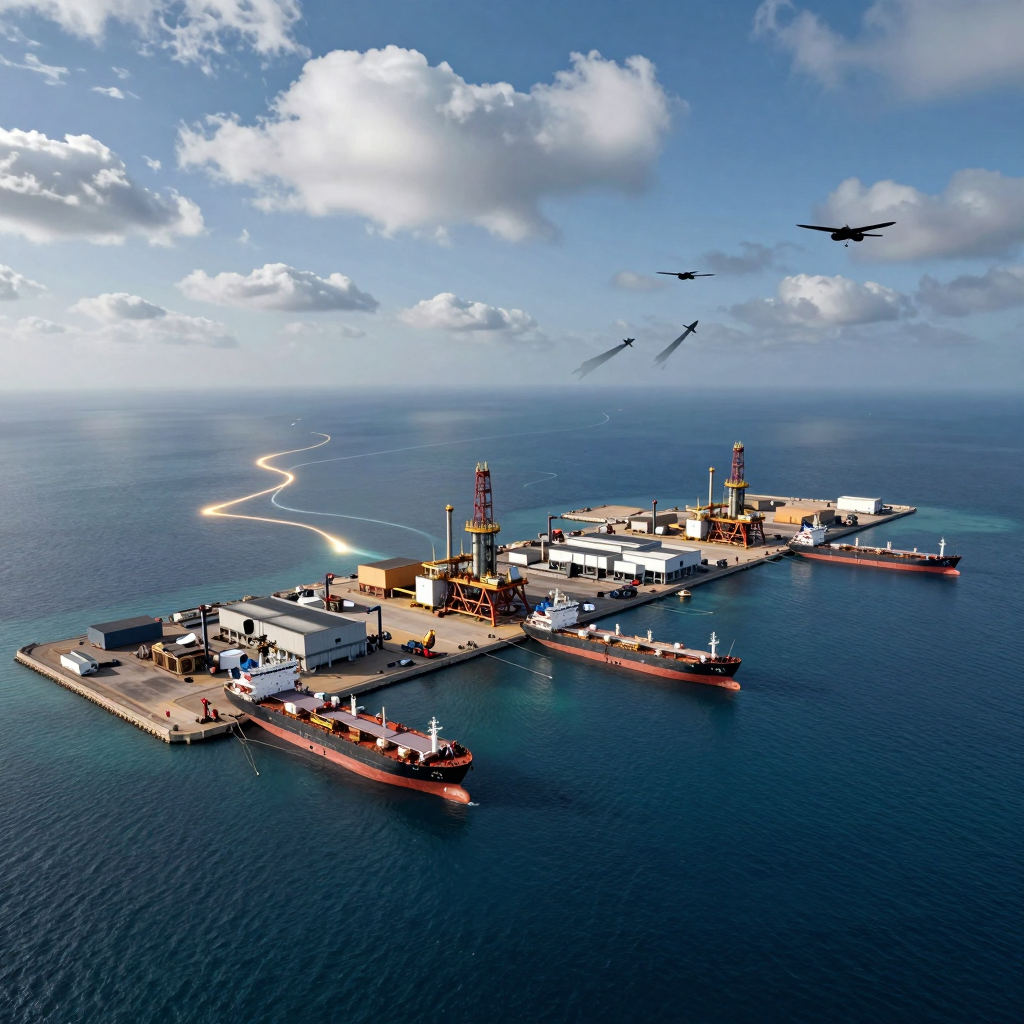
Kharg Island is not just a mere port; it is a critical infrastructure directly linked to Iran’s foreign currency earnings and national budget. According to reports, it once had the capacity to handle up to 5.4 million barrels per day, with over 90% of Iran’s oil exports passing through this island. In other words, the operating status of this island is intimately tied to the very breath of the Iranian economy.
The reason the U.S. monitors Kharg Island so closely stems from this reality. First, from an energy security perspective, any disruption in Iranian supply is instantly reflected in global oil prices. Second, it serves as a ‘field indicator’ to judge the real impact of sanctions. If export operations here falter, it reveals whether sanctions and pressures are truly blocking Iran’s cash flow. Third, Kharg Island is part of the extended tensions linked to the Strait of Hormuz. If passage through the strait becomes unstable, not only oil but also insurance premiums, freight costs, and prices across the board ripple upward.
Ultimately, Kharg Island is far more than a small dot on the map; it is a strategic lever that simultaneously moves the felt prices in the global economy—such as gasoline, electricity bills, and logistics costs—as well as the costs of U.S. Middle East policy. This is precisely why events unfolding on this island never end up as just a single line in the news.
Kharg Island: The Core of Iran’s Oil Exports and Its Strategic Significance
Through this island, Iran exports up to 5.4 million barrels of crude oil per day, accounting for over 90% of the national economy. As the numbers suggest, Kharg Island is not just a port or storage facility, but rather the ‘export artery’ sustaining Iran’s foreign currency earnings, government finances, and national governance. So, what does this strategic infrastructure mean in the realms of international politics and markets?
Why Kharg Island is the ‘Heart of Iran’s Economy’
- Export Concentration: When the majority of Iran’s oil exports are concentrated at a single hub, that hub becomes a single point of failure in national risk. If Kharg Island falters, not only does Iran’s export volume suffer, but its fiscal stability itself is shaken.
- Gateway for Foreign Currency Inflows: Oil exports are Iran’s central source of foreign currency. The operational capacity of this island directly impacts exchange rates, inflation, and government finances.
- Source of Negotiating Power: As long as exports continue, Iran secures a level of resources that grants it resilience in international negotiations despite sanctions. Conversely, damage to this infrastructure could dramatically shift the negotiation landscape.
How Kharg Island’s Value Connects to U.S. Strategy
The importance of Kharg Island extends beyond Iran to intersect with U.S. goals in the Middle East.
Managing Global Oil Prices and Inflation
Disruptions at Kharg Island can trigger supply concerns that shake oil prices. Price volatility translates into higher gasoline costs and inflation in the U.S., creating economic and political burdens.Measuring the ‘Effectiveness’ of Sanctions
The impact of U.S. sanctions on Iran’s economy ultimately hinges on how much and how Iran exports its oil. Kharg Island stands at the heart of this measurement.Symbolism of the Strait of Hormuz and Maritime Routes
The Persian Gulf shipping lanes are critical to global energy flows. Kharg Island exemplifies how tensions in this region connect to issues of freedom of navigation, allied defense, and U.S. military presence.
Key Takeaway on Kharg Island in One Line
Kharg Island is “the gateway for Iran’s oil to the global market” and simultaneously “the benchmark by which the U.S. gauges its energy security and sanctions success in the Middle East.” Thus, the island’s stability remains an ever-present variable where market forces, diplomacy, and military strategies intertwine.
Attacks and Sanctions: Geopolitical Upheaval Surrounding Kharg Island
From the 2019 drone attacks by the Houthi rebels to the U.S. military responses, what ripple effects have these events sparked in global oil prices and the political landscape? The answer is straightforward. When the artery of oil flow trembles, markets and diplomacy react immediately. At the very heart of that artery lies Kharg Island.
How Attacks Targeting Kharg Island Escalate into Price Shocks
Kharg Island serves as the terminal for the majority of Iran’s oil exports, so any attack there spreads damage far beyond the site itself.
- Instant Pricing of Supply Disruption Fears: Regardless of actual production cuts, mere forecasts that "exports might be blocked" trigger risk premiums in both futures and spot markets.
- Heightened Maritime Transport Risks: Given its proximity to the Strait of Hormuz, rising tensions push up insurance premiums and freight costs, which directly inflate crude oil prices.
- Psychological Chain Reaction: Energy markets react more sharply to “potential uncertainties” than confirmed losses, making Kharg Island the prime target for sending the strongest signals.
What the U.S. Military and Diplomatic Responses Post-Kharg Island Incidents Mean
U.S. responses go beyond simple “defense,” pursuing a threefold goal: alliance management, deterrence display, and market stabilization.
- Emphasizing Safe Navigation Through the Strait of Hormuz: Securing oil transit routes is critical not only for U.S. energy security but also for allied economies; thus, increased maritime surveillance and escort operations send a clear message.
- Reaffirming Defense Commitments to Allies: By reinforcing security cooperation with Saudi Arabia, the UAE, and others, the U.S. aims to heighten the cost of escalation and deter further conflict.
- Indirect Management of Surging Oil Prices: Strengthening military presence itself signals “control” to markets, helping to temper excessive fear and volatility.
Why Sanctions Amplify Kharg Island’s Sensitivity
Sanctions simultaneously restrict Iran’s export capacity as well as its financial and logistical operations, turning Kharg Island into more than just an export hub — it becomes a pressure gauge measuring the effectiveness of sanctions.
- Increased Concentration on Export Routes: With alternatives limited, the terminal’s significance grows, magnifying the impact of even minor shocks.
- Rising Costs and Challenges in Recovery and Maintenance: Damage repairs become more difficult and expensive under sanctions, prolonging uncertainty.
- Ambiguous Effects of Expanding Bypass Trade: Efforts to increase transactions with countries like China and Russia persist, but logistical and payment risks endure, keeping markets on edge.
Summary: Kharg Island Is Not Merely a Local Incident but a Trigger in the International System
Attacks and sanctions around this island, coupled with U.S. military responses, converge on one conclusion: Events at Kharg Island simultaneously unsettle global oil prices, maritime transport, alliance politics, and the efficacy of sanction regimes. Therefore, tensions in this region always translate into palpable economic costs felt worldwide.
Kharg Island in 2026: Restoration Efforts and Shifts in U.S. Middle East Policy Landscape
As Iran accelerates facility restoration and sanctions evasion, the U.S. is seeking a new balance amid strengthened ally support and energy market restructuring. The intersection of these three dynamics centers on Kharg Island. Questions like “Will restoration directly lead to export recovery?”, “Are sanctions still effective?”, and “Where is U.S. Middle East strategy headed?” become critical variables shaping the 2026 outlook.
The Significance of Kharg Island’s Restoration: More Than Reconstruction, It’s a Race for ‘Export Recovery Scenarios’
Kharg Island’s restoration goes beyond simply rebuilding facilities—it is directly linked to reinstating Iran’s foreign currency inflows. For Iran, increasing throughput means greater negotiating strength and financial leeway, but rising risks of attacks, blockades, and sanctions highlight the test: “Restoration speed = risk management capability.”
- Faster restoration: Iran secures potential for export resumption (or expansion)
- Delayed restoration: Reliance deepens on alternative routes and circumvention exports
The Nexus of Kharg Island and Sanctions Evasion: ‘Diversifying Export Routes + Changing Transaction Structures’
A hallmark of 2026 is that “how you trade” has become as crucial as “how much you sell.” Rather than confronting sanctions head-on, Iran is focusing on reshaping transaction frameworks and solidifying partners to keep breathing room.
- Seeking alternative export routes: lowering dependency on specific terminals to spread risks
- Expanding trade with China, Russia, etc.: creating more leeway in payments, insurance, and shipping for sanctions evasion
- Decreasing market ‘visibility’: even if volumes are visible, unclear routes and actors fuel price volatility
Within this process, Kharg Island remains pivotal, but Iran’s incentive to move beyond “putting all its eggs in one basket” intensifies.
U.S. Policy Surrounding Kharg Island: Concurrent Pursuit of Ally Support and Secure Maritime Passage
U.S. responses in 2026 center on two main pillars:
1) Ensuring free passage through the Strait of Hormuz: a minimal condition to prevent shocks in energy supply chains
2) Continued support for Middle Eastern allies (Saudi Arabia, UAE, Israel): maintaining deterrence and regional order
Rather than viewing Kharg Island itself as a sole ‘target,’ the U.S. increasingly manages the island’s surrounding maritime security, allied deterrence, and sanctions enforcement as an integrated package. As long as this framework holds, even tangible Iranian restoration progress will unlikely prompt an immediate U.S. policy easing.
Kharg Island and Changes in the Energy Market: Supply Shocks Show Up as ‘Volatility’ Rather Than Just ‘Price Spikes’
In contrast to past patterns where Middle East events directly triggered oil price surges, by 2026 markets respond more complexly. The simultaneous rise of U.S. shale oil, accelerated renewable energy transition, and shifting demand patterns make “repeated sharp spikes and corrections” more prominent than consistently high prices.
- Greater Kharg Island tensions: supply anxiety → short-term volatility spikes
- Effective substitutes, inventories, and demand management: quicker post-spike adjustments possible
Key Watchpoints Beyond 2026 Through the Lens of Kharg Island
Looking ahead requires monitoring these three factors together:
- Restoration progress: Does physical capacity recovery translate into actual export growth?
- Sanctions enforcement intensity: Are crackdowns and secondary sanctions tightening, or are exceptions expanding?
- Maritime risks: How much do Strait of Hormuz tensions disrupt insurance rates, shipping costs, and supply planning?
Ultimately, Kharg Island in 2026 is not a “once restored, case closed” story—it’s where restoration speed, sanction circumvention, U.S. alliance strategy, and market structural shifts converge. Grasping this crossroads offers the most grounded way to anticipate upcoming oil price trajectories and transformations in the Middle East policy landscape.
The Impact of Kharg Island on the U.S. Economy and Global Energy Security
What happens on this island is far from a mere local issue. It shapes crucial elements of America’s future—oil price volatility, inflation, foreign policy, and energy independence. Kharg Island is not only Iran’s export artery but also functions like a traffic light signaling the “risk premium” in global oil flows.
Kharg Island and Oil Price Volatility: How ‘Supply Shocks’ Shake Prices
The core of Kharg Island’s influence lies less in physical supply quantities and more in the market’s perception of potential supply disruptions. News of facility damages, drone and missile threats, or maritime transport disturbances triggers immediate reactions in the oil market.
- Short-term: Risk-averse sentiment spikes in futures markets, causing prices to surge unpredictably.
- Medium-term: Iran’s export detours, stockpile releases, and OPEC+ production decisions intertwine, potentially prolonging volatility.
- Ultimately: Prices tend to move ahead of confirmed “actual production cuts,” reinforcing a market structure where risk perceptions dominate.
Kharg Island and U.S. Inflation: The Pathway of Gasoline Prices Infecting Broader Consumer Costs
In the U.S., oil prices are not mere energy expenses but a core variable of the felt cost of living. Rising oil quickly transmits to consumers through gas station prices, then spreads through transport costs and raw material prices, escalating widespread inflation pressures.
- Gasoline and diesel price hikes → increased logistics and transportation costs
- Energy cost surges → higher production costs across manufacturing, agriculture, and services
- Worsened perceived inflation → weakened consumer sentiment and greater monetary policy challenges
In essence, rising tensions around Kharg Island can add significant strain to U.S. inflation control efforts, including the Federal Reserve’s interest rate path.
Kharg Island and U.S. Foreign Policy: When Military and Diplomatic Costs Become ‘Economic Variables’
Kharg Island is intrinsically linked to the security of the Persian Gulf, including the Strait of Hormuz. For the U.S., protecting maritime routes and defending allies directly correlate with energy price stability, making it difficult to reduce military presence or diplomatic engagement.
- Guaranteeing Strait passage and deterrence → increased basing and operational expenses
- Strengthening alliance commitments → limited diplomatic flexibility
- Decisions on sanctions enforcement → balancing between oil price stability and pressure effectiveness
This dynamic makes “security strategy” a direct influence on “inflation and growth,” crystallizing the nexus between economic and security concerns.
Kharg Island and Energy Independence: Could It Be a Catalyst for Shale and Renewable Transitions?
The supply risks that Kharg Island symbolizes continuously reinforce the U.S. dialogue on energy independence—but with real trade-offs.
- Shale oil expansion: May aid price stability but remains vulnerable to investment cycles and environmental regulations.
- Faster renewable energy transition: Mitigates long-term imported oil risks but encounters bottlenecks in grids, storage, and mineral supply chains.
- Strategic Petroleum Reserve (SPR) use: Provides short-term shock absorption but is not a sustainable substitute.
Ultimately, U.S. energy independence isn’t merely about “producing more” but about shifting toward a structure less shaken by shocks through diversification, efficiency, and transition.
The One-Sentence Takeaway from Kharg Island: Though the Risk Originates Far Away, the Costs Are Paid in America
While Kharg Island is Iran’s oil export hub, its ripple effects circle back to U.S. gas prices, inflation trends, foreign and military spending, and the pace of energy transition. Therefore, news from this island should not be seen as just regional conflict updates but as a “leading indicator” forecasting volatility in the U.S. economy.
Comments
Post a Comment