Korean National Football Team Suffers Shocking 0-4 Defeat to Ivory Coast... Urgent Concerns Ahead of the World Cup
 \n
\n
The Shock Begins: South Korea vs. Ivory Coast Ends in a 0-4 Rout
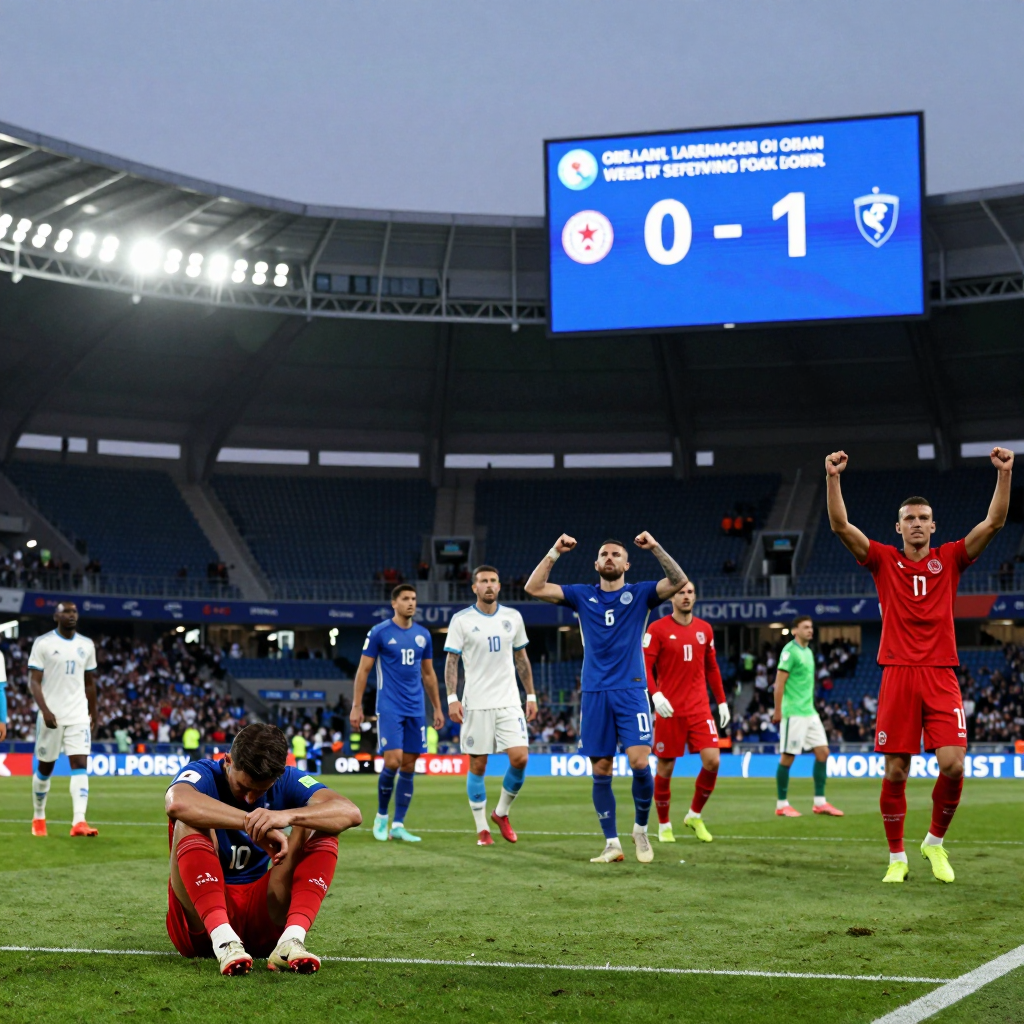
In an A-match ahead of the 2026 World Cup, 22nd-ranked South Korea collapsed against 35th-ranked Ivory Coast with a shocking 0-4 defeat. The scoreline alone is devastating, but what hurts even more is the natural question that arises during the match: “How did it get this bad?” The South Korea vs. Ivory Coast game was not just a loss; it brutally exposed the cracks we had been overlooking in our World Cup preparations.
The match took place at Stadium MK in Milton Keynes, England. South Korea created chances from the start and even hit the post, holding a flicker of hope to seize momentum. However, the price of failing to finish key opportunities came swiftly in the form of goals. Ivory Coast efficiently launched attacks from the outset and grabbed the lead, while South Korea, trailing throughout the first half, failed to spark any comeback.
In the 58th minute, the introduction of captain Son Heung-min and Lee Kang-in was clearly a bold tactical move. Yet, there was not enough time to turn the tide, and more critically, the way goals were conceded proved fatal. In the 62nd minute, amid the chaos of a corner kick, South Korea allowed another goal, draining their momentum to rally back, and conceded yet another right before the final whistle, cementing the heartbreaking 0-4 result. A four-goal gap is a weight too heavy to be shrugged off as mere “bad luck.”
After the match, Son Heung-min lamented that “football is a battle of momentum,” expressing regret over the missed chances to score, while soberly acknowledging that “this kind of situation could happen in the World Cup too.” His recognition of the opponent’s performance and the call for more rigorous preparation make it clear that the South Korea vs. Ivory Coast game was not just an evaluation match—it was a warning signal.
Inside the South Korea vs. Ivory Coast Match: What Exactly Broke South Korea
The turning point of the game wasn’t some grand tactical move but rather the early ‘split-second moment’ and the ensuing ‘domino effect’. From the start, South Korea created chances, but failing to convert them into goals quickly tilted the balance sharply in Ivory Coast’s favor.
Early Missed Opportunities: The First Critical Turning Point
South Korea crafted key moments in the opponent’s half early on, even hitting the post in a decisive chance. The problem? It ended at “well done” without further impact. Although friendlies allow experimentation, against strong teams, if you don’t strike first in the early stages, the opposition gains confidence and ups their pressure. This game was textbook proof of that formula.
Ivory Coast’s First-Half Offensive Onslaught: Strength Turned into Goals
Ivory Coast, meanwhile, deployed attacking resources from the start, ramping up the tempo and finishing the first half 2-0 up. The concession itself stung South Korea, but more devastating was the psychological shift created by the two-goal gap. Being one slip away from the match effectively ending intensified the pressure, forcing hurried choices from both the defense and midfield.
The Decisive Blow After Second-Half Substitutions: The Tactical ‘Game Over’ Third Goal
In the second half, South Korea looked for a turnaround by bringing on Son Heung-min and Lee Kang-in. But before the momentum could shift, Ivory Coast scored again. The third goal, conceded in a chaotic corner kick situation at the 62nd minute, delivered by Martial Godo, sealed the fate of the match. Once a set piece defense breaks down, organizational structure unravels quickly and attacks become more desperate. The chase was no longer for two goals but three—and hope dimmed dramatically.
Conceding Late Again: A Sign of Focus Breakdown
An additional goal late in the game deepened the deficit. While the scoreline was already wide, this final goal left questions over game management and concentration. South Korea’s 0-4 loss to Ivory Coast wasn’t just about the scoreboard—it was the outcome of a flow marked by early missed chances, first-half goals conceded, and set-piece collapses.
South Korea vs. Ivory Coast: Captain Son Heung-min’s Weighty Words
Right after the match, Son Heung-min stated, “Football is a battle of momentum.” This was not a simple remark, but a precise summary of the defeat’s underlying structure revealed in the South Korea vs. Ivory Coast game. Although there were early chances and even a strike that hit the post, failing to convert these into goals at critical moments quickly shifted the flow of the match toward the opponent. The moment the momentum slipped away, the team grew more anxious, the defensive organization loosened, and conceding goals happened in a chain reaction.
The key point in Son’s words is that the term ‘momentum’ goes beyond mere psychology. Momentum includes the rhythm of game management, timing of scoring, reactions after conceding, and the spacing and coverage among players. By saying, “We should have scored when the chance came,” he stressed the harsh reality that against strong teams, missing even a single opportunity can cost you the entire match.
The heavier message came with his warning: “This kind of situation will occur at the World Cup too.” This should not be dismissed as an excuse for a heavy loss in a friendly match but understood as having already experienced scenes likely to repeat on the main stage. At the World Cup, where opponents come well-prepared, what determines the outcome is not just conceding goals itself, but how the team responds—with what expression and method—after going behind. Son’s words, therefore, are less a comfort and more a command. The conclusion, “It hurts, but we have to learn,” carries the urgent message not to ignore the sense of crisis but to strengthen the team.
How Korean vs. Ivory Coast Fans and Media Evaluated the Match
The 0-4 scoreline conveyed a message beyond just the result. Immediately after the Korea vs. Ivory Coast match, Japanese media described the atmosphere as a “shocking defeat,” while fans scrutinized the team’s structural vulnerabilities with even sharper eyes. This wasn’t seen merely as a single loss, but rather as a ‘warning sign’ ahead of the World Cup.
Japanese Media: Emphasizing Both “Shock” and “Anxiety”
Japanese outlet Soccer Digest assessed Korea’s 0-4 loss as a source of concern ahead of the North and Central America World Cup. Even considering that it was a friendly, the fact that a higher FIFA-ranked team fell by four goals raised “questions about the preparation process.”
In other words, the Korea vs. Ivory Coast result was interpreted not simply as a slump in form but as a collapse in match management and teamwork.
Japanese Fans’ Reaction: A Cooler, “Not Surprising” Verdict
Interestingly, Japanese fans’ response was less about “shock” and more about the result being “predictable.” Their reasoning focused on the team’s player pool and future prospects.
- Fears that “once Son Heung-min retires, the team will weaken dramatically”
- Realistic views that “it’s hard to expect consistent results in the World Cup knockout stages with the current squad”
- Cynical takes that “a 0-4 loss to Ivory Coast isn’t particularly startling”
This perspective goes beyond the tactical issues of one Korea vs. Ivory Coast match to question how much the national team depends on a specific star player and whether there are adequate substitutes and competitive depth.
A Common Message from Various Perspectives: “The World Cup Could Shake Them Even More”
While the media focused on the shock of the outcome and the fans spoke of future worries, the conclusion aligns: In the World Cup, Korea will face even stronger, better-prepared opponents. To prevent this assessment from being just remembered as a ‘loss record,’ it is essential to embrace external criticism not as uncomfortable blame but as a necessary warning.
After South Korea’s Crushing Defeat to Ivory Coast, the Path Korean Football Must Take Before the World Cup
With the World Cup finals approaching, South Korea’s 0-4 loss to Ivory Coast is not just a simple friendly defeat but rather a stark warning: “If nothing changes, history will repeat itself.” What matters now is not to dwell on the shock but to transform this result into a checklist for a comeback.
1) The Reality Behind the ‘Momentum Battle’: Finishing and Reaction After Conceding
Son Heung-min’s remark that “football is a battle of momentum” isn’t just emotional talk; it reflects concrete match management skills like finishing scoring chances and stabilizing the team within five minutes after conceding.
- If you create chances but fail to capitalize, you easily lose control of the flow
- Losing momentum stretches the defensive line gaps, leading to chain concessions
To prevent “collapsing games after good play,” the focus must be on improving the quality of chances (shooting position, numerical advantage, cutback frequency) and establishing a team routine of breaking the tempo with short passes immediately after conceding.
2) When Set Pieces Become a ‘Survival Skill’ Rather Than a ‘Bonus’
Conceding goals in chaotic corner kick situations, as seen in this match, can mean immediate elimination in knockout tournaments. In the World Cup, a single set-piece moment often decides victory or defeat more than open play.
The focus for improvement is straightforward:
- Defense: Clearly define marking roles and automate second-ball clearance (organizing lines outside the box)
- Attack: Develop just 2-3 go-to patterns involving the kicker, target, and secondary runner (players making late entries)
It’s no longer about “scoring if the delivery is good” but about consistently generating a certain level of threat in every match.
3) Designing a ‘Plan B’ to Reduce Reliance on Plan A
Deploying key players in the second half to spark a turnaround proved inefficient when the opponent already controlled the rhythm. Now, what’s essential is not the timing of star substitutions but tactical tools that change the game.
- Escape routes from build-up pressure without relying on long balls but on “precise” transitions
- Link-ups between flanks and half-spaces when the center is locked down (structures beyond repetitive crosses)
- Increasing attacking numbers without compromising defensive stability when trailing (maintaining line distances)
In other words, the team must shift from “solving problems with substitutions” to changing situations through tactics.
4) Player Depth Issues Belong to ‘Management’, Not ‘Blame’
As Japanese fans have pointed out, depending heavily on specific players is often seen as a weakness. But the solution isn’t criticism—it’s building a competitive structure.
- Define interchangeable roles per position (e.g., detailing the duties of the No. 10, wingers, and No. 6)
- Assign “tactical tasks” to backups during camps so they operate with the same language
- Embrace real-match testing in A-level matches without fear of failure (the more failure before the World Cup, the stronger the team at the finals)
The World Cup demands a system shared by all 23 players—not just a best eleven.
5) Conclusion: Rebound Begins When Heavy Defeat Is ‘Datafied’
The lesson from South Korea’s match against Ivory Coast is clear: if finishing, response after conceding, set pieces, Plan B, and player management aren’t strengthened simultaneously, the same defeat pattern may repeat in the finals.
What’s needed now is not “momentum” but a cool-headed design that breaks the loss down into detailed areas for improvement. While painful, properly analyzing this heavy defeat and structurally transforming the team can mark the starting point that builds World Cup competitiveness.
Comments
Post a Comment