 \n
\n
Daejeon Fire Disaster: The Shocking Inferno at an Auto Parts Factory in Daejeon
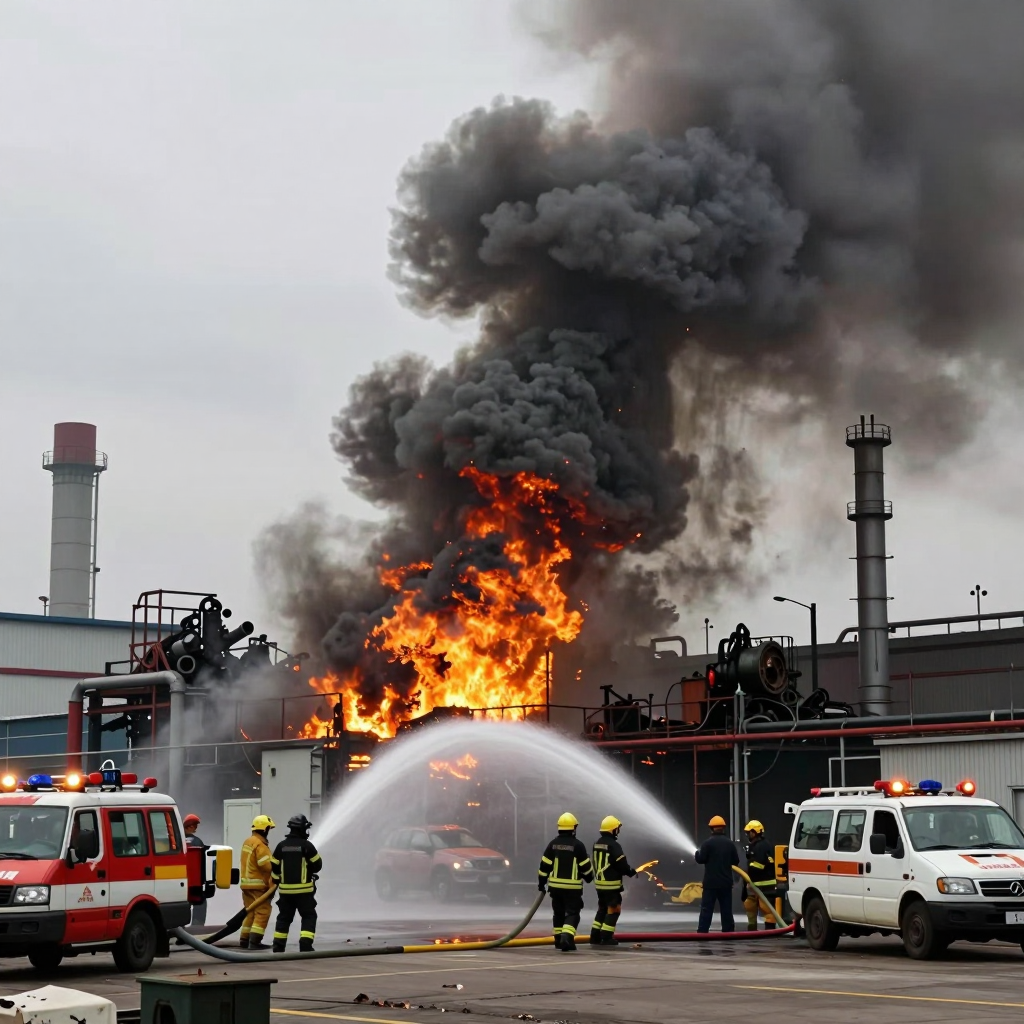
On March 20, 2026, peaceful Daejeon was suddenly shaken by a massive blaze. An auto parts factory was reduced to ruins in an instant—what truly unfolded amidst this devastating scene?
This Daejeon fire was far more than just a “factory fire,” with casualties that are hard to fully capture in words. Initial reports mentioned over 25 injuries, but later tallies revealed a grimmer toll: 35 seriously injured and 15 with minor wounds. During firefighting efforts, it was also reported that 14 people were missing and out of contact, highlighting the chaos and urgency at the site.
The response was swift and intense. Recognizing the emergency’s gravity, the government acted immediately—Prime Minister Kim ordered the full mobilization of all available resources, while fire authorities declared a National Fire Mobilization Order to spearhead massive extinguishing operations. According to reports at the time, the fire was approximately 80% contained, yet given the factory’s layout, presence of flammable materials, and risk of lingering sparks, the situation remained volatile and unpredictable.
However, crucial details such as the exact cause of the fire, its precise starting time, and location remain limited in official disclosures. This leaves us with pressing questions: Why did this devastating fire spread so rapidly? And what must be changed to prevent such tragedies in the future? This incident continues to pose a profound challenge to us all.
Surprising Facts Behind the Damage Status of the Daejeon Fire
With over 25 injured and 14 reported missing, it's easy to dismiss this as just a "major accident" based on the numbers alone. However, an even more devastating scale of damage lies beneath the surface. The recent Daejeon fire goes beyond a simple industrial accident, leaving a deep impact on the site and the entire local community.
- The number of injured has rapidly increased. Initially reported as "over 25 injured," later counts revealed 35 seriously injured and 15 with minor injuries. This pattern of escalating figures suggests that as the situation is brought under control, more victims are being uncovered—highlighting the chaos at the scene and the extensive scope of the damage.
- The fact that there are many seriously injured is especially concerning. A high proportion of severe injuries indicates that this was not merely a case of smoke inhalation but involved the complex interplay of intense heat, toxic gases, and explosive flames unique to factory fires. As a result, medical treatment and recovery will take a long time, meaning the damage extends far beyond the day of the accident.
- The figure of 14 missing persons magnifies the uncertainty surrounding the damage. Even the mere existence of “unconfirmed individuals” amid rescue efforts throws families, coworkers, and the entire community into extreme anxiety. This is not just a statistic but a reality where the time spent not knowing if these people are alive constitutes a secondary form of trauma.
Ultimately, the shock from this incident expands beyond “how many were injured” to include the medical burden centered on the seriously injured, long-term anxiety caused by those missing, and the volatility of the damage that may continue to grow until the site is fully contained. This hidden structure behind the numbers is what amplifies the social impact left by the Daejeon fire.
Emergency Response to the Daejeon Fire: Government and Fire Authorities Go All Out
The moment the flames engulfed the factory, the speed of the response became the crucial factor determining the scale of the damage. From the very start of the Daejeon fire, casualties piled up rapidly, and during the firefighting efforts, some individuals went out of contact, plunging the scene into a tense situation that worsened by the second. The decision was clear: “Not a moment can be wasted.”
What stood out immediately was Prime Minister Kim’s swift directive. The government issued an urgent order to mobilize all available resources, quickly activating an all-government support system to ensure no delays in onsite response. At a disaster scene, the speed of decision-making is as vital as the number of equipment and personnel. Any hesitation in initial command disrupts troop deployment and rescue routes, allowing smoke and heat to penetrate even deeper.
In tandem, the fire authorities declared a national fire mobilization order, launching a large-scale firefighting operation. This order is not merely a “request for support” but a powerful system that rapidly pulls personnel and equipment nationwide to concentrate on the site. During the Daejeon fire, the firefighting efforts progressively expanded, reportedly reaching an 80% containment rate.
However, the pressure on the ground cannot be captured by numbers alone. Factory fires often involve complex internal layouts and large amounts of flammable materials, meaning the flames can subside only to flare up again instantly. Meanwhile, casualty transport, rescue, and extinguishing efforts had to proceed simultaneously, with some missing persons reported even amid the firefighting, underscoring the unpredictable dangers. It was a total war fought on two fronts—quelling the flames and locating people—both unfolding concurrently with unwavering determination.
The Cause of the Daejeon Fire Remains a Mystery: The Truth Yet to Be Unveiled
The specific cause of the fire is still shrouded in mystery. Why did this tragedy occur, and what messages do the lingering questions leave us?
Based solely on the information released so far, the incident saw a sudden surge in the number of casualties (35 severely injured, 15 mildly injured) and even missing persons, highlighting the chaos on the scene. The government’s order to mobilize all available resources and the fire department’s invocation of the National Fire Mobilization Command reveal just how intense and quickly spreading the fire was. Yet, when it comes to the crucial question of ‘what actually started the fire,’ no definitive explanation has emerged.
The Key Questions Left Unanswered
- Where exactly did the fire ignite? The responsibility and prevention measures hinge entirely on whether the fire began in the production line, warehouse, equipment room, or another zone of the facility.
- Was the initial response adequate? It is essential to verify the timing of the first detection of smoke or flames, the evacuation announcements and route guidance, and whether initial suppression efforts were feasible.
- What factors caused the damage to escalate? Elements such as how flammable materials were stored, the functioning of ventilation and containment systems, and the operation of fire partitions directly impact the scale of human casualties.
- What does the communication blackout imply? Whether it was a total communication failure, isolation along evacuation routes, or a failure in on-site verification processes, this points to critical weaknesses in the emergency response system.
The Warning Behind the ‘Unconfirmed Cause’
Without clarity on the cause, accountability and institutional reform can easily stall. Especially in catastrophic events like the Daejeon fire with massive human losses, the full process—from ignition to spread, evacuation, and rescue—must be meticulously reconstructed rather than chalking it up to simply “a large fire.” The longer the truth remains elusive, the higher the risk the site will face similar dangers again.
What is needed now is not assumptions but verification. Rather than rushing to conclusions with scant clues, pursuing the questions still demanding answers is the crucial challenge left by this tragedy.
A Spark of Hope, Remaining Challenges, and Lessons Learned — What We Must Do After the Daejeon Fire
Despite the heavy loss of lives, the spark of hope has not been extinguished. The Daejeon fire, which resulted in a large number of injuries including serious and minor casualties and even reports of missing persons, has once again confirmed that "on-site safety" is not just a slogan but a matter of survival. What matters now is to connect the remaining challenges and lessons learned to concrete changes to prevent such tragedies from happening again.
The Core Lesson Left by the Daejeon Fire: ‘Response’ Alone Is Not Enough
Mass mobilization and swift firefighting efforts are certainly crucial. In fact, the government’s order to mobilize all available resources and the declaration of a national firefighting mobilization likely helped contain the spread of damage. However, this incident emphasizes that the thoroughness of preventive measures before an incident is just as vital as the speed of post-incident response. Factory fires involve complex interconnections of equipment, processes, materials, and personnel routes, where a small vulnerability can quickly escalate into massive damage.
Priority Safety Measures After the Daejeon Fire
- Reassess the effectiveness of escape and evacuation systems: Redesign should not focus merely on securing escape routes but on whether “everyone can immediately evacuate” in real situations. This must include emergency guidance, access control, and scenarios for night and shift work.
- Proactive management of high-risk processes: Although further investigations into the cause of the fire are necessary, even before the root cause is identified, processes with high risk (handling flammables, high-heat operations, electrical equipment, etc.) must undergo intensified inspection cycles alongside equipment improvements.
- Enhance on-site training: Move beyond paper-based education and implement repeated drills involving actual workers, managers, and partners together. Especially protocols for personnel accounting, assuming the possibility of missing individuals, must be meticulously refined.
The Question Raised by the Daejeon Fire: Can We Change the ‘System’ Beyond Assigning Blame?
After an accident, accountability debates always follow. But the more important question is this: Have we established a structure that prevents the next disaster? Safety cannot be achieved by individual caution alone. It requires a system where equipment investment, operational standards, risk assessments, subcontractor and main contractor collaboration, as well as balanced supervision and support, all work collectively. Only when such a system is genuinely improved does the minimum respect for victims and sites come to fruition.
The Daejeon fire is a painful event, but the choices we make afterward will shape the future. The spark of hope grows not from a promise to “never forget,” but from actions to make real change.
Comments
Post a Comment