 \n
\n
Daylight Saving Time Kicks Off Tomorrow — Are You Ready? (Daylight Savings 2026)
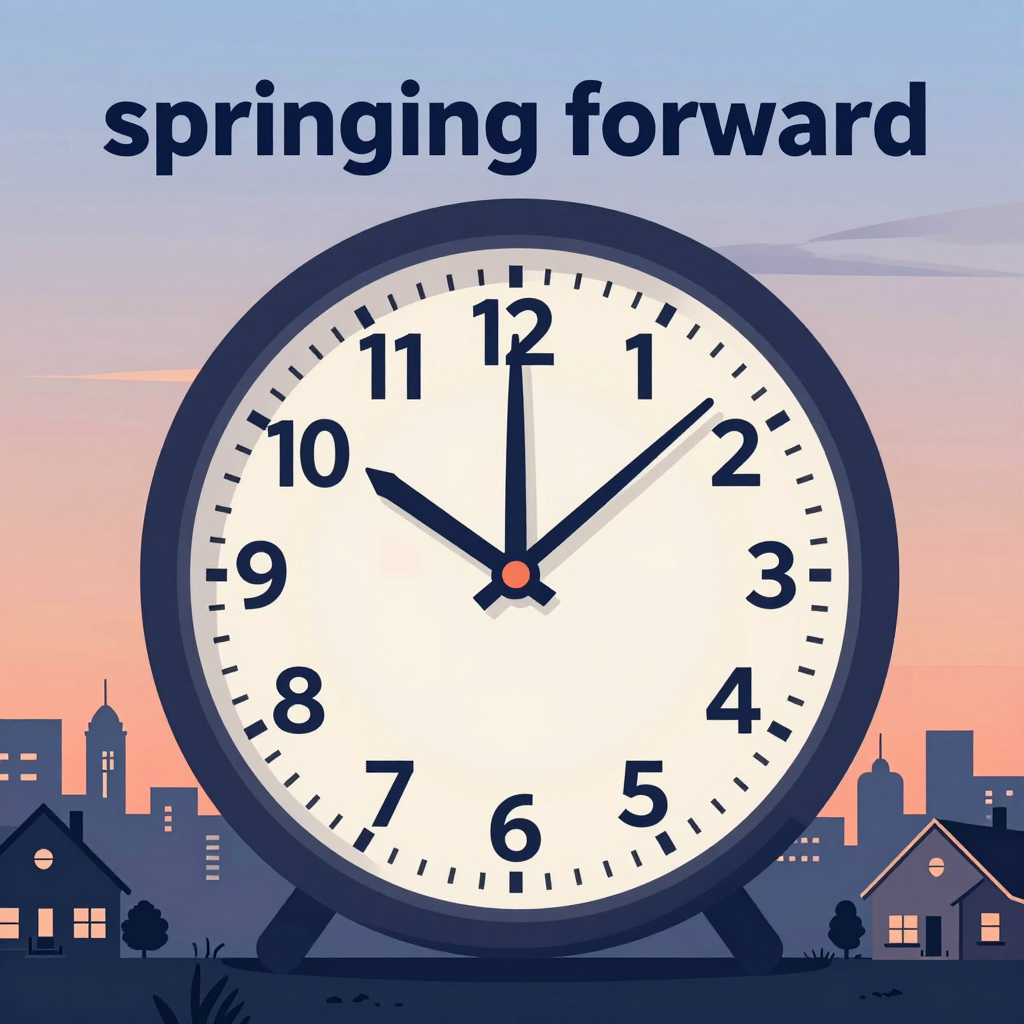
At 2 a.m. on March 8, 2026, clocks across the United States will leap forward by one hour. As you rub your eyes and check the time, you'll notice that 2 a.m. suddenly becomes 3 a.m., and just like that, we naturally lose one hour of sleep. This marks the official start of Daylight Savings 2026.
But this shift is more than just changing the clocks. As one hour of morning sunlight moves into the evening, your entire daily rhythm changes. For instance, in Boston, the sunrise shifts from 6:09 a.m. to 7:08 a.m., while the sunset moves from 5:41 p.m. to 6:42 p.m., giving you longer evenings after work to enjoy the daylight. On the flip side, mornings will feel darker for a while.
Here are three key points to keep in mind:
- When? Sunday, March 8, at 2 a.m. → 3 a.m., clocks jump forward
- What changes? Most people experience one less hour of sleep, but the sun sets later in the evening
- Any exceptions? Hawaii and Arizona (except the Navajo Nation) do not observe daylight saving time. Some U.S. territories like Puerto Rico also stay on standard time year-round.
Lastly, if you use a smartphone, you’re mostly in the clear. With automatic time updates enabled, your device will adjust itself overnight. However, for manual clocks like your alarm clock, oven, or microwave, it’s wise to check and set them tonight to avoid morning confusion.
The Shift in Daily Time by Daylight Savings: Daylight Savings 2026
Instead of losing an hour of sleep, your evening time definitely gets longer. Daylight savings 2026 begins on March 8th at 2 AM local time, when the clock jumps forward by one hour, making 2 AM leap straight to 3 AM. This means tomorrow morning might start more rushed than usual.
What we gain instead is extra daylight after work. By shifting an hour of morning sunlight to the evening, the day feels rearranged to be more “evening-focused.”
- Boston Sunrise: 6:09 AM → 7:08 AM (It’s darker in the morning)
- Boston Sunset: 5:41 PM → 6:42 PM (Evenings become brighter)
This one-hour change isn’t just about turning the clock. Morning workouts or getting ready for school and work might begin in the dark, but activities like evening walks, runs, outdoor playtime with kids, and grocery shopping become far more relaxed. That’s exactly why it feels like your day has gotten longer.
The Long History of Daylight Saving Time, and Does It Really Work? (Daylight Savings 2026)
In 1918, during wartime, daylight saving time was first introduced as a means to save fuel. The idea was to “shift daylight hours to the evening” to reduce the use of lighting. However, every time we move the clocks forward in the modern era, like in daylight savings 2026, the same question arises: “Does it really save energy today?”
To get straight to the point, many studies show that the energy-saving effect is surprisingly minimal. After the U.S. changed the start of daylight saving time to the second Sunday in March from 2007 onward, the Department of Energy’s analysis found that electricity consumption decreased by only about 0.03%. While the numbers indicate some savings, it is hardly noticeable in everyday life.
The reason is simple. In the past, lighting made up a large part of energy consumption, but now power use has become far more complex with air conditioning, heating, electronics, and commercial operations. In other words, although evening lighting decreases due to later sunsets, increased cooling demand in certain regions and seasons, along with shifts in lifestyle patterns, can offset the savings.
In summary, daylight saving time has historical roots as a “fuel-saving device during wartime,” but today it has become a system whose existence is hard to justify by energy savings alone. That’s why every year, as moments like daylight savings 2026 approach, debates flare up again between tradition and efficiency.
The Secret of Daylight Saving Time Exceptions: Why Hawaii and Arizona ‘Keep Time’ in Daylight Savings 2026
Why don’t Hawaii and Arizona observe daylight saving time? While everyone else springs their clocks forward tomorrow for daylight savings 2026, these two places stick to “just the usual time.” It’s not simply out of laziness; rather, clear geographical, lifestyle, and economic realities shape their choice.
Hawaii: No Need to ‘Spring Forward’ When the Sun Already Shines Long Enough
Hawaii, located in a low-latitude region, experiences relatively little change in daylight hours across seasons. In other words, unlike other states where days are much longer in summer and shorter in winter, the perceived benefit of shifting time by one hour is limited.
Moreover, as an island with major industries like tourism, aviation, and logistics relying heavily on precise schedules, the confusion and costs caused by time changes can be more burdensome. Ultimately, the “gains from changing time” are outweighed by the “inconveniences it brings.”
Arizona: Heat Is the Issue—An Extra Hour of Evening Sun Is Not a ‘Benefit’
Arizona (most of it) is famous for its desert climate. Daylight saving time moves morning sunlight into the evening, but in Arizona, this can worsen life quality by pushing the hottest hours later into the day.
In other words, when sunset shifts one hour later, the evening heat lingers longer, boosting air conditioning demand. Although daylight saving time originally started with the goal of “energy saving,” studies showing minimal effects on power consumption mean Arizona has little reason to endure this downside.
An Exception to the Exception: Navajo Nation Observes Daylight Saving Time
Interestingly, Arizona is not uniform in this regard. Within the state, the Navajo Nation does observe daylight saving time. Since its territory spans multiple states, aligning clocks makes administrative and daily life much more efficient.
In the end, whether to adopt daylight saving time is not simply a matter of preference but a decision based on local geography, economic zones, and daily routines.
U.S. Territories Also Choose ‘Year-Round Standard Time’
Not just Hawaii and Arizona, U.S. territories like Puerto Rico, Guam, the U.S. Virgin Islands, American Samoa, and the Northern Mariana Islands generally maintain standard time throughout the year. Differences in latitude, lifestyle patterns, and minimal practical benefits of time changes strongly influence these choices.
Amid the nationwide clock-shifting frenzy of daylight savings 2026, the reasons Hawaii and Arizona keep their time steadfast are clear. Their “stubbornness” is actually a rational choice, best reflecting the realities of their regions.
Daylight Savings 2026: The Convenience of Automatic Updates in the Digital Age
Your smartphone changes the time automatically, but is your device ready? One small setting can prevent everyday confusion. On days like daylight savings 2026, when the clock jumps forward at 2 AM, it’s easy to mistakenly think, “Did I oversleep?” or “Did the meeting time change?”
Nowadays, most smartphones update the time automatically, but exceptions may occur in the following cases:
- If automatic time setting is turned off: When ‘Set Automatically (Network Provided)’ is disabled, the time change won’t be applied.
- If you keep a time zone set for another region after traveling: Alarms and calendars can get messed up if your device isn’t returned to your local time zone.
- Older or offline devices (car clocks, microwaves, wall clocks, etc.): Even if your smartphone is accurate, other devices won’t change, causing the classic “Which time is correct?” dilemma.
- Delayed synchronization in some apps: Calendars or work tools may still show the old time until network syncing completes.
A simple checklist the day before daylight savings is enough:
1) Enable ‘Set Automatically’ for time and time zone in your smartphone settings
2) Double-check alarms and calendar events (especially early morning schedules)
3) Verify that your smartwatch, car clock, and digital clocks at home are updated too
In the end, daylight savings is a matter of “one hour,” but that one hour can ripple through your commute, appointments, online meetings, and even flight or train schedules. Trust automatic updates, but today, make sure your essential devices are perfectly in sync.
Comments
Post a Comment