 \n
\n
PSG’s Dramatic Advance to the Champions League Quarterfinals: The Secret Behind the Crushing Victory Over Chelsea
PSG’s overwhelming 8-2 aggregate triumph leaves fans wondering—what is the secret behind this stunning sweep? The answer lies not in a single explosive moment, but in unwavering tactical consistency, meticulous fitness management, and the ruthless clinical finishing that broke their opponents early across both legs.
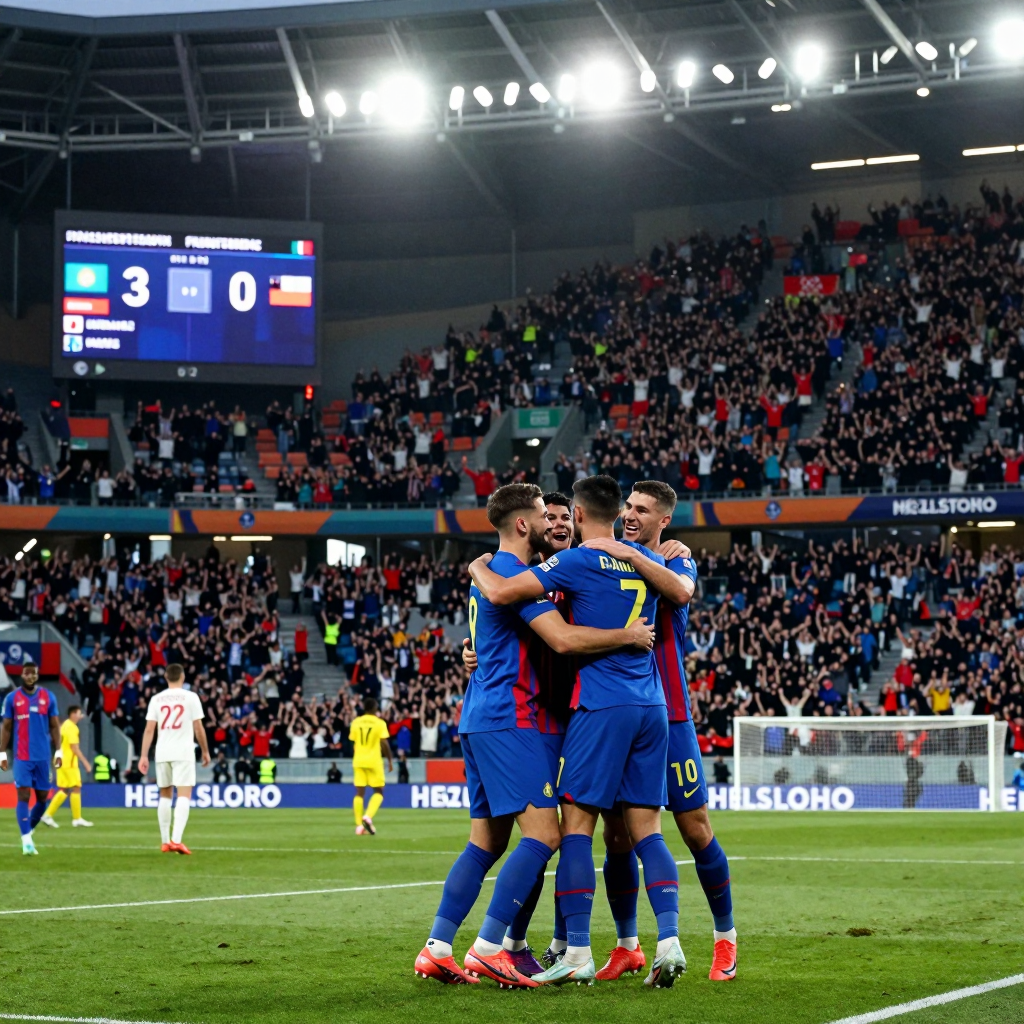
In the second leg of the Round of 16, PSG maintained their momentum flawlessly. A game-changing opening goal from Kvaratskhelia in the 6th minute quickly crushed Chelsea’s spirit, and Barcola’s powerful strike at the 15th minute widened the gap, effectively sealing the direction of the clash. Adding to the dominance, Mayulu's goal in the 62nd minute ensured that this was not a chase, but a “controlled victory” from start to finish.
Equally crucial was the off-field preparation. While PSG secured physical freshness by adjusting their league schedule, Chelsea faced instability with recent inconsistent league performances compounded by the injury absence of captain Reece James—making squad management a tough puzzle. These disparities became increasingly evident as the match progressed, with Chelsea’s attempts repeatedly thwarted by PSG goalkeeper Safonov’s stellar saves, denying even a single breakthrough.
Although Lee Kang-in was brought on as a substitute and did not register an attacking contribution, he played a vital role in reinforcing PSG’s solid game structure, helping to cement their path to the quarterfinals. Ultimately, this Chelsea versus PSG showdown showcased how precise preparation and operational excellence layered atop flashes of star brilliance can crown an extraordinary scoreline.
PSG’s Explosive Firepower from the Start: Decisive Moments That Crumbled Chelsea Against PSG in Three Waves
At the 6th minute, the 15th minute of the first half, and the 17th minute of the second half. The timing of these goals wasn’t a coincidence—it was a clear signal that their game plan worked. This second leg clash between Chelsea and PSG wasn’t about a single momentum shift; it was a match where PSG overwhelmed Chelsea in three crushing waves. From Kvaratskhelia to Várkola and Mayulu—how did they bring Chelsea down?
6th Minute: Kvaratskhelia Opens the Scoring
Early in the game is usually a period of probing and adjustment, but PSG boldly skipped that phase. Right after kickoff, they raised the tempo and struck before Chelsea’s defense could even organize, with Kvaratskhelia first to convert that gap into a goal. That opener wasn’t just a single goal; it was a ‘command’ shaking the very foundation of Chelsea’s game plan.15th Minute: Várkola’s Powerful Shot Crushes Chelsea’s Hope for a Comeback
The key was scoring another goal in less than 10 minutes. Just as Chelsea was trying to regroup, PSG accelerated once more, and Várkola’s fierce right-footed strike sealed the moment. This wasn’t just a goal; it was a declaration: “We can strike faster and stronger.” For Chelsea, it wasn’t a springboard for counterattack but a point where uncertainty and pressure intensified.17th Minute of the Second Half: Mayulu’s Clinching Goal Seals the Outcome
Chelsea tried to spark a comeback at home in the second half, but PSG stood firm. They regained control of the game’s rhythm and at the 17th minute of the second half, Seni Mayulu netted the third goal. This moment confirmed that the first half’s burst of goals wasn’t a fluke or flurry but part of a sustained assault. The fact that the goal storm continued into the second half proved PSG didn’t just perform well—they managed the game’s momentum from start to finish.
Ultimately, this match wasn’t about one team losing focus but about PSG’s methodical pressure creating scoring moments from the very beginning to the end. Every time Chelsea tried to generate shots and opportunities, PSG responded with an even faster goal.
Chelsea vs PSG: A Night of Crisis and Its Limits
The cheers of the home crowd, the familiar turf, and an atmosphere that promised a comeback. Yet this Chelsea vs PSG match revealed just how easily the so-called ‘home advantage’ can be rendered powerless. Chelsea needed to seize control early but found their plans shaken when they conceded the opening goal just six minutes in, followed by another setback at 15 minutes. The usual expectation of “early pressure to take the lead” on home ground instead backfired against PSG’s clinical finishing.
But the problem wasn’t only the scoreline. Chelsea entered this big European fixture amid a shaky run, having won just one of their last five league games. When a team is unstable, even small mistakes loom large, and once they fall, it takes time to recover. In fact, their gameplay after conceding grew more desperate, with attacks fizzling out rather than sparking a wave of counterattacks.
To make matters worse, injuries struck. The absence of captain Reece James dealt more than just a blow to the squad’s strength—it left a void in defensive stability and on-field leadership. In high-stakes matches, teams need a central figure to organize and regain rhythm during crises, but Chelsea never managed to create that presence. Meanwhile, PSG benefited from a favorable league schedule, allowing them greater physical freshness—a gap that showed clearly in their intensity and quick transitions.
Ultimately, this match was less about “playing at home” and more about exposing “conditions where even home advantage falls short.” A near losing streak, structural gaps caused by injuries, and an opponent’s well-prepared completeness collided all at once. Chelsea faced those limits head-on, confronting the weight of reality before any dreams.
Chelsea vs PSG: Lee Kang-in’s Shining Presence and Missed Offensive Contributions
In the 73rd minute, when South Korean national team player Lee Kang-in replaced Khvicha Kvaratskhelia, the tone of the match subtly shifted. Although the score was already leaning in PSG’s favor, Lee Kang-in’s entry was not merely a tactic to ‘run down the clock’—it was more of a card aimed at smoothing out the closing phase of the game. So, what changes did his introduction bring in the Chelsea vs PSG match, and how far could his potential stretch in the future?
Changes Brought by Lee Kang-in’s Substitution: Prioritizing ‘Control’ Over Speed
Despite limited playing time, Lee Kang-in focused less on pushing the attack aggressively and more on stabilizing ball possession and organizing the direction of passes. With PSG already leading, the greater concern was not simply conceding another goal, but the risk of the momentum shifting due to Chelsea’s sudden counterattack. Lee Kang-in’s inclusion was interpreted as a choice that reduced risks while maintaining the rhythm of the attack during this crucial period.
Missed Offensive Points but a Clear Message
There were no offensive points to show for his efforts. However, judging solely by the ‘lack of points’ overlooks PSG’s clear strategic approach at that moment. Holding an advantage over two legs, PSG prioritized minimizing mistakes and closing the game rather than pushing forward recklessly, and Lee Kang-in’s short passes and ball retention added much-needed stability. In other words, while the stats remained empty, his role within the team’s tactical framework was unmistakable.
Looking Ahead After Chelsea vs PSG: An Option for Bigger Stages
The significance of this appearance lies in demonstrating that Lee Kang-in is not just a ‘substitute resource’ but an option capable of managing game flow depending on the situation. Especially on a stage like the Champions League knockout rounds, where a single mistake can be fatal, controlling rhythm and maintaining possession become as vital weapons as scoring points. If the next round brings even tighter battles, Lee Kang-in’s abilities could shine even brighter.
Chelsea vs PSG: A Battle of Stamina and Strategy, PSG Completes Their Journey to the Quarterfinals
With a rescheduled league calendar preserving their stamina and Chelsea grappling with key absences, the second leg of the Chelsea vs PSG Round of 16 was defined just as much by the decisive factors throughout the match as by the 3-0 scoreline. Building on the psychological edge secured from their commanding first-leg victory, PSG focused on efficiency and control in the second leg to secure their spot in the quarterfinals.
PSG’s key strategy was a burst of early pressure followed by careful management. After taking the lead in the 6th minute and doubling their advantage by the 15th, they controlled the flow without overcommitting, accelerating only when necessary to shape the game. This approach was possible thanks to their superior fitness levels. A third goal in the second half sealed the outcome, showcasing the rhythm of a team that knows how to win.
Chelsea, on the other hand, showed intent to fight back on home ground, but their recent struggles and squad depletion due to injuries were evident throughout. While they managed to build attacks, their finishing lacked sharpness, and they couldn’t break through PSG goalkeeper Safonov’s saves. Maintaining intense forward pressure was a heavy physical burden, and the plan quickly unraveled after conceding.
Ultimately, this matchup was not just a matter of tactical superiority but a complex interplay of scheduling, stamina, and squad completeness. PSG didn’t just protect the lead built in the first leg safely—they took command again in the second leg and advanced with an 8-2 aggregate score. Despite creating promising moments, Chelsea lacked the energy and options to deliver the final decisive touch.
Comments
Post a Comment