 \n
\n
Unexpected Exposure: The Full Story Behind the Claude Code Source Code Leak
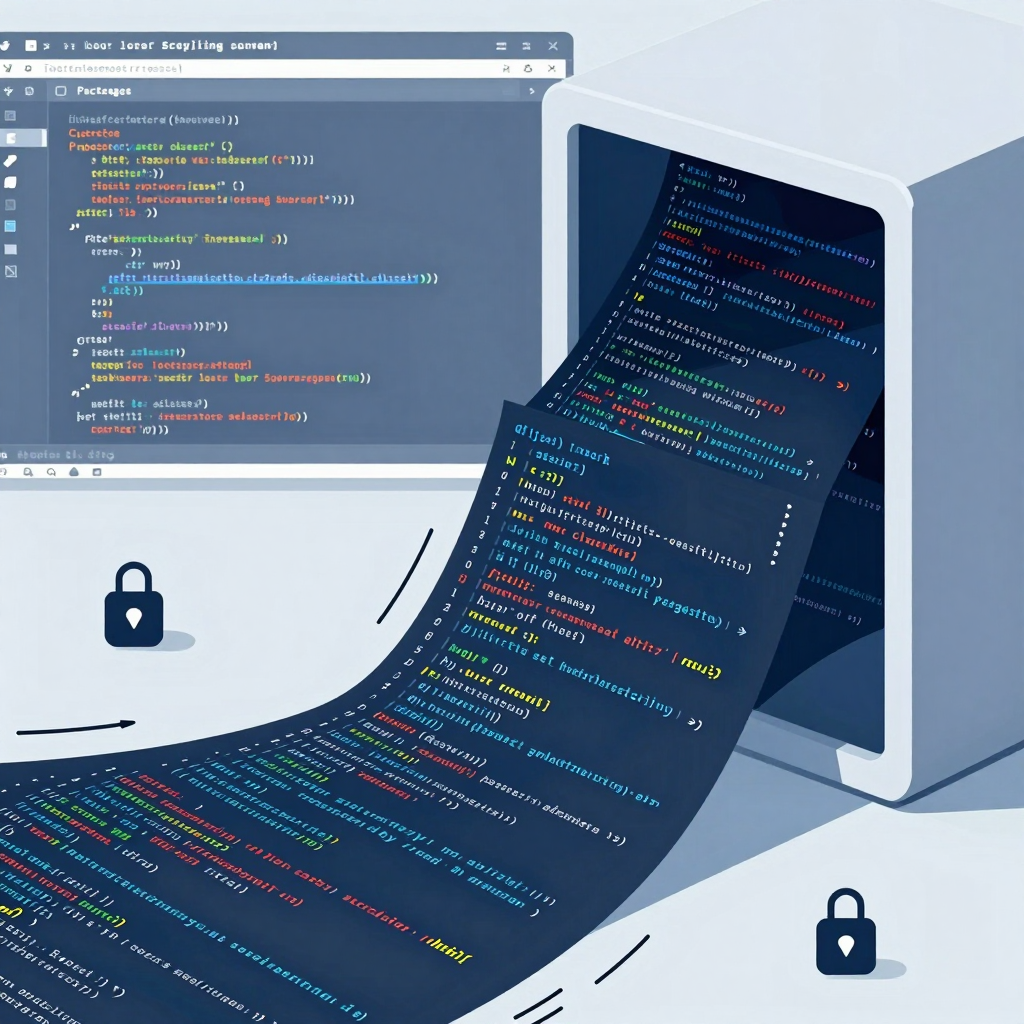
How did over 500,000 lines of TypeScript code become publicly available worldwide due to a simple deployment mistake? The recent Claude code source code leak was not caused by hacking or internal breaches, but rather by a common “packaging quality control” oversight during the build and deployment pipeline. In other words, this was not a case of attackers breaking into the system, but of the deployment artifacts unintentionally revealing clues themselves.
The Source Map (.map) Hidden in the Deployment Triggered the Claude Code Source Leak
The key trigger of the incident was the inclusion of source map (.map) files during the NPM package distribution. Source maps are debugging metadata that help developers trace back from bundled (compressed/obfuscated) JavaScript code errors in browsers or runtimes to the original TypeScript/source file locations and line numbers.
The problem is that while source maps typically only contain “code line mapping information,” depending on the settings, they can also include sensitive information such as:
sources/sourcesContent: original file paths or even the original source code itself- internal paths and resource URLs generated during the build process
- various comments and metadata for debugging purposes
In this instance, the source maps included in the NPM package contained links to source code archives stored on Anthropic’s R2 storage bucket, allowing anyone with the link to download the full code externally. Essentially, an “auxiliary file bundled inside the package” had accidentally disclosed an additional download route to the entire codebase.
The Story of the Claude Code Source Leak: Not ‘Hacking’ but a ‘Packing Mistake’
Unlike a typical supply chain attack scenario, the sequence of this leak is relatively straightforward:
- The CLI client was distributed as an NPM package
- The deployment accidentally included debugging source map (.map) files (a packing mistake)
- The source map exposed a source archive link to external storage (R2)
- Through this link, the public could download over 2,300 files totaling 500,000 lines of TypeScript code
In other words, rather than attackers exploiting vulnerabilities to penetrate the system, the deployment artifact itself uploaded the ‘keys’ to a public repository. What makes this kind of leak especially frightening is that even if the development team believes the backend and models remain secure, the client code alone can expose extensive information about the product’s architecture, functional roadmap, and internal design philosophies.
Why the Impact Is Huge Even Though the Leak Is Limited to the ‘Client’: The Significance of the Claude Code Source Leak
To summarize, the leak was confined to the CLI client-side code—not model weights or backend server code. Yet the fallout is significant because the client contains highly sensitive implementation details such as:
- How agents operate (e.g., running tools like Bash, file editing)
- MCP server integration, remote sessions, OAuth authentication, policy management logic
- System prompt design traces and AI interaction flows
- Clues to deactivated unreleased features (e.g., Auto-Dream, KAIROS) and internal roadmaps
Moreover, the incident has sparked trust and governance concerns because a similar exposure occurred around 13 months ago via a comparable path. This is not “a one-time slip” but a “repeated mistake,” pushing the team and organization to reevaluate their entire deployment validation frameworks—including artifact inspections, source map policies, and storage access controls.
Ultimately, the Claude code source code leak reminds us that security is not just about preventing intrusions but also about taking full responsibility for what is included in deployment artifacts until the very end.
The Mechanism Behind the Claude Code Source Code Leak: The Trap of Source Map (.map) Files and NPM Packages
Could a single source map (.map) file leak thousands of files and hundreds of thousands of lines of code? This incident isn’t about hacking or exploiting vulnerabilities; rather, it starkly reveals how deadly “unintentionally exposed metadata” in build and deployment pipelines can be. The key issue is that the source maps included in the NPM package generously pointed to the exact locations of the original source code.
What Exactly Are Source Maps, and How Did They Lead to a Leak?
Source maps are commonly used in frontend (or CLI UI/bundled) development. Since TypeScript or bundled JavaScript code is difficult to debug, browsers or runtimes are provided with .map files so they can trace back to the “original TypeScript files.”
Source maps typically contain information like:
- Mapping of each line/column in the bundled code back to the original source
- A
sourceslist (paths to the original files) - Occasionally,
sourcesContent(the original source code itself embedded) - And the most dangerous case: external URLs or internal storage paths where the original sources can be fetched
In other words, while source maps serve the innocent purpose of “debugging convenience,” a slight misconfiguration can turn them into publicly shared maps leading straight to the original source code.
What Happened During NPM Packaging?
This Claude code source code leak began because the NPM package included .map files. More precisely, inside those source maps, links or access paths to Anthropic’s R2 storage bucket containing the source archive remained intact, allowing anyone to follow the trail and download the entire archive.
The sequence was as follows:
- A source map is generated during the TypeScript → bundle/build process
- The generated source map records references to the original source code (including the problematic links/paths)
- During the NPM publishing step, the source map file got included in the package by mistake
- Third parties installing or analyzing the package opened the
.mapfiles - Through references inside
.map, they downloaded the source archive stored in R2 - As a result, approximately 2,300 files totaling 500,000 lines of TypeScript code were exposed externally
The critical point here is not just that the source code was directly included in the NPM package, but that the source maps inside the package served as clues connecting to a much larger original source archive hosted externally.
Why Does “Including Source Maps” So Often Lead to Accidents Like This?
As build/deployment automation has become more sophisticated, source maps often unintentionally sneak into published packages because of things like:
- Default settings leaving
sourceMappingURLin, or generating.mapfiles alongside build artifacts - Incomplete control over build artifacts through
files,.npmignore, or packaging scripts - CI systems that don’t properly separate “debug build artifacts” from “release artifacts”
- Internal storage URLs left in place under the assumption that they won’t be publicly accessible
→ But public settings, presigned URLs, or missing access controls add unpredictable risks
In the end, this incident is not the result of “complex hacking,” but a classic example of how a tiny source map file released in the supply chain triggered a chain reaction of information leakage. Coupled with similar exposure routes discovered around 13 months ago, it raises the development security question: are sufficient safeguards properly embedded in the deployment pipeline to prevent recurrence?
Shocking Internal Leak: Hidden Features and Architecture Revealed Through the Claude Code Source Code Leak
What if 44 inactive features—from the unreleased Auto-Dream to team orchestration—were suddenly exposed all at once? This recent Claude code source leak wasn’t a “hack” but a classic supply chain mishap where the inclusion of source maps (.map) during NPM packaging inadvertently revealed internal archive links. Yet, as a result, it offered an unprecedented glimpse into the philosophy and structure behind the CLI. Here are the key takeaways from the leaked code.
The Full Scope of the CLI Revealed by the Claude Code Source Leak: A Frontend That Resembles a ‘Mini Platform’
Although the leak involved the CLI client-side (TypeScript) code—not model weights or backend—it was massive in scale. Approximately 500,000 lines of code across 2,300+ files signal something beyond a mere “command-line tool.” This points to a platform-like CLI stacked with functional modules.
Notable structural highlights include:
- Tooling-Centric Design: Modules enabling Bash execution, file editing, and more, equipping the AI with “hands and feet” to perform real tasks
- Session/Policy/Authentication Layers: Built-in support for remote sessions, OAuth authentication, and policy management designed for operational environments
- Extensible Integrated Architecture: A systematic framework accommodating external system integrations such as MCP server connections
In other words, this CLI is no thin client merely passing prompts. It’s designed as a combination of agent runtime environment, security/policy enforcement, and integration all rolled into one.
Core Features Uncovered by the Claude Code Source Leak: Agent Execution Logic at the Product’s Heart
The leaked code emphasizes AI interaction logic and execution control far more than the “chat UI.” Specifically, the product core appears to revolve around:
- Internal Logic Operating the Agent: Which tools to call under certain situations, and how results feed back into model inputs
- System Prompt Design Traces: How internal rules and guardrails are embedded within prompt layers
- Remote Session and Collaboration-Oriented Flows: Remote control and session chaining features despite being a local CLI
This structure aligns closely with ambitions to operate agents within enterprise environments under strict policy compliance—moving well beyond a developer-focused CLI.
The Biggest Intrigue: The Identity of 44 Inactive Features Exposed by the Claude Code Source Leak
What amplified this issue was not isolated hidden features, but an abundance—approximately 44 distinct inactive functions. The roadmap breadth is remarkable even based on top mentions:
- Auto-Dream: Automated memory cleanup or possibly automated memory management
- KAIROS: Features suggesting “proactive AI behavior”
- Coordinator: Functionality hinting at team orchestration and management
- Companion Pet Features: Experimental elements designed to make the product experience more casual and engaging
Crucially, these inactive features don’t necessarily mean “imminent release.” Typically, such dormant code stems from:
- Experimental features flagged off
- Internal test/demo functions conflicting with formal product requirements
- Releases on hold due to pending policy/security reviews
Even so, this volume of inactive functionality strongly signals that Claude Code CLI is a product aiming for long-term expansion into agent-based workflows rather than a mere tool.
Security Implications from the Claude Code Source Leak: Source Maps and Archive Links as ‘Data Leakage Vectors’
The crux of this incident isn’t simply that the code was in TypeScript, but that source maps included internal repository links (R2 bucket archive paths) exposed externally in the build artifacts. While source maps are often published to aid debugging, they become an immediate risk if:
- They contain original file paths, comments, or metadata
- Those paths link to accessible storage URLs
- There’s no pre-release verification step catching this in packaging pipelines
Particularly here, given similar past exposures via related paths, this points less to a one-off slip and more to a governance flaw in the build and deployment pipeline’s security controls. From a dev security perspective, recurrence equals process failure.
What We’ve Learned Post-Claude Code Source Leak: Revealing Construction Means Enlarging the Attack Surface
Even without model weights or backend data, exposing client architecture leaks information such as:
- Potential structural weak points like authentication/session flows and policy enforcement spots
- Exploration clues for attackers like feature flags and hidden endpoint hints
- Design level insights into safety mechanisms governing tool executions (Bash, file edits, etc.)
Ultimately, the Claude code leak divulged not only “what is being built” but also “where vulnerabilities might lie.” And that is precisely why the development security community views this incident as far more than a mere mishap.
Repeated Mistakes: Why Has the Claude Code Source Leak Happened Again at Anthropic?
The fact that the source was exposed through almost the exact same route 13 months ago makes it hard to view this recent Claude code source leak as just a simple “mistake.” Since this is not hacking but a failure in packaging/build artifact management, having it happen again after the first time signals a structural weakness somewhere in the organization’s development process. So, why has the same path been repeated?
A Typical Structure Leading to Recurrence: An Organization Where “Builds Are Automated but Verification Is Manual”
The core issue in this incident was that debug-friendly artifacts like source maps (.map) were included in the distributed package, exposing metadata inside—such as archive links—to the outside world. Such leaks usually occur when the following conditions overlap:
- The build/deployment pipeline is automated, enabling fast releases
- But the verification step that catches files that shouldn’t be included in the artifact is weak
- Multiple layers of rules (NPM’s
files/.npmignore/bundler settings) overlap, and a small configuration change causes an omission - Source maps are “easy to leave in due to their utility for bug tracking,” creating inertia in keeping these files
In other words, the more the process feels like “everything’s running smoothly and automatically,” the more security verification right before release tends to be reduced to a formal checklist. If the same pattern repeats after the first leak, it’s highly likely that only reactive fixes were made, but the fundamental process remained unchanged.
Why Source Maps Are Dangerous: They Don’t Leak the Code, But the “Roadmap” to It
Many developers think source maps are less meaningful without the original code, but in reality, the opposite is often true. Source maps can contain:
- Mapping information between bundled code and original source code
- Internal project structures, such as original file paths and module hierarchy
- Sometimes, snippets of original code itself in
sourcesContent - And, as in this case, external repository links or references inserted during build
Therefore, when source maps are mixed into the distributed package, attackers don’t just “steal code”—they get a map leading to the code. Once this map leaks externally, deleting it doesn’t end the problem. It may have been crawled, cached, or mirrored elsewhere. More importantly, the “pathway of leakage” becomes known, increasing the risk of recurrence.
The Gap Between “AI Safety” and “Build Security”: Different Organizational Priorities Create Holes
AI companies often emphasize safety focused on model behavior, policies, guardrails, and red teaming. Meanwhile, this Claude code source leak is a very traditional software supply chain issue. This gap arises from:
- Separate goals between safety teams and product engineering:
Model or policy safety can improve while build artifact security is treated as a “default” afterthought. - Speed-driven product release culture:
For client products like CLIs, rapid releases are competitive advantages, so “ease of debugging (including source maps)” often trumps “distribution security.” - Lack of clear ownership:
When “who is responsible for NPM packaging security?” is unclear, improvements get pushed to the next sprint—again and again.
In the end, the problem is structural, not technical. If the same type of leak has occurred twice within 13 months, it’s likely not a “single mistake” but rather that verification systems are not enforced in the release process.
Practical Prescriptions to Prevent Recurrence: “Automated Blocking Before Release” Is Key
Such incidents are rarely stopped by training or announcements alone. The probability of recurrence drops sharply only when checks are done automatically within CI/CD. Realistic defenses include:
- Add inspection steps before NPM publishing
- Check for inclusion of
.mapfiles, especially in production releases - Detect
sourcesContent, external URL patterns, or internal paths likesrc/,internal/inside.mapfiles
- Check for inclusion of
- Verify based on the actual
npm packartifact- Generate the tarball to be published, compare the file list, and fail the build if risky files are present
- Statically scan for repository links, tokens, and bucket URLs
- Detect and block URL patterns within bundles, source maps, and log artifacts
- Enforce artifact minimization policies
- Set clear rules like “debugging artifacts only go through internal channels” and “public packages include minimal files only”
The key is one thing: don’t rely on human attention—let the deployment pipeline automatically reject dangerous artifacts. Only then will the organization stop “repeating the same path again.”
Lessons and Future from the Claude Code Source Code Leak: Warnings and Responses from the Developer Security Community
What does this incident imply for AI technology and cloud deployment environments? The core reality is that “data leaks happen even without hacking.” The Claude code source code leak stemmed from a typical supply chain and build pipeline mistake, where source maps were distributed alongside NPM packages, exposing external storage (R2) archive links in the process. The fact that similar incidents have occurred before highlights, beyond technical skill, how crucial basic deployment controls (guardrails) truly are.
Why Are “Source Maps” Risky in Build and Deployment Environments? (From the Perspective of the Claude Code Source Leak)
While source maps are useful for frontend debugging, loose deployment configurations can trigger a chain of issues:
- Original source paths, comments, and metadata remain in the source map: This reveals bundle internals, module names, file tree structures, and even traces of internal systems.
- External resource links become publicly accessible like ‘documents’: As with this case, if source maps contain R2 bucket archive URLs, anyone—not just attackers—can simply navigate to and download them.
- Leaking client-side code alone expands the attack surface: Even without model weights or backend code, exposing CLI authentication flows (OAuth), policy handling, and tool executions (Bash/file edits) enables easy design of phishing, spoofed packages, and malicious plugins.
In summary, source maps aren’t the root “cause” of security breaches but become an “amplifier” when uncontrolled artifacts are distributed.
Developer Security Community’s Warning: “Repeated Mistakes Indicate Structural Problems” (Lessons from the Claude Code Leak)
The community focuses not just on a “single incident” but on the recurrence of similar leak paths—pointing to structural, not individual, failures:
- Release gates don’t verify artifact contents rigorously: No automatic blocking of sensitive inclusions like map files, internal URLs, or debug flags in packages.
- Lack of storage access and expiration policies: Buckets hosting build artifacts are openly accessible or URLs have long validity, increasing leak impact.
- Separation of “AI safety” and “software supply chain security”: Deployment security remains a classical DevSecOps domain requiring fundamental discipline, independent of model safety policies.
In other words, maintaining trust demands not only messaging that “AI is safe” but proof that deployment pipelines themselves are secure.
Future Tasks: Strengthening Build Security and Safe Deployment Checklists (Preventing Recurrence of the Claude Code Leak)
Preventing recurrence hinges on embedding enforceable rules into the build pipeline, rather than relying on reactive fixes:
- Separate source map policies at packaging stage
- By default, exclude
.mapfiles from production builds; upload them only to authenticated error-tracking systems (e.g., Sentry) when necessary. - Apply clear operational policies like
hidden-source-mapin bundler configurations or remove maps after upload.
- By default, exclude
- Enforce artifact scanning as part of release gates
- Automatically scan
npm packoutput before publishing: detect.mapfiles, internal domains/bucket URLs, and keywords like “internal”, “staging”, “r2.” - Generate and archive SBOMs with each release to trace impact if issues arise.
- Automatically scan
- Control storage bucket access and URL lifetimes
- Buckets holding build artifacts should be private by default, with access via signed URLs and short expiration periods when needed.
- Continuously monitor public ACLs and bucket policies in CI to detect policy drifts.
- Design even disabled features assuming code exposure
- Even feature flags set to “off” can reveal roadmap, intents, or bypass routes if their code is accessible.
- Isolate unreleased features in separate branches/packages or move sensitive logic to server side.
- Operationalize recurrence prevention
- Establish quality metrics like “zero sensitive files in release artifacts” and block releases on violations.
- Embed prevention costs as organizational KPIs, highlighting that prevention is far cheaper than incident response.
Conclusion: In the AI Era, Deployment Security Remains the Most Practical Foundation of Trust (The Meaning of the Claude Code Leak)
The takeaway from the Claude code source code leak is straightforward. No matter how innovative AI products become, what users actually install and update daily are packages (artifacts)—and trust can instantly collapse at that interface. The challenge going forward is to build safer build and deployment systems, even before seeking “smarter models.” The developer security community’s warning converges on a single truth: deployment is not the end of functionality but the beginning of security.
Comments
Post a Comment