 \n
\n
Hwang Seok-hee, the Film Translator Who Bridges Emotions
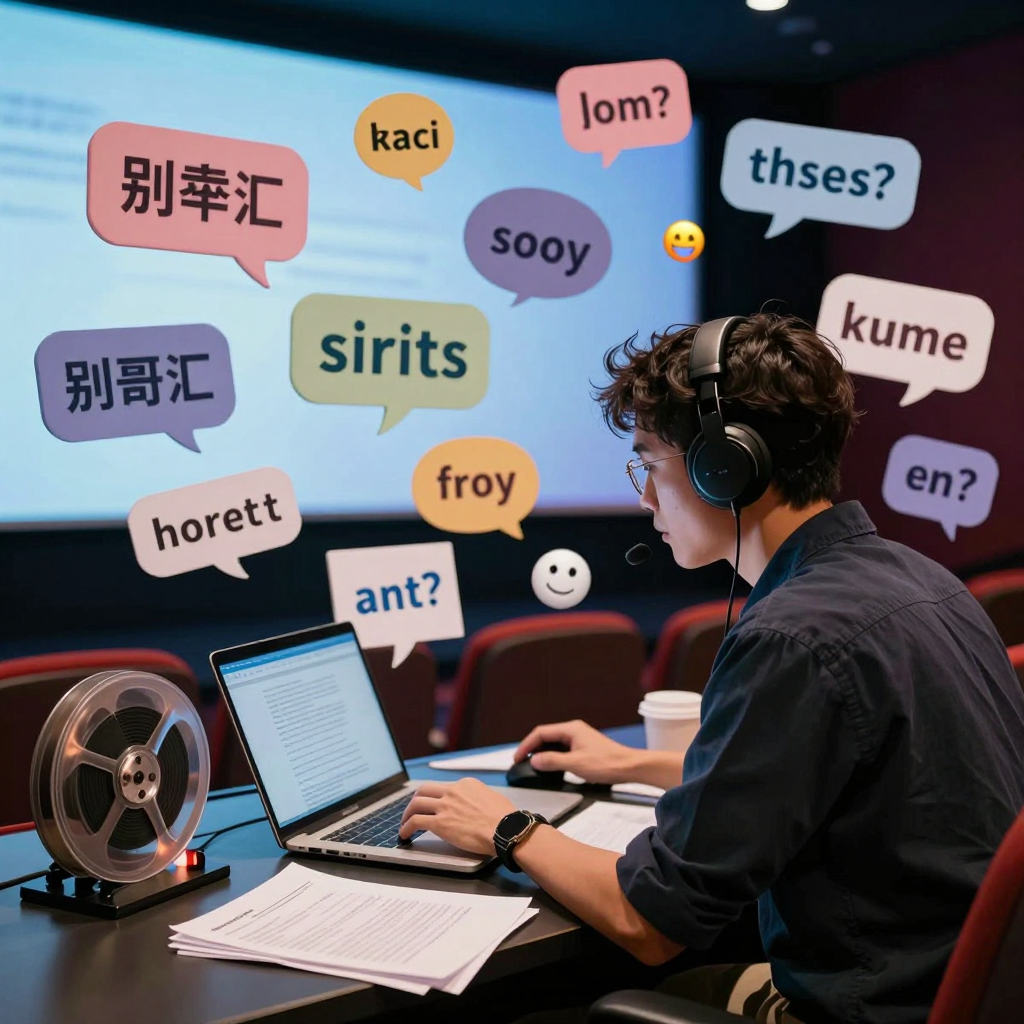
In his mid-40s and recognized as the nation’s top film translator, how did Hwang Seok-hee craft subtitles that truly “speak” to the audience? The answer isn’t simply that he’s fluent in English—it lies in his unique ability to replay a film’s emotional rhythm in Korean.
Starting his translation career in 2005, Hwang honed his skills through cable TV and documentaries before diving into theatrical film translation with the 2013 release The Perks of Being a Wallflower. This journey laid the foundation for him to design subtitles not just as “information delivery” but as an integral part of the viewer’s experience. His subtitles don’t just present words on a screen; they glide naturally over actors’ lip movements, breaths, and the beats of the soundtrack. The so-called “heard subtitles” Hwang speaks of are ultimately a technique that connects emotions seamlessly, without drawing attention to the act of reading.
At the pinnacle of his craft is the film Deadpool, etched into the minds of many viewers. Translating the character’s explosive blend of profanity, humor, and B-movie charm meant going beyond mere word swaps. Hwang had to recreate the character through the timing and nuances of the Korean language. This is why his subtitles earned such acclaim: both fans of the original and general audiences felt like “the character’s voice came through perfectly.” He boldly refined expressions without losing the character’s essence.
Today, Hwang remains the translator on projects for major distributors, standing out as the most widely recognized name in the field. The phrase on his business card, “Translate the world,” isn’t grandiose—it reflects a deep self-awareness of being someone who builds emotional bridges between screen and audience through a single line of subtitle. And that bridge continues to quietly expand, taking us beyond merely “understanding” films to truly “feeling” them.
Hwang Seokhee: From English Education to the World of Translation
Hwang Seokhee, who majored in English Education at Kangwon National University’s College of Education, initially started closer to being “an English teacher.” However, he found himself more captivated by the real-world application of language outside the classroom — that is, English embedded within content. Facing scenes where not just the meaning, but also the nuances, pace, and emotions are conveyed simultaneously, his interest shifted from simply “transferring sentences” to “delivering experiences.”
His first stage was cable TV and documentary translation. Broadcast translation demands capturing the essence precisely within limited subtitle length and time, while documentary scripts must be refined so viewers can follow without losing informational density. Through this process, Hwang naturally built a solid foundation in translation basics like “short but accurate sentences” and “rhythms that read like natural speech.” It was during this period that the groundwork was laid for his subtitles to be praised not as “subtitles you read” but as “subtitles you hear.”
Then, in 2013, beginning with the film "The Perks of Being a Wallflower," he fully stepped into the world of theatrical film translation. Films trigger emotions more directly than broadcasts, and a single line can shape a character and narrative. Thus, film translation is less about finding the perfect word and more about synchronizing the timing of emotions so the audience laughs, hesitates, and feels quietly moved all at the same moment. Combining the linguistic sensitivity honed through English education with the compression and rhythm learned in broadcast translation, Hwang Seokhee began to recreate the taste of speech in films uniquely in Korean.
From Hwang Seok-hee’s Deadpool to 20th Century Fox: The Alchemy of Perfect Dialogue
Translating Deadpool’s profanity and B-grade humor into subtitles isn’t simply about “intensely” rendering coarse language. The moment it’s converted into Korean, the rhythm can break, the joke’s direction can shift, or the character’s attitude might seem different. Yet, Hwang Seok-hee’s subtitles received acclaim from both audiences and comic fans because his translations were closer to making the character’s unique voice and the film’s emotion ‘audible,’ not just amplifying provocation.
His motto of “audible subtitles” shines especially in Deadpool. Deadpool’s signature rapid pace, sarcasm, and meta humor that breaks the fourth wall become flat with even a single misplaced word. Hwang used Korean’s colloquial rhythm and pacing to create lines that truly hit the ear. In other words, the translation was designed to function not as mere captions explaining the screen below, but as “another performance” coming out of the actor’s mouth.
Another strength is his balance between B-movie sensibility and tone control. Literal translation of profanity can sound harsh, while euphemizing it dulls the character. Hwang adjusts the intensity depending on the scene’s tone yet never loses Deadpool’s sharp and snappy style. As a result, the brazen charm comic fans expect is preserved, excessive information hard for general audiences to grasp is pared down, and jokes land at a pace everyone can follow.
This keen sense connects to his expanding career. After translating for cable TV and documentaries, he ramped up to theatrical film translation and now handles many projects for 20th Century Fox Korea and Sony Pictures Korea, establishing himself as a “translator audiences trust.” Ultimately, his alchemy isn’t flamboyant wordplay, but the tech skill of preserving emotion and rhythm at the final stage where the film reaches its viewers—this is where his mastery is perfected.
The Philosophy of Translator Hwang Seok-hee: The Heart Behind ‘Translate the world’
On Hwang Seok-hee’s business card is inscribed the phrase, "Translate the world. Movie translator Hwang Seok-hee." This goes beyond a simple job description of “doing translation”; it reads like a declaration that encapsulates his heartfelt approach to cinema in one line. So, what sincere meaning lies behind the words translating the ‘world’?
His work motto, ‘audible subtitles,’ sheds some clarity on this. For Hwang Seok-hee, translation isn’t just about transferring words—it’s closer to reproducing emotions, rhythm, and the very breath of characters in the audience’s language. Take a work like Deadpool, where the flavor of speech and B-movie vibe come alive; rather than blindly softening curses or directly translating jokes, he carefully adjusts the timing and tone of the subtitles so Korean viewers genuinely feel, “This is exactly how that character would speak.” As a result, the subtitles become not mere captions beneath the screen but a sense you can hear like the actor’s own dialogue.
Another striking point is that the phrase states he translates the ‘world,’ not simply a ‘work.’ Hwang’s journey—from cable TV and documentary translation to theatrical film releases—reflects his belief that translation is not just a technical skill for specific content but a bridge connecting different cultures and ways of life. Within a single film lie the era’s jokes, regional sensitivities, and linguistic customs, and the translator builds a bridge so audiences can cross this intricate world. His business card’s phrase seems to embody a promise to build that bridge “wider and farther.”
His personal life also firmly supports this attitude. He married in 2012 and became a father in 2019. Because refining subtitles so viewers can laugh at one line and shed a tear at another ultimately requires being intimately connected to human everyday emotions. The life of a translator with a family constantly reminds him “which words might hurt someone and which expressions can bring warmth.” Hence, his translation does not remain merely dazzling wordplay but converges in a way that preserves the texture of the work.
Ultimately, “Translate the world” is both an aspiration as a translator and a promise to his audience. Rather than explaining the world through subtitles, Hwang chooses a way that lets the world speak for itself. As that sincerity accumulates, we come to not just read the screen but naturally experience the world of the film.
Hwang Seok-hee and a Future Communicating with the Public Beyond Film
Building on his reputation and experience as a film translator, what does Hwang Seok-hee envision for his future path and the future of Korean film translation? His translations go beyond mere “subtitles that convey meaning”—they are remembered as language that allows audiences to hear and feel each scene more vividly. The trust built under the motto of “subtitles that can be heard” now naturally leads to the next stage.
The Translator’s Influence Expanding Beyond the Screen
Hwang Seok-hee’s achievements go far beyond just credits on blockbuster films. His ability to capture the flavor and rhythm of characters’ speech, the jokes unique to each genre, and the charm of B-movie sensibilities has brought the profession of translation closer to the public, broadening the perception that “subtitles are part of creation.” Moving forward, opportunities will likely grow not only in translation work itself but also in sharing the decision-making process and linguistic sensibilities behind translations, creating deeper connections with audiences.
The Future of Korean Film Translation: From ‘Accuracy’ to ‘Experience’
As technology advances, literal translation becomes increasingly easy. In contrast, the value of human translators shines more brightly in areas difficult to automate—nuance, timing, and the warmth of emotions. This is precisely where Hwang Seok-hee’s strengths lie. Going forward, Korean film translation will evolve beyond mere delivery to designing experiences where audiences “live” the emotions of each scene—not line by line, but by units of viewing experience.
Connecting with the Next Generation: From a Profession to a Culture
The greatest expansion for a trusted translator is the “connection with the next generation.” Systematizing know-how to raise the standards for junior translators, and refining the ethics and style guides of translation, will raise the overall quality of Korean film translation. As a result, audiences will encounter more natural subtitles, and translation will transform from an invisible skill into a shared cultural asset.
Whatever Hwang Seok-hee’s next step may be, one thing is clear: his work has proven that “subtitles are not just text but a voice,” and that voice will continue to meet wider audiences beyond the screen, gradually reshaping the future of Korean film translation.
Comments
Post a Comment