Tottenham Eliminated from Champions League Round of 16: Defeated by Atletico with a 5-7 Aggregate Score
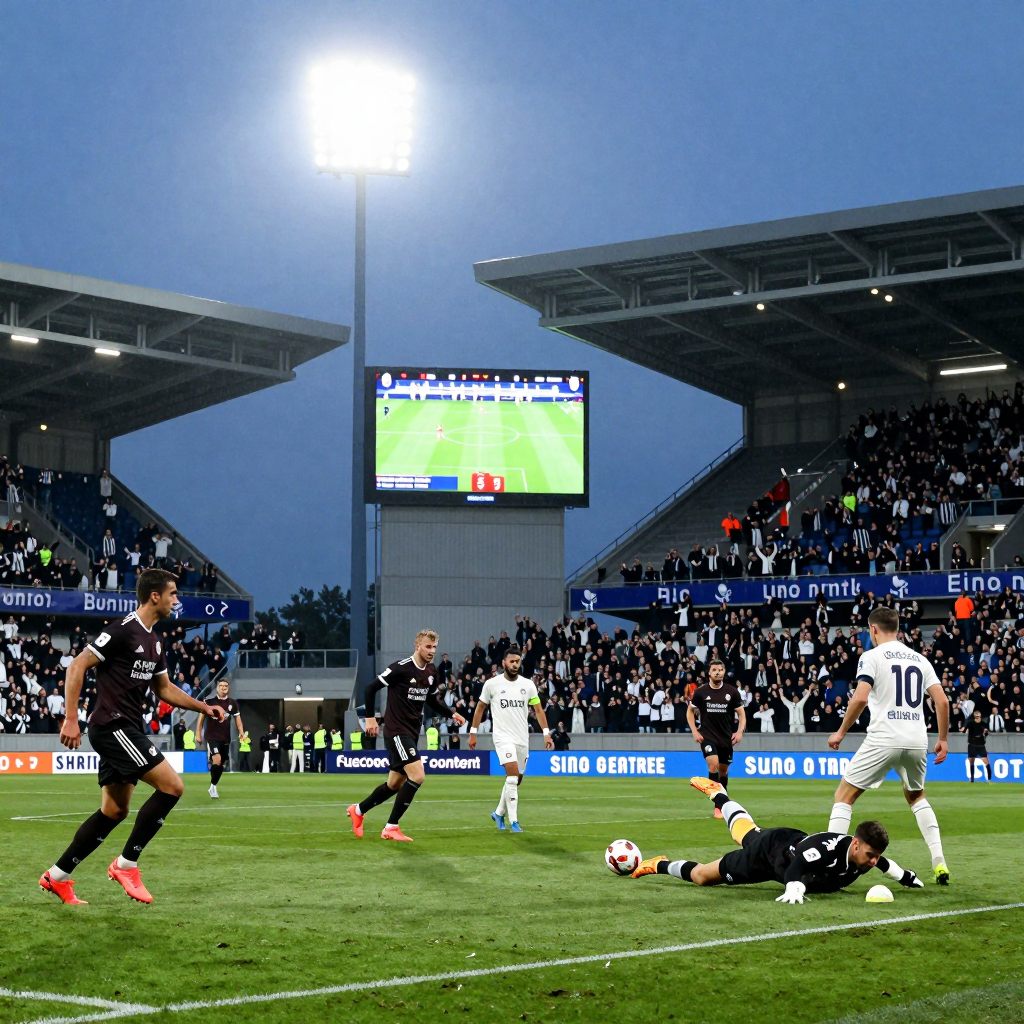 \n
\n
The Night Dreaming of a Miracle: Tottenham vs. Atlético Madrid’s Final Challenge
After suffering a crushing 5-2 defeat, Tottenham faced an almost impossible task: to win by a margin of at least three goals. In a scenario where a single slip meant the end, there was only one path they could take—to push the pace relentlessly from start to finish, overwhelming their opponent. Yet, the second leg between Tottenham and Atlético Madrid was not a night for “possibility,” but one demanding the “price” to be paid.
Tottenham lost tactical flexibility due to the crushing away loss. To overturn the aggregate score, they had to take risks—risks that inevitably exposed gaps in their defense, drained their stamina, and tested their mental resolve. So, coach Tudor chose to make changes. By bringing Romero and van der Hoorn back into defense, he laid the groundwork for a higher defensive line, while Simmons and Kolo Muani were introduced to boost activity and pressing intensity up front. It was the most straightforward prescription for a team desperately needing an early goal.
In contrast, Atlético Madrid started with a five-goal cushion. This meant they had no reason to rush. The more anxious their opponent became, the more fragmented the rhythm of the game, where a single counterattack or set piece could prove deadly. If Tottenham prepared for a “miracle,” Atlético prepared for “control.”
Ultimately, the core of this night was simple. Tottenham knocked on the door with all their might, dreaming of a miracle, while Atlético strategically ensured that door would remain locked. In that tense collision, Tottenham chose a fate to fight until the very end, embarking on their final challenge.
Change and Hope: Tudor’s Bold Decisions — Tottenham vs Atlético Madrid
Armed with a surprise strategy of substituting four players, Tottenham’s approach was less about taking a gamble and more about a necessary move. Facing the brink after a crushing 5-2 defeat in the first leg, coach Tudor reshaped the game plan by simultaneously increasing the tempo and the intensity of man-to-man pressure. The final counterattack for victory began the moment the lineup was announced.
The most striking change was in the defense’s restoration. The return of Cristian Romero and Micky van de Ven went beyond mere reinforcement; it provided Tottenham with the justification to engage Atlético Madrid higher up the pitch. With improved cover behind and the ability to push forward defensively, even if the front-line press faltered, the risks were reduced. Ultimately, Tottenham boldly pushed up their line in the second leg, disrupting Atlético Madrid’s buildup play and turning the initial goal-at-a-time target into a tangible reality from the very start.
The attacking adjustments were equally clear. The decision to start Xavi Simons in place of Richarlison signaled a focus not on destructive power inside the box, but on the speed of play development and timing of runs from the second line. Atlético Madrid’s defense excels at dropping deep and compressing space, but conversely, it is vulnerable to quick pass exchanges and unpredictable movements in the pockets just ahead of their defensive block. Simons exploited this vulnerability, elevating Tottenham’s attacking rhythm.
Another tactical gamble was made up front. By choosing Randal Kolo Muani over Solanke as the striker, Tottenham opted not for a traditional “hold-up and link” number 9, but for one who bursts into space. This adjustment didn’t just change the scoring option; it transformed the entire approach—shoving opponents’ defense back and buying crucial time for the midfield to advance. In the Tottenham vs Atlético Madrid battle, this meant prioritizing a “continuous barrage” over a “single, perfect finish.”
Of course, such boldness comes at a price. The higher line and increased pace exposed Tottenham to Atlético’s deadliest weapon: swift counterattacks. Although Tottenham won the second leg 3-2, they couldn’t overturn the aggregate deficit because, despite clearly unsettling the flow, Tudor’s changes weren’t flawlessly executed enough to erase the first-leg gap. Nonetheless, Tudor’s choices proved one undeniable truth: this team wasn’t broken — it was searching fiercely for a way to fight back.
Tottenham - Atlético Madrid: A Hard-Fought Battle with a Disappointing Finish, The Meaning Behind the 5-7 Scoreline
The final score marked Tottenham's elimination. However, the real story behind the second leg’s 3-2 victory tells a different tale. At first glance, the numbers might suggest “a valiant effort despite the loss,” but this match was a vivid 90-minute display of why a dramatic comeback attempt failed and where that failure originated.
The ‘Light’ of the 3-2 Victory: Tottenham’s Signal of Resurgence
Having been virtually on the edge of the cliff after a crushing 5-2 defeat in the first leg, Tottenham raised their line and increased tempo in the second leg, successfully shedding the image of a “broken team”. The return of defenders and changes in the starting lineup helped restore balance to the game’s flow, ultimately leading to an attacking rhythm that produced goals.
In other words, the 3-2 scoreline was more than just a single match win; it was evidence that the team still has the capacity to rally.
The ‘Shadow’ of the 5-7 Aggregate: The Structural Limitations Created by the First Leg Rout
Yet, the 5-7 aggregate score is brutally clear. Every goal Tottenham scored in the second leg raised hopes with the thought “it might still be possible,” but the deficit from the first leg was simply too large. The bigger issue is that the moment the calculation of ‘how many more goals are needed’ begins, the team’s options shrink drastically.
The more Tottenham pushed forward offensively, the greater the risk of vulnerability behind—and Atlético Madrid is a team that manages that very zone most skillfully. Ultimately, although Tottenham generated momentum and flow, there was not enough time to meet the condition for a comeback (overturning a 3-goal deficit), and the psychological blow of conceding just one goal was devastating.
The Heart of the Hidden Drama: ‘Unanswered Questions Despite the Loss’ and ‘The Winner’s Composure’
The drama of this matchup lies less in the fact that “Tottenham won the second leg” and more in why that victory wasn’t enough. While Tottenham succeeded in mounting a counterattack, Atlético managed their aggregate lead by regulating the intensity when it mattered most, securing their place in the quarterfinals.
Thus, the 5-7 scoreline isn’t merely a number marking elimination but a reaffirmation of the recurring message in the Tottenham - Atlético Madrid matchup — momentum in a single match and the strategy across two legs are entirely different.
Tottenham vs Atlético Madrid: American Fans’ All-Night Support and the Club’s Growing Sense of Crisis
The reason Tottenham garners such immense attention from American fans goes beyond simply being a “famous Premier League team.” It’s the global fandom centered around Son Heung-min, the anticipation for their aggressive style of play, and the compelling narrative of a club aiming for elite status yet repeatedly delivering dramatic twists that deeply engage American viewers. That’s why the second leg of the Tottenham vs Atlético Madrid match, kicking off in the afternoon U.S. time despite the late hour, was must-watch TV—heightened by the tension of whether Tottenham could overturn the shocking 5-2 defeat from the first leg.
The problem lies in the aftermath. Tottenham claimed a 3-2 victory in the second leg, salvaging some pride, but were eliminated on aggregate, 5-7, from the Round of 16. This moment resonated strongly with U.S. fans because it reinforced the perception of Tottenham as a team that simultaneously wins a game yet faces tournament elimination. In other words, while signs of a performance rebound appeared, there was no definitive result to confirm an upward trajectory for the club.
Reactions from fans at home and abroad mirror this split. Supporters find hope in Tottenham’s bold approach and tactical changes in the second leg—such as the return of key defensive players and offensive line adjustments—but the cold reality remains that the gulf created by the first leg’s heavy defeat was never bridged. Adding to the worry is Tottenham’s precarious position near the Premier League relegation zone and growing concerns over sponsorships and brand value, making this early Champions League exit more than just a tournament setback—it's a sharp amplification of the club’s overall crisis.
On the flip side, Atlético Madrid, despite conceding goals in the second leg, is seen as the team that “calculated what was needed and held on until the end.” This contrast is vividly clear to American fans as well. Tottenham was the team at the center of the story, but Atlético was the one that ultimately secured the outcome. Ultimately, this Tottenham vs Atlético Madrid showdown revealed in one compelling stage why Tottenham is beloved worldwide (for its drama and star power), and simultaneously why it faces ongoing unease and criticism (due to repeated critical failures).
The Next Stage, Tottenham - Atlético Madrid and Atlético’s New Challenge with Fans’ High Hopes
Atlético, set to face either Barcelona or Newcastle United in the quarterfinals, stands at a crossroads of what their future journey will look like. Having snatched the series with a thrilling 7-5 aggregate win over Tottenham, Atlético Madrid has entered a phase where they must prove not just that they have “advanced,” but that they can soar “even higher.”
This showdown between Tottenham and Atlético Madrid also left a clear message. Tottenham’s fiery comeback with a 3-2 win in the second leg shows that whoever Atlético faces in the quarterfinals, a single shift in momentum can flip the game completely. In other words, Atlético needs not only the savvy to maintain their lead but also the tactical precision to break down any surge from their opponents.
Fans are tuning in with two main points of focus:
- If the opponent is Barcelona: Against a team known for dominant possession and pressing, the key lies in how Atlético manages space and times their transitions. Mere “solid defense” won’t suffice—they’ll need a sharp attacking edge that creates genuine chances.
- If the opponent is Newcastle: A direct clash with a team boasting intense pressure and blistering speed is expected. Atlético’s ability to control the tempo and steer the match into their rhythm could ultimately decide the outcome.
Scheduled between April 7-8 and 14-15, the quarterfinals represent yet another testing ground for Atlético. With Tottenham behind them, it’s no longer a matter of mere “survival” but a quest for true “proof.” The next match will reveal unmistakably the face Atlético intends to present at the heart of Europe’s grand stage, capturing the hearts and imaginations of their fans.
Comments
Post a Comment