 \n
\n
Labor Day: More Than Just a Holiday
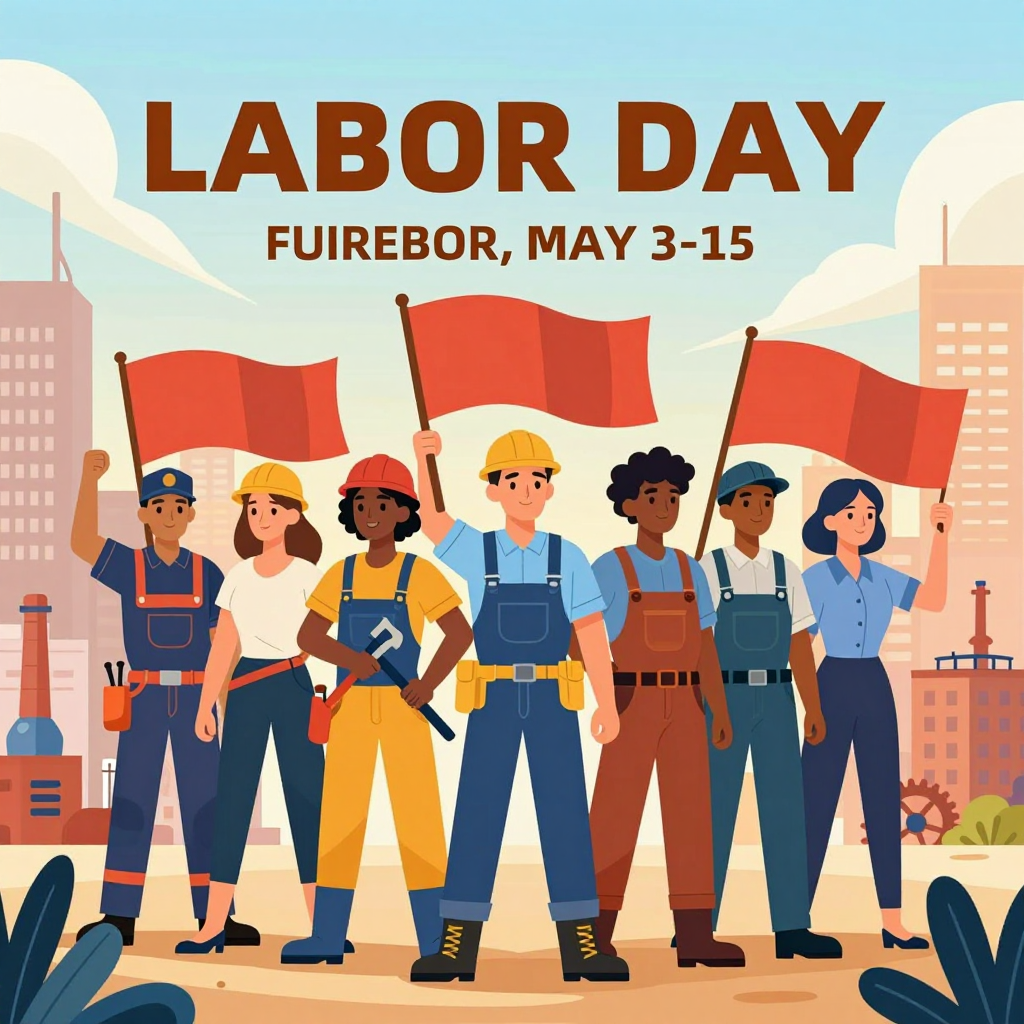
Did you know that May 1st, known as Labor Day, is far more than just a day off? Across the globe, countless workers reflect on their rights and contributions on this very day.
Labor Day is less about taking a break and more about officially recognizing the dignity of labor and the vital role of those who drive society forward. In South Korea, May 1st is designated as Labor Day to honor the hard work of employees and to remind society that labor deserves fair respect.
But this day is not just about commemorating past labor movements. Today, Labor Day prompts us to reassess pressing issues like fair wages, safe working conditions, and appropriate labor environments. It encourages us to revisit how workplace standards we take for granted were established and to question where improvements are still needed.
Ultimately, Labor Day is not merely a day of rest; it is a solemn social commitment to continually expand workers’ rights and quality of life—even today.
The Roots of Labor Day, the Flames of Struggle in History: Moments When Labor Day Was Born
The beginning of Labor Day stems from the relentless fight for workers’ rights in the late 19th century. Aren’t you curious about which events gave birth to the rights modern workers take for granted today? Standards like the “8-hour workday” were not innate understandings but the result of fierce struggles from the very start.
The Historical Context That Gave Birth to Labor Day: Industrialization “Swallowing Life Whole”
As the factory-centered economy rapidly expanded after the Industrial Revolution, workers faced long hours, low wages, and dangerous working conditions. Working 10 to 14 hours a day or more was common, and injuries and deaths in unsafe workplaces occurred frequently. At this time, workers’ core demand was simple:
“Divide time for work, rest, and life.”
The Decisive Turning Point of Labor Day: Collective Action for the 8-Hour Workday
The symbolic date of Labor Day, May 1st, was no coincidence. In the late 19th century, labor movements across various countries organized systematically to make the “8-hour workday” a reality, sparking massive strikes and demonstrations.
Within this momentum, workers’ demands evolved from “personal appeals” to “rights that society must recognize.”
Here, a crucial change occurred:
- Labor issues began to be seen not as individual diligence problems but as structural and institutional problems
- Workers uniting and voicing their demands rose as political and social agendas
- This, in turn, became a catalyst for the serious discussion of labor laws and systems around the world.
The Legacy of Labor Day: Rights Grow Again from ‘Memory’
Labor Day is not merely a day to commemorate past events. It is a mechanism to reflect on how society has upheld the “dignity of labor” and how far it has advanced. Above all, the history of Labor Day clearly states one thing:
Today’s labor rights are not spontaneous—they are a social consensus forged through solidarity and struggle.
What we celebrate today on Labor Day is not just a holiday itself but the long journey that made this holiday possible—and the ongoing question of how to achieve ‘better labor’ still today.
Diverse Meanings and Celebrations of Labor Day Around the World
In South Korea, known as Labor Day for Workers, how is Labor Day recognized and celebrated in other countries? Although observed on May 1st, the atmosphere varies greatly depending on each country's history, culture, and the trajectory of its labor movement. Let’s take a brief look at the unique Labor Day scenes across different nations.
Labor Day in Europe: A Day of Both Protests and Festivals
In many European countries, May 1st has become an official public holiday known as Labor Day. Especially in France, Germany, and Italy, labor unions and civic groups march and hold rallies in city centers to bring labor rights issues into public discourse. At the same time, depending on the region, musical performances and outdoor family events often take place, creating a day where “rest” and “demands” coexist side by side.
Labor Day in the U.S. and Canada: A Different Date with a Different Meaning
In the United States and Canada, Labor Day is celebrated on the first Monday of September, setting it apart from the international May 1st observance. This distinction stems from historical labor movements and political tensions that led to the establishment of separate holidays. The mood tends to lean more toward a “holiday” vibe. While parades take place, for many people it symbolizes a long weekend marking the end of summer, associated more with travel and relaxation.
Labor Day in Japan: Not a National Holiday, but a Day to Speak up About Labor
May 1st in Japan is called “May Day,” during which rallies and marches occur, though it is not a national public holiday. However, the early May holidays known as Golden Week often lead to more people taking time off, creating a sense of rest. Discussions around Labor Day in Japan have broadened beyond wages and employment to encompass modern labor issues such as work-life balance and the challenges faced by non-regular workers.
Labor Day in China: Extended Holidays and Massive Travel
May 1st in China is a public holiday known as Labor Day, and depending on the calendar, it can evolve into a multi-day holiday. This period sees concentrated travel and consumer activity as the entire country shifts into a mode of massive movement. On the other hand, official events commemorating the value of labor take place, including state-level symbolic ceremonies like awards for exemplary workers.
Labor Day Reflects a Society’s ‘Standards for Work’
Even though it’s the same Labor Day, some countries take to the streets shouting for rights, while others rest with their families welcoming the season. The differences in celebration methods ultimately serve as a mirror reflecting “how labor is valued and which issues are prioritized” in each society. When looking at South Korea’s Workers’ Day, recalling how other countries observe Labor Day enriches our understanding of the true meaning of labor in a more multidimensional way.
The Message of Modern Labor Day: Towards Better Working Conditions (Labor Day)
Today, Labor Day is not just a day off; it is a moment to assess how far workers’ economic and social status has advanced. Demands for fair wages, safe working environments, and respectful labor conditions remain ongoing issues. So, where do we stand?
The Core Question Labor Day Asks: Fair Wages and Life Balance (Labor Day)
The first message Labor Day sends is: “Are workers being justly compensated for their labor?” Wages are more than mere numbers—they determine the stability of an individual’s and a family’s life. At the same time, wage issues are intertwined with working hours, rest, and caregiving. A better workplace is not achieved by wage increases alone; excessive overtime and precarious employment structures must also be changed for real progress.
A Safe Workplace Is Not an Option, but a Standard (Labor Day)
The second message is clear. Safety is not a welfare option but the minimum standard. Although systems and workplace cultures to reduce industrial accidents have been strengthened, risks remain disproportionately concentrated in vulnerable employment forms and on site. Labor Day urges us to reflect not on “fixing after accidents occur,” but on whether a system to prevent accidents before they happen is in place.
Realizing Fundamental Labor Rights: Rights That Work, Not Just Exist on Paper (Labor Day)
Labor Day’s roots lie in the fight for workers’ rights, a spirit still alive today. It demands verifying whether the rights to unionize, collective bargaining, and collective action not only exist in law and documents but function effectively on the ground. It has become even more crucial to reach social consensus on how rights can be guaranteed in hard-to-organize sectors and new forms of work like platform-based labor.
Next Steps Toward Better Working Conditions (Labor Day)
The message of Labor Day does not end with commemorating the past. To make today’s workplaces healthier, we must continuously demand and review:
- A fair compensation system and narrowing wage gaps
- A prevention-focused safety system and responsible management
- Non-discriminatory labor conditions and an organizational culture that upholds dignity
- Redesign of rights fitting the evolving forms of labor
Labor Day is not a declaration of “we’ve done enough,” but a day for society as a whole to update better standards together. By clearly recognizing where we stand now, the next progress becomes possible.
Labor Day: The Dignity of Work, the Future, and the Path We Must Take
What is the greatest challenge Labor Day leaves us with? It’s not just a “day off,” but a call to rethink how we protect and expand the dignity of labor. Especially, guaranteeing fundamental labor rights and improving working conditions cannot be achieved in isolation. For rights to truly function, workplace conditions must change, and to change those conditions, social consensus and effective implementation systems must follow.
The Question Labor Day Poses: “Do Rights Truly Function at the Workplace?”
Fundamental labor rights (the right to organize, collective bargaining, and collective action) gain meaning only when they are more than declarations. The key lies in their ‘functionality’: Are workers free from retaliation when exercising these rights? Is genuine bargaining possible? Are workers’ voices reflected within institutional frameworks? Labor Day demands that we scrutinize exactly this reality.
The Challenge After Labor Day: Improving Safety, Wages, and Working Hours Together
Improving working conditions cannot be reduced to a single issue. Fair wages, safe workplaces, predictable working hours, and adequate rest are deeply interconnected. For example, safety concerns tie into staffing, time allocation, and education, which in turn connect to wages, job security, and workload management. Labor Day’s relevance today endures because working conditions remain the most direct deciding factor in the quality of life.
How to Make Labor Day a ‘Starting Point for Dialogue’
For social discussions not to end as mere slogans, structural measures are essential.
- Data-Driven Transparency: Sharing clear data on industrial accidents, overtime, and wage gaps creates a discourse grounded in reality.
- Expanded Stakeholder Participation: Voices from all labor types—full-time, temporary, platform workers, freelancers—must be present at the table.
- On-the-Ground Implementation Checks: Continuous monitoring and updating must ensure that policy improvements are actually applied, identifying and closing blind spots.
Labor Day commemorates past struggles while setting the standards for the future. To ensure a society where “working people are respected” is more than just words, realistic discussions that advance both rights and working conditions must continue.
Comments
Post a Comment