 \n
\n
The Rise of Low-code Citizen Developers: A Revolution in Software Development
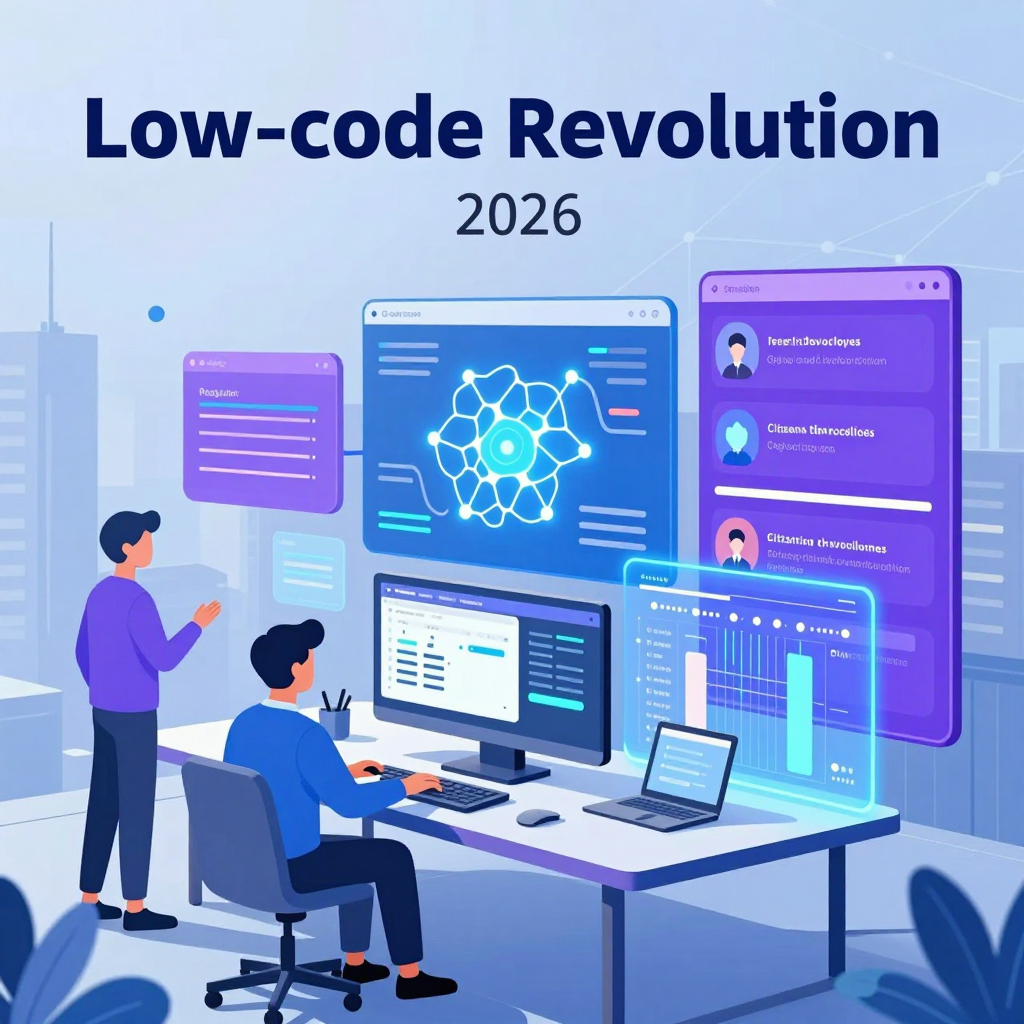
The era when only traditional IT professionals handled development is over! The fusion of AI and low-code is breaking the conventional belief that "only developers do development." Now, frontline workers in business departments are stepping up as Citizen Developers, defining problems themselves, crafting solutions, and rapidly iterating improvements.
Why Is the Low-code Citizen Developer Revolution Exploding Now?
In the past, even a simple automation request had to go through an IT backlog queue. The process was long: requirements gathering → development → testing → deployment, while everyday work piled up in the meantime.
But AI-powered low-code platforms are flipping this model. For example, Priya, a sales operations manager in Pune, India, used to depend on IT for automation. Now, she implements workflows herself with minimal coding using intuitive tools. The key is that “the people who understand the problem best can solve it immediately.”
The Core of Low-code: Drag-and-Drop + Prebuilt AI Models
Citizen developers achieve quick results because platforms handle complex technical tasks behind the scenes.
- Drag-and-drop design: Features like UI, data flows, approvals, and notification rules are assembled like building blocks. This lets users focus more on “business process design” than coding.
- Prebuilt models and automated complex tasks: Platform templates and automation absorb challenging tasks such as data structuring, model training, and debugging. This enables non-experts to produce quality outcomes rapidly.
Technically, users link triggers (e.g., receiving emails, submitting forms) and actions (e.g., updating CRM, requesting approval) on a visual canvas, while AI functions—classification, summarization, extraction—are called via embedded modules. In essence, the paradigm shifts from “writing code” to “configuring workflows.”
AI Agents Built with Low-code: From ‘Tools’ to ‘Colleagues’
The biggest recent leap in low-code is the emergence of AI agent development. This goes beyond simple automation (following fixed rules) to creating agents that actively assess situations and perform tasks autonomously.
- Reading work requests and gathering necessary information
- Finding and summarizing supporting data within company databases
- Asking users clarifying questions
- Executing next steps like generating reports, issuing tickets, or scheduling events
With this capability, citizen developers are evolving from “simple app creators” into designers of AI-powered business systems.
What This Means for Enterprises: Redefining “Who Makes Software”
This trend is more than just speeding up development; it transforms how organizations operate. By bypassing IT bottlenecks, low-code citizen developers boost productivity, enabling faster cycles of experimentation and improvement. Leading companies like Kissflow, OutSystems, Mendix, and Appian are rapidly advancing enterprise-grade low-code capabilities to accelerate this shift.
Ultimately, the core trend by 2026 is clear: Software development is no longer exclusive to specialized roles—those who face problems become the very creators of their solutions.
An Immersive Experience of AI-Powered Vibe Coding Built with Low-Code
What if anyone could create automation tools with just drag-and-drop, no complex coding required? This is the revolutionary development experience that AI-integrated Vibe Coding delivers. Users focus solely on “which problems to solve,” while the platform understands their intent and seamlessly supports the heavy lifting behind the scenes—workflow design, data processing, model utilization, and error handling.
Why Low-Code Vibe Coding Feels Effortlessly Accessible: The Technical Backbone
Vibe Coding isn’t just easy because of a friendly UI—it features an internal architecture that automates key development stages. This can be explained through four core layers:
1) Intent-Based Design: Natural Language → Structured Workflow
When a user inputs “When a customer inquiry arrives, categorize it, assign it to the right person, and send an alert for urgent cases,” the platform breaks this down into discrete tasks:
- Trigger (Inquiry received)
- Classification (Text analysis/labeling)
- Routing (Assignee rules)
- Exception handling (Urgent alerts, missing field handling)
- Logging/Audit (Who handled what and when)
AI transforms the user’s expression into a process graph (DAG) structured workflow, automatically suggesting the necessary nodes (task blocks). It’s essentially an automated “translation from idea to design.”
2) Drag-and-Drop + Prebuilt Blocks: Assembling Proven Patterns
The strength of a low-code environment lies in assembling validated components, not building from scratch. At Vibe Coding, AI elevates this by:
- Recommending contextually relevant blocks (e.g., email parsing, OCR, approval flows)
- Automatically mapping data fields (e.g., guessing which system column corresponds to ‘customer name’)
- Suggesting condition/branching templates (e.g., auto-generating “prioritize VIP” rules)
As a result, users operate at the level of selecting “what to connect,” and the platform manages repetitive implementations.
3) Data Structuring and Quality Auto-Checks: Eliminating the Biggest Barrier for Citizen Developers
Automation often fails not because of code, but due to imperfect data. The Vibe Coding-based low-code platform reduces failure risk by automating:
- Input data normalization (standardizing date/phone/address formats)
- Missing value handling recommendations (default values, re-request, review queues, etc.)
- Duplicate/outlier detection (duplicate tickets from the same customer, abnormal amounts)
- Schema inference and field creation (auto-column generation for frequently appearing attributes)
This feature is crucial for business users who previously depended heavily on IT queues—the AI proactively addresses “data blockers” so users don’t get stuck.
4) AI Agent Execution Model: From Simple Automation to Autonomous Workforce
Conventional automation merely executes fixed rules, but with Vibe Coding, AI agents transform the paradigm:
- Goal-driven execution: “Summarize unprocessed inquiries this week into three types and generate a report”
- Tool invocation: Access CRM, search documents, create tickets, send messages
- Context retention: Maintain consistent tone and priority by referencing past interactions and policies
- Stepwise reasoning: Complete tasks by gradually gathering necessary information rather than rushing for instant results
In other words, users issue ‘commands’ and agents autonomously execute tasks across multiple systems to complete workflows end-to-end.
The Final Puzzle for Immersion: Automated Debugging and Governance
Because anyone can build with it, “Is it safely operable in enterprise environments?” becomes paramount. Vibe Coding’s immersive experience culminates in features that keep users from giving up even when problems arise:
- Natural language summaries of execution logs: Explaining “why it failed under which conditions” in readable sentences
- Automated error recovery suggestions: Recommends retries, alternate paths, or approval requests
- Built-in permissions/audit systems: Tracks who accessed or changed which data and when
Together, low-code and AI combine not only ease of creation but also operational stability—raising the entire development experience to a new level of immersion.
The World of Citizen Developer Autonomous AI Agents Unlocked by Low-code
What if you could develop AI agents that work and solve problems on their own, without any programming knowledge? How far could this possibility go? Now, the question has shifted from “Will this be possible someday?” to “Which tasks should we delegate first?” The combination of low-code-based Vibe Coding and citizen developers is transferring automation and intelligent tools—once only built by IT teams—directly into the hands of business professionals.
Why AI Agents Become “Tools” for Low-code Citizen Developers
In the past, automation followed a long queue: requirement definition → development → deployment. Recently, low-code platforms have enabled a structure where “people who know the work create the work tools” by offering drag-and-drop UIs, pre-built connectors (email, calendar, CRM, ERP), and template-based workflows. When AI is added, automation evolves to the next level.
- Rule-based automation: Predetermined flows like “If A happens, execute B”
- Autonomous AI agents: Given a goal, they interpret the situation, select and execute necessary tools, validate results, and decide the next actions
In other words, citizen developers focus less on writing code and more on designing goals, input data, boundaries, exception handling, and approval methods.
The Technical Composition of Low-code Autonomous AI Agents (A Bit Deeper)
AI agents created by citizen developers are not just “chatbots.” They resemble an execution engine for tasks, combining the following elements:
Orchestration (Workflow Orchestration)
Low-code workflows form the agent’s backbone. From triggers (e.g., new lead creation, email receipt, issue ticket registration) → step-by-step tasks → approvals/notifications → record-keeping, the entire flow is visually constructed.Tool Use and Connectors
The agent gains value by interacting with external systems. Low-code connectors enable calling actions such as CRM queries, document creation, payment verification, and ticket updates without API coding.Knowledge Base (RAG/document-based queries) and Data Structuring
When the agent references unstructured documents like internal regulations, product manuals, and contracts, it can deliver evidence-based answers and judgments for task processing, going beyond simple FAQs. The platform manages document indexing, permissions, and search scopes to lower barriers for citizen developers.Guardrails (Safety Measures) and Approval Systems
As autonomy increases, control becomes critical. A practical pattern is semi-automatic (suggest → approve → execute) rather than fully automatic. For instance, an agent drafts a quote, but before sending, a human clicks once to approve it.Observability (Logging/Audit Trails) and Debugging
Logs explaining “why this decision was made” are essential. In low-code environments, visual confirmation of execution history, utilized data, and branching conditions enables business users to debug by themselves.
Realistic Autonomous AI Agent Scenarios Enabled by Low-code
- Sales Operations Agent: Automatically organizes new lead data, assigns the proper person in charge, drafts a meeting proposal email, and requests approval—all autonomously
- Customer Support Agent: Sorts ticket content, drafts answers by consulting relevant documents, and, if needed, summarizes reproduction information to pass along to engineering teams
- Finance/Purchasing Agent: Reads invoices, extracts required fields for system entry, generates questions to responsible persons when omissions or anomalies are detected, and routes them through approval workflows
Here, agents shine not in “conversations” but in task-level execution.
Will IT’s Role Disappear in the Low-code Citizen Developer Era?
On the contrary, its role becomes even more critical—but with a shift in direction. Instead of developing everything directly, IT becomes more like a “platform team,” providing standard templates, data governance, permission design, security policies, and operational guidelines that enable citizen developers to build safely.
Ultimately, there is one key point: Who discovers problems faster and deploys solutions more securely? Low-code and autonomous AI agents extend that speed all the way to business users.
The New Engine of Enterprise Productivity Unleashed by Low-code: The Citizen Developer Strategy
What is the strategic value of citizen developers and low-code platforms that bypass bottlenecks in central IT infrastructure to boost corporate competitiveness? The answer goes beyond mere “faster development speed” — it lies in creating a structure where problems are defined and solved directly at the point where work occurs. With AI-powered Vibe Coding combined with low-code, the locus of software production is expanding from the IT department to the entire business organization.
Eliminating Bottlenecks with Low-code: From IT Queues to ‘Instant Implementation’
Traditional enterprise development processes involve multiple steps—gathering requirements → prioritizing → development/testing → deployment—forcing business units to rely on IT backlogs (queues). In contrast, the low-code environment enables:
- Drag-and-drop process design: Business users can assemble approval workflows, notifications, data entry forms, reports, and more on their own.
- Prebuilt components and models: The platform standardizes repetitive tasks like data structuring, basic validation rules, and log tracking.
- Accelerated implementation with AI assistance (agents/automation): Simply express your intent in natural language, e.g., “Detect anomalies based on this data and notify via Slack,” and the flow from automation to integration drafts itself swiftly.
This approach doesn’t “bypass IT” but rather distributes small-scale automation and departmental tool creation away from IT, allowing central IT to focus on core systems, security, and governance.
Transformation Driven by Citizen Developers: Business Expertise Becomes Product Design
Citizen developers are not traditional coders, but they understand business domain knowledge and problem contexts best. For example, a sales operations manager building a tool to reduce quote approval delays knows exactly “where the bottlenecks are.” Low-code enables this knowledge to be translated into software as follows:
- Rapid reflection of business rules: When policies change (e.g., discount approval criteria), the business unit updates rules directly without requesting code changes.
- Shortened feedback loops on the ground: Since users are also creators, cycles of improvement → deployment → validation happen rapidly.
- Spread of standardized automation: One team’s workflow can be templated and replicated or scaled across others.
As a result, citizen developers become not just “tool builders” but facilitators who digitalize, automate, and make business processes measurable.
Combining AI Agents and Low-code: From ‘Apps’ to ‘Autonomous Execution’
By 2026, the key is that low-code evolves beyond app-building tools to make AI agents accessible to business users. Crucial technological elements combine as such:
- Workflow orchestration: From triggers (events) → conditional branching → integration with external systems (ERP/CRM/email) → recording/audit logs, all arranged in one seamless flow.
- Natural language-based design (intent-to-configuration transformation): Users state their desired goals; the platform suggests data connectors, permissions, and subsequent tasks.
- Autonomous task execution: Agents independently handle data analysis, summary reporting, customer inquiry classification, ticket creation, and more.
What matters is not the volume of automation but how reliably human judgment, repetitive tasks, and communications can be delegated. To ensure this, companies must design control points like agent permissions, data access, rollback procedures on failure, and approval steps.
Strategic Value: Productivity Gains Are About ‘Organizational Design,’ Not Just ‘Speed’
The true value of a citizen developer strategy isn’t in technology adoption but in redesigning the operating model.
- Empowering business units to solve problems: Minor automations are handled in-house; IT focuses on platform architecture, security, and integration.
- Reducing central IT burdens while improving quality: Instead of indiscriminate tool development, platforms provide standards (data models, authentication, auditing) to ensure reusability.
- Execution speed as a competitive advantage: Rapid responses to market changes (pricing, promotions, regulations, customer channels) directly translate into competitive strength.
In short, low-code is not simply a development methodology but a strategic lever that redefines “who builds the software” within the enterprise. The moment citizen developers are equipped with the right tools, productivity expands from ‘IT throughput’ to the organization’s entire execution power.
A Turning Point in the Low-Code Ecosystem: The Future-Defining Path of Low-Code Innovation
The direction of low-code innovation led by industry giants like Kissflow, OutSystems, and Mendix ultimately boils down to one question: “Who will hold the reins of software development after 2026?” The answer is becoming increasingly clear. The rise of AI-powered ‘Vibe Coding’ and the spread of Citizen Developers are reshaping the traditionally centralized IT-driven development model, propelling the low-code ecosystem into an unprecedented new phase.
The Shift in Low-Code’s Core: From IT-Exclusive Development to ‘Business-Led’ Creation
In the past, when automation or a new app was needed, requests had to be queued and prioritized within the IT department. Today, however, a structure where the business units most familiar with their work—such as sales operations, HR, or finance—directly build their own tools is rapidly expanding.
Take Priya, a sales operations manager in Pune, India, for example—someone who once relied heavily on IT support is now building workflow automations herself using Low-code platforms. This is not just about convenience; it’s a fundamental shift altering the speed at which organizations evolve.
The Technical Inflection Point of Low-Code: Beyond Drag-and-Drop to ‘AI-Designed, AI-Learned, AI-Debugged’
Low-code today is no longer just “a UI tool for drag-and-drop screen creation.” The key lies in how pre-built models and AI-driven automation converge, allowing platforms to absorb the most challenging segments of development.
- Visually design processes and data flows using drag-and-drop plus pre-built components
- Rely on AI to assist or automate formerly complex tasks like data structuring, model setup, testing, and debugging
- Users focus on “intent (requirements) and flow (business process)” instead of code
This transformation transcends mere productivity boosts; it elevates the entire software creation process to a new level of abstraction.
The Next Phase of Low-Code: Creating ‘AI Agents’ Instead of Just Code
Post-2026, a critical trend will be the popularization of AI agent development. Cutting-edge no-code/low-code platforms are evolving so that even non-programmers can compose autonomous AI agents that carry out specific tasks.
Technically, these AI agents combine the following functions to operate:
- Task Execution (Orchestration): Perform actions like approval requests, notification dispatches, ticket creation, and system updates
- Data Analysis (Reasoning/Analytics): Detect bottlenecks, classify exceptions, generate summary reports from business data
- User Interaction: Receive natural language commands, ask clarifying questions, explain outcomes
In other words, future competitive advantage won’t lie in “building one more app” but in how quickly and securely a digital colleague capable of executing tasks autonomously can be deployed.
The Strategic Significance of Adopting Low-Code: Changing ‘Who Builds Software’
This ecosystem shift is powerful not because of technology trends alone but because it reshapes organizational structures. When citizen developers bypass central IT bottlenecks, frontline teams can rapidly cycle through experimenting, applying, and improving, empowering enterprises with enhanced responsiveness to change.
However, success requires clear conditions:
- Governance: Defining who can build what, along with scopes of authority and responsibility
- Security/Compliance: Standardizing data access, audit logs, deployment policies
- Reusable Design: Managing templates and modules to ensure business automation does not fragment into ‘one-off personal tools’
This is precisely why leading players like Kissflow, OutSystems, Mendix, and Appian are strengthening enterprise-grade features. Ultimately, after 2026, the real battleground for low-code lies beyond “making it easier to build.” It is in making expansion and operation safer and more scalable.
Comments
Post a Comment