April 2026 Key News: President Lee Jae-myung Attends Hormuz Meeting, Middle East Ceasefire Agreement
 \n
\n
A New Wave in International Diplomacy Through the News: The Strait of Hormuz and Middle East Tensions
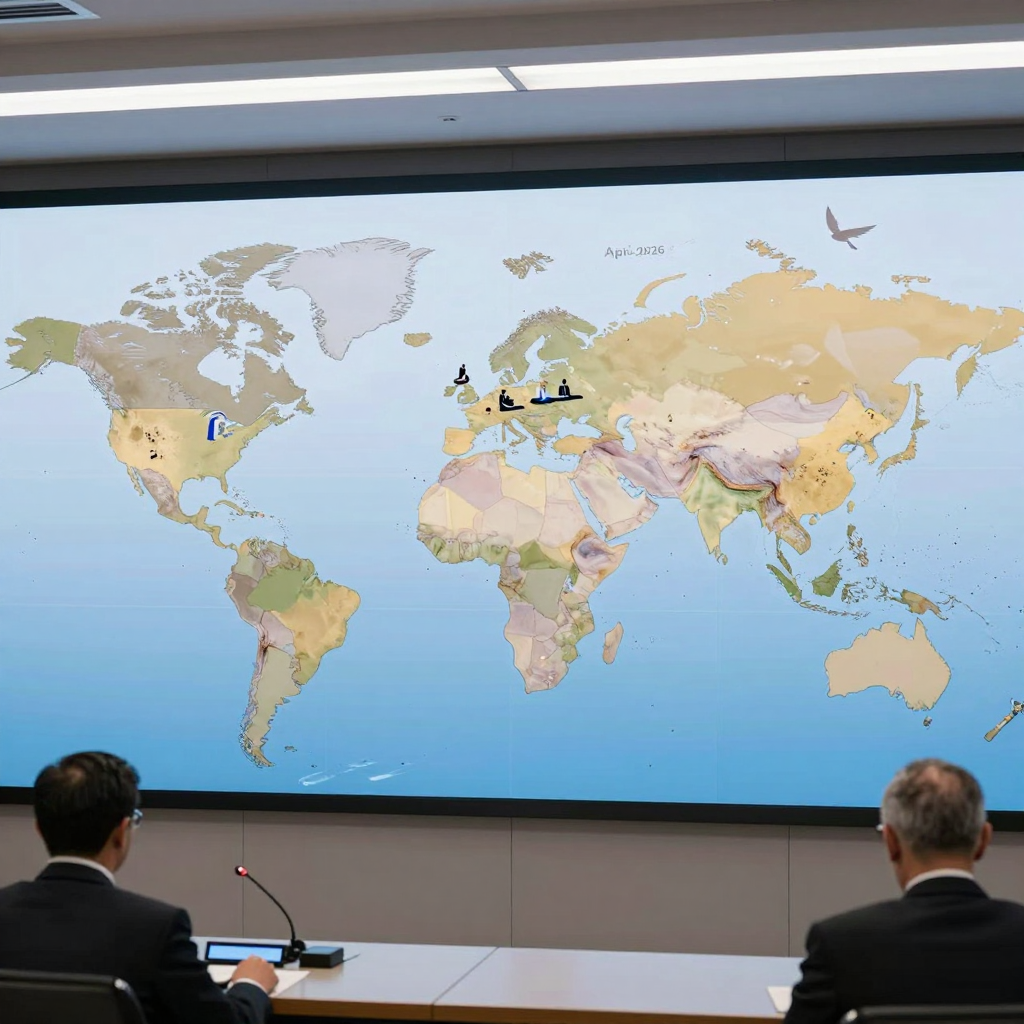
President Lee Jae-myung is joining an international conference addressing the highly scrutinized Strait of Hormuz issue via video call. While it may seem like just another diplomatic engagement, this single moment signals what priorities nations place amid Middle Eastern tensions—and where Korea is choosing to put its weight.
The Strait of Hormuz is a critical gateway for oil transportation. Any disruption here sends shockwaves through energy prices, logistics costs, and financial market sentiment. Thus, discussions around “freedom of navigation” quickly evolve into a diplomatic agenda entwined with both security and economic concerns. Korea’s participation can be seen as an effort to articulate its pragmatic interests—stabilizing oil supply and ensuring maritime safety—through the language of international cooperation.
Tensions extend beyond Hormuz. The very mention of oil tankers passing through the Red Sea highlights that Middle Eastern maritime routes as a whole are perceived as risk zones. Moreover, even though a ceasefire agreement between Israel and Hezbollah has been reached, the fact that fighting continued until the ceasefire took effect exposes the harsh reality that “an agreement doesn’t automatically mean stability.” What the international community truly seeks now is not mere declarative accords, but substantive safeguards for navigation safety and conflict prevention.
In this context, the key takeaway is clear. Today’s headlines are not just about Middle East conflicts—they tell a story about how these tensions are reshaping global supply chains and the trajectories of national diplomacy. Korea’s virtual attendance should not be seen as passive observation but as a deliberate choice to reaffirm a framework of “rules and cooperation” in an increasingly uncertain maritime order. Depending on what joint messages and action plans emerge from this meeting, not only could Middle East tensions shift, but so too could the balance of international diplomacy.
A Breathless Crossroads of Peace Negotiations and Fate in the Middle East Through the News
Although Israel and Hezbollah have agreed on a 10-day ceasefire, the fact that fighting continued right up until the ceasefire took effect shows that this agreement is closer to a “pause” than a true “end” to the conflict. Coupled with the historic event of a Korean oil tanker passing through the Red Sea for the first time, the Middle East has entered a critical phase where diplomacy, security, and energy logistics intersect. Ultimately, these two developments lead us to the same question: Will the current buffer reduce the crisis, or merely buy time until the next clash?
The Light and Shadow of the Ceasefire Agreement: Stopped But Not Ended
The continuation of hostilities up to the very brink of the ceasefire “agreement” means that tensions on the ground are outrunning the pace of central negotiations. In such a situation, even a small miscalculation can instantly escalate into broader conflict. While a short-term ceasefire offers the advantage of opening humanitarian corridors and securing negotiation time, it can also serve as a critical window for each side to regroup, potentially intensifying the fighting that follows.
The Korean Oil Tanker Passing Through the Red Sea: Energy Logistics as Diplomacy and Security
The first passage of a Korean oil tanker through the Red Sea is not merely a navigational choice but a test of maritime safety and supply chain resilience. The Red Sea is a vital maritime route connecting Europe and Asia, and as risks grow, detours increase transport delays and costs. This passage symbolically exposes where the market’s pressure for “logistics must keep moving” clashes with the security imperative that “safety must be guaranteed.”
A Crossroads of Fate: The Interaction of Peace Talks and Maritime Traffic
If the Middle East ceasefire holds steadily, maritime risk premiums could ease, and volatility in energy prices and shipping rates may subside. Conversely, if the ceasefire falters or surrounding conflicts intensify, shipping routes including the Red Sea will once again become a barometer of danger. Ultimately, the core issue now is whether “the ceasefire can expand into a sustainable structure” and whether “maritime safety can be managed systematically rather than relying on temporary luck.” When these two pillars improve together, today’s headlines will mark not a record of crisis but a sign of transformation.
Sharp Criticism Pours Down on World Leaders: Pope Leo XIV’s Warning and the Questions Raised by Today’s News
“A handful of tyrants are ravaging the world.” Pope Leo XIV’s declaration, resonating throughout his African tour, carries a message that transcends any single region. It directly targets the recurring scenes of international politics today—concentration of power, violence against the vulnerable, and the normalization of war and conflict.
This statement draws attention not simply because of its forceful rhetoric. The Pope’s words serve less to classify "who is good or evil" and more as a warning of how swiftly the world can collapse when power goes unchecked. When the multiple crises reported in today’s news appear interconnected, this message becomes strikingly relevant and urgent.
The Shadow of ‘Tyrants’ in the News: A Structural Issue, Not Just Individuals
The Pope’s criticism seems less about pinpointing individual leaders and more about addressing the conditions that enable tyranny. The longer wars and conflicts drag on, the more citizens’ daily lives fracture, and fear justifies stronger rule and harsher propaganda. In this process, the words “security” and “order” often become masks for shrinking freedom and silencing dissent.
At this point, the Pope’s warning reads not as a moral sermon but as a diagnosis of political reality. Tyrants do not emerge overnight. They are “allowed” to grow amid crises and indifference.
A Test for International Politics: Between Silence and Complicity
The symbolism behind the African context of his remarks is powerful. When the global order shakes, the first to suffer are often regions lacking institutional protection, and the damage spills across borders. The Pope’s message challenges the international community:
- Are we consuming news about crises while neglecting the structures that fuel them?
- Are the sufferings of weaker nations dismissed as “collateral damage” amid great power interests?
Ultimately, this statement pushes beyond “who is right” to ask by what standards the world will monitor power and limit violence.
The Conclusion Left by Today’s News: Turning Warnings into ‘Language of Action’
Pope Leo XIV’s blunt words are not just rebukes aimed at political leaders. They are a call directed at international organizations, the media, civil society, and all of us who engage with the news. The power to stop tyrants lies not in a single statement or condemnation but in sustained vigilance, solidarity, and institutions that hold power accountable.
The reason this warning resonates so deeply now is clear: the world stands at a crossroads—whether to return to an era where “the strong make the rules” or to uphold a time where “rules restrain the powerful.”
The Busy Flow of Domestic Political News: By-Elections, Ulsan Issues, and Controversial Figures at the Center
The Democratic Party’s preparations for the by-elections and the Ulsan issue related to Cho Kuk have become hot topics. What changes might these matters, shaking the political world, signal for our society? Recently, the flow of domestic political news reveals how election strategies, regional issues, and personal controversies intertwine, accelerating the setting of the agenda.
The ‘Strategic Timeline’ Revealed by By-Election News
By-elections go beyond simple local contests—they often serve as a testing ground for parties to gauge public sentiment and plan future moves. The Democratic Party’s acceleration in preparation is driven not only by rallying its base but also by managing messages aimed at moderate voters. Candidate selection, competitiveness, and the feasibility of local pledges become key criteria for voter judgment, and in many cases, framing battles outpace policy discussions.
The Ripple Effect of the Ulsan Issue: From Local to National Agenda
As the Ulsan issue tied to Cho Kuk becomes a political hot topic, the typical pattern repeats where a local incident expands into a nationwide political battleground. Ulsan’s complex mix of industry, labor, and local political structures means that an issue centered on an individual often translates directly into a larger narrative of “regional public opinion” and “judgment or check on the administration.” Ultimately, public opinion is shaped less by the facts and more by who interprets the issue and how.
The Controversial Figures at the Center: Between Trust and Fatigue
Issues revolving around figures like former People Power Party leader Han Dong-hoon quickly raise political news attention. However, such repeated disputes can also accumulate political fatigue among voters. The crucial point isn’t merely whether controversy exists, but how parties and individuals fulfill their accountability, and how that process connects to policy and livelihood issues. In the end, building trust relies not on “attacks” but on “convincing explanations and consistent messaging.”
Key Points to Watch: Voters Asking for ‘Results’ Instead of Frames
The changes heralded by the current flow are clear. In the by-election phase, organizational strength and candidate selection will likely determine outcomes; in the Ulsan issue, competition over interpretation will dominate; and in personal controversies, the ability to regain trust will be decisive. The more the political sphere amplifies news waves, the more voters paradoxically return to asking, “So what will change in my life?” Ultimately, the next phase will be led by those who prove policy execution and responsible governance over sensational issues.
Hidden Stories Behind Political News: The Voluntary Sesame Report and the Cartier Controversy
As former People Power Party leader Han Dong-hoon speaks out, the long-whispered ‘voluntary sesame report’ and ‘Cartier controversy’ have resurfaced. Though they may seem like minor incidents on the surface, in politics these issues are battled not by the scale of the event but by the endurance of the framing. Whether this statement ends as a one-off news story or ignites the next explosive phase depends entirely on who claims which narrative first.
The News Spread Process: When ‘Controversy’ Becomes ‘Image’
A typical pathway for political issues to gain traction is straightforward:
1) A gap in suspicion or interpretation emerges, 2) the subject’s explanation style is scrutinized, and 3) the outcome solidifies into a fixed personal brand (morality, sincerity, distance).
The ‘voluntary sesame report’ feels familiar as everyday content but simultaneously raises the question, “Why bother?” expanding room for interpretation. The ‘Cartier controversy,’ linked to symbolic capital (luxury goods), tends to spread faster when entangled with economic and fairness discourse.
Political Ripple Effect News Points: Rallying Supporters vs. Alienating Moderates
This controversy could leave two major traces on the political landscape.
- Strengthened Supporter Unity: The more supporters perceive the controversy as an “excessive attack,” the stronger their defensive instincts become; the firmer the subject’s tone, the tighter the internal cohesion.
- Cumulative Fatigue Among Moderates: Conversely, moderates often grow weary of news highlighting ‘battle fatigue’ over policy. Especially luxury/splurge frames provoke emotional reactions regardless of facts, deepening the feeling that “politics is distant from my life.”
Ultimately, the key lies not just in the “truth of the controversy,” but in how the controversy is handled and what impression that leaves on voters.
Three News Watchpoints to Decide the Next Phase
- Tone of Further Explanation: More important than clarification is the tone. Defensive tones prolong suspicion; clear, orderly messages hasten the news’ fade-out.
- Opposition’s Frame Choice: If attacks focus on ‘morality,’ escalation follows; if treated as a ‘minor incident,’ early closure is likely.
- Internal Party Reactions: How the party draws lines, defends, or stays silent marks the turning point between treating it as a “personal issue” or a “party issue.”
The fallout from these events goes beyond mere gaffes or minor mishaps—it strikes at the intersection where a politician’s sense of everyday life clashes with symbolic consumption and voter sentiment. The next news cycle will likely hinge less on the truth of the statements and more on the battle for image supremacy.
Comments
Post a Comment