 \n
\n
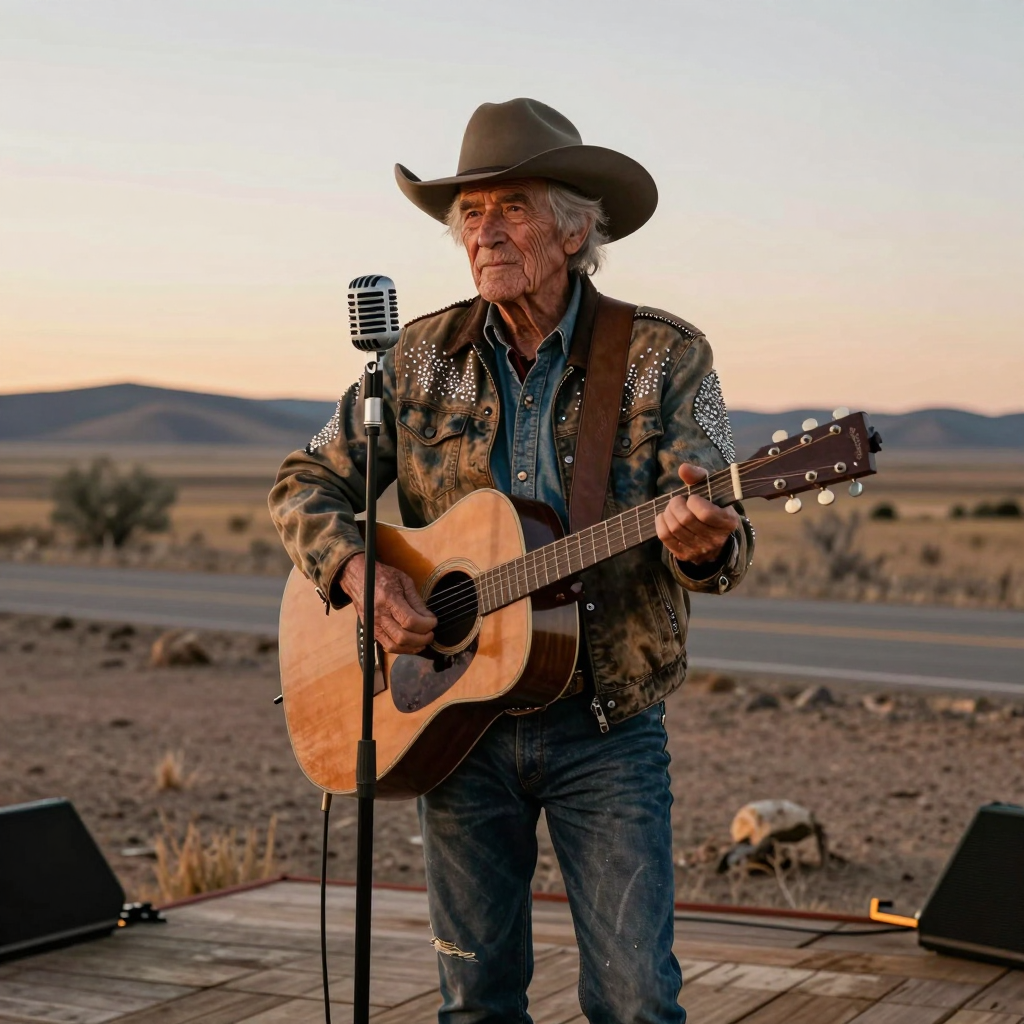
The Legendary Chapter Closed by Death, David Allan Coe
David Allan Coe, the outlaw country legend, passed away at the age of 86. Who was he, and why has his death sent shockwaves through the music world?
He was more than just a singer with hit songs. With a prison record, narratives plucked from society’s fringes, and an uncompromising style of expression—his life itself proved the spirit of outlaw country. On April 29, 2026 (local time), he breathed his last in an intensive care unit, with the cause of death undisclosed. Yet, the moment the obituary broke, the void felt by many was undeniable. It was the kind of shock that comes with “the end of an era.”
David Allan Coe’s greatest legacy wasn’t merely his ‘songs’—it was the ‘standard’ he set. His “Take This Job and Shove It”, immortalized by Johnny Paycheck’s voice, topped the country charts in 1977 and became a rallying cry for a generation embodying workers’ rage and resignation. His songs like “Would You Lay With Me (In a Field of Stone)”, which topped Tanya Tucker’s charts, and “You Never Even Called Me by My Name”, famously known as the “perfect country song” spoken word, ingrained the very grammar of the genre into the public consciousness.
What made his presence even more intense was his transformation into a ‘legend’ that included contradictions and controversy. Nicknamed “The Mysterious Rhinestone Cowboy,” he dominated stages with masks and flamboyant suits, yet his lyrics never hid the raw, uncomfortable realities. The narrative power he revealed in songs like “The Ride” and “Mona Lisa Lost Her Smile” proved he was not simply a provocative figure but a master storyteller.
That is why his death resonates so strongly. He was the one who proved outlaw country’s music sprang not from a ‘pose of rebellion’ but from a life truly lived—and now, that authentic sensibility has become even rarer.
From Prisoner to Musician: A Story of Rising Above Adversity — David Allan Coe
How could a past spent behind bars lead to becoming a legendary ‘outlaw’? The life of David Allan Coe is a narrative in itself that answers that very question. Born in Akron, Ohio, in 1939, he spent his youth cycling through reform schools and prisons, enduring a rough journey. His incarceration from 1963 to 1967 left a deep mark on his life but also laid the groundwork for the raw authenticity demanded by ‘outlaw country’ music.
After his release, he chose not escape but to challenge life head-on. In 1967, he headed to Nashville and embarked on a career as a musician, confronting his past boldly with his 1970 debut album Penitentiary Blues. Rather than singing a glamorous success story, he reflected on the realities of workplaces, streets, and the margins of society. That’s why his music resonated with so many, striking a chord that felt like “this is my story.”
The message he left is clear. One’s past doesn’t define the end of life, and even the darkest chapters can be transformed into voices of solace and resistance. At this very point, his time as a prisoner was not a stigma that tarnished his legend but a testament to reality that made him an icon of the ‘outlaw’ spirit.
True Greatness as a Composer: Capturing the Voice of the Working Class — David Allan Coe
Why is the man behind timeless anthems like “Take This Job and Shove It” remembered not just as a singer, but as a legend in country music? Let’s uncover the secret. Simply put, David Allan Coe's true strength lay not in his vocal performance, but in his songwriting. He wasn’t merely a hit-maker; he was a chronicler who nailed the emotions of workers and society’s margins into precise, unforgettable lines.
The most iconic example is the 1977 chart-topping country hit performed by Johnny Paycheck, “Take This Job and Shove It.” This song doesn’t mask workplace anger with exaggerated bravado. Instead, it spits out the exact words anyone who’s ever swallowed their frustration has thought but never dared to voice. That’s why it transcended being just a trendy hit and became a collective anthem of labor’s defeat—echoing powerfully across generations.
Coe’s songwriting packs a punch because it’s not limited to rage alone. As in Tanya Tucker’s #1 hit “Would You Lay With Me (In a Field of Stone),” he convincingly sings of love and devotion amidst harsh, rough lives. Moreover, with “You Never Even Called Me by My Name,” he cleverly twists the conventions of the perfect country song through witty self-referential storytelling—crafting a memorable narrative device that stays with listeners.
What’s crucial is that these songs don’t sound like polished fiction—they resonate like lines forged from Coe’s very own life. Experiences from prison, survival on society’s edge, and the grit of labor’s realities form the backbone of his lyrics. That’s why his songs endure no matter who sings them or how much time passes. The reason David Allan Coe remains a legend is here—not as the outlaw on stage, but in his greatness as a composer who encapsulated the spirit of an era through his music.
David Allan Coe: The Shadow Behind the Glittering Stage—Controversy, Collaboration, and Hardship
The shock factor that words can hardly capture has always been David Allan Coe’s most potent weapon and his darkest shadow. He transformed the word ‘outlaw’ from a mere genre into an attitude and narrative, embracing both praise and controversy along the way.
Masks, Rhinestones, and the ‘Outlaw of Outlaws’
He earned the nickname “Mysterious Rhinestone Cowboy” by crafting a striking image with rhinestone suits and masks on stage. In a country music scene that values ‘honest storytelling,’ such exaggerated theatrics ironically revealed an even greater truth.
Yet, that truth wasn’t always warmly received. His blunt, provocative lyrics and taboo subjects made him the “outlaw’s outlaw” while placing him squarely in the eye of controversy. A figure where freedom and discomfort coexist—this paradox amplified his presence like no other.
Influence Proven by Cross-Genre Collaborations
What’s fascinating is that he wasn’t a solitary rebel. Through tours and collaborations, he expanded his influence. He shared the stage with Willie Nelson, Kid Rock, Neil Young, and notably, in 2006, shook boundaries with the country+metal project “Rebel Meets Rebel” alongside members of Pantera.
This collaboration was more than an event—it was a declaration shattering the rulebook of “how country music must be.” His legacy lies not only in hit songs but also in being a force that pushed the walls of genre outward.
Battles Offstage: Tax Troubles and Financial Struggles
The more dazzling the stage, the harsher the reality. His later years grew complicated by financial woes, culminating in a 2015 guilty plea regarding tax charges, leading to probation and over $980,000 in restitution by 2016.
This was the collision between a vast career packed with countless performances and the neglect behind the scenes. While he raced fiercely on stage, life’s administration and numbers proved a vulnerability no less real.
Ultimately, the question “What kind of man was the real David Allan Coe?” boils down to this: he was neither a flawless hero nor a mere troublemaker. He was a man in whom controversy and innovation, expansion and downfall coexisted—and it is this complexity that made David Allan Coe a true legend.
The Unending Legend: The Legacy Left by David Allan Coe
What truly is the footprint and real value that a man who lived a stormy life left on the music world? The final message his fading story sends us ultimately boils down to one sentence: "Sing life as it is." David Allan Coe's legacy is not just a list of hit songs but an experiment and declaration of how truthful country music can truly be.
David Allan Coe: Elevating the Language of Labor and the Margins to the ‘Standard’
The most powerful trace he left behind lies in how he raised the anger, resignation, and texture of life outside the system into the very language of song. The reason “Take This Job and Shove It” remains a timeless anthem across generations is less about melody and more about its unflinching, raw emotion. His music didn’t offer “polished consolation” but spoke in the very words born straight from the trenches, representing the people themselves.
David Allan Coe: A Singular Narrative Including Controversy
David Allan Coe is a figure who sparked both praise and controversy. His bold expressions and willingness to cross taboos sometimes caused discomfort, but it was precisely here that he remained not a ‘flawless hero’ but an existence that embraced contradiction. The essence of his outlaw country wasn’t rebellion for its own sake but the moment when uncensored genuine emotion becomes music.
Shaking Genre Boundaries, and the Weight of His Final Message
His career never stayed confined to country alone. Collaborations with various artists and his late experimental projects can be read as a refusal to stop under the name of ‘tradition.’ At the same time, realities like tax troubles and worsening health remind us that behind the title of legend lies a human life accompanied by responsibility and suffering until the very end.
What he truly left behind was not perfection but the courage to transform a rough and complicated life into art. And that courage still questions us today. To what extent are we honestly living out our own voices?
Comments
Post a Comment