From Disposable Heaven to the Plastic Crisis: How the Closure of the Strait of Hormuz Changed Our Daily Lives
 \n
\n
The Hidden Truth Behind Disposable Items and Convenience
From delivery food to festival sites, why are we inevitably facing disposable items every day? What secrets lie behind this convenience?
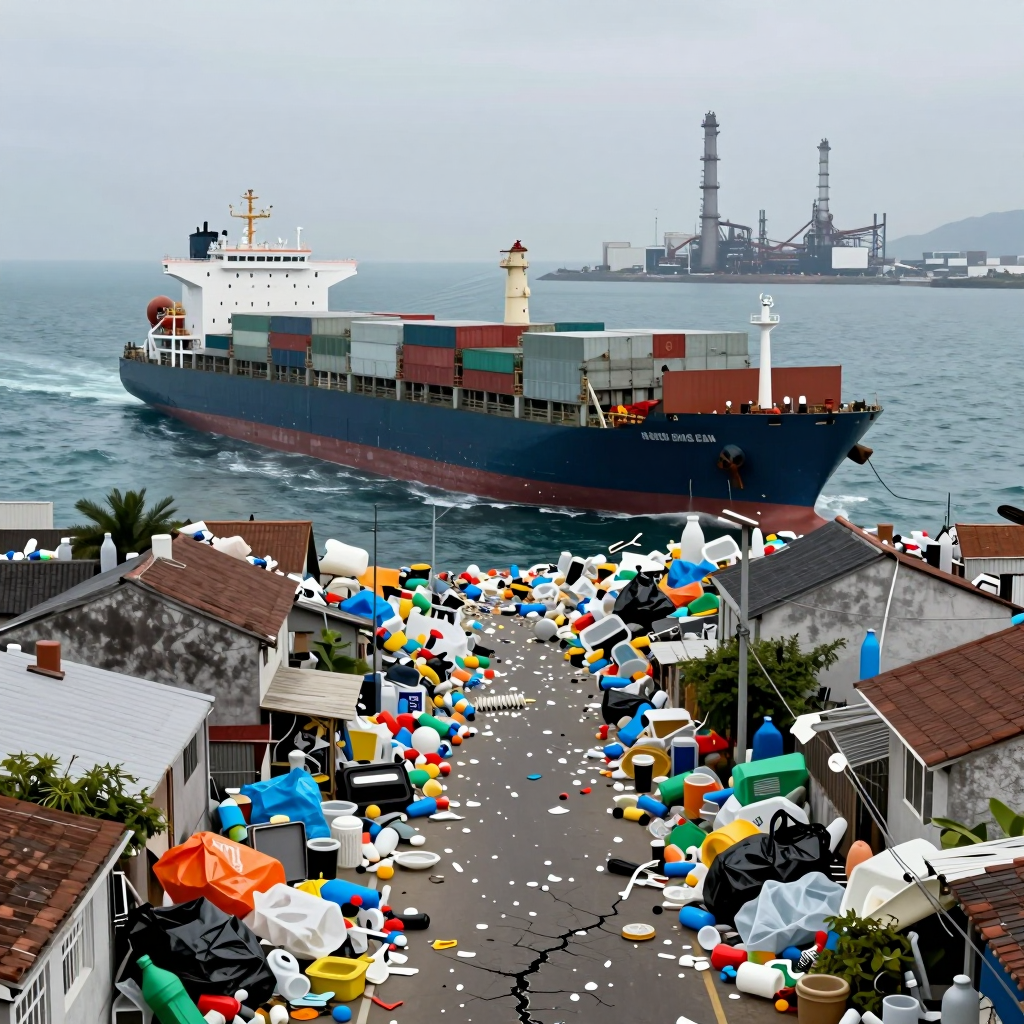
Disposable items persuade us with a simple usage experience: "use once and throw away." No need to wash dishes, no storage required, and an impression of hygiene is added. But this convenience is not created by individual choices alone. The delivery and takeout-focused consumption patterns, mass distribution systems, and operational efficiency of events have converged to make disposable items the easiest standard. It is a structure that processes quickly, disperses responsibility, and only appears cheap “in the moment.”
The problem is that this standard causes the entire social system to rely on disposables beyond everyday life. Single-use plastic containers and bags remain in the environment far longer than their usage time, and the collection, sorting, and recycling processes require additional costs and energy. Ultimately, the "immediacy" we enjoy is easily transferred onto someone’s labor, local treatment facilities, and the burden on nature.
An even more fundamental truth is that disposables are not just daily items but industrial products linked to petrochemical supply chains. When raw material supply fluctuates, prices and availability ripple immediately, impacting everything from essential household items like trash bags to plastics needed in medical settings. In other words, disposables symbolize convenience while also proving our fragile dependence.
In the end, the question boils down to one: how can we maintain "convenience" while reducing its costs? It’s time to view disposable items not as a matter of personal habit but as a structural problem—and to design alternatives accordingly.
The Origin of Disposable Plastic: Naphtha, Why Is It Called the 'Rice of the Chemical Industry'?
Countless disposable items we use all trace back to a single starting point: naphtha, a component derived from crude oil. From ordinary plastic bags to delivery containers, following the root of the materials invariably leads to the name “naphtha.” So, why is naphtha referred to as the ‘rice of the chemical industry’?
Naphtha is one of the components obtained during crude oil refining, accounting for about 18% of the total crude oil refined. It is produced through a process called fractional distillation, where crude oil is heated to around 350 degrees Celsius and separated by components. Among naphtha types, the light naphtha with a boiling point below 100 degrees Celsius becomes the key raw material for petrochemical products such as plastics and vinyl.
The reason behind the nickname ‘rice’ is simple: just as rice is the basic staple on our dining tables, naphtha serves as the foundational basic raw material (starting substance) for almost every product in the chemical industry. In fact, naphtha supports a wide range of everyday items:
- Everyday disposable products closely tied to life, such as plastic bags, packaging films, and volume-based waste bags
- Plastic containers used for delivery and takeout
- Materials used industry-wide, including milk cartons, various packaging, and wire coatings
Ultimately, calls to “reduce disposable products” are not just about waste issues but raise the question of how to transform the naphtha-centered production and consumption structure. By understanding the origin of plastics, we gain clearer insight into what we need to change.
Uiwang City Proposes a New Relationship with Single-Use Products
Reducing single-use products is no longer a choice but a necessity. How will the reusable container ordinance promoted by Uiwang City change our daily lives? Let’s take a closer look at the beginning of this transformation together.
Uiwang City is pushing forward the ‘Ordinance to Promote the Use of Reusable Containers,’ which prioritizes the use of reusable containers at public events and festivals organized by government agencies. The key is not to rely solely on “individual goodwill” but to create a system that structurally reduces single-use product consumption.
Three Mechanisms to Create an ‘Environment Where Reducing Single-Use Products Is Easy’
Establishing a Rental, Return, Cleaning, and Redistribution System
Even when people want to use reusable containers, questions like “Where do I borrow one, and where do I return it?” can lead them back to single-use products. Uiwang City’s ordinance standardizes this process so that both event organizers and participants can engage without hassle.Designation of Outstanding Businesses Using Reusable Containers and Incentives
For a policy to be sustainable, it must offer clear benefits to participants. Designating outstanding businesses and providing incentives turns the shift to reusable containers from a ‘cost’ into an ‘opportunity’ for local entrepreneurs.Expanding Citizen Participation Through Promotion and Awards
Ultimately, reusable containers must be held by users to be effective. The promotion and award system that expands citizen involvement serves as a catalyst that transforms the mindset from “It’s just me” to “This is how our neighborhood acts.”
How the Single-Use Product Policy Transforms Event Scenes
Once the reusable container system takes root, the typical piles of single-use waste seen at festivals and events begin to fade away. Operational aspects also change: purchasing, storage, and disposal burdens of single-use products decrease, while the processes of collection, cleaning, and redistribution integrate smoothly into event management, enhancing overall event quality—including flow, organization, and hygiene standards.
Why Reducing Single-Use Products Is Not Just an ‘Environmental’ Issue
Recent global tensions have revealed that disruptions in crude oil and petrochemical supplies immediately affect plastic availability and prices. Lowering dependence on single-use products is, therefore, not only about reducing waste but also a choice that lessens risks to daily life stability and public services. Uiwang City’s ordinance stands as one of the most practical answers to this change—not simply saying “Let’s reduce,” but creating a system that makes reduction possible.
The Plastic Crisis Cast by Middle East Conflicts: The Fragility of Single-Use Product Supply Chains
A conflict in one region has triggered a plastic crisis across Asia. From hoarding to shortages of medical supplies—the core of this crisis lies in the reality that "plastic is oil," and the dependency on supply chains created by single-use product-centered consumption.
Why the Strait of Hormuz Blockade Shakes Single-Use Products
When the Strait of Hormuz is blocked due to Middle East conflicts, crude oil transportation halts, instantly disrupting the supply of petrochemical raw materials. Plastic is not just simple "packaging"; it is an industrial material derived from naphtha, a product of crude oil.
Ultimately, as the flow from crude oil → naphtha → plastic resin is interrupted, production lines for single-use products either stop or costs skyrocket.
The Real Scenes Behind the Single-Use Product ‘Crisis’ Sweeping Asia
This shock was not merely a number on a price tag. It shook daily life, industries, and even medical fields simultaneously.
- South Korea: Panic buying of garbage bags; government advised minimizing single-use products at events
- Japan: Concerns over shortage of plastic medical tubes essential for dialysis
- Taiwan: Emergency hotline established for companies facing plastic shortages
- India: Bottle cap prices soared fourfold
Especially as Asian plastic resin prices surged by up to 59%, the assumption of “buying whenever needed” was broken. Single-use products, once taken for granted, became the items that ran out first in moments of crisis.
One Lesson from the Single-Use Product Crisis
The message from this crisis is clear: while single-use products offer convenience, their supply chain fragility immediately becomes a social risk. Beyond environmental concerns, stable supply of daily essentials and medical necessities is now linked, making ‘plastic dependence’ a matter of both safety and economic security.
Beyond Convenience with Disposable Products: The Path to a Sustainable Future
A wise choice considering both the environment and the economy is essential. The way we handle disposable products today could shape the future. Which path will we choose?
Until now, disposable products were chosen for their “convenience.” But as the Middle East conflict disrupts crude oil supplies, plastic resin prices soar, triggering societal phenomena like hoarding garbage bags. This reveals that disposable products are not merely a lifestyle issue but a living infrastructure connected to resource, logistics, and price stability.
When Choosing to Reduce Disposable Products Becomes ‘Savings’
- Reducing Environmental Costs: Cuts pollution and treatment expenses from landfill and incineration processes.
- Mitigating Supply Chain Risks: When naphtha-based petrochemical product supplies falter, alternative systems like reusable containers absorb the shock.
- Local Economic Opportunities: Operational systems involving rental, collection, washing, and redistribution transform one-time consumption into a sustainable service industry.
A Practical Solution to Lower Disposable Product Dependence: “System Transformation”
Individual willpower has its limits. That’s why it’s effective for the public sector to lead by setting standards, allowing the market to follow. When public events prioritize reusable containers—like the reusable container ordinance in Uiwang City—“available choices” become part of citizens’ daily lives. The key is not just encouraging use but establishing a functioning system of rental–collection–washing–redistribution.
The Path We Must Choose
Rejecting disposable products outright isn’t the answer. The crucial point is to “use them only when necessary and switch to circulation whenever possible.” Maintaining convenience while protecting resources and the environment—this is the most realistic path toward a sustainable future.
Comments
Post a Comment