 \n
\n
'Juice Uncle' Park Dong-bin Leaves Us
On April 29, 2026, actor Park Dong-bin (real name Park Jong-moon) passed away at the age of 56. He was found dead at a restaurant he had been preparing to open in Jangan-dong, Pyeongtaek City. Reports confirm that there were no signs of foul play or a suicide note. The sudden news left many lamenting that it was "far too soon."
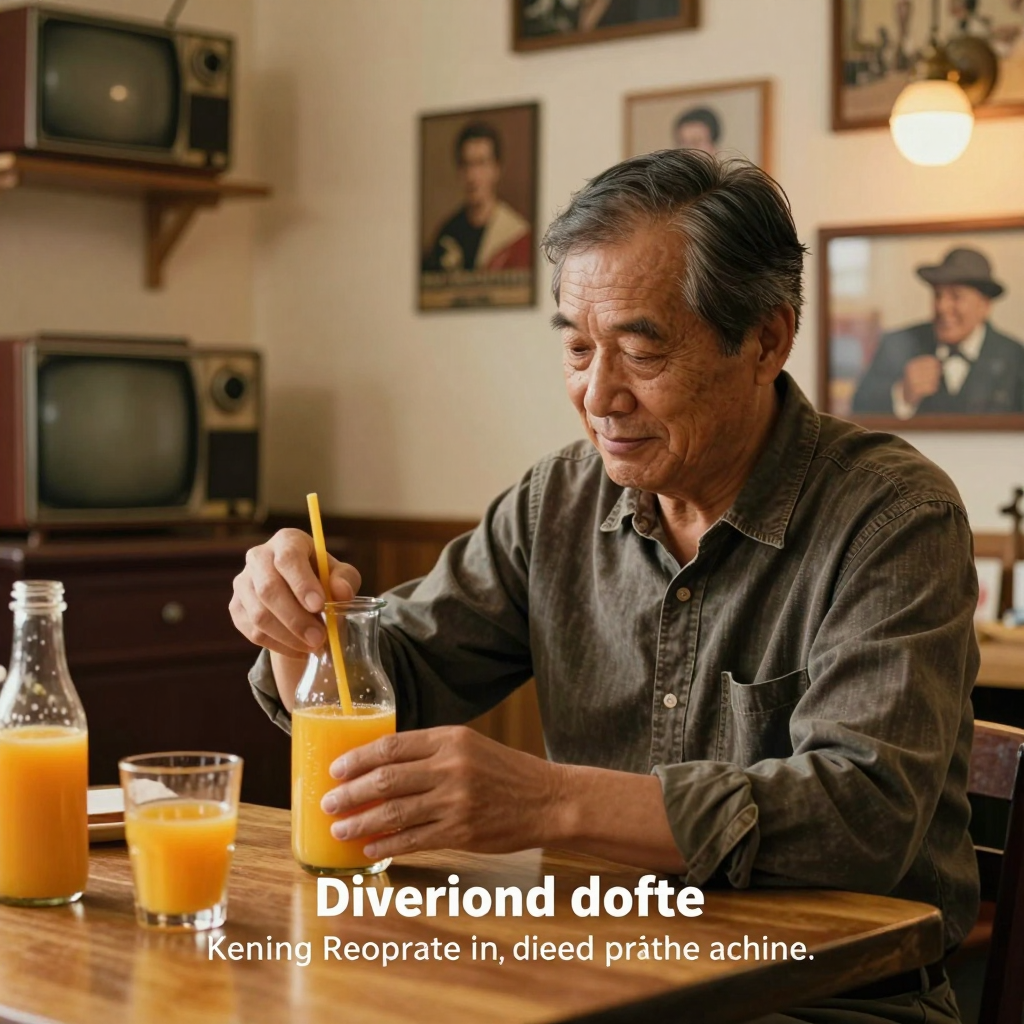
To the public, he was forever imprinted through a single scene. In the 2012 drama ‘I Think I Loved You’, the moment he sprayed orange juice became a sensation, earning him the nickname ‘Juice Uncle’. That scene evolved into a cultural phenomenon, spawning countless parodies and memes. Yet, his life held depths far beyond that famous moment.
Why was his life anything but ordinary? Park Dong-bin married at the age of 51 and became a father late in life. He devoted himself wholeheartedly to being the pillar of his family, especially for his daughter born with a congenital heart defect. In a 2024 broadcast, he courageously revealed for the first time the childhood trauma of sexual abuse he endured, bravely bringing long-buried wounds to light. Behind the name Juice Uncle, once met with laughter and surprise, lay the sincere heart of a man who bore life’s burdens with unwavering responsibility until the very end.
Juice Man: The Birth of a Legendary Actor Through a Single Scene
In 2012, a single scene from the MBC drama “I Guess I Loved You” etched actor Park Dong-bin into the public’s memory forever. At the moment he learns a shocking secret about his daughter’s birth, his brief but powerful act of spitting out the orange juice he was drinking needs no explanation. The expression and rhythm bursting forth with surprise, confusion, and embarrassment pierced the screen, and people naturally started calling him Juice Man.
What made this scene special wasn’t an exaggerated “comedy act” but rather a slice-of-life performance that accurately captured the emotion of the moment through his physical reaction. That authenticity sparked countless imitations and parodies. While it became an internet meme, the original scene’s power never faded. Just by watching that short clip, audiences instantly understood the character’s situation and feelings.
In the end, Juice Man wasn’t just a nickname; it was proof to the public that Park Dong-bin is an actor who “brings scenes to life.” Those few seconds became far more than part of an actor’s filmography — they became a symbolic moment demonstrating how a scene can leave a lasting mark on popular culture.
An Acting Career That Spans Screen and Television: The Multifaceted Stage of “Juice Uncle” Park Dong-bin
From director Kang Je-kyu’s heavyweight films to beloved popular dramas, Park Dong-bin is an actor whose presence fills far more than a single scene. While the nickname “Juice Uncle” left a vivid mark, tracing his filmography before and after reveals just how flexibly he has expanded his career through diverse variations.
He first debuted on the big screen in the 1996 film The Gingko Bed, gradually building his presence in cinema. Following this, he appeared in works like Shiri and Taegukgi by the same director, steadily carving his own space within the major currents of Korean film. Amid sweeping narratives and densely packed scenes, he leaned not on exaggeration but on detail, convincing audiences through accumulated, nuanced performances rather than a single expression.
His strides on television never stopped either. Navigating between historical and mainstream dramas such as The Age of Wild Men, Immortal Admiral Yi Sun-sin, God of War, and Sungkyunkwan Scandal, he showed his ability to change faces to suit the tone of each production. The 2012 drama I Think I Loved and its memorable orange juice scene became the defining moment that made the public remember him as “Juice Uncle.” Yet, that nickname is not merely a catchphrase—it stands as proof that he is an actor who nails emotional shifts perfectly, even in fleeting moments.
Ultimately, Park Dong-bin’s acting life transcends “viral scenes” to become a sustained record woven through masterpieces of cinema and realistic characters in dramas. It is precisely the trajectory of this evolution, built across screen and television, that remains the strongest reason why we recall him time and again.
Courage Revealed Before Family and Truth: The Life of Juice Uncle Park Dong-bin
To the public, he was known simply as Juice Uncle, but Park Dong-bin’s real story unfolded quietly and steadfastly beyond the camera. Especially significant are his marriage at the age of 51, his life as a father, and the moment he finally revealed wounds he had hidden for 50 years—these moments make us remember him as more than just a “scene that caught attention.”
He started a family late in life and had a daughter. By his daughter’s side, who suffers from a congenital heart defect, he stood first as a father—long before as an actor. In the days where his child’s day became the family’s day, responsibility was proven not through grand words but through daily choices. Park Dong-bin consistently made those choices, bearing the weight of life in a way very different from his “stage presence.”
Then, in 2024, he publicly confessed on a broadcast to being a victim of child sexual abuse at around 6 or 7 years old—a truth he had kept buried for decades. It was no easy decision to expose such a past, but instead of hiding his wounds, he chose the path of ‘an adult who speaks the truth’ in front of his family and daughter. That moment was not an act but a life’s confession, and it’s why so many paused to embrace his sincerity.
What we must ultimately remember is not the nickname ‘Juice Uncle’ itself, but the attitude of the man behind it. The countless quiet hours endured to protect his family, and the courage to face fear and speak the truth. Park Dong-bin’s legacy remains in those silent yet profound decisions.
Beyond Movie Scenes: The Legacy Left in Life by “Uncle Juice” Dongbin Park
When people think of “Uncle Juice” Dongbin Park, many first recall that famous orange juice scene. But as time passes, what becomes clearer isn’t just a meme from a single moment—it’s the genuine attitude he showed throughout his life. His acting left laughter and astonishment, and his choices and confessions left a lasting emotional resonance.
Park Dongbin didn’t rely solely on leading roles that basked in the spotlight. Through steady presence in various works, he earned trust as “an actor who brings scenes to life,” and that sincerity ultimately gave new life to the nickname “Uncle Juice.” What the public loved wasn’t the exaggerated expressions—it was the power to make a moment feel real.
Above all, his legacy grew deeper beyond the screen. Starting a family late in life, fulfilling his responsibilities as a father to a sick daughter, and for the first time publicly revealing long-hidden wounds on a broadcast—his approach wasn’t to exploit personal pain but to speak in a way that inspired courage in others. This quietly offered comfort to many. By neither denying nor hiding his scars, and by reorganizing his life for his family and child, he is remembered not as a celebrity but as a maturing human being.
Thus, “Uncle Juice” is more than just a source of parody; he leaves us with this question: “What scene will I leave behind, and what is the attitude of my life?” The reason Park Dongbin’s name resonates long after is that the moments he chose sincerity over laughter remain a greater source of inspiration.
Comments
Post a Comment