 \n
\n
Surge in Fraud Crimes: A Dark Shadow Over Korean Society
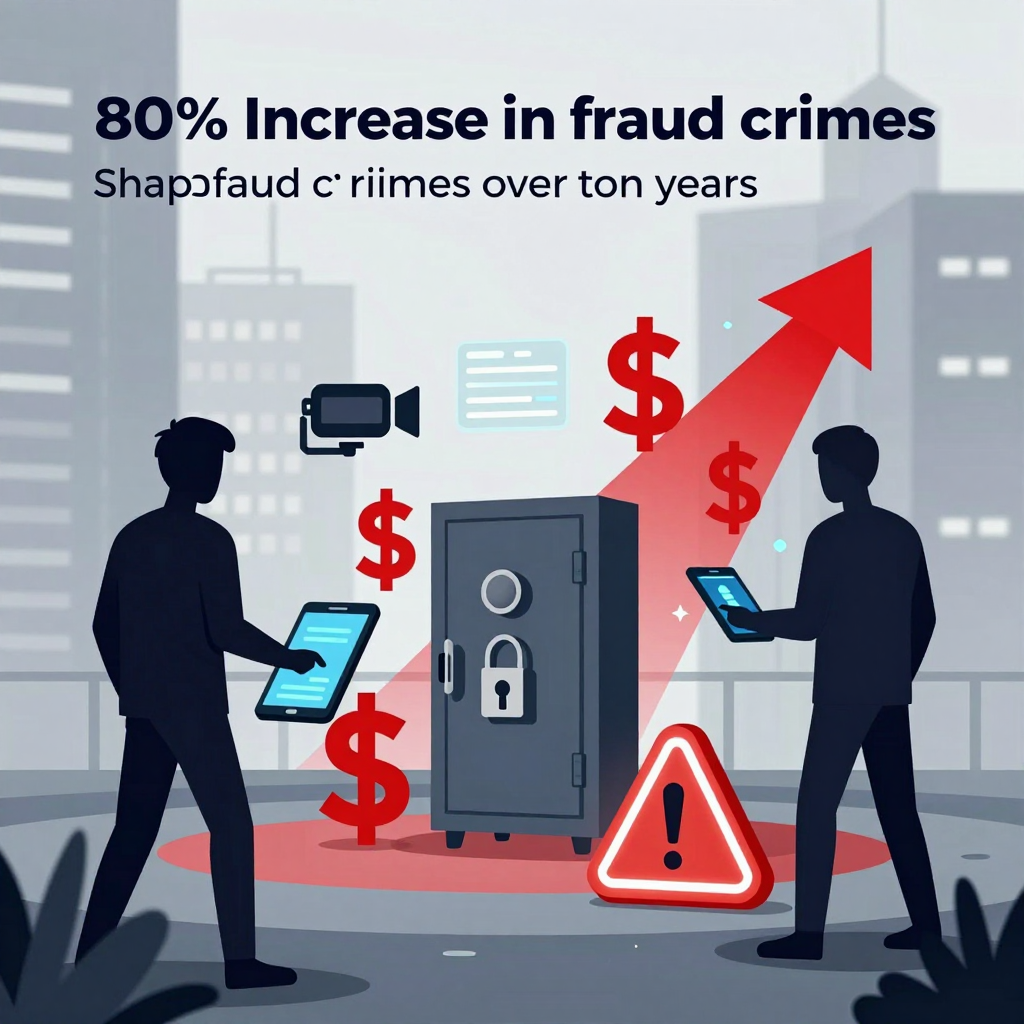
Over the past decade (2014–2024), fraud crimes have skyrocketed from 240,000 to 420,000 cases—an 80% increase. What’s even more alarming is that this upward trend shows no signs of slowing, with projections suggesting a further surge of over 20% in both 2024 and 2025. Why is this happening?
The core issue isn’t that “crime has become easier,” but that the social and technological landscape has rapidly evolved to boost fraud’s success rates. Unlike theft, which becomes easier to catch as CCTV and security systems improve, fraud operates in the exact opposite way. Because victims are tricked into willingly handing over money or assets under false pretenses, these transactions often appear as “voluntary transfers” at a glance. This subtlety leads to major challenges in gathering evidence, making the game heavily tilted in the criminals’ favor.
Adding fuel to the fire is the normalization of online and non-face-to-face interactions. The traditional face-to-face verification has been replaced with messages, links, app installs, and open chat rooms, shifting the basis of trust from genuine “relationships” to carefully crafted “performances.” As a result, fraud has become more sophisticated. What began as document forgery has expanded in the 2000s into voice phishing, and today, cutting-edge technologies like cryptocurrency, the dark web, and deepfakes have been weaponized as tools in scams.
Especially striking recently are modern tactics that simultaneously tap into victims’ desires and anxieties. Methods such as “leading scams” that promise guaranteed profits by guiding investments in stocks or cryptocurrencies, or obscene material extortion scams that trick victims into installing malicious apps through video chats to steal contacts and blackmail, quickly isolate victims and push them toward extreme actions (like turning to private loans).
Ultimately, the surge in fraud is more than just a policing challenge—it is the result of criminals rapidly learning to exploit the vulnerabilities in a society where trust has eroded amid growing non-face-to-face interactions. What we need now is not mere warnings to “be careful,” but a deep understanding of these structural changes and an updated strategy to confront them.
Fraud vs Theft: Why Their True Natures Are Fundamentally Different (Fraud)
What exactly sets fraud apart from simple theft? The key lies in the fact that the victim is ‘deceived’ and voluntarily hands over their property. This distinction dramatically changes not only the nature of the case but also the complexity of the investigation.
Fraud vs Theft: It’s Not ‘Taken’ but ‘Given Over’ (Fraud)
- Theft occurs when the perpetrator physically takes property against the victim’s will.
- Fraud is established when the victim is misled by the perpetrator’s falsehoods, causing the victim, under false assumptions, to voluntarily hand over money or assets.
In other words, theft centers on “who took it,” whereas fraud focuses on “why the victim handed it over (what lie they fell for).”
Why Investigating Fraud Is More Challenging: Transactions That ‘Appear Consensual’ (Fraud)
Fraud is tricky because it often looks like a legitimate transfer, a valid contract, or a proper business deal on the surface. The victim might even directly make a bank transfer or message “I sent the money.” Here, investigators must go beyond the mere fact that money changed hands and prove the following:
- Whether the perpetrator intended to deceive from the outset (intent to defraud)
- Whether the victim was misled by false information (mistaken belief)
- Whether this mistaken belief caused the victim to part with their property (causation)
Ultimately, in fraud cases, the crucial evidence lies in the conversations, promises, and situational context that occurred before the money changed hands, not the moment the funds were transferred.
Traces Left by Fraud: Why ‘Words and Context’ Matter More than CCTV (Fraud)
Theft often leaves clear physical evidence such as CCTV footage, access logs, and fingerprints. In contrast, fraud’s core evidence is found in verbal and circumstantial proof—online messages, phone calls, emails, and investment pitch materials. However, these materials:
- Can be easily deleted
- May be spread across offshore platforms/accounts
- May be entangled with claims like “it was just a broken promise,” making the case seem more like a civil dispute
For these reasons, securing evidence early on is often the decisive factor that determines the success or failure of a fraud investigation.
The Evolution of Fraud Crimes: Why the CCTV Era Has Reduced Theft but Increased Scams
With the rise of CCTV and security companies, theft has become a ‘crime that is easily caught.’ The moment someone steals something, their movements and face are recorded on video, and physical evidence at the scene is relatively clear. Ironically, however, this shift has made fraud a more appealing crime. Because victims are deceived into sending money or transferring assets themselves, there is no physical crime scene, and the evidence tends to be scattered. Coupled with the rise of online, non-face-to-face culture, an environment where “you can deceive without meeting in person” has rapidly emerged.
The Flow of Fraud Techniques: From Forgery to ‘Psychology + Technology’
Fraud crimes have continuously changed form according to the era’s technology and lifestyle.
1990s: Focus on Forging Securities
When paper-based transactions like documents, promissory notes, and checks were common, creating ‘convincing documents’ to gain trust was widespread. The key was manipulating trust through technical forgery.2000s: The Rise of Voice Phishing
With the combination of telephone and financial systems, voice phishing spread, where perpetrators “impersonated institutions to pressure victims urgently.” From this time, fraud evolved beyond mere forgery into a crime that engineers victims’ anxiety, fear, and time pressure.Recent Years: Expansion to Cryptocurrency, Dark Web, and Deepfakes
Today, fraud uses technology not just as a tool but as a stage. Scammers approach through highly anonymous spaces, create trust with deepfakes of faces, voices, and videos, and make recovery difficult. In other words, sophisticated technology + decentralized transactions + low traceability combine to increase profits against the risks.
Why Modern Fraud Crimes Are Especially Dangerous
What makes fraud today so frightening is that the damage grows rapidly and victims feel isolated.
- Like “leading fraud,” which clouds investment judgment by promising “guaranteed big returns,”
- And obscene material blackmail scams, which trick victims into installing apps through video chats, steal contacts, and then threaten to stop them from reporting by exploiting vulnerabilities.
Ultimately, the direction of fraud’s evolution is clear. Instead of stealing directly, criminals have shifted to making victims believe and willingly give up their assets—and technology makes this process faster and more sophisticated than ever before.
An Era of Evolved Scams: Modern-Day Frauds and How You Could Become a Victim
'Leading scams' and 'sextortion scams' go beyond merely stealing money—they are devastating frauds that shatter daily life, relationships, and even livelihoods. Especially in online, non-face-to-face environments, perpetrators hide their identities, quickly build trust, isolate victims, and then rush their decisions. The careless mindset of “Surely not me?” becomes their prime target.
The Pinnacle of Fraud: How ‘Leading Scams’ Work
Leading scams lure victims by claiming that “experts will tell you when to buy or sell,” exploiting both investment greed and anxiety simultaneously. The pattern generally unfolds as follows:
- Approach: Luring through profit claims, success stories, and ‘free leads’ on social media, messengers, and open chat rooms
- Building Trust: Letting victims taste small profits first or using fabricated trading screens, testimonials, and group chat atmospheres to convince them
- Encouraging Expansion: Pressuring additional deposits and leveraged investments with phrases like “This is your last chance” or “You must get in now”
- Blocking Withdrawals: Making profits appear but then demanding fees, taxes, or deposits at the withdrawal stage to keep funneling money
- Disappearing: Cutting off contact or closing groups once money stops flowing
Victims don’t just suffer losses; they also carry the guilt of ‘having made a wrong judgment.’ Criminals prey on this feeling, baiting victims with the hope that “if only withdrawals work, everything will be over” to extract more money. This snowballs into growing debt, secrets from family, and prolonged suffering.
The Cruelty of ‘Sextortion Scams’ Combining Fraud and Blackmail
Sextortion scams typically begin with video chats or encounters that trick victims into installing apps, which then steal contacts, photos, and other data via malware to blackmail them. Unlike ordinary scams, these are especially dangerous because they take victims hostage with their social reputations, pushing them to the brink.
- Luring: Lowering defenses through intimate conversations and provocative offers
- Infiltration: Stealing information via app installations or link clicks
- Blackmail: Maximizing psychological terror with threats like “I will spread this to your acquaintances”
- Repeated Extortion: After the first payment, repeatedly claiming “This is the last time” while demanding even more money
Victims often cannot share their ordeal due to shame and fear, attempting to cope alone, sometimes even resorting to extreme measures like illegal loans, driven to the edge. In essence, this fraud targets both financial damage and mental collapse simultaneously.
The Pain Beyond Money That Scam Victims Endure
What makes modern scams truly terrifying is that the damage transcends mere numbers.
- Relationship Breakdown: Isolating themselves out of fear of revealing the truth to family, partners, or workplaces
- Mental Aftereffects: Anxiety, insomnia, panic attacks, social withdrawal ruining everyday life
- Risk of Further Harm: Exposure to secondary scams promising “we’ll help you recover your losses”
At their core, scams exploit human trust. That is why victims don’t just feel “I was deceived” but carry a long-lasting sense that “my trust was betrayed.” This cruel reality is what makes modern-day scams so relentlessly brutal.
Fraud Crime Challenge: The Preparation and Effort Our Society Must Face
Fraud methods evolve at the pace of technological and cultural changes. Now that non-face-to-face transactions are everyday occurrences and voice phishing, reading scams, and deepfakes have emerged, simply relying on personal responsibility with the mindset of “just be careful” is no longer enough to reduce harm. To counter rapidly changing fraud, our society must collaboratively design the entire process of prevention – blocking – relief.
Fraud Prevention: Making “Procedure,” Not “Suspicion,” a Habit
Fraud persuades victims to hand over their assets by exploiting emotional appeals and urgency. Therefore, the key to education lies not in vague caution but in cultivating a habit of verification.
- Three-step verification before any transaction: Confirm the counterpart’s identity (real name/business registration) → Review account/contact history → Keep records of contracts and conversations
- Standard red flags for investment pitches: Phrases like “guaranteed principal,” “only now,” “group chat/reading rooms,” and “profit certification” signal high risk
- Customized education for vulnerable groups: For seniors, focus on phone and text message case studies; for youth, tailor content around secondhand trading, investment, and part-time job scams for greater impact.
Fraud Blocking: Changing the ‘Default Settings’ of Finance, Communications, and Platforms
Individual caution alone cannot defeat organized fraud. At frequent fraud contact points (accounts, phones, messengers, trading platforms), a structure that blocks attempts by default is essential.
- Enhanced detection of suspicious transactions: Sophisticate pattern-based blocking, such as multiple small transfers, receiving large sums in new accounts over short periods
- Rapid risk marking of accounts and numbers: Link common databases so accounts or phone numbers with accumulated reports trigger warnings before any transaction or contact
- Clarifying platform responsibility: Since distribution routes exist for reading rooms, false investment ads, and malicious app inducements, platforms’ roles in ad screening, account sanctions, and automatic detection of suspicious posts determine the scale of damage.
Fraud Relief: Accelerating the Process After “Reporting”
Fraud drains money quickly, and delayed responses drastically decrease recovery chances. What victims need is not blame but immediately actionable procedures.
- Standardizing initial responses: Guide victims simultaneously on requesting transfer/payment freezes and preserving evidence (conversations, accounts, app installation records)
- Strengthening one-stop support: The smoother the connection between police, financial institutions, telecom companies, and platforms, the higher the possibility of tracking and refunding
- Providing combined psychological and legal support: Many cases involve secondary damages such as threats or fears of exposure (e.g., obscene material extortion scams), so counseling and legal aid should be offered simultaneously.
The Fight Against Fraud Is About Closing the “Information Gap”
Fraud exploits gaps in information and technology. Ultimately, the challenge for our society is clear: to build a verifiable transaction culture, systems that block fraud by default, and swift relief procedures—so victims never have to face fraud alone. The path to reducing fraud damage begins not with individual anxiety but with societal design.
Comments
Post a Comment