 \n
\n
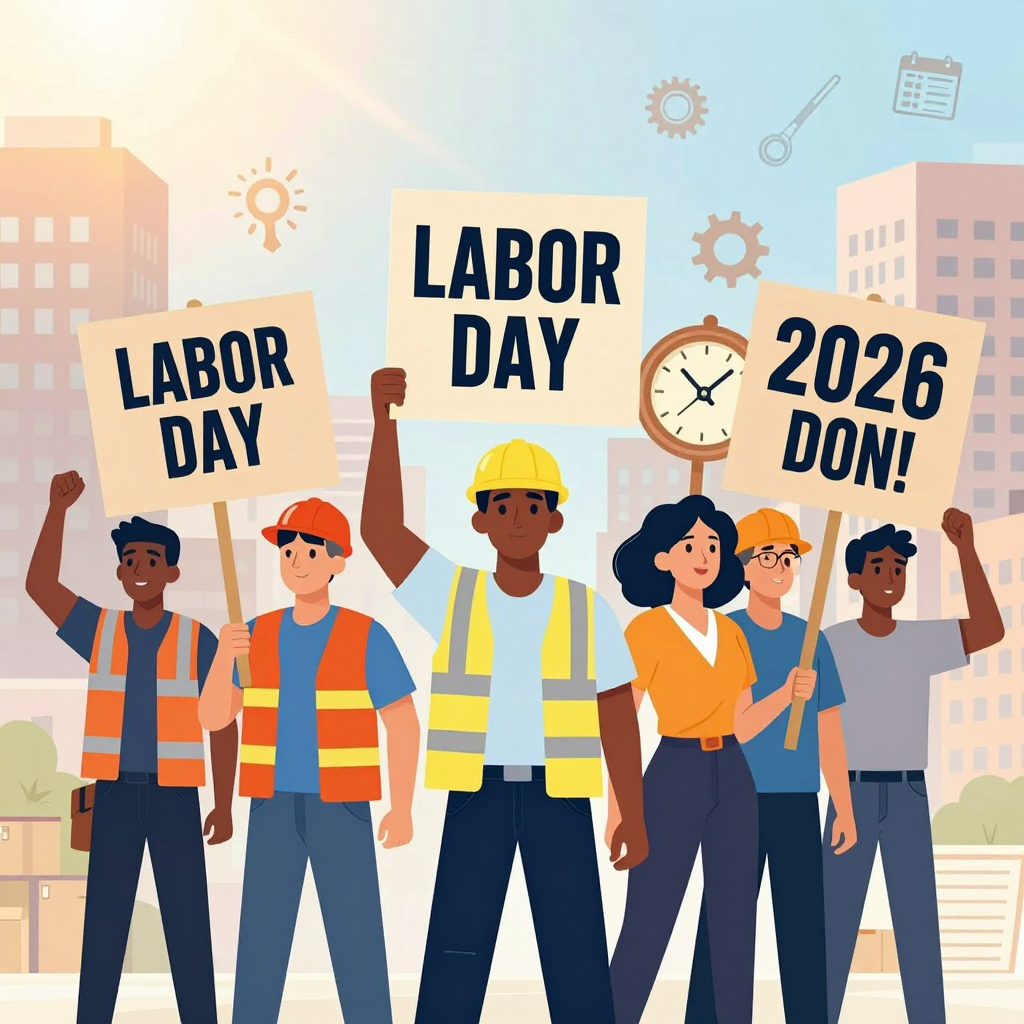
Labor Day: More Than Just a Holiday
Why does the whole world celebrate a day dedicated to workers on May 1st? Discover the profound meaning and symbolism behind this day. Labor Day is far from being just “a day off.” From its very inception to its purpose, it clearly honors the hard work of laborers while reaffirming a powerful message of solidarity and unity for safer and more humane workplaces.
What makes Labor Day special is its historical background. During the rapid expansion of capitalism in the 1800s, countless workers faced excessive working hours and harsh conditions, sparking collective movements for change. Amidst this struggle, on May 1, 1890, the international “Workers of the World, Unite!” rally dubbed May Day was held, establishing Labor Day as a symbolic date for global labor movements. In other words, Labor Day is not a holiday “gifted” to workers but a commemorative day built upon their relentless efforts and sacrifices to protect their rights and dignity.
In Korea as well, although the name and date of Labor Day have shifted over time, its core meaning has endured. From the first commemorative event in 1923 that raised demands for shorter working hours, wage increases, and unemployment prevention, Labor Day remains an annual occasion for society to revisit the question: “To what extent should the standards of working life be guaranteed?” Ultimately, Labor Day is more than just a day off—it is a mechanism of remembrance and a social pledge to reaffirm the value and rights of labor we often take for granted.
The Roots of Labor Day: The Fiery Cries of 19th-Century Workers and the Birth of Labor Day
Would you like to hear about the grueling lives of workers amid the rapid rise of capitalism and how they united to claim their rights? As industrialization accelerated in the mid-1800s, factories and cities expanded, but behind this growth, workers endured long hours, low wages, and dangerous working conditions. The promise that "the harder you work, the better your life" was rarely fulfilled, and it was nearly impossible to change the system through individual effort alone.
So workers chose to raise their voices together. Scattered individuals organized, shared common demands, and took to the streets to assert their "right to live with dignity." At the heart of this movement were shorter working hours and improved labor conditions. In particular, the eight-hour workday was not just about reducing work hours—it symbolized the worker’s minimum dignity to care for their family and life.
This collective movement eventually expanded into international solidarity. On May 1, 1890, under the rallying cry “Workers of the World, Unite,” the first May Day assembly was held, firmly establishing the symbolism of what we now know as Labor Day. Labor Day is not a holiday granted suddenly; it is a day built on the choices and sacrifices of people who joined hands to change harsh realities.
The Special Journey and Transformation of Korean Labor Day: From 1923 to Today
How has Korean Labor Day evolved since 1923? Following the multiple changes in dates and names reveals that society’s perspective on labor and the direction of related institutions have moved hand in hand.
The Starting Point of Korean Labor Day: The First Commemoration in 1923
In Korea, the commemoration of Labor Day took root in 1923 when about 2,000 workers gathered under the leadership of the Joseon Federation of Labor Unions. They raised demands directly linked to their lives, such as shorter working hours, wage increases, and unemployment prevention. This event highlighted that labor was not merely an ‘individual issue’ but a ‘social agenda that must be addressed collectively.’
Post-Liberation Developments: From May 1st Commemoration to Date Changes
Following liberation, May 1st was celebrated as Labor Day in line with global trends. However, in 1958, when the government shifted the Labor Day to March 10th—the founding day of the Federation of Korean Trade Unions—it became clear that the observance of Labor Day could be reshaped by political and social circumstances.
Changes in Name: From ‘Labor Day’ to ‘Workers’ Day’
In 1963, the name was unified as ‘Workers’ Day.’ This change was more than just a simple renaming; it illustrated how language and perspectives surrounding labor are selectively integrated into institutional frameworks. Even when commemorating the same day, the choice of name could shift the emphasis between rights and solidarity versus diligence and duty.
Duality and Unification: Coming Together on May 1st Again
From the 1980s, the existence of two dates—March 10th (Workers’ Day) and May 1st (May Day)—coexisted, creating a dual observance. Then, starting in 1994, the name ‘Workers’ Day’ was retained while the date was unified back to May 1st. As a result, Korea’s Labor Day settled into a compromise form that blends “May 1st as an international commemoration” with “the domestic institutional title.”
Today’s Significance: History Embedded in the System
This history of transformation reveals that Korea’s Labor Day is far more than just a day off; it is a record of how society has recognized the value and rights of labor in different ways. Each time the date changed or the name shifted, it reflected the evolving attitudes toward labor in that era.
Labor Day Changes from 2026: Legal Protection and the Secrets of Wage Calculation
Starting this year, Labor Day is no longer “just a day off” but a paid holiday clearly protected by law. So, how exactly is Labor Day legally safeguarded, and how much does your pay change if you work that day? Here’s a concise summary that uncovers the surprising wage calculation method many tend to overlook.
Legal Protection of Labor Day: Why It’s a ‘Statutory Holiday’ But Different
From 2026, Labor Day has been designated as a statutory holiday, yet it operates differently from regular public holidays. Labor Day is governed by a separate legal framework specific to its establishment, emphasizing the essence of a paid holiday more prominently.
- The key is guaranteed paid leave: Whether you go to work or not, you are entitled to receive pay on Labor Day.
- Applies regardless of workplace size: Even businesses with fewer than five employees must observe paid leave on Labor Day.
No Substitute Holiday for Labor Day: This Holiday Must Be ‘That Day’
Unlike other public holidays, Labor Day does not allow for substitution.
If Labor Day falls on a weekend, you won’t automatically get the following weekday off. This preserves the special meaning of the paid holiday on the specific date of May 1st.
Labor Day Wage Calculation: Earn Up to 2.5 Times If You Work
If you work on Labor Day—especially if you are paid hourly or daily—your wage structure could become significantly more advantageous. The calculation is based on this combination:
- Regular wage (100%) + Holiday work premium (50%) + Paid holiday pay (100%)
→ This adds up to a maximum of 2.5 times your usual pay
For example, if your normal daily wage is 100,000 won, working on Labor Day could earn you up to 250,000 won (under qualifying conditions).
Paid Even When You Don’t Work: “Day Off ≠ Unpaid”
Labor Day isn’t merely a day off—it’s a paid holiday, which means that even if you don’t go to work, you are entitled to receive 100% of your daily wage as paid holiday pay.
This is the most substantial benefit of Labor Day and a right every employee should know to avoid losing out.
Lessons from Labor Day and Future Challenges: For a Better Future of Work
Looking back on the path Labor Day has walked so far, how will our society and the future of workers change? When we consider a better tomorrow for the dignity and rights of labor, this day is not just a commemoration but a social benchmark asking, “How should workers be treated?”
The Greatest Lesson Labor Day Leaves: Rights Are Not Given Automatically
There is a common message in the history of Labor Day. People who refused to accept harsh conditions as “normal” stood together, and through this solidarity, institutional changes like the eight-hour workday became reality. Ultimately, labor rights are sustained not by individual goodwill but by social consensus and legal guarantees.
Today’s Reality Reflected by Labor Day: Bridging the Gap Between Systems and the Workplace
While recent developments like guaranteed paid holidays and wage calculation principles for attendance are clear on paper, barriers such as “an atmosphere where taking leave is impossible,” “lack of information,” and “entrenched practices” still remain in workplaces. For laws and policies to function as real rights, both workers and employers must know and uphold these standards accurately.
Challenges After Labor Day: Three Priorities Beyond ‘Holidays’
- Workplace Safety and Health: Equally as important as wages is the right to return home safely. Safety should not be optional but a minimum standard.
- Fair Compensation and Predictable Working Hours: To prevent overtime from becoming the norm, working hours management and compensation systems must be transparent.
- Rights That Apply to Everyone: As employment forms diversify, rights protection for blind spots like platform and special employment must also be part of the conversation.
The Next Question Labor Day Raises: What Kind of Society Will We Choose?
Labor Day is a day to remember past struggles and simultaneously design the future. To ensure that “growth” does not surpass “dignity,” and that workers’ respect becomes embedded in daily life, the meaning of Labor Day will become clearer with each passing year.
Comments
Post a Comment