 \n
\n
Labor Day, a Day of New Beginnings: Questions Raised by the First Official Holiday in 63 Years
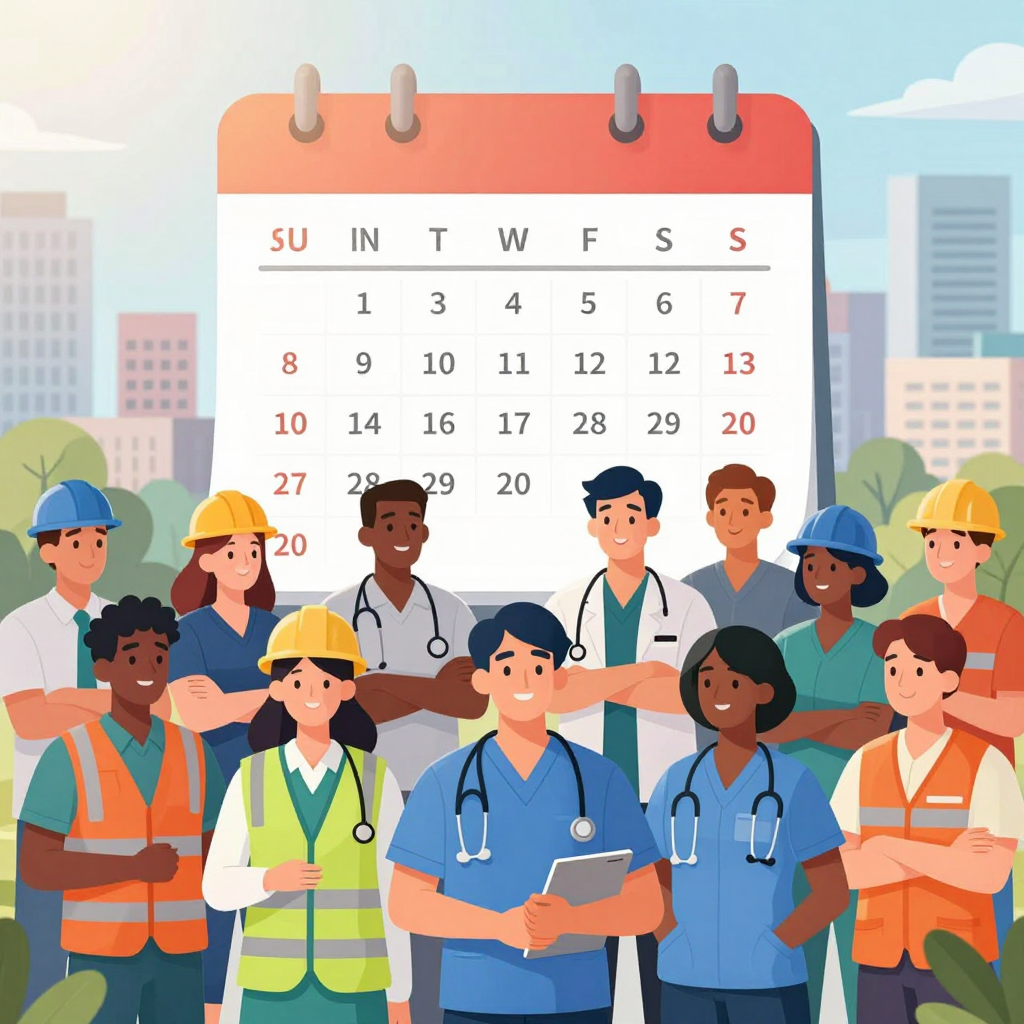
Labor Day has returned as an official public holiday for the first time in 63 years. But why are we only now paying attention to this day? It’s not merely about having “one more day off.” This change, involving both its name and system, signals a societal reset in how we view ‘work’ and ‘workers.’
Whereas the former “Workers’ Day” was based on a specific form of employment, Labor Day expands its meaning to honor the labor of all workers, including those in special employment, platform workers, and freelancers. The fact that occupations like security guards, sanitation workers, bus drivers, and daycare teachers—who support our daily lives—are officially recognized marks a significant shift.
This year’s inaugural national ceremony centered on the theme: “The Value of Labor, Solidarity, and Coexistence.” The government’s statement about respecting “the value of sweat over the value of land” echoes this. Designating a public holiday is not just about providing rest; it’s an opportunity to reaffirm the dignity of labor through societal discourse.
Yet challenges remain. Many young people still see Labor Day as merely “a day off,” with limited opportunities to learn about the history of labor or the meaning of workers’ rights. For Labor Day to truly become a meaningful celebration, it must move beyond being just a date on the holiday calendar. Schools, workplaces, and media need to foster a natural understanding of labor’s value. The reason this day marks a ‘new beginning’ is precisely because that transformation starts now.
The Profound Meaning Behind Changing the Name of Labor Day
Did you know that simply changing the name from ‘Working People's Day’ to ‘Labor Day’ carries with it a deep respect and inclusion for all who work? This renaming is far more than a mere adjustment in wording—it is a bold declaration that broadens society’s definition of who qualifies as a ‘worker.’
In the past, ‘Working People's Day’ tended to focus primarily on those within traditional employment relationships. In contrast, Labor Day expands the scope of ‘labor’ to fit the reality of today’s diverse employment forms, including freelancers, specially employed workers, and platform workers. It sends a powerful message: contribution to society through work is recognized not by the type of contract or affiliation, but by the actual impact of one’s labor.
This shift matters deeply because many workers who support society behind the scenes—such as security guards, sanitation workers, bus drivers, and caregivers—are often overlooked. The moment the name changes to ‘Labor Day,’ it casts these previously marginalized forms of work into the spotlight, affirming them as equally worthy of respect.
Ultimately, this reform goes beyond asking “Who gets a day off?” to challenge us with the question, “Who deserves respect?” Labor Day is not simply about another holiday—it marks a pivotal starting point for society to re-define where it places the value of sweat and effort in the future.
The Message of Labor Day: “The Value of Work, Solidarity, and Coexistence”
“How prepared is our society to prioritize the value of sweat over the value of land?”
As Labor Day becomes an official public holiday, it marks more than just a day of rest—it establishes a benchmark for asking which types of labor we should truly respect. This year’s theme, “The Value of Work, Solidarity, and Coexistence,” converges on a singular message: let’s place the dignity of working people at the very center of society.
This message matters deeply because the nature of labor is rapidly changing. Traditional frameworks centered on regular employment fall short in fully capturing the realities of borderline work, such as that of special employment types, platform workers, and freelancers. The evolution of Labor Day’s designation is essentially a bold declaration to confront this very issue head-on. Rather than narrowing the question to “Who is a worker?” it expands the perspective to ask, “Whose labor keeps society running?”
“Solidarity and coexistence” are not merely emotional slogans but practical solutions. Burnout, relational stress, and job insecurity prompted by the rise of AI aren’t personal troubles—they reflect challenges within the work environment and safety nets. When workers from diverse fields and generations share their experiences around the same table, these issues finally become societal agendas. The question Labor Day poses is clear: Are we ready to design, together, conditions that sustain not only productivity but the very people behind it?
The Reality Faced by Modern Workers and the Need for Dialogue: Questions Raised by Labor Day
Burnout and AI-driven job insecurity—what realities are the workers around you truly living in? On the surface, it might all be summed up with “everyone’s just busy,” but on the ground, signals warning that sustainable labor is shaking are emerging everywhere. That’s why the transformation of Labor Day into a public holiday represents more than just a day of rest; it becomes an opportunity to fundamentally question the conditions of work.
Burnout: Not an Individual’s Problem, but a Structural Warning
Today’s burnout is rarely about a lack of willpower; it mostly stems from excessive performance pressure, precarious employment, and unbroken connectivity. Tasks that follow you home via messaging apps after work, increased emotional labor, and interpersonal stress aren’t resolved by simply “enduring it.” Burnout ultimately destroys productivity, relationships, and health simultaneously, requiring much longer time to recover.
The Spread of AI: Growing Job Anxiety Behind Convenience
AI undoubtedly boosts work efficiency, but it also invites the daily question: “Am I going to be replaced?” Jobs heavy in repetitive tasks, platform-based work, and short-term contract labor face a particularly intense shock from these changes. What truly matters is not the technology itself, but who gets protected and who is left behind during this transition. This is precisely why Labor Day’s scope has expanded to embrace ‘all working people.’
Why a Space for Conversation Is Essential: Change Begins When Anxiety Can Be Voiced
The government’s choice to hold a talk concert with young people on Labor Day’s eve, discussing burnout, relational stress, and AI-induced fears, carries symbolic weight. If we blame problems solely on individual adaptability, solutions remain out of reach. By contrast, change starts the moment we bring reality into words, compare experiences, and recognize the gaps between policy and practice.
- A culture where saying “I’m struggling” does not bring penalty
- Designing transition education and retraining to effectively translate into careers
- Safety net discussions that include platform, freelance, and specially-employed workers
As these conversations accumulate, Labor Day transcends mere celebration and becomes a landmark that enforces the dignity of labor in everyday reality.
The True Meaning of Labor Day and Its Challenges: Beyond a Day Off, Making It a ‘Value’
Labor Day, now a legally recognized public holiday, is not simply an extra day off. With its name changed from ‘Workers’ Day,’ its significance has expanded beyond celebrations centered on regular employees to a day that respects the labor of all workers, including those in special employment, platform workers, and freelancers. Now, the question is one: Will we let this change remain just a date marked in red on the calendar, or will we use it as an opportunity to shift the standards of our society?
Teaching Labor Day in the Language of ‘Rights and Dignity’
For many young people, Labor Day is still perceived as ‘just a day off.’ To close this gap, schools and families must address the history of labor, labor rights, safety, and dignity in everyday language.
- Moving beyond the prejudice that “labor is hard,” explain it as the role that keeps society running
- Connect with real experiences like part-time jobs and internships to teach basic rights such as contracts, wages, breaks, and harassment prevention
- Help people understand labor not as the opposite of success but as a process of building one’s own life
Connecting Labor Day’s Message to ‘Real Issues’
Today’s labor touches on concrete problems like burnout, relationship stress, and anxiety over AI. To prevent Labor Day from remaining a mere symbol, the themes of solidarity and coexistence presented at ceremonies must be felt in individuals’ workplaces.
- Organizations should guarantee rest, recovery, and psychological safety through systems and cultures, not just focus on results
- Society should reduce anxiety by strengthening retraining and transition support amid technological changes
- Individuals need to stop the habit of “enduring is a virtue” and regain the sense of asking for help and solidarity
Changing the Way We ‘Remember’ Labor Day
The best way to celebrate Labor Day is not with grand slogans but by making invisible labor visible and normal. When words and policies that respect everyday work—such as security guards, sanitation workers, care and education labor, and transportation labor—accumulate, Labor Day becomes not just a ‘day off’ but a social pledge.
What’s necessary to prevent Labor Day from being consumed as just a day of rest is not a grand resolution, but a habit of learning and speaking about the value of labor through education and awareness. Whether this year’s Labor Day will take root as “not a casually made public holiday” but “a day to affirm the dignity of all working people”—that answer begins in our daily lives.
Comments
Post a Comment