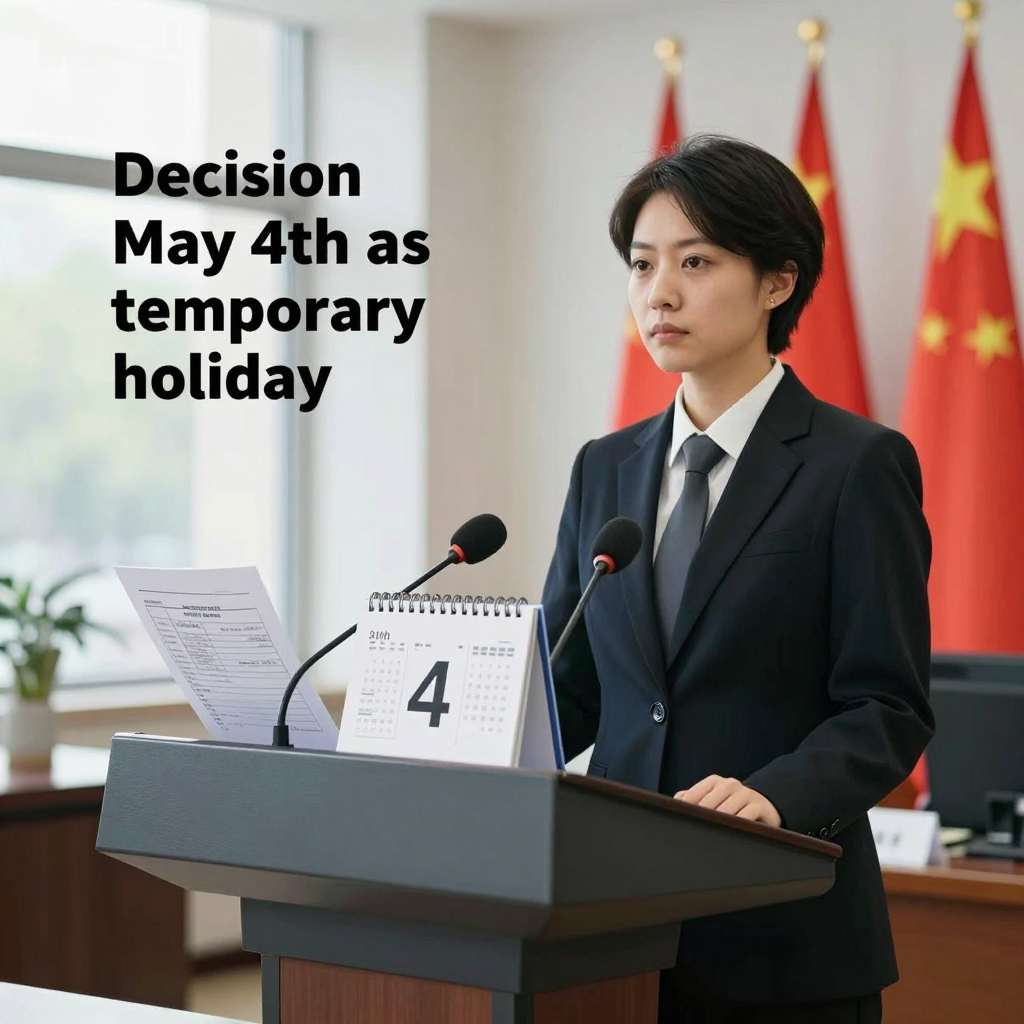
May 4th as a Temporary Holiday: The Beginning of the Temporary Holiday Controversy
Why has May 4th suddenly been brought up as a temporary holiday? It all started with the expectation that the long weekend could be extended, quickly spreading speculation online. When May 1st, the weekend, and Children’s Day (May 5th) align, even just one extra day off can feel like a ‘golden holiday,’ making any slight possibility rapidly magnified.
Adding to this, some citizens proposed designating an extra day off for reasons like energy saving, making the rumor even more plausible. Expressions like “under review somewhere” or “an announcement is imminent” repeated over and over typically solidify expectations before any official confirmation.
However, the current official stance is clear. The Presidential Office stated in a May 1 press release that they “have not considered designating May 4th as a temporary holiday,” and there are no government plans related to this. In other words, the controversy over May 4th as a temporary holiday is less about a confirmed policy and more about anticipation and speculation fueled by the appeal of the date on the calendar.
The Link Between Energy Savings and the Proposal for a Temporary Holiday on May 4th
There have been calls to designate May 4th as a temporary holiday in the name of energy conservation, but what evidence supports this claim? The core logic is simple: “Taking a day off reduces commuting, operation, and travel, which is expected to lower electricity and fuel consumption.”
However, it is not always certain that this logic results in a ‘net reduction’ in energy use. Here’s why:
- Potential decrease in work-related energy use: Reduced lighting, heating/cooling, and IT equipment operation in government offices, workplaces, and some businesses could lower electricity demand. It’s also argued that the effect might be more noticeable on a weekday.
- ‘Shift’ in household and leisure consumption: With more holidays, household heating/cooling and appliance use may increase, or outings and travel demand might rise, boosting transportation fuel consumption. In other words, energy consumption may not decrease but rather shift from work to home and leisure activities.
- Seasonal and weather factors: Early May does not have the extreme heating or cooling demands seen in midsummer or midwinter, so the impact of one holiday in significantly lowering peak electricity demand may be limited.
- Challenges in measuring the effect: Energy savings require analysis beyond “just one day off,” considering multiple variables like industrial operation rates, temperature, and travel volume. Therefore, while “temporary holidays = energy savings” feels intuitive, proving this claim demands sophisticated data.
Another key point to note is that the government has officially stated it is not currently considering designating May 4th as a temporary holiday. This means that even though there has been discussion about energy savings, it is not likely to translate into policy right now.
In the end, “energy savings” can be a persuasive point in proposing temporary holidays, but the actual effect may vary depending on circumstances. To properly evaluate this claim, evidence and comparative data confirming “whether total energy consumption really decreased” must be presented.
The Official Stance of the Presidential Office: What Does It Truly Mean? — Interpretations Surrounding the May 4 Temporary Holiday
As the Presidential Office clearly drew a line by stating that it has “not reviewed” the matter, expectations for a temporary holiday on May 4 are quickly fading. In particular, with the official announcement on May 1 confirming the position that “there has been no consideration of designating a temporary holiday,” various speculations circulating online and in communities have effectively lost their basis.
Nonetheless, reactions have not completely swung in one direction. The phrase “not reviewed” can be understood to mean that no discussions are currently underway, while some interpret it as leaving room for change “if the situation shifts.” However, since this matter was addressed with relatively clear wording by the Presidential Office, political circles seem to be leaning toward fact-checking and distancing themselves rather than hastily framing it as a ‘promotion’ effort.
Public responses are even more divided. In the past, voices hoping or proposing a May 4 temporary holiday—citing reasons like extending the holiday period, boosting domestic consumption, and saving energy—were common. But after the official denial, reactions split between seeing it as “an unfounded wishful illusion” and understanding it as “regrettable but realistic.” Ultimately, the key point at this moment is clear: it is officially confirmed that there is no government-level plan in place, and for the time being, there are no signs that this stance will be overturned.
What Are the Implications of Not Designating May 4 as a Temporary Holiday?
If May 4 is not designated as a temporary holiday, the “extended holiday” effect on the calendar will disappear, leading to subtle yet clear changes across society and the economy. Since the presidential office has stated that it has “not reviewed” the matter, attention now shifts to ‘what impact will this non-designation have?’
Consumption & Tourism: Short Trips May Increase, Long-Distance Travel May Decline
Without the temporary holiday, the shorter holiday period makes it difficult for demand in accommodation, airlines, and long-distance tourism to grow as expected. Instead, consumption focused on day trips or nearby outings is likely to rise, distributing demand across dining, cafes, and urban commercial districts.
In other words, sectors hoping for a “tourism boom” may feel disappointed, while everyday consumption industries are likely to maintain relatively stable patterns.
Corporate Operations & Productivity: Greater Scheduling Stability, but Rest Demand Remains
Additional holidays require businesses to urgently adjust production, logistics, and call center schedules. Conversely, if May 4 is not designated as a temporary holiday, work continuity is preserved, reducing the risk of disruptions in delivery, shipping, and project timelines.
However, from the employee’s perspective, the loss of a long weekend may heighten perceived fatigue, and some employees might seek to take annual leave to secure rest, potentially causing a clustered use of leave.
Education & Childcare: Fewer Sudden Gaps, but Family Plans Shift
When a temporary holiday is designated, school schedules and childcare gaps can create extra burdens for dual-income families. Without such designation, these unexpected variables decrease, but families who had already planned around the holiday may need to revise their schedules.
Ultimately, the non-designation reduces institutional disruptions but forces individuals and households to realign their expectations and plans.
Energy & Transportation: Limited ‘Peak Spread’ Effect
Some argue that a temporary holiday reduces commuting demand, thereby dispersing traffic congestion and energy use during peak times. Without the holiday, such dispersal effects are limited, and weekday demand patterns are likely to persist.
In summary, if May 4 is not designated as a temporary holiday, the “major holiday boom” will weaken, but social systems can operate more steadily. Still, given the anticipation that existed, noticeable changes in daily life—like a sense of disappointment and increased annual leave usage—may linger.
The End of the Controversy and the Challenges Ahead: Questions Left by the Temporary Holiday on May 4th
The conclusion of this issue is relatively clear. The presidential office officially stated on May 1st that “there has been no consideration of designating May 4th as a temporary holiday,” and currently, there are no plans for such designation at the government level. While the debate—filled with expectations and speculation—has come to a close for now, the challenges facing our society have become even more evident through this process.
First, there is a need to examine the structure where discussions about temporary holidays spread rapidly based solely on “expectations.” As unconfirmed information spreads quickly, individuals change their schedules and spending plans, while companies and schools experience unnecessary confusion. Moving forward, the government should provide more transparent guidance on whether and how such matters are being reviewed, and media outlets and platforms must strengthen standards to avoid circulating unverified information as fact.
Second, there is a lack of social consensus regarding the purpose and impact of temporary holidays. While some propose them to save energy or expand rest rights, realistic costs such as burdens on self-employed and small businesses, care gaps, and public service operation challenges also exist. Beyond “taking one more day off,” we need a system that evaluates who is affected and how, based on data.
Third, future policy directions depend on predictability. If temporary holidays are necessary, rather than reacting to public opinion on specific dates, criteria for designation (economic, disaster-related, social needs, etc.), decision-making timelines, and methods for gathering stakeholder opinions must be institutionalized to reduce confusion. This way, even if another debate arises, it can proceed based on “procedural judgment” rather than speculation, as happened this time.
In summary, while the designation of May 4th as a temporary holiday has been concluded against, more important is how we establish the credibility of information and standards for policy regarding temporary holidays. Although this debate has ended, the real challenge for better decisions starts now.
Comments
Post a Comment