Robert Kiyosaki's Warning of the 2026 Great Depression: Investment Strategies to Turn Crisis into Opportunity
 \n
\n
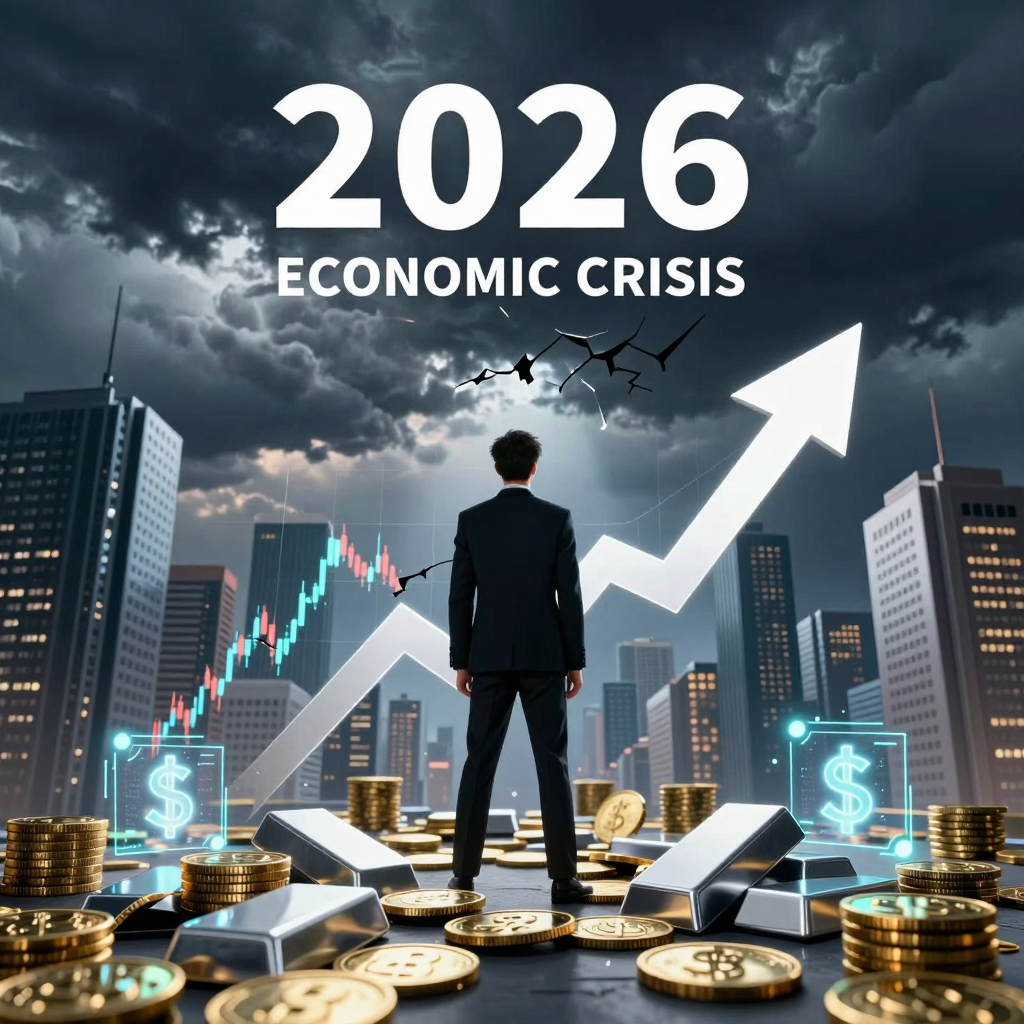
Robert Kiyosaki's Urgent Warning: Market Collapse Scenario for 2026–2027
A massive market collapse that will shake our economy is approaching in 2026–2027. Will this crisis be just a simple crash, or will it become the worst Great Depression in history?
Robert Kiyosaki, author of Rich Dad Poor Dad and a legendary investor, recently posed this very question head-on on social media, warning that “a major market collapse could occur in 2026–2027, and this crash might turn into another Great Depression.” Although his language is bold, the core message is clear: “The upcoming shock could be bigger than you expect, and if you’re unprepared, it could be fatal.”
What he emphasizes most is not ‘fear’ but ‘choice.’ Kiyosaki challenges investors with a blunt question: “Will you collapse completely, or will you seize the opportunity by some stroke of luck?” This aligns with his investment philosophy—that during crisis phases, when asset prices plunge steeply, high-quality assets flood the market like a sale, and only those prepared can buy low and come out stronger.
Moreover, Kiyosaki cites past major downturns (such as 1987, 2000, and 2008) to argue that crashes are not an end but a period of wealth redistribution. Ultimately, this warning should not be seen as fear-mongering but as a realistic signal to review your strategies with the volatility ahead in mind.
The Reality and Prophecy of a Great Depression-Level Crisis According to Robert Kiyosaki
Robert Kiyosaki warned on X (formerly Twitter) that “a major market crash could occur between 2026 and 2027, and this plunge might become another Great Depression.” He posed a choice to investors: “Will you be completely ruined, or will you seize the opportunity by luck?” Though it sounds provocative, this question stands out not simply as fear-mongering, but as a warning that demands action after the crisis hits.
What Robert Kiyosaki Means by ‘Great Depression-Level’
The core of Kiyosaki’s message isn’t just that “a downturn may come,” but the severity and ripple effects of that downturn. He envisions that if a recession strikes, the entire market will shake, spreading its impact to stocks, real estate, jobs, and credit markets. In other words, he anticipates stress across the entire financial system, not just a sectoral correction, which explains his use of the term “Great Depression-level.”
Why Robert Kiyosaki’s Warning Gains More Attention: The Narrative of Repeated ‘Crash Experiences’
What Kiyosaki especially emphasizes is the concept that “a crash is not the end but the beginning.” He claims that in previous market collapses (e.g., 1987, 2000, 2008), he actually became wealthier, arguing that he can apply the same strategy again in the upcoming crisis.
What makes this narrative compelling is one thing: rather than positioning himself as a prophet who predicted crashes, he consistently underscores action principles that work when a crash happens (focus on cash flow, buying assets, and viewing price drops as ‘sales’).
The Real Intent Behind Robert Kiyosaki’s Question: Not Fear, But Preparation
The choice of “Will you be ruined or seize the opportunity?” is ultimately not a test of investment style but a question of readiness. Kiyosaki’s message is clear:
- When a crisis hits, even strong assets will fall
- That moment gives individuals a brief window of price negotiation power
- Those who are prepared can turn the downturn from a ‘loss’ into an ‘entry point’
Therefore, more important than simply believing his warning is using it as a catalyst to review whether your portfolio can withstand turbulent times and to establish principles to act upon when the downturn arrives.
How to Discover Shining Investment Opportunities Amid Crises with Robert Kiyosaki
What is the secret to growing wealth by buying good assets that are actually on “sale” amid chaotic recessions and market crashes? Robert Kiyosaki interprets crises not as “disasters to be avoided” but as “times to scoop up quality assets whose prices have plummeted.” He repeatedly shares that during major market collapses like those in 1987, 2000, and 2008, he actually became wealthier. The core idea is simple: the greater the fear, the more good assets are sold at discounted prices—and only those who are prepared can take advantage of this ‘sale.’
Robert Kiyosaki’s Criteria for Identifying ‘Sale’ Assets
In a crash, everything may appear cheap, but true opportunities are selective. From Kiyosaki’s perspective, the standards for choosing “assets on sale” can be summarized as follows:
- Assets defined by value over price: Short-term plunges affect price, but assets with sustained demand and utility over the long term have great potential for recovery.
- Assets supported by cash flow or scarcity: The strength that helps withstand crises is either ‘cash flow’ or irreplaceable ‘scarcity.’
- Assets oversold due to widespread panic: When everyone says “It’s over,” that paradoxically becomes the buying environment (though reckless leverage is excluded).
The ‘Action Principles’ Behind Robert Kiyosaki Getting Richer During Crises
Kiyosaki emphasizes consistent action rather than trying to predict markets. His claim to have gotten richer during every crisis follows a common pattern:
Assume a crash as a ‘certainty’ and prepare in advance
Instead of waiting to react once a crash happens, prepare your funds and mindset under the premise that it will inevitably come someday.Wait for the moment when assets flood the market during downturns
Crises increase fire sales, forced liquidations, and panic selling—that’s the ‘sale period’ he waits for.Don’t delay decisions based on fear
Rather than trying to time the bottom perfectly, he approaches opportunities step-by-step when assets meet his criteria to avoid missing out.
Robert Kiyosaki’s Crisis Response Checklist
Turning crashes into ‘opportunities’ hinges more on preparation than luck. Checking the following items reduces the chance of being shaken when a crisis arrives:
- Secure cash (or cash-equivalents) reserves: Opportunities only exist if you have cash ready.
- Set ‘target prices’ for assets of interest in advance: Since judgment can blur during crashes, having predetermined criteria is advantageous.
- Clarify your risk tolerance range: The greatest danger during crises is making excessive bets based on the belief “This time is different.”
In one sentence, Kiyosaki’s message is clear: Crises come to everyone equally, but only those who are prepared get access to the ‘sale period.’
Robert Kiyosaki’s Safe Asset Strategy with Gold, Silver, and Bitcoin: Why Bet on ‘Physical and Alternative Assets’ Instead of Cash
Why do investment legends like Robert Kiyosaki and Warren Buffett mention physical and alternative assets far more often than simply holding onto cash? At first glance, Buffett’s staggering $370 billion in cash-like assets might seem like a ‘preference for cash,’ but the real point is not the cash itself — it’s the “option” it provides during a market crash. In other words, in times of crisis, cash is not the destination; it’s the starting point.
The Logic Behind Kiyosaki’s Emphasis on Gold, Silver, and Bitcoin over Cash
Kiyosaki’s message is straightforward: the more the market shakes, the greater the uncertainty around currency values and the financial system, making ‘paper assets (promises)’ less attractive than ‘physical and alternative assets (scarcity)’.
- Gold: The quintessential asset that trust shifts to in times of crisis. The larger the system risk, the more gold is seen as the “ultimate collateral.”
- Silver: Like gold, it’s a physical asset but more volatile and influenced by industrial demand. Kiyosaki often highlights silver because it has the potential to act like leverage during the ‘recovery phase’ after a crisis.
- Bitcoin: Highly symbolic as an alternative asset outside national currency systems. Kiyosaki views it as ‘digital gold,’ emphasizing its role as insurance when faith in fiat currencies falters.
The Real Meaning Behind “Holding Cash”: Buffett’s Cash Is Not Defense, It’s Preparation for Offense
Buffett’s enormous cash hoard shouldn’t be viewed simply as a claim that “cash is safe.” Instead, it’s more naturally interpreted as standby funds to scoop up quality assets cheaply during a crash. When prices plummet, markets offer a ‘fear discount,’ and in those moments, cash becomes the most powerful weapon.
Kiyosaki’s gold, silver, and bitcoin strategy aligns with this logic—just executed differently.
- Buffett: Wait with cash in hand to buy companies and cash-flowing assets at bargain prices
- Kiyosaki: In crisis, increase gold, silver, and bitcoin positions to hedge against declining currency trust, then seize opportunities when the “sale” comes
The Bottom Line: It’s Not ‘Cash vs. Physical Assets,’ But ‘Options vs. Vulnerability’
The ultimate question isn’t whether you hold cash—it’s whether you are positioned to buy when collapse hits. Robert Kiyosaki emphasizes gold, silver, and bitcoin not only to survive crises but also to build a foundation to reaccumulate wealth during the inevitable post-crisis reshuffling.
With Robert Kiyosaki: Overcoming the Upcoming Crisis and Building Your Own Financial Strategy
Economic crises are inevitable, but how will your financial situation change? Robert Kiyosaki’s message is simple. Crashes come to everyone, but for those prepared, they become a ‘sale period.’ Ultimately, the winning move lies not in prediction but in pre-designed action.
The Core Principle of Turning Crisis into Opportunity According to Robert Kiyosaki
- Good assets hit the market when prices fall: The greater the fear, the more urgent sales appear, shifting bargaining power to cash holders.
- Think centered on cash flow and value: Instead of habitually buying in a rising market, you must be able to explain ‘why you are buying this asset’ during a downturn.
- ‘Fail or seize opportunity’ is not a choice but the result of a system: The more you operate by rules rather than emotions, the less you waver in a crisis.
3-Step Action Plan to Turn Robert Kiyosaki’s Message into Reality
1) Build your defensive line first (secure survival funds)
- Separate 3 to 12 months of liquidity based on living expenses.
- If you have debt, first review interest rates and repayment terms to prioritize refinancing or repayment.
2) Create buying rules that enable ‘crash purchases’
- Simply saying “I will buy when prices drop” is weak. Fix rules by price range, amount, and frequency.
- For example: If Asset A falls -20%/-30%/-40% from its peak, make split purchases at predetermined proportions.
- The key is not prediction, but automated decision-making executable even during sharp declines.
3) Craft a crisis-ready portfolio to ‘wait for opportunity’
- Alternative/physical assets like gold, silver, and Bitcoin, often mentioned by Kiyosaki, can be considered as hedges for times “when market confidence shakes.”
- At the same time, design some “ammunition (cash-like assets)” to deploy into assets that often present opportunities during recovery phases (blue-chip stocks, cash flow assets, etc.).
- Rather than going to extremes on one side, structure it so that defense (endurance) and offense (buying power) work in tandem.
Turning Robert Kiyosaki’s Warnings into Your Own Checklist
- Do I have a minimum 6 months’ cash flow cushion for crisis scenarios?
- Are my buy/sell rules for downturns clearly written down?
- When “good assets come on sale,” do I actually have enough liquidity to buy?
Crises are hard to avoid. But for those prepared, as Robert Kiyosaki states, they can be a time to secure stronger assets at better prices. What you must do now is not to predict the outlook, but to document your own financial strategy and convert it into actionable steps that won’t falter when a crisis hits.
Comments
Post a Comment