 \n
\n
A Shocking National Address by President Trump through His Speech
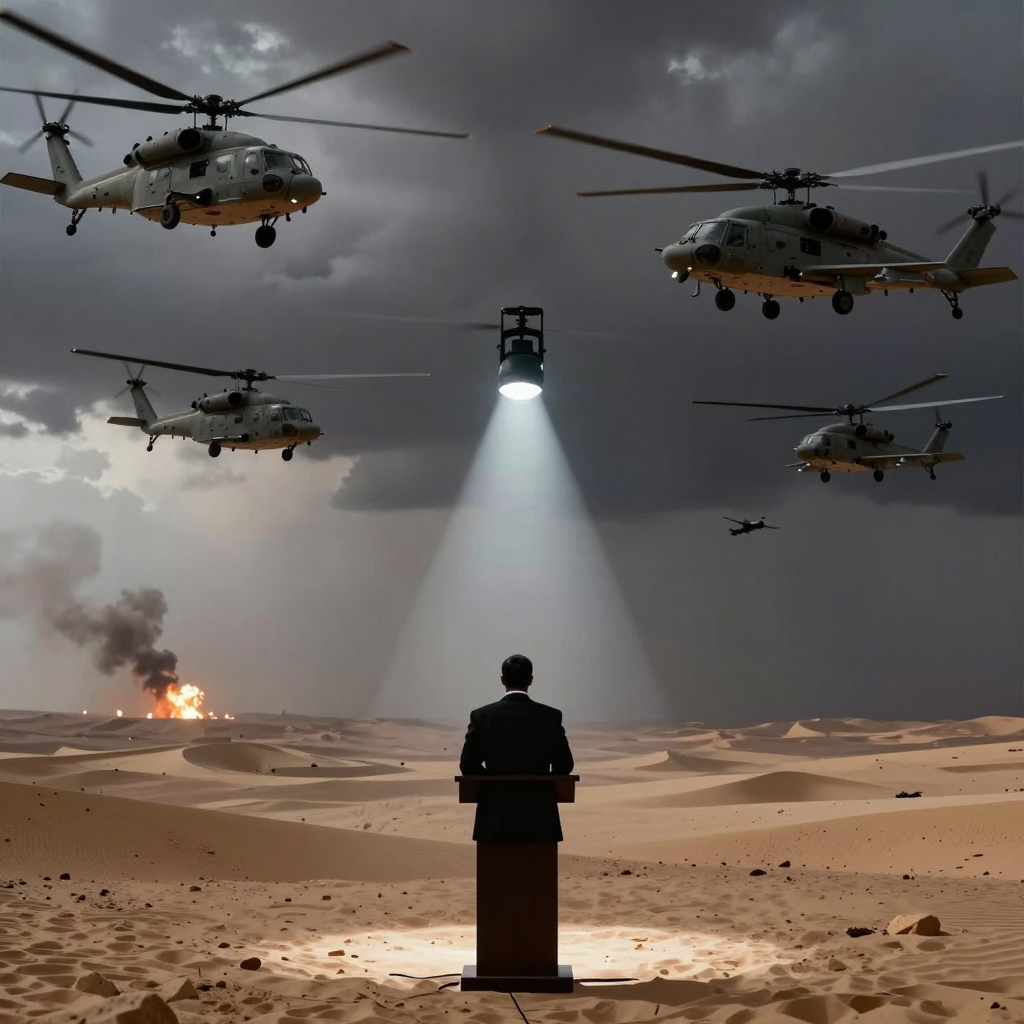
On the 32nd day of the Iran war, many expected a peace declaration or a ceasefire roadmap. However, in a 19-minute nationwide address from the White House, President Trump delivered the opposite message: instead of ending the war, he announced additional attacks on Iran over the next 2-3 weeks. Why did this ‘unexpected announcement’ occur? The key lies in the speech’s subtleties: redefining the war’s justification, shifting responsibility, and controlling the negotiation framework.
Trump’s First Point: Justifying the War Again Through the ‘Nuclear’ Issue
President Trump centered this military action on blocking Iran’s nuclear weapons. He challenged the view that “Iran ultimately cannot obtain nuclear weapons,” arguing that it had to be removed through action. He claimed to have achieved four goals—destroying Iranian missiles, crushing their navy, banning proxy support, and preventing nuclear weapon acquisition—but provided limited concrete evidence.
The hidden meaning here is clear. Rather than signaling an end, the focus was on re-establishing the war’s legitimacy. While the declaration of “having achieved objectives” might sound like a step toward ending the war, it simultaneously serves as a justification for further attacks to complete the remaining tasks.
Trump’s Second Point: Shifting the Hormuz Strait Issue as an ‘Alliance Responsibility’
One of the most striking messages was Trump’s stance on the Hormuz Strait. He stated, “The United States does not import oil from Hormuz. We don’t need to, and won’t in the future,” effectively emphasizing that the responsibility for the strait’s safety belongs to other countries.
This is more than a simple energy comment. It signals that the US will not bear the war’s costs and burdens alone in the future and lays the groundwork for demanding ‘shared protection costs’ from the international community. In other words, while maintaining military tensions, the message politically shifts the weight of responsibility outward.
Trump’s Third Point: Why He Announced a ‘Timeline’ Instead of a ‘Ceasefire’
Contrary to expectations, Trump did not announce a ceasefire but forecasted additional attacks over the next 2-3 weeks. With expressions such as “military objectives will soon be met,” he repeatedly used tough rhetoric promising massive damage to Iran. Consequently, this announcement is viewed not as progress toward peace talks but as leaving behind only a bombing timetable.
Here lies a crucial interpretation. Ending a war requires agreement, verification, and mutual concessions, while announcing “additional attacks” is much simpler. Trump’s speech can thus be seen as an attempt to maximize military pressure and seize the negotiation framework by reducing the complexity of diplomacy. It hinted, “We can end it if we want to,” while in reality pushing the opponent into a more disadvantageous position.
The ‘Conditional Ceasefire’ Message in Trump’s Speech: The Door Is Open, But We Hold the Key
Trump mentioned that Iran requested a ceasefire and said he would consider it when the Hormuz Strait is open, free, and secure. Yet he also said, “They don’t have to make a deal with me,” leaving the nuance that the war could end independent of negotiations.
Putting these two statements together, the conclusion is clear. The ceasefire is not an ‘outcome of negotiations’ but a choice granted by the US. In other words, the door is left open, but the conditions and timing for entry are controlled by America.
Media Reaction to Trump’s Speech: No ‘New Answers,’ Only Continued Pressure
Major foreign media criticized the national address for failing to provide new information on the war’s end or solutions. It was viewed as a repetition of messages over the past month with no clear optimistic signs of diplomatic progress.
In summary, Trump’s speech was not about ‘ending the war’ but a reconfiguration of justification to sustain it; not about ‘negotiations’ but a restructuring of pressure tactics. At the heart of this design lies a powerful yet uncertain timetable: the ‘next 2-3 weeks.’
Nuclear Weapons, the Strait of Hormuz, and the Trilogy of Negotiations Through Trump’s Speech
Do you know the three key keywords at the heart of the Iran war? Trump’s speech fixes the frame of the war into a ‘trilogy’ of nuclear weapons, the Strait of Hormuz, and negotiations, more clearly than the ceasefire message. On the surface, it looks like a firm declaration of victory, but inside lies a calculation to shift responsibility to allies and maximize bargaining leverage.
‘Blocking Nuclear Weapons’ Highlighted in Trump’s Speech and the Blank Spaces in the Four War Objectives
President Trump put preventing Iran from acquiring nuclear weapons at the forefront as the greatest justification for this war. He also claimed to have achieved all four war objectives: missile destruction, naval annihilation, banning proxy support, and preventing nuclear acquisition.
The problem starts here. Although the conclusion of “achieving” is strong, no concrete evidence was presented on how these goals were achieved. This point transforms the speech from a ‘performance report’ into a narrative device to justify further attacks. Declaring the objectives already met allows subsequent military actions to be framed as ‘confirmed kills’ or ‘final stages.’
The Strait of Hormuz Message in Trump’s Speech: “We Don’t Need It, You Guard It”
The most blatant shifting of responsibility in the speech comes with the Strait of Hormuz. President Trump drew a line by asserting that the U.S. does not need the oil flowing through this strait, effectively sending a message that other countries, not America, should protect this import route.
This is not a simple boast of energy independence but a political calculation over the cost and risk of war. In other words, the strait is defined as an ‘international public good’, but the responsibility for its management is shifted onto allies and other nations. Ultimately, this statement attempts to redefine Middle Eastern security from being an ‘absolute U.S. task’ to a ‘global shared responsibility.’
The Negotiation Frame in Trump’s Speech: ‘2-3 Week Airstrike Schedule’ Takes Precedence Over Ceasefire
Contrary to expectations of an immediate ceasefire or peace declaration, President Trump signaled an additional 2-3 weeks of airstrikes ahead. The tone was harsh. Although it may seem to leave the door open for negotiations, the real approach says, “Negotiations are possible, but conditions must be set on the battlefield.”
An intriguing moment is the mention that Iran requested a ceasefire, which received a conditional consideration. President Trump said he would consider it only when the Strait of Hormuz is “open, free, and secure,” fixing the core negotiation terms on military and maritime control issues. At the same time, his statement that “they don’t have to make a deal with me” signals a refusal to grant the other side a ‘victory’ in negotiations and serves as a show of American dominance over the war’s endgame.
In the end, this trilogy can be summed up in one sentence: nuclear weapons are the justification, the Strait of Hormuz is a burden shifted, and negotiations are the product of pressure—and at the core lies the war roadmap crafted through Trump’s speech.
Trump Speech: Iran’s Ceasefire Request and Trump’s Conditional Acceptance
The point that Iran’s new president has requested a ceasefire from the United States is the most eye-catching moment in this war phase. However, the message delivered by Trump’s speech was not a mere “consideration.” While President Trump seemed to leave the door open for ceasefire talks, he essentially laid out clear preconditions first.
The key is the Strait of Hormuz. President Trump set the condition that he would “consider a ceasefire only when the Strait of Hormuz is open, free, and secure.” In other words, a ceasefire does not simply come about by the ‘other side’s request’; rather, the safety of this global oil shipping route must first be confirmed.
So, why specifically the Strait of Hormuz?
- Bottleneck of Global Energy Flow: The Strait of Hormuz is a vital passage for Middle Eastern oil transport, and instability there immediately shakes international oil prices and the entire supply chain. By making this point the condition for ceasefire, President Trump’s intent appears to be redefining the war not as a US-Iran conflict, but as an issue of international order and maritime security.
- Reallocation of Responsibility: Trump’s speech also included the claim that “the US does not import oil from the Strait of Hormuz.” This frames the defense of the Strait not as a sole US burden, but as the responsibility of other nations dependent on that oil.
- Negotiation Leverage: Setting the ceasefire condition on the ‘security of the strait’ rather than the ‘battlefield situation’ allows the US to hold the leadership in negotiations regardless of whether military operations continue.
What’s intriguing is that President Trump expressed an attitude implying “they don’t need to come to an agreement with me,” suggesting he does not view negotiations themselves as a mandatory prerequisite. Outwardly maintaining a tough stance, yet practically using the single condition of Hormuz to control the exit of ceasefire talks—this is the core of Trump’s ‘conditional acceptance’ revealed in this speech.
Trump’s Speech: Why Was the Media So Lukewarm?
The New York Times and CNN raise one key question regarding Trump’s speech: “So, what’s changed?” Contrary to the anticipation of a possible ceasefire, the speech delivered more of a ‘repetition’ than a ‘solution,’ and that very void sparked the media’s cool response.
Why Trump’s Speech Was Labeled “Lacking New Content”
The New York Times viewed the speech largely as a recycling of claims that had been circulating on social media for the past month. While the core messages—nuclear deterrence, military objectives, and warnings of further strikes—were strong, there was a glaring shortage of concrete evidence and new information backing those claims.
Ultimately, the much-desired ‘endgame to the war’ that audiences hoped for was nowhere to be found; what remained were only statements of resolve.
CNN’s Main Critique: No Answer to “When Will It End?”
CNN’s perspective is more pragmatic. At the 32-day mark of the war, a national address typically serves to outline an exit strategy (a roadmap to peace) or clarify short-term goals (timelines, conditions, means).
Yet Trump’s speech repeated phrases like “goals being achieved soon” while simultaneously signaling another 2 to 3 weeks of additional attacks. From the media’s standpoint, this was not a declaration of war’s end but rather an announcement extending the timeline of conflict further.
The Diplomatic Reality Revealed Through Repeated Threats: “Condition Setting,” Not “Negotiation”
An intriguing aspect of the speech lies in mentioning Iran’s request for a ceasefire, yet effectively emphasizing the conditions of ‘openness, freedom, and security’ in the Strait of Hormuz. Instead of detailing a negotiation’s finer points, the approach resembled setting conditions and maintaining pressure.
Moreover, the tone suggesting “they don’t need to come to agreement with me” reads less like a sign of diplomatic progress and more like an emphasis on unilateral resolution over reciprocal agreement. This explains why the media found no ‘optimistic diplomatic clues’ in the speech.
Conclusion: A Speech That Left “Frames,” Not “Facts”
In summary, the media’s coolness stems from the judgment that Trump’s speech failed to provide new information that would change the war’s direction, while signaling further attacks and shifting blame (the Hormuz issue) and deepening uncertainty over when—and how—this war might end.
For the audience, the lingering question remains the same: despite the “strong words,” the realistic exit strategy those words should point to remains invisible.
The Unfinished War, The Upcoming Schedule: The Meaning Behind Trump’s ‘2–3 Weeks’ in His Speech
What does the ongoing military operation and the planned airstrikes over the next 2–3 weeks signify? This Trump speech is less a declaration of the war’s end and more a public setting of the war’s timetable. The key message was not “ready to end” but “ready to strike harder.”
Why It Should Be Read as ‘Operation Continuation’ Not ‘Peace Declaration’
In his speech, President Trump claimed the war’s objectives had been achieved, yet the conclusion was not a ceasefire or troop withdrawal but rather a forecast of additional attacks (over 2–3 weeks). This sends two clear signals:
- The focus of the war’s goals weighs more on disabling capability than on reaching an agreement.
- Despite diplomatic avenues being portrayed as “under consideration” (with mention of pause requests), the real option remains continued military pressure.
In other words, whether these strikes are “bombardments aimed at forcing negotiations” or “justifications for more bombing” becomes unclear, increasing uncertainty felt by markets and allies alike.
Three Variables the ‘2–3 Weeks of Airstrikes’ Points To
This timeline matters because the war is not seen as an instant event ending overnight, but rather as a predicted phased escalation.
The threshold for escalation draws near
Additional strikes could provoke Iranian retaliations, potentially increasing asymmetric responses such as proxy attacks, sea disruptions, and cyber warfare.The Strait of Hormuz becomes both a ‘condition’ and a ‘pressure card’
President Trump emphasized securing the Strait of Hormuz yet subtly shifted responsibility toward “other countries.” This implies that the strait’s security isn’t merely a military matter but can evolve into a political agenda involving allied burden-sharing and a reshaping of international maritime security.The ‘nuclear’ rationale remains, but verification is pending
Although nuclear weapon prevention is reiterated as a war aim, no concrete evidence of achievement was presented. The longer this drags on, the more the world will question “what exactly has been destroyed and how can it be verified?” Sustaining this rationale is becoming a pivotal factor in the war’s longevity.
Why the World Must Pay Attention: The Start of a ‘Management Phase’, Not the War’s End
As many in the media noted, this speech reiterated previous messages rather than offering new solutions, leaving the question of “when and how will it end” unanswered. Filling that void is the military timetable of ‘the next 2–3 weeks.’
Ultimately, Trump’s speech delivers a simple but profound message: the war isn’t wrapping up; it’s transitioning into its next phase—one that threatens to shake up the Strait of Hormuz, energy flows, and the roles allies must play. The coming 2–3 weeks will not only shape battle outcomes but also signal where the burden of global order will shift.
Comments
Post a Comment