Tesla Surpasses BMW with a 25% Market Share in Korea's Imported Car Sector: The Secret Behind Its Success
 \n
\n
Tesla Emerges as the Unrivaled Leader in South Korea’s Imported Car Market
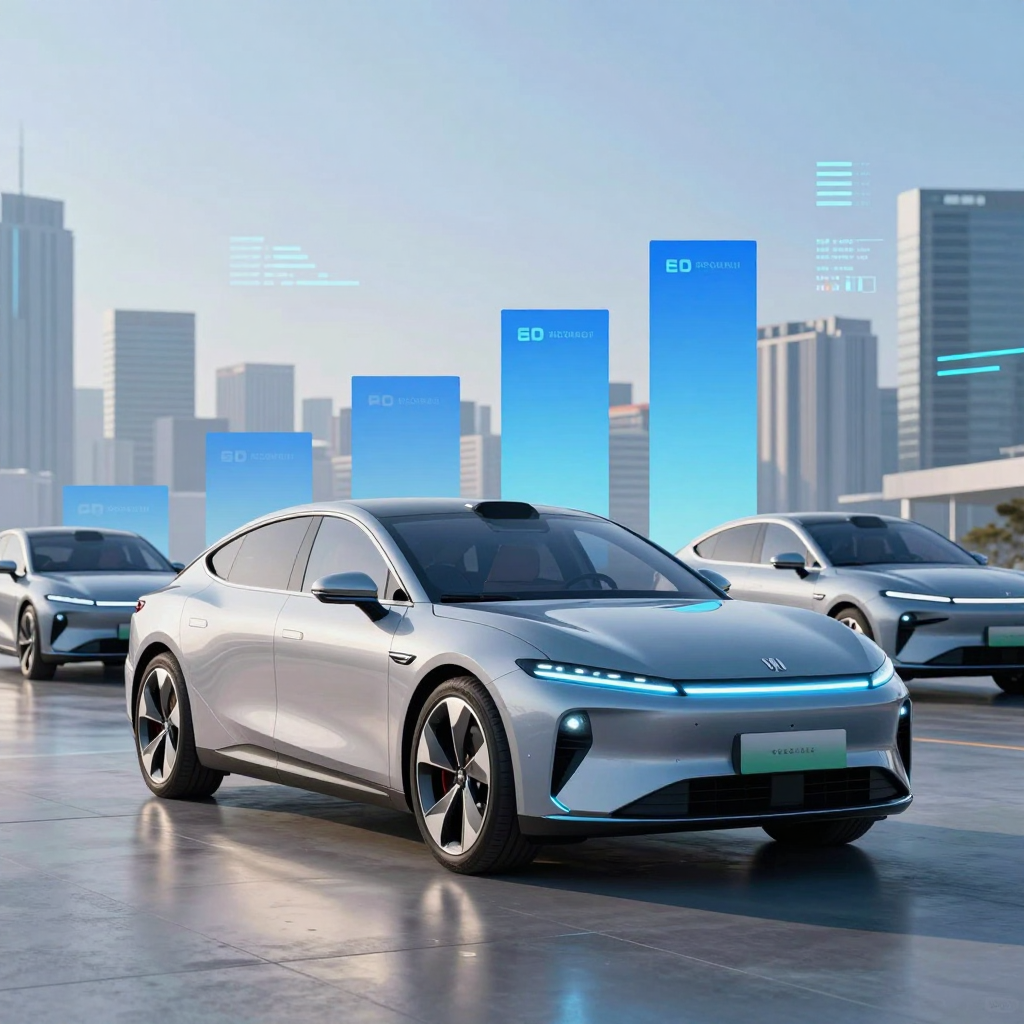
In the first quarter of 2026, Tesla soared to the top spot in South Korea’s imported car market with a commanding 25.5% market share. At first glance, one might simply conclude that "electric cars sold well," but the true story lies in how Tesla has fundamentally shaken the very structure of the market. Tesla’s meteoric rise boils down to two key factors.
Tesla Targeted the ‘Price Gap’ with Precision
By aggressively promoting electric cars priced between 40 to 60 million KRW, Tesla quickly captured the entry-level demand within the import market. This price range simultaneously breaks down the psychological barrier of “imported cars being expensive” and aligns perfectly with the accelerating adoption phase of electric vehicles. As a result, the pool of potential buyers widened, naturally driving up sales volume.
Tesla’s Growing Market Share Puts Pressure on Mid-Range Brands
Looking at first-quarter sales trends, the top three brands—Tesla, BMW, and Mercedes-Benz—account for roughly 68% of the market, highlighting a clear centralization. Tesla’s dominance even extends to the ‘lower end’ of the market, squeezing the space available to mid-priced brands. From the consumer’s perspective, the choice becomes easier: “For about the same price, why not pick a stronger brand with the latest technology?” This repeated consumer behavior strengthens Tesla’s advantage, creating a reinforcing loop of dominance.
Tesla Accelerates Purchase Decisions with its ‘Technology Image’
Price alone can’t secure market dominance. Tesla has elevated the buying experience by turning technological innovations like Full Self-Driving (FSD) into core brand values, speeding up purchase decisions. As the perception shifts from simply ‘buying a car’ to ‘investing in a technology platform,’ Tesla’s competitive edge expands far beyond simple specs.
Ultimately, the 25.5% market share is no coincidence—it’s the outcome of price accessibility + concentrated market dominance + high-tech expectations all converging. This powerful combination signals that Tesla in South Korea’s imported car market is set to operate not as a ‘challenger’ but as the unmistakable ‘benchmark’ for the foreseeable future.
Tesla’s Strategy to Dominate the Lower Market with Price Competitiveness
How did Tesla capture the middle class with electric vehicles priced between 40 to 60 million KRW, effectively shaking the foundations of existing brands? The key lies in how they reset the market’s price expectations, which had long seen these cars as "premium imported vehicles" only. By supplying a large volume of electric cars at accessible price points—even among imported brands—Tesla quickly shifted consumer choice criteria firmly in their favor.
Tesla’s Redefinition of the ‘Entry-Level EV’ Standard
In the traditional imported car market, the 40 to 60 million KRW range was a tricky zone. German brands with strong prestige could easily push prices higher with additional options, while mid-tier brands lacked presence, often leading consumers to ask, “Why bother with imported cars at all?” Tesla exploited this gap by offering a clear alternative precisely in the price bracket where demand for electric vehicle transition was strongest, capturing customers from the lower end upward.
Why Mid-Tier Brands Are Losing Ground
Tesla’s price competitiveness created effects beyond mere discounts or promotions. From a consumer’s perspective, it sparked the confidence that “at this price, switching to an EV is viable,” ultimately shrinking the market space for mid-tier brands like Honda, Peugeot, and Ford. When the benchmark for comparison shifts from internal combustion engine imports to Tesla’s EVs, even segments with weak brand loyalty began to falter.
The ‘Price + Technology’ Combo Simplified Consumer Choices
Price alone wouldn’t have had this disruptive power. Tesla combined their electric vehicle’s technological appeal—such as autonomous driving features—with affordability, simplifying buying decisions. As the message “latest EV experience at a reasonable price” grew stronger, consumers gravitated toward the most familiar answer: Tesla, bypassing complicated trim or option comparisons. This cycle is rapidly reshaping the market from the bottom up.
Tesla Full Self-Driving (FSD) Subscription Service: Changing the Paradigm of Future Driving
What does it feel like to ride in a self-driving car cruising through the streets of Seoul? What once seemed like a scene from a movie is now becoming an everyday reality. Tesla’s Full Self-Driving (FSD) is expanding in South Korea as a subscription service, shifting the question from “When will autonomous driving be possible?” to “Where and how can I try it?”
The Subscription Model That Transforms Tesla FSD from ‘Ownership’ to ‘Experience’
Until now, autonomous driving remained the domain of early adopters due to barriers like expensive option prices, vehicle replacement cycles, and update uncertainties. But the subscription model changes everything. It allows users to access the latest software quickly for a set period whenever they want. In other words, the trend toward autonomous driving evolving from a mere feature into a service has officially begun.
Experiencing ‘Real Autonomous Driving’ in the Heart of Seoul
Recently, vehicles equipped with FSD have been made available as subscriptions, creating opportunities to experience self-driving on an approximately 4 km stretch through downtown Seoul. The city center is a challenging environment packed with lane changes, cut-ins, and unpredictable pedestrians. Experiencing autonomous driving here goes beyond a simple test drive—it’s a real-world test to see if the technology has truly integrated into everyday life.
The Ripple Effect Changing Driving Habits and Mobility Services
The impact of expanding FSD subscriptions extends far beyond the steering wheel.
- Shifting Standards for Personal Driving: Demand grows to reduce driver fatigue and reallocate travel time for rest or work.
- Changing Criteria for Vehicle Choice: Rather than horsepower or design, “the completeness of driving assistance and software updates” become key factors in purchase decisions.
- Expansion of Mobility Services: Combining autonomous driving experiences with subscription and sharing services lets more people experience the technology without bearing heavy costs.
Tesla’s FSD subscription service isn’t just selling a new option. It marks a groundbreaking shift, turning driving from an ‘action’ into an ‘experience’ and accelerating the entry into the era of autonomous driving like never before.
Optimus Robot: Tesla’s Vision for the Human Companion of the Future
Can you imagine how the humanoid robot Optimus, set to begin production in the summer of 2026, will transform our daily lives? Until now, robots have primarily existed in factories or logistics centers, optimized for “specific tasks.” However, Tesla’s goal with Optimus is different. It aims to be a general-purpose companion that moves within human spaces and takes over repetitive and tedious chores.
Everyday Scenes Transformed by Tesla’s Optimus
Once Optimus enters full-scale production, the use of robots is likely to shift from “technology demonstrations” to changing “lifestyle habits.”
- At home: It will reduce time-consuming daily chores like cleaning, organizing, and moving heavy objects—especially impactful for dual-income and aging households.
- At workplaces: It can assist in tasks requiring constant human effort, such as setting up stores before opening, inventory management, and simple transport, thereby reducing fluctuations in workforce management.
- On job sites: It’s also possible to share risky or physically exhausting work, boosting both safety and efficiency.
Tesla’s Next Big Move Beyond “Electric Cars”
Tesla has disrupted the electric vehicle market through competitive pricing and technological prowess. Optimus can be seen as an extension of this strategy, expanding beyond transportation (cars) into the realm of automation of labor and daily life. When production kicks off in summer 2026, market attention will shift from “Can it be done?” to “How quickly will it spread?”
The Remaining Watchpoint: Trust Over Speed
To integrate humanoid robots into everyday life, trust is as critical as performance. Tesla must overcome hurdles related to safety, error handling, maintenance, and the psychological barrier of humans accepting robots as “partners” in daily use. Nevertheless, the news that Optimus is entering production on schedule signals that Tesla’s envisioned future is no longer a distant fantasy—it’s rapidly becoming reality.
Tesla Executive Dispute and AI Innovation: The Ripple Effects of Elon Musk’s Challenge
From legal battles with OpenAI to the founding of xAI, aren’t you curious about the impact Tesla’s executive conflicts will have on the company’s future? This issue goes beyond mere “personal disputes” and strikes at the very heart of Tesla’s strategic direction on where and how AI will be applied.
The Core of Tesla vs. OpenAI Conflict: A Clash Over “AI Dominance”
Elon Musk helped establish OpenAI in 2015 to curb AI monopolies, but stepped down from the board following management disputes in 2018. Since then, a legal showdown worth $180 billion has symbolized the fierce competition for control over the AI ecosystem.
What captures market attention here is simple: Tesla’s core businesses—autonomous driving and robotics—ultimately hinge on AI capabilities determining success or failure.
What the Founding of xAI Means: Accelerating Tesla’s AI Integration
By launching xAI in 2023 and putting ‘Grok’ front and center, Musk is signaling an effort to reduce reliance on external technology and internalize AI development within Tesla’s own ecosystem.
If xAI quickly advances, Tesla could weave its AI research and commercialization tightly with product lines like Full Self-Driving (FSD) and the humanoid robot Optimus. Conversely, prolonged conflicts or fragmented organizational focus could be seen by investors as a leadership risk.
Changes Felt by Investors and Consumers: “Speed of Technology vs. Uncertainty”
Tesla’s strength has always been its ‘speed.’ In South Korea, FSD subscription services are gaining traction, enhancing consumer experiences, and expectations are mounting around Optimus production timelines. Still, executive disputes and external conflicts introduce two key uncertainties:
- Consistency of the technology roadmap: Will autonomous driving, robotics, and AI converge toward a unified direction—or will priorities waver?
- External trust and regulatory environment: The longer legal battles drag on, the greater the pressure on partnerships, regulatory compliance, and brand credibility.
Ultimately, the story is clear: Whether Tesla transforms this conflict phase into a catalyst for AI innovation or lets it balloon into a leadership risk will fundamentally shape its future market position and growth narrative.
Comments
Post a Comment