 \n
\n
The Dawn of MLOps Innovation in 2026: Where Ray Meets GenAI
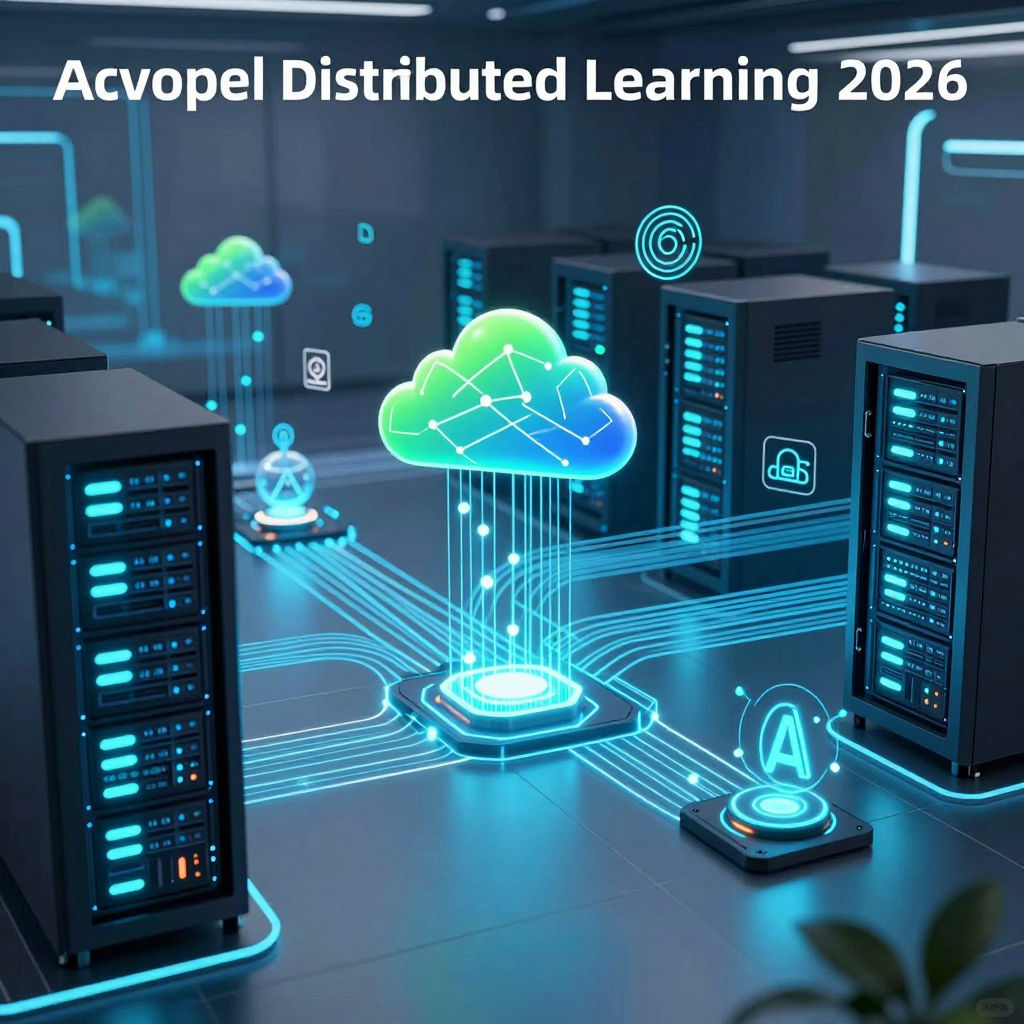
In 2026, two game-changing technologies emerged that are set to transform AI model operations. Are you curious why the fusion of Ray, the powerhouse of distributed learning, and Generative AI (GenAI) is capturing everyone's attention right now? The key isn’t just about “training bigger models faster,” but rather the evolution of MLOps into a seamless flow that integrates the entire lifecycle from training to deployment and monitoring.
How Ray Redefines MLOps: Making Distributed Learning Truly Operable
Ray offers a robust yet straightforward developer experience for massive data processing and distributed learning, while naturally scaling within Kubernetes-based production environments. This addresses common pain points—such as cases where experiments run smoothly but reproducing them in production or predicting performance and costs is a nightmare—from an MLOps perspective.
In fact, by 2026, production environments consider the following demands as the default:
- Always-on multi-node, multi-GPU training: Single-server training hits its limits as model and data sizes grow
- Elastic workload scaling: Resource demands for training, batch inference, and data preprocessing fluctuate wildly over time
- Consistent execution, observation, and recovery: Retrying on failure, checkpointing, logging, and tracing systems are essential
Ray tackles these needs at the “distributed computing framework” level and, combined with Kubernetes integration (e.g., KubeRay), offers a form factor ready to become the operational standard. In other words, Ray is no longer just a tool to speed up distributed training—it has evolved into a distributed execution backbone that safely plugs into MLOps pipelines.
New MLOps Demands Posed by GenAI: Operating ‘Agents,’ Not Just Models
With GenAI adoption accelerating, operational targets in MLOps have grown more complex. It’s no longer about deploying a single model but managing components like:
- Prompt and system message version control
- Data freshness and quality in RAG (retrieval-augmented generation) pipelines
- Agent tool use and workflow orchestration
- Safety monitoring (harmful speech, data breaches) and policy compliance
Simply put, GenAI-era MLOps must manage not only “model accuracy” but also operationalize agent behavior and policy enforcement. Ray-powered distributed execution is ideal here for parallelizing and scaling multi-stage agent tasks (search → summarize → verify → generate response), while enabling consistent deployment and resource management in Kubernetes environments.
Why the Ray + GenAI Integration Is Turning Heads: Making End-to-End MLOps a Reality
The trend of 2026 isn’t about piling on tools—it's about connecting the dots seamlessly in MLOps. In practice, frontline operations enhance maturity with combinations such as:
- Airflow: Automating data ingestion, preprocessing, training, evaluation, and deployment pipelines
- Ray / KubeRay: Execution engines for distributed training and processing
- Ray Serve: Online inference and serving with scaling, rolling updates, and traffic distribution
- MLflow: Experiment tracking, reproducibility, model registry, and deployment linkage
- MinIO and other object storage: Standardizing storage of data, artifacts, and checkpoints
The strength of this architecture is crystal clear. Diverse workloads including GenAI models and agents are handled under unified operational principles—automation, traceability, observability, and reproducibility—while simultaneously optimizing performance and costs in distributed settings. Ultimately, the Ray and GenAI combination is not just a “tech demo” but marks the starting point of MLOps innovation where organizations can truly operate AI at scale.
Ray-Based Distributed Training in MLOps: The Core Engine Bridging the Gap Between Development and Production
Traditional model training often ends with the classic pain point: “It worked perfectly on my notebook, but broke in production.” This happens because environment differences, mismatched data/code versions, scheduling and resource constraints, and configuration omissions at deployment compound to widen the gap between training and operations.
So the key question is this: How does a Ray-based architecture dramatically shrink this gap while simplifying complex ML pipelines? The answer lies in the “standardization of distributed execution” and an “operations-friendly interface.”
Why Ray Becomes the ‘Heart’ of MLOps
Though Ray is a distributed computing framework, in MLOps it goes beyond being just a “tool for fast training” — it acts as a unifying execution model for entire pipelines.
- Integrating distributed processing under a single programming model: From data preprocessing (distributed ETL) → training (distributed training) → tuning (large-scale experimentation) → serving (inference), tasks that used to be split across different systems can be consistently orchestrated around Ray.
- Aligning with operational standards through Kubernetes integration: With components like KubeRay, deployment, scaling, and failure recovery conform to cluster operation best practices. This is crucial to bridging the gap between “experimental clusters” and “production clusters.”
- Simplifying GPU/CPU scheduling through resource abstraction: Complex operational challenges like adding workers, allocating GPUs, and retrying tasks are handled at the framework level. This lets teams focus more on models and data instead of infrastructure headaches.
How Ray Simplifies MLOps Pipelines: Technical Highlights
The secret to Ray-based distributed training simplifying pipelines is its ability to break down workloads into fine-grained tasks and actors and automatically schedule them across the entire cluster.
Task-based Parallelization
Operations amenable to data parallelism, like preprocessing or feature engineering, are decomposed into tasks executed simultaneously across multiple nodes. This alleviates the common bottleneck where preprocessing delays block training.Actor-based Statefulness (Ideal for Distributed Training)
Training workers maintain state (model parameters, optimizer states, etc.) through iterative execution, making the actor model particularly powerful. Actors live long and reliably sustain communication and synchronization structures.Fault Tolerance (Retry/Recovery) and Elastic Scalability
In large-scale training, node failures are the norm, not the exception. Ray is designed with built-in task retries and worker restarts to ensure fault tolerance, delivering the reliability that production-grade MLOps demands.
MLOps Operational Architecture: The Ecosystem Ray Connects
Ray’s true strength emerges when combined with MLOps components, creating a clean, end-to-end operational architecture—not just distributed training in isolation.
- Airflow (or any workflow engine): Automates data ingestion → preprocessing → training → evaluation → registration → deployment as a DAG
- MLflow: Tracks experiments (parameters/metrics/artifacts), elevates models to staged/production-ready versions in the model registry
- Object storage like MinIO: A unified repository for snapshots of training data, features/checkpoints, and model artifacts
- Ray Serve: Connects training outputs to production endpoints, enabling online inference, A/B testing, canary deployments, and other operational patterns
The effect is crystal clear: Training and deployment aren’t separate worlds but ‘continuous stages’ within the same pipeline. Instead of “someone manually deploying after training finishes,” MLOps matures into a system where “only validated models auto-promote to serving.”
Essential Practical Checklist for MLOps with Ray
When adopting Ray-based distributed training, don’t just chase performance—design around operational quality factors that truly matter.
- Reproducibility: Lock data versions (snapshots), code commits, and environments (containers) + use MLflow for experiment tracking
- Observability: Establish logging and monitoring for training/serving, including metrics (performance, latency, error rates) and data drift detection
- Resource Policies: Prioritize GPUs, queue jobs, and enforce quotas by team/service to prevent “well-functioning experiments” from disrupting production
- Deployment Strategies: Predefine Ray Serve–based canary and A/B deployments along with rollback plans
Ultimately, Ray is far more than a tool to accelerate distributed training; it blurs the boundary between training and operations, simplifying MLOps as a whole. When designed right, this core engine naturally organizes large-scale models and complex pipelines into operationally manageable systems.
Mastering MLOps: The Perfect Blend of Kubernetes and Open Source Tools
Airflow, MLflow, Ray Serve, and MinIO — when these tools synergize effectively, the result is an automated MLOps system that runs through “training → validation → registration → deployment → monitoring” with minimal human intervention. The key lies in clearly defining each tool’s role on Kubernetes and seamlessly connecting the pipeline to flow naturally to the “next stage.”
Understanding the MLOps Architecture at a Glance (Kubernetes + Open Source Stack)
The most commonly used production setup follows this flow:
- Kubernetes: The standard execution platform hosting all workloads (training, ETL, serving, batch jobs)
- MinIO (S3-compatible object storage): A unified repository for data, features, and model artifacts
- Airflow: Workflow orchestration (scheduling, dependencies, retries, notifications)
- Ray (KubeRay): Execution engine for distributed preprocessing, training, and hyperparameter tuning
- MLflow: Experiment tracking + Model Registry (the cornerstone for promotion/rollback)
- Ray Serve: Online serving (version control, rolling updates, scaling)
The beauty of this combination is simple. Data converges in MinIO, Airflow drives the pipeline, heavy distributed computations run on Ray, MLflow governs the “official” model version, and Ray Serve handles deployment. Each tool focuses on what it does best, while Kubernetes ties everything into a single operational ecosystem.
How an MLOps Pipeline “Automatically” Runs in Practice
Breaking down the automated MLOps process step-by-step:
Data Ingestion/Preprocessing: MinIO + Ray
1) Raw data lands in a MinIO bucket (logs, DB dumps, streaming batches, etc.).
2) Airflow detects this or triggers jobs on a schedule.
3) Preprocessing and feature generation run as Ray jobs, leveraging parallelism across nodes, CPUs, and GPUs for large-scale data.
4) Outputs (cleaned data, features, statistical reports) are stored back to MinIO under versioned paths.
The critical insight is designing the data path itself as a version control mechanism, e.g., s3://mlops/feature_store/v2026-04-24/...
This drastically boosts reproducibility and makes rollback straightforward in case of issues.
Training/Tuning: Ray + MLflow
1) Airflow triggers “training jobs.”
2) Ray executes distributed training and hyperparameter tuning, logging each experiment’s results (metrics, parameters, artifacts) to MLflow Tracking.
3) Only candidate models meeting criteria (e.g., validation AUC, latency, cost) get registered in the MLflow Model Registry.
Here, MLflow acts not just as a logging tool but as a team-agreed “promotion gate.” Model operation is solidified not by gut feeling but by the registry status (like Staging, Production).
Deployment/Serving: MLflow + Ray Serve
1) Airflow queries the registry for the “Production-promoted model version.”
2) Ray Serve loads this model to run as a serving endpoint.
3) Common deployment strategies include:
- Rolling updates: Gradual replacement to minimize downtime
- Canary releases: Direct a subset of traffic to the new version for validation
- Concurrent versioning: Run A/B tests or segment customer groups
Ray Serve’s strength lies in its natural integration with Kubernetes scaling. When traffic surges, replicas increase; GPU/CPU resource policies become standardized.
How This Combination Solves the Most Common MLOps Challenges
“Experiments succeed but production deployment is a headache”
→ Define “deployable models” clearly in MLflow Registry and embed Ray Serve deployment into pipelines to bridge gaps.“Don’t know where data/models are or which version they are”
→ Use MinIO as a single artifact repository and store Airflow-generated outputs under versioned paths for traceability.“Retraining requires manual effort every time”
→ Define retraining triggers (schedule, performance degradation, drift signals) in Airflow DAGs to automate retraining through redeployment.
MLOps Setup Checklist: Essential Design Points for the “Perfect Combination”
- Storage Standardization: MinIO(S3) path conventions, permissions, encryption, lifecycle policies
- Experiment/Model Standardization: Define metrics/tags to log in MLflow (data version, code commits, pipeline run IDs)
- Pipeline Standardization: Clearly separate Airflow task units (preprocessing/training/validation/registration/deployment) and apply retry/notification policies
- Serving Standardization: Define Ray Serve endpoint specs (input/output schema), versioning strategies (canary/A-B), and autoscaling resource policies
- Observability: Collect both model metrics (accuracy, drift) and system metrics (latency, error rates, GPU/memory) together
With this architecture, MLOps becomes not just a “set of tools” but a product-grade operational system organically flowing on Kubernetes. Airflow orchestrates the flow, Ray speeds it up, MLflow sets the standards, Ray Serve delivers reliably, and MinIO keeps a full trail of every trace.
The Exploding MLOps Market and the Future of GenAI Integration
The forecast that the MLOps market will grow from $380 million in 2021 to $2.11 billion by 2026 highlights that the core competitive advantage has shifted from simply “building models” to “operating them to extract value.” Notably, the driving force of growth in 2026 is not mere automation, but the evolution of MLOps into a system capable of managing the skyrocketing operational complexity triggered by GenAI and AI agents entering real-world workflows.
The Real Reason the MLOps Market Is Expanding: From “Model Operations” to “Agent Operations”
Traditional MLOps focused on reliably running the cycle of training, deployment, and monitoring repeatedly. However, with the adoption of GenAI, the operational unit has shifted from a single model to an agent-based system, dramatically increasing requirements.
- Multimodel orchestration: Large language models (LLMs), embedding models, rerankers, classification/safety models all operating together within one request flow
- Tool usage (Functions/Tools) and workflow execution: Agents performing actual “actions” such as database lookups, search, and calls to internal systems
- Prompt/Policy/Guardrail management: Prompt versions and policy change histories influence quality as much as the models themselves
- Unstructured quality measurement: Not ending with accuracy alone, but requiring multidimensional metrics like usefulness, consistency, safety, and groundedness
Ultimately, MLOps is expanding beyond a “model deployment pipeline” to an operational system encompassing execution, control, evaluation, and accountability of agents.
New Opportunities Presented by GenAI-Integrated MLOps: Simultaneous Optimization of Cost, Quality, and Speed
GenAI delivers great benefits but also triggers simultaneous challenges in operation: cost (tokens/inference), quality (hallucination/consistency), and compliance (logging/security). Here is the clear opportunity MLOps offers:
1) Evaluation (Eval)-Based Release Standardization
- Running automated evaluations before and after deployment to judge passes/fails by numbers, not just subjective impressions
- Example: Gatekeeping using a combo of scenario test sets + LLM-as-judge + human sampling
2) Observability-Centered Operations to Reduce Downtime Costs
- Tracking prompts, contexts, tools used, responses, latency, and token costs at the request level
- Monitoring drift not only in “data” but also in user query distributions and changes in the knowledge base
3) Serving Optimization to Cut Inference Costs
- Structurally reducing costs with caching, batching, routing (small model → large model), and scalable serving frameworks like Ray Serve
- Since agents tend to have frequent calls, serving architecture optimization directly influences ROI
Direction Global Companies Are Taking: “Platformized MLOps + Agent Operations”
Lately, global companies are elevating MLOps from a tool for single teams to a platform shared across entire organizations. Platform designs focused on AI agents are rapidly spreading.
- Large enterprises/defense & manufacturing: Increasing investments in talent and organizations integrating MLOps with GenAI platforms for secure operation combining internal data
- Cloud vendors: Leading with “MLOps platforms for AI agents,” bundling deployment, observability, and governance
- Open source ecosystems: Moving toward standardization connecting experiment tracking, registries, deployments, and audits around core tools like MLflow
The essence of this trend is simple. GenAI has become an “operating product” rather than a mere “feature,” and continuous improvement requires MLOps as an essential infrastructure.
The Future of MLOps: Agent Governance and “Continuous Evaluation” Will Become the Norm
Going forward, MLOps will be differentiated less by “deployment automation” itself and more by its ability to control agents’ safe behavior and continually assess quality.
- Policy-based releases: Promotion only when model/prompt/tool changes satisfy quality metrics
- Simultaneous version control of data, prompts, and knowledge bases: Ensuring reproducibility and accountability
- Real-time monitoring + automated responses: Immediately adjusting routing, tightening guardrails, or rolling back upon detecting drift
In conclusion, the explosive market growth is not just because “AI usage is increasing,” but fundamentally because MLOps is the only platform capable of solving the operational challenges brought by GenAI and AI agents. Organizations excelling in MLOps won’t just build models faster—they will become organizations that reliably “commercialize” AI.
The Imperative of 2026 Ray and GenAI Integrated Solutions from an MLOps Perspective
From complex distributed training to automated monitoring and AI agent support — here’s a final summary of why MLOps in 2026 is no longer optional but essential, and what groundbreaking transformations it enables in practice. To start with the conclusion: Ray-based distributed execution + Kubernetes standard operation + GenAI management (including agents) have merged into a unified platform, marking a full transition from an era of patching together individual tools to an era of managing through platforms.
Ray-Based Distributed Learning Architecture as the MLOps Operational Standard
In the 2026 production environment, model training is no longer server-centric. Large-scale data preprocessing, multi-GPU training, hyperparameter tuning, and batch inference have made distributed workloads the default. Here’s why Ray matters:
- Unified execution model for training, preprocessing, and serving: Ray’s distributed task/actor model unites data processing and training under the same paradigm. Code developed during experimentation can scale seamlessly into production without major rewrites, drastically narrowing the “research-to-operations gap.”
- Elastic scaling combined with Kubernetes: Operating Ray clusters on Kubernetes via setups like KubeRay enables automatic scaling of nodes according to workload demands. This achieves both cost optimization and throughput enhancement simultaneously.
- Eliminating MLOps pipeline bottlenecks: Previously, separated layers for preprocessing (e.g., Spark), training (e.g., distributed PyTorch), and serving (different servers) caused bottlenecks. Integrating around Ray reduces data movement, environment discrepancies, and operational complexity, significantly shortening overall lead time.
The Core of MLOps Automation: Consistency Across Pipelines, Experiment Management, and Serving
To build not just a “running demo” but a “working product,” automation isn’t optional — it’s central to design. The 2026 MLOps reference stack converges on Ray/KubeRay + Airflow + MLflow + Ray Serve + object storage (e.g., MinIO) for this reason.
- Pipeline orchestration with Airflow: From data ingestion → validation → preprocessing → training → evaluation → deployment approval, workflows are clearly defined as DAGs, minimizing human manual interventions.
- Reproducibility and governance with MLflow: Experiment parameters, metrics, and artifacts are systematically recorded and promoted to model registries, enabling traceability of “which data/code/configuration produced this model.”
- Serving standardization with Ray Serve: Beyond simply exposing models as APIs, it supports multi-model routing, version rollouts, traffic splitting (canary), and autoscaling — meeting modern operational requirements with ease.
In short, modern MLOps is not about using many tools but about ensuring operational consistency from training to deployment.
New Demands Arising as MLOps Meets GenAI: AI Agent Operations
With the expansion of GenAI, MLOps management targets are extending from “models” to “agents.” Agents represent complex systems involving tool usage, memory, retrieval-augmented generation (RAG), multi-step inference, and policy/guardrails — not just single model calls. This creates new operational priorities:
- Version control of prompts and policies: Beyond code and models, prompt templates, system prompts, and safety policies must be managed in release cycles.
- Continuous evaluation (Eval): New metrics like task success rate, hallucination rate, policy violation rate, and citation quality replace accuracy, requiring ongoing evaluation pre- and post-deployment.
- Toolchain observability (Tracing): Tracking “which tool was called in which sequence for what request” and pinpointing “where delays and failures occurred” is vital for troubleshooting and enhancing quality.
In conclusion, MLOps in 2026 has entered a stage of standardizing GenAI agent operations, making platform-level integration even more indispensable.
MLOps Monitoring and Observability as Quality Assurance: Simultaneously Tracking Drift, Performance, and Cost
The greatest costs in operations don’t come from deployment but from post-deployment issues. Thus, modern MLOps treats observability not as a feature but as a core design principle.
- Data drift detection: Changes in input distribution degrade model performance over time. Statistical detection (distribution shifts), feature importance changes, and proxy metrics accounting for label delays must be operated together.
- Performance monitoring: Beyond accuracy, integrated observation of latency (p95/p99), error rates, queue backlogs, and GPU/CPU usage allows rapid differentiation between “quality degradation vs infrastructure problems.”
- Cost/efficiency monitoring: Especially for GenAI, token costs directly impact revenue/profit. Failure to instrument metrics like tokens per request, cache hit rates, RAG retrieval costs, and model routing strategies leads to explosive cost increases during scaling.
Monitoring has evolved from a “dashboard added later” to an instrument for maintaining service quality in 2026 MLOps.
Final Summary: Why ‘Platform’ is the Solution for MLOps in 2026
The reason MLOps is essential in 2026 is straightforward. Distributed training is a given, GenAI makes systems complex, and operations without monitoring are impossible. Ray and GenAI integrated solutions gain prominence because they absorb this complexity not through “team effort” but as a “platform architecture.”
- Reliable large-scale workload distribution with Ray/Kubernetes
- Operational standardization of training, deployment, and serving with Airflow/MLflow/Ray Serve
- Continuous post-deployment quality assurance through observability, drift detection, and agent evaluation
Remember this final line:
MLOps in 2026 is not just a technology to deploy models, but a technology to operate AI as a ‘business system.’
Comments
Post a Comment